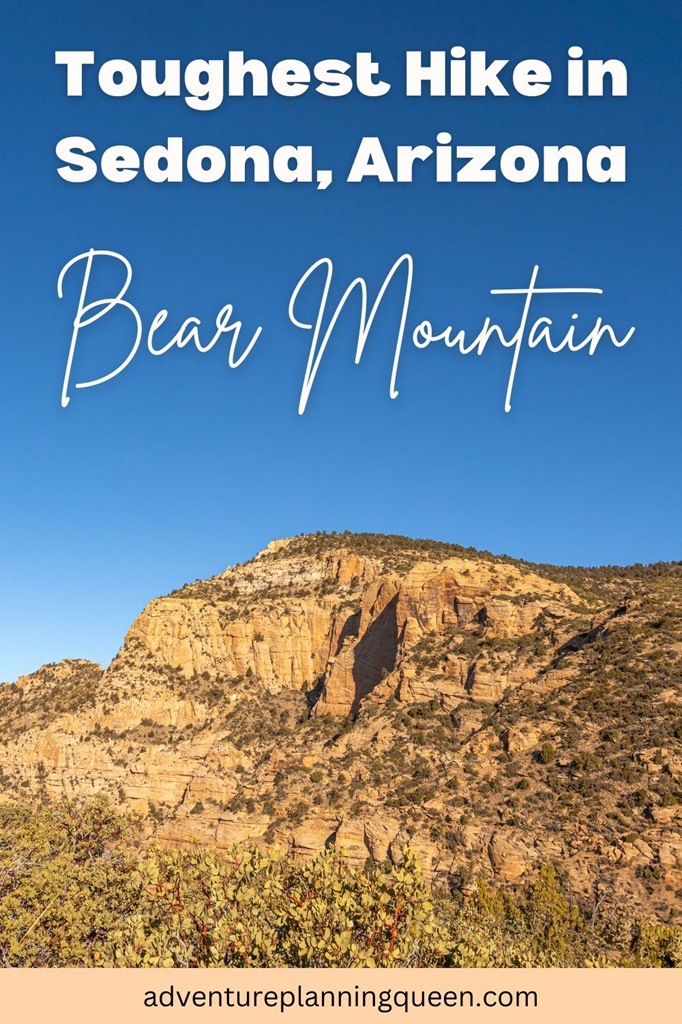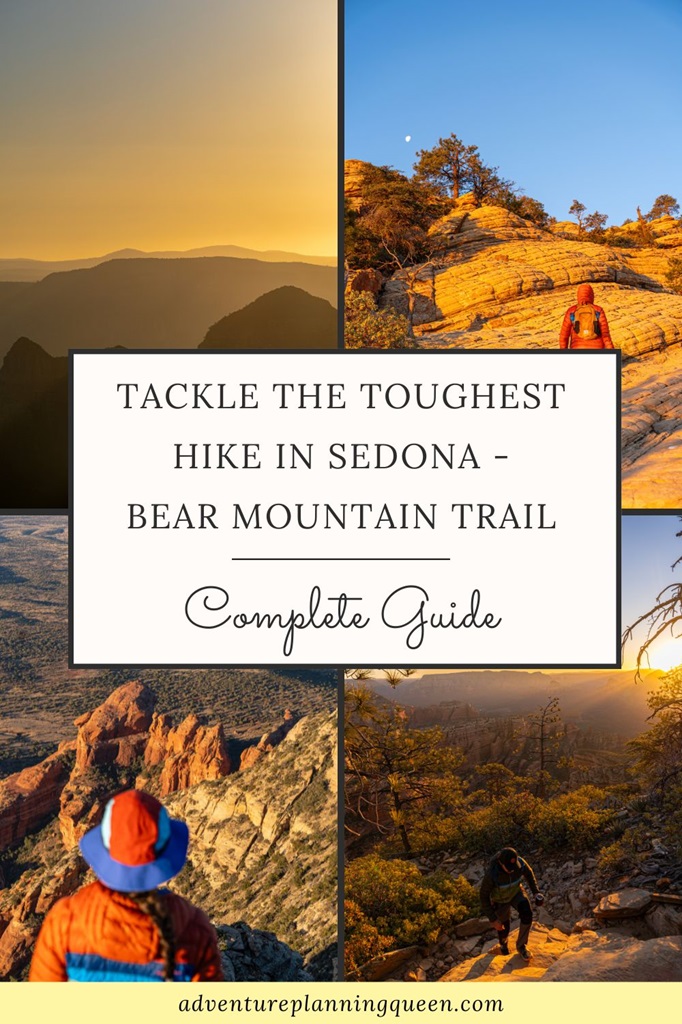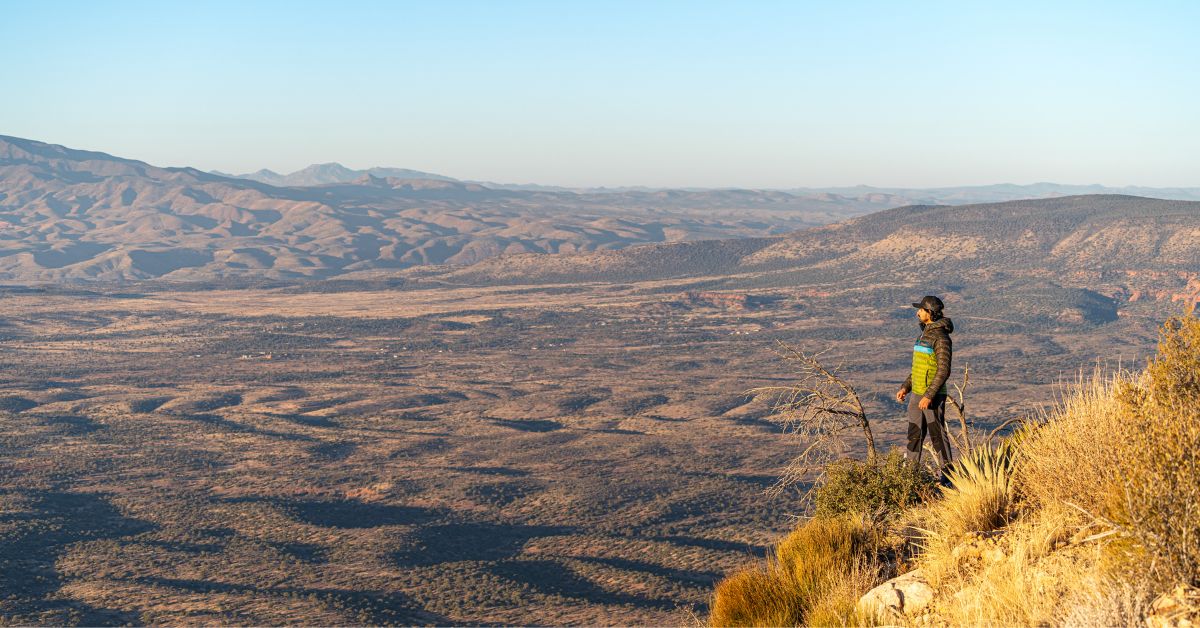
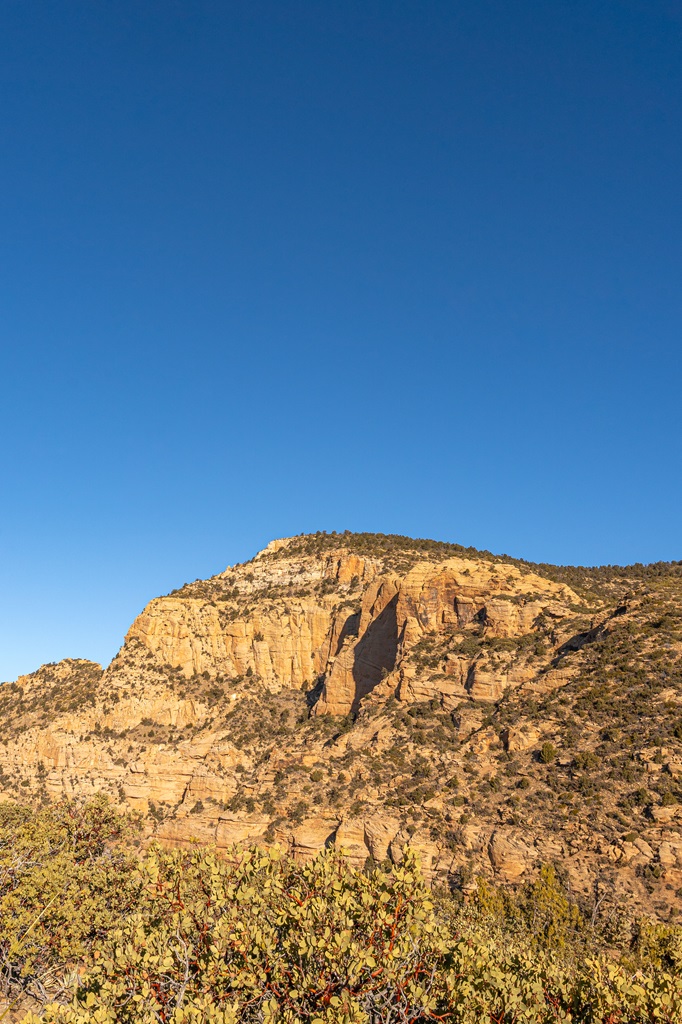
Rising to 6,463 feet as Sedona’s second-highest peak, Bear Mountain is a challenging yet rewarding hike. It is named the toughest hike in Sedona. 😧
The strenuous 2.3-mile ascent climbs about 2,000 feet, with steep, rocky terrain and little shade.
The trail offers breathtaking views throughout, showcasing Sedona’s iconic red rock formations and the distant San Francisco Peaks.
Navigating the trail requires careful attention. Look for white, diamond-shaped markers painted on the rock to help guide your way.
While Bear Mountain sees fewer crowds than Devil’s Bridge or Cathedral Rock, it remains a popular trek.
The parking lot is shared with another well-traveled trail, so arriving early is key to securing a spot and avoiding the midday heat.
Read my in-depth hiking guide to learn how to safely and successfully summit Bear Mountain in Sedona. 🙌
Affiliate Disclaimer: Some links on this page may be affiliate links, meaning I may earn a small commission at no extra cost to you. As an Amazon Associate, I earn from qualifying purchases. Thanks for supporting the blog! 🫶
Bear Mountain in Sedona: Trail Stats and Map
Bear Mountain Trail Stats
Starting Point: Bear Mountain Trailhead
Length: 4.6 miles roundtrip
Elevation Gain: 2,000 feet
Difficulty: Challenging
Hiking Time: 3 to 4.5 hours
Route Type: Out-and-back
Pet-friendly? Yes, must be on leash
Hike Features: Easy rock scrambling, amazing views, a few false summits, Bear Mountain summit
Bear Mountain Sedona Map
Bear Mountain Trailhead and Parking
The Bear Mountain Trailhead offers a fairly spacious parking area, but it fills up quickly due to its popularity.
Since it serves as the starting point for both Bear Mountain and Doe Mountain, arriving early is essential to secure a spot.
Vault toilets are available at the trailhead.
If the lot is full, limited roadside parking is available along Boynton Pass Road.
Is a Red Rock Pass required?
A Red Rock Pass is required to park at the Bear Mountain Trailhead, or you can use an America the Beautiful Pass if you have one.
You can purchase a Red Rock Pass online in advance or at the self-pay kiosk at either trailhead.
You may not need a Red Rock Pass to park alongside Boynton Pass Road but I’m not 100% sure!
🎟️ The Red Rock Pass costs:
- $5 for a day
- $15 for a week
- $20 for an annual pass
Learn more about the Red Rock Pass Program HERE.
Best Time to Hike Bear Mountain in Sedona
The best times to hike to Bear Mountain are typically in the spring (March to May) and fall (September to November). During these months, the weather is usually perfect for hiking and other outdoor activities.
This is also peak season for Sedona so expect more people on the trails and full parking lots. Starting your hike early is the best way to beat the crowds and secure a parking spot!
✨ READ THIS: 10 Best Hikes in Sedona, Arizona
🍂 Fall (September – November): This is a popular time to visit Sedona due to ideal weather conditions making it perfect for outdoor adventures.
❄️ Winter (December – February): This season is probably my favorite time to explore Sedona because the crowd-level is at its lowest. My husband and I hiked Bear Mountain in January and had the summit to ourselves!
However, it’s important to note that we started before sunrise, and on our way down the mountain we saw quite a few people making their way up.
⚠️ If there’s snow or ice on the trail or summit, exercise caution and use good judgment – slippery conditions can make this hike extremely dangerous!
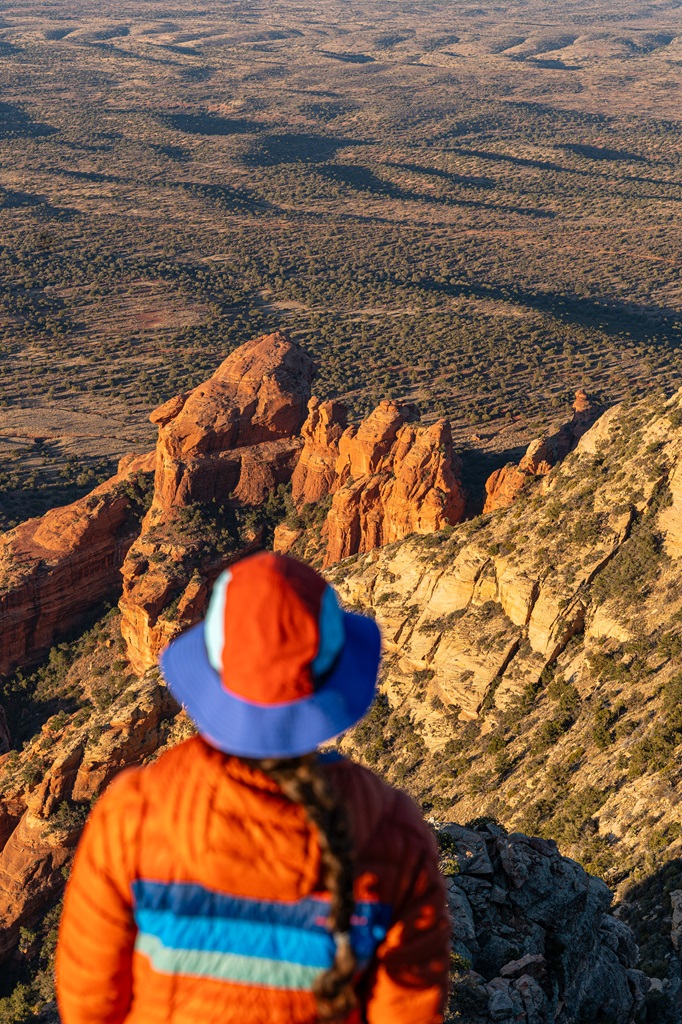
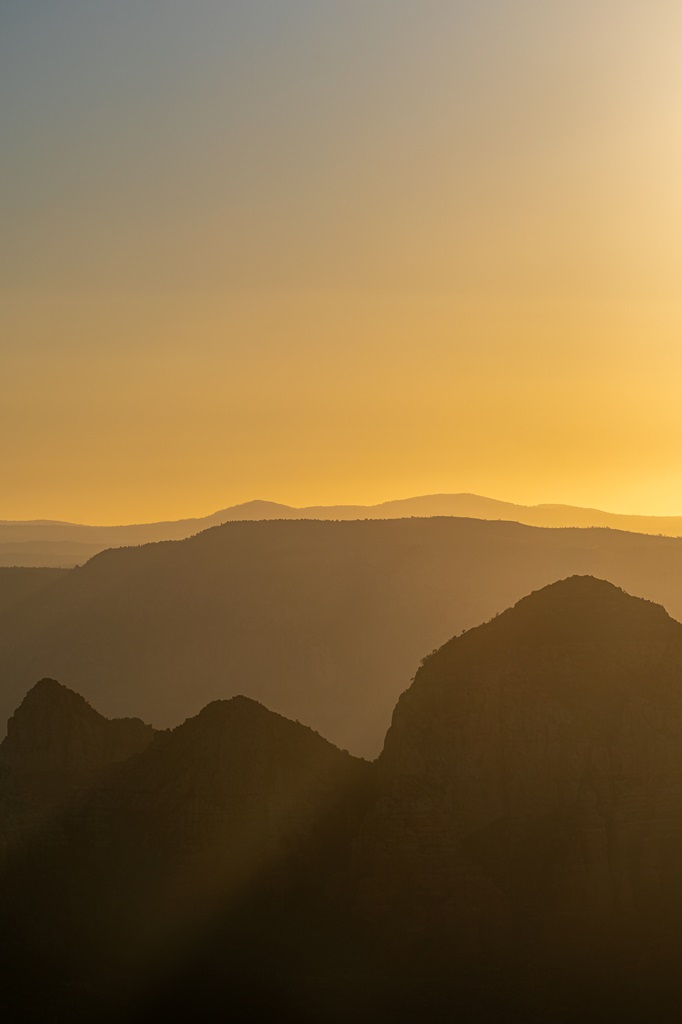
🌷 Spring (March – May): This season offers pleasant temperatures and beautiful desert blooms, but trails will be busy as it’s a popular time to visit Sedona.
☀️ Summer (June – August): Visiting Sedona in the summer is not recommended due to extreme heat.
Most of the Bear Mountain Trail is exposed, and when combined with a challenging hike it can quickly lead to dehydration and heat-related illness.
🥵 Follow these tips to stay safe in the summer:
- Start early in the morning or later in the day to avoid peak heat
- Bring plenty of water – more than you think you’ll need
- Wear sun-protective clothing like a hat, sunglasses, and lightweight clothing and apply sunscreen
Hike the Bear Mountain Trail: Step-by-Step Directions
Bear Mountain Trail
The Bear Mountain Trail begins across the street from the parking lot. This hike begins by passing through a gate and crossing a few washes.
Enjoy the first 0.3 miles because it’s about to get real. Real tough. 😭
But also real fun! 😜
The trail consists of four steep sections consisting of switchbacks, lots of steps, and rock scrambling with a few breaks of flat or gentle incline in between each hard section.
Follow small white, double-ended arrows painted on rocks to stay on track.
The views along the way will be incredible! My husband and I started our hike early and saw the sunrise as we ascending towards Bear Mountain – it was beautiful.
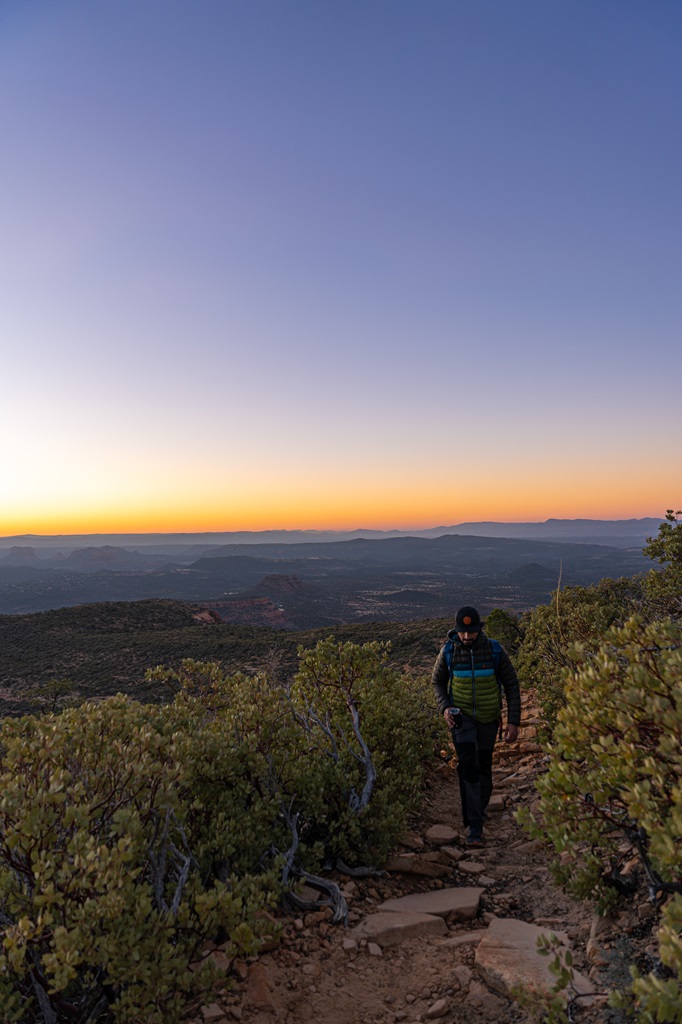
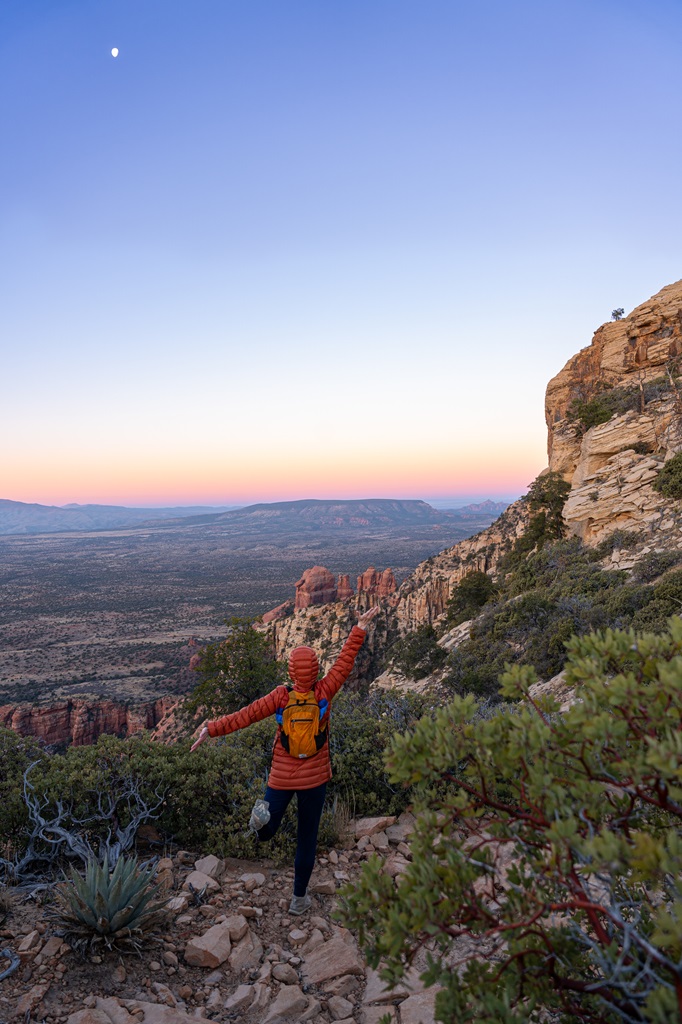
If you are using AllTrails, it may tell you there is an “overlook” about 0.5 miles away from the summit of Bear Mountain. This spot is also known as a false summit – one of several along the way.
This false summit or overlook provides amazing views of Fay Canyon and Sedona’s red rock formations.
False summits can be deceiving, so downloading AllTrails offline maps can help pinpoint the true summit. If you don’t have offline maps, don’t worry – a “Trail End” sign marks the actual summit.
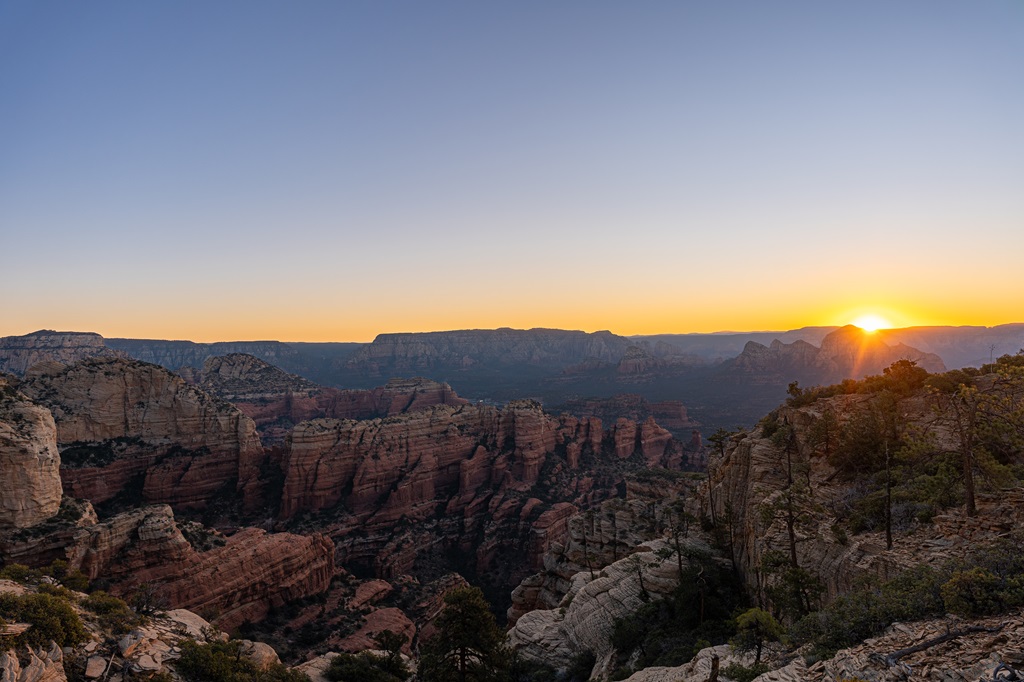
From this point, you’re almost there! The trail continues its steady climb toward the summit, demanding one final push.
During our hike, the sun gave us more energy to finish the final climb strong! We had just hiked Wilson Mountain (another challenging hike) a few days prior, so we were still recovering from that.
But we pressed on, step by step, until we finally reached the summit. 🙌
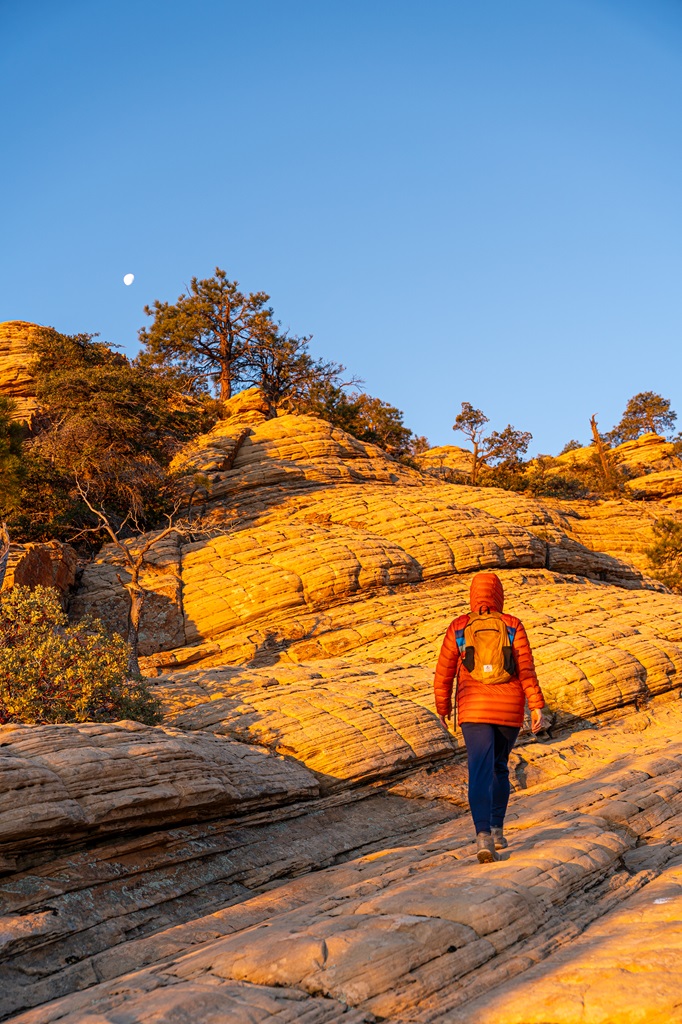
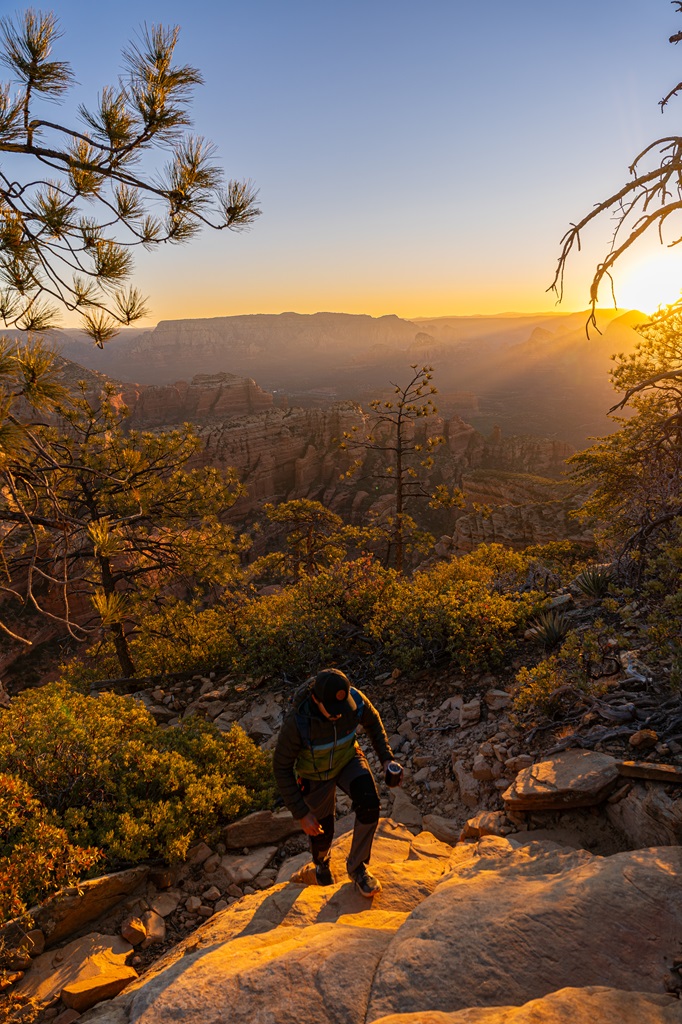
Bear Mountain Summit
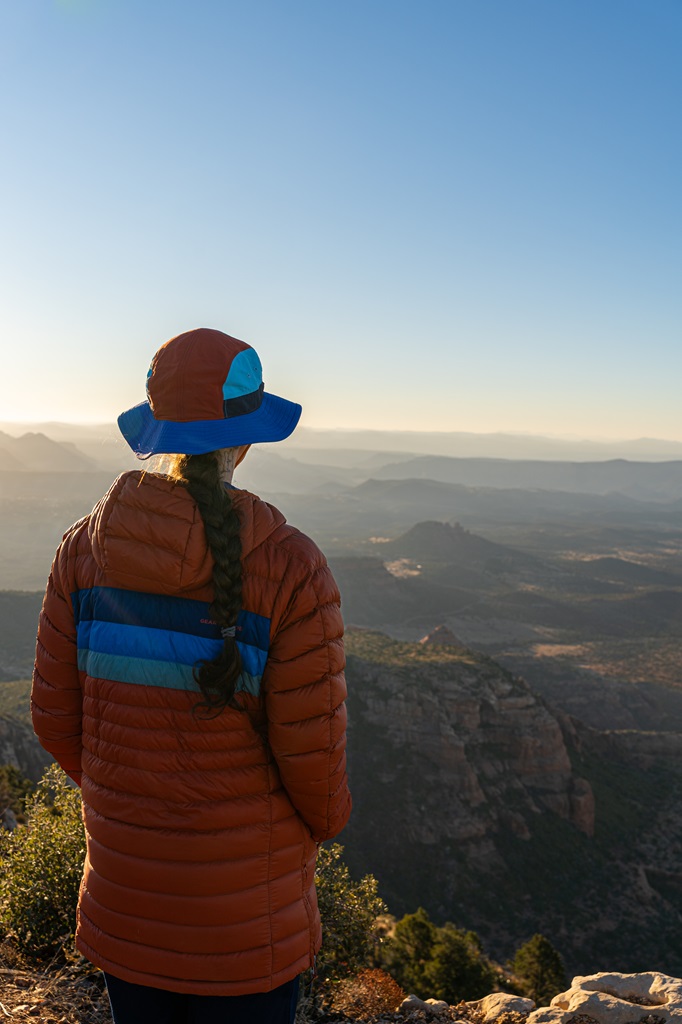
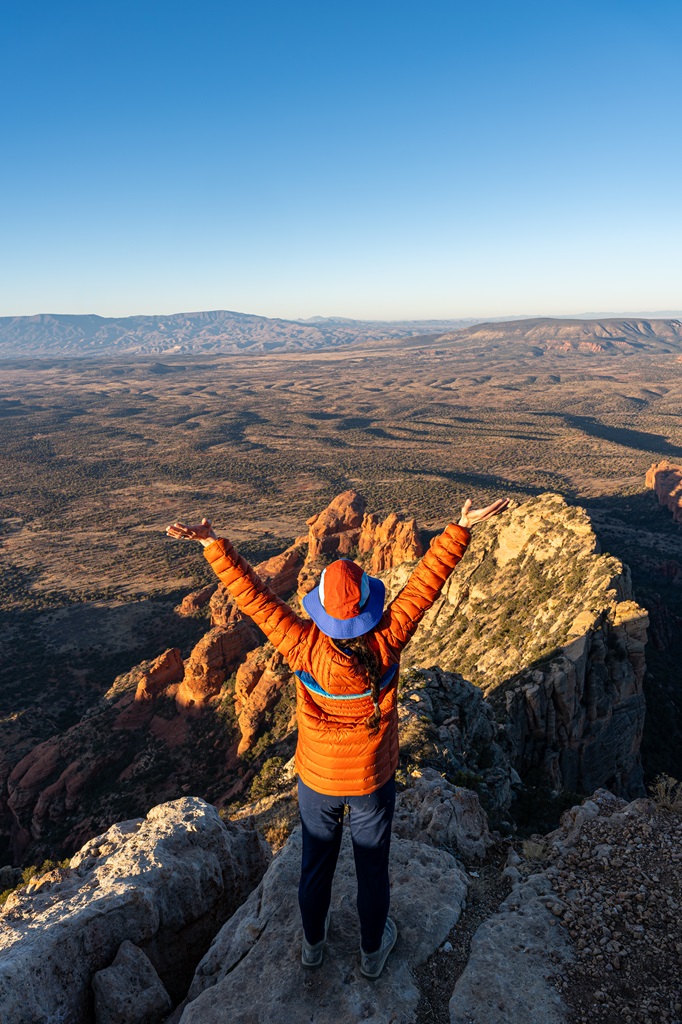
At the top we were greeted by a “Trail End” sign. From the summit, you’ll be rewarded with panoramic views stretching across Sedona’s red rock landscape.
We reached the summit at a bad time for photography due to the sun rising in the east which was where the best views were at.
Everything was bright and hazy – I did the best I could with editing the pictures. 🫣
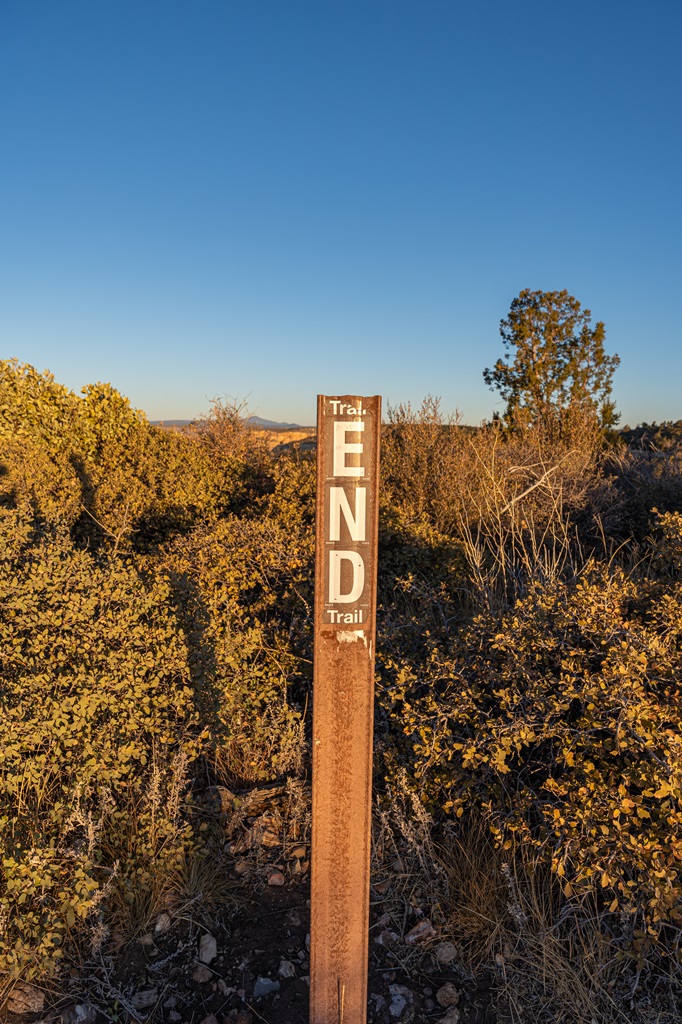
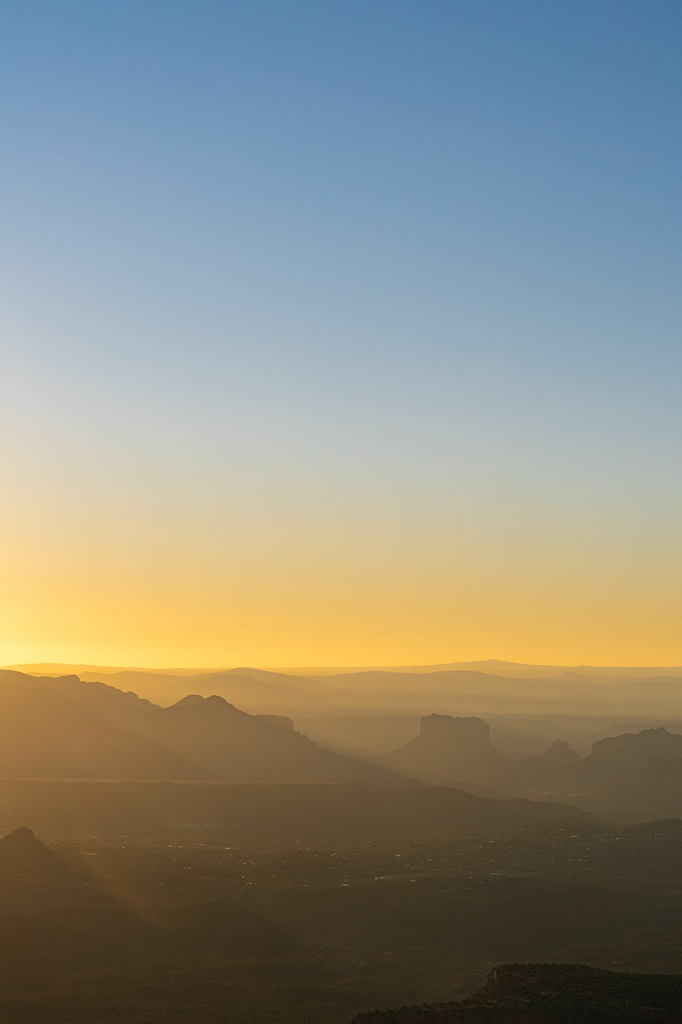
If you walk to the other side of the summit, you will be treated to a breathtaking view of the San Francisco Peaks rising in the distance to the north.
I don’t know why I didn’t get a picture of those mountains! What was I thinking!? Looks like we’ll have to hike the Bear Mountain Trail again just so I can take a picture of the San Francisco Peaks.
Anyway, once you reach the summit, take a moment to soak in the incredible scenery – you’ve earned it!
When you’re ready, retrace your steps back down to the trailhead. Congrats, you did it! 🥳
✨ Discover more great hikes in Sedona, Arizona!
- Devil’s Bridge – Tackle this short yet exciting hike to the largest natural sandstone arch in Sedona! The panoramic views from the top will leave you speechless. And don’t forget to walk across the bridge – if you dare!
- Cathedral Rock – This is a short but steep hike to one of the most magical spots in Sedona. Also, it’s an incredible spot to watch the sunset!
- Subway Cave – Take a short detour off the Boynton Canyon Trail to explore one of Sedona’s most popular caves. This adventure offers stunning red rock views, a fun scramble, and a touch of history with ancient Sinagua ruins.
- Birthing Cave – Hike a short distance to a uniquely shaped cave. This spot has a blend of natural beauty and profound cultural significance!
- Soldier Pass Trail – This trail is perfect for families and beginners plus it’s pet-friendly! You’ll encounter remarkable features like Devils Kitchen Sinkhole, the Seven Sacred Pools, and the intriguing Soldier Pass Cave.
- Fay Canyon Arch – The Fay Canyon Trail is a true gem in Sedona, perfect for those seeking a short, scenic hike. The true highlight is the Fay Canyon Arch, a natural arch-shaped rock formation hidden along a side trail.
- Doe Mountain – This is a short, scenic hike to stunning views that are even more spectacular at sunrise – plus there’s a chance to see hot air balloons!
- Bear Mountain – This is Sedona’s toughest hike, with nearly 2,000 feet of steep elevation gain in just 2.3 miles. The trail offers breathtaking views throughout, showcasing Sedona’s iconic red rock formations and the distant San Francisco Peaks.
- Keyhole Cave – Tackle this off-the-beaten-path hike to one of Sedona’s largest caves, offering an adventurous challenge for experienced hikers.
- Wilson Mountain – If you’re up for a challenging climb with unmatched scenery and fewer crowds, tackle this hike to the tallest peak in Sedona!
Bear Mountain Hiking Tips
1. Start Early: This is a long, strenuous hike with a good amount of elevation gain. An early start not only helps to avoid crowds but also avoid the heat and ensures you have enough time to complete the trek.
2. Red Rock Pass Required: This pass is required for parking at the Bear Mountain Trailhead, or you can use an America the Beautiful Pass. You can purchase one online or at the trailhead kiosk.
3. Download Offline Maps: The Bear Mountain Trail is well-marked and easy to follow but having offline maps on your phone can give you peace of mind.
4. Follow the Trail Markers: Look for small white, double-ended arrows painted on rocks to stay on the correct path.
5. Be Prepared for a Tough Climb: This trail is steep and relentless. Working out consistently and hiking other tough trails can help you prepare for this hike.
6. Check the Weather: Avoid hiking in extreme heat, and be cautious if snow or ice is present, as the trail becomes dangerously slippery.
7. Wear Sturdy Hiking Boots: Sturdy hiking boots with good traction are essential for navigating steep, rocky, and uneven terrain.
8. Bring Hiking Poles: They’ll help with balance on the uneven, rocky terrain, especially on the descent.
9. Summer Safety Tips:
- Take frequent breaks in shaded areas.
- Be sure to bring plenty of water to stay hydrated.
- Eat high-carb and salty snacks to help keep your energy levels up and replenish electrolytes.
- Wear lightweight, breathable clothing, a wide-brimmed hat, and sunscreen to protect yourself from the sun.
- Try to hike during the cooler parts of the day, such as early morning or late afternoon.
10. Keep Sedona Pristine for Future Generations: Take the Sedona Cares Pledge and follow Leave No Trace principles.

Hiking in Sedona Packing List
👚 Layers of Clothing (top) – Pack a moisture-wicking base layer, a fleece mid-layer, an insulated jacket, and an outer shell to protect you from the elements, such as rain and wind. You may not need all these layers, especially in the summer months, but it’s always best to be over-prepared!
Check out my favorite tops 👇
- Base layer: REI Co-op Sahara Shade Hoodie (warm/mild conditions) and REI Co-op Midweight Long-Sleeve Base Layer (cooler conditions)
- Fleece mid layer: Cotopaxi Teca Fleece Full-Zip Jacket
- Down mid layer: Cotopaxi Fuego Hooded Down Jacket
- Outer shell: In the summer I always pack a light windbreaker, such as the Cotopaxi Teca Crop Windbreaker or the RevolutionRace Unit Light Windbreaker. If cold, windy, and rainy conditions are in the forecast (or there’s a slight possibility), I make sure to pack my Patagonia Torrentshell 3L Jacket.
🩳 Hiking Shorts or Pants – Pack a comfortable, durable, and stretchy pair of hiking shorts or pants. Also think about what conditions you might run into, such as warm or cold temperatures, wind and/or rain, bugs, and overgrown trails.
Check out my favorite hiking bottoms 👇
- Cotopaxi Losdos Zip-Off Pants
- RevolutionRace Breezy Ankle Outdoor Pants
- Baleaf Fleece-Lined Jogger Pants
- RevolutionRace Summit Pocket Tights
- Revolution Race Hike & Dive Shorts
🥾 Hiking Footwear – Bring a good pair of hiking boots or shoes with good traction. If I’m not expecting to hike in too much mud or snow, my go-to hiking shoes are the Altra Lone Peak trail runners. They have a wide-toe box, 0 mm heel-to-toe drop, and MaxTrac rubber outsole. Plus, they’re lightweight and so comfy!
🧦 Socks – Moisture-wicking, quick-drying socks are the way to go. My favorite pair of hiking socks are Darn Tough Hiker Micro Crew Cushion Socks. Always pack an extra pair!
🎒 Day Pack – What you plan to do (sightseeing, hiking, etc.), determines what size pack you’ll need. Here is what I typically bring based on what I’m doing that day 👇
- Short walks and sightseeing: Cotopaxi Kapai 1.5L Del Dia Hip Pack
- Short, easy to moderate day hikes: REI Co-op Flash 22L Pack
- Long, moderate to challenging day hikes: REI Co-op Trail 25L Pack or Cotopaxi Luzon Del Dia 24L Pack
🥢 Trekking Poles – Essential for stability, balance, and support when hiking trails, especially on tough, rocky, and uneven terrain. I use REI Co-op Trailmade Trekking Poles and love them!
❄️ Microspikes – Bring a pair of microspikes if you’re visiting in the winter and you’re planning to hike along icy trails. They will give you good traction to avoid slipping! I use Black Diamond Access Spike Traction Device.
🦟 Mosquito/Bug Repellants – In the warmer months, be prepared for annoying gnats, mosquitoes, and flies. Wear long-sleeve clothing, a head net, and use bug spray.
🧤 Extra Warm Layers – If you expect cooler conditions or hiking to higher elevations, make sure to pack extra layers for added warmth, such as gloves, beanie, neck gaiter, and a light jacket.
🗺️ Navigation – Carry a physical topographic map, compass, a satellite messenger (or personal locator beacon), and download offline maps to help you stay on course, find your way in unfamiliar terrain, and call for help if needed.
🔦 Headlamp/Flashlight – A reliable light source with extra batteries, in case you end up hiking in the dark or need it for emergency situations.
💧 Water – Water bottles to carry sufficient water to stay hydrated, along with a filtration system or purification tablets if you plan to refill from natural sources.
🍕 Food – Energy-rich snacks or meals to keep your energy levels up during the hike.
😎 Sun Protection – Sunscreen, sunglasses, and a sunhat to protect yourself from harmful UV rays, even when it’s cloudy. Also, polarized sunglasses are important when it’s bright outside and to reduce glare from reflective surfaces like water, snow, and roads.
🩹 First-Aid Kit – A basic first-aid kit with items like bandages, antiseptic, pain relievers, and any personal medications you may need.
🥶 Emergency Shelter – Pack an emergency bivy sack or space blanket for shelter in case of sudden weather changes.
🔥 Fire – A lighter, matches, or fire starter to help you build a fire for warmth or signaling in case of emergency. Along with matches, I also carry a multi-tool carabiner that has a fire starter, utility blade, screwdriver, and bottle opener.
🗡️ Multi-Tool and Repair Kit – A versatile tool/knife and repair kit to handle any task, from preparing food to making repairs.
💩 Waste Disposal Supplies – WAG bags, trowel, toilet paper, pee cloth, wipes, Ziploc bags – be sure to pack out everything!
FAQs: Bear Mountain Sedona
-
How long does it take to hike Bear Mountain in Sedona?
It takes about 3 to 4.5 hours to hike Bear Mountain in Sedona.
-
Is it hard to hike Bear Mountain?
This hike is considered strenuous for the average hiker with nearly 2,000 feet of elevation gain in 2.3 miles.
-
What is the hardest hike in Sedona?
Bear Mountain is considered to be the hardest hike in Sedona.
Conclusion
Hiking Bear Mountain in Sedona is a demanding yet incredibly rewarding adventure.
With its steep ascents, rocky terrain, and breathtaking panoramic views, this trail is a true test of endurance and a must-do for experienced hikers seeking a challenge.
Prepare properly, pace yourself, and enjoy the journey.
If this guide inspires you to tackle the toughest hike in Sedona – Bear Mountain – I’d love to hear about your adventure.
Leave a comment and share your experience!
✨ READ THIS: Best Sunrise Hikes in Sedona with Epic Views
Enjoyed this post? Pin for later!