Yosemite is, without a doubt, one of my favorite destinations in the world. Why you ask? Because of the breathtaking vistas, towering granite cliffs, iconic trails, and THE WATERFALLS!! 😍
If you visit during peak flow (late spring to early summer), your jaw will drop once you see these beautiful, powerful waterfalls.
I love hiking the trails that lead to the waterfalls, especially if they take you closer to them. Witnessing Yosemite’s waterfalls is something everyone needs to experience at least once in their life!
Ready to witness waterfalls at Yosemite for yourself? 🙂↕️
Dive into my complete guide, where I’ll share the best Yosemite waterfalls, top-rated Yosemite waterfall hikes, the perfect time to visit, essential tips, and must-have gear!
Not a big hiker? No problem! I’ve also included a list of Yosemite waterfalls you can admire without hitting the trails. This guide has something for everyone, no matter your abilities. 🙌
Affiliate Disclaimer: Some links on this page may be affiliate links, meaning I may earn a small commission at no extra cost to you. As an Amazon Associate, I earn from qualifying purchases. Thanks for supporting the blog! 🫶
Best Yosemite Waterfalls
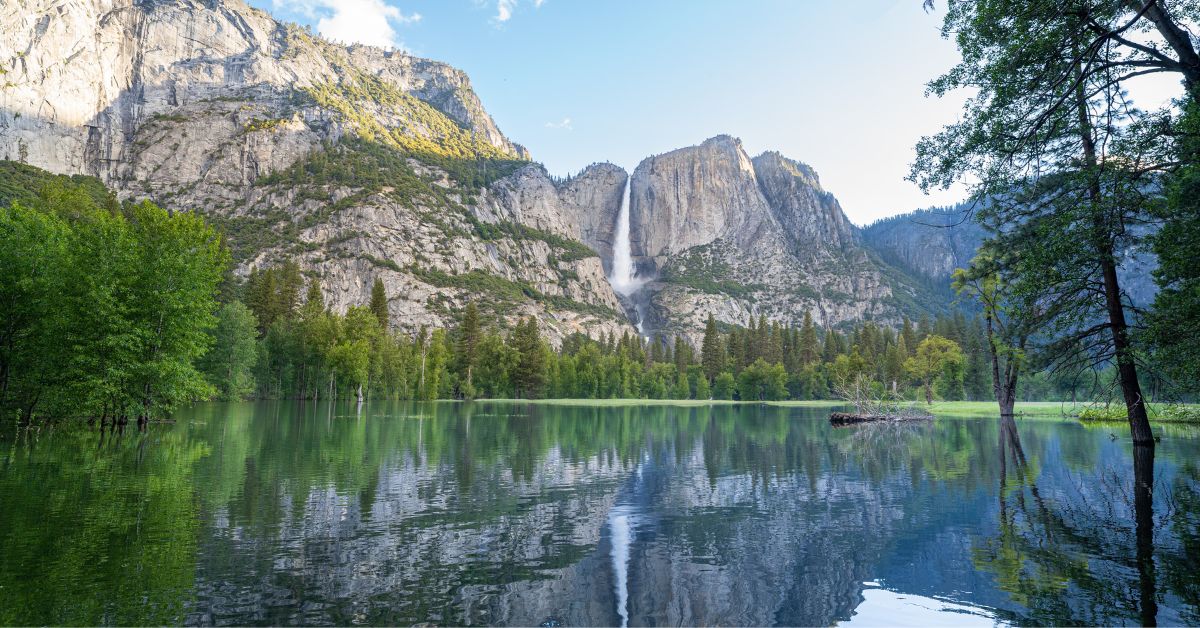
1. Yosemite Falls
Location: Yosemite Valley near Yosemite Village
Waterfall Height: 2,425 feet (740 meters)
Flows: Seasonally from November through July with peak flow in May
Best Spots to See this Waterfall: Swinging Bridge, Cook’s Meadow, Yosemite Village, Yosemite Valley Lodge, Glacier Point, Lower Yosemite Fall Trail
Hiking Trail: Lower Yosemite Fall Trail and Upper Yosemite Fall Trail
Fun Fact: Yosemite Falls is one of the world’s tallest waterfalls in the world!
2. Vernal Fall
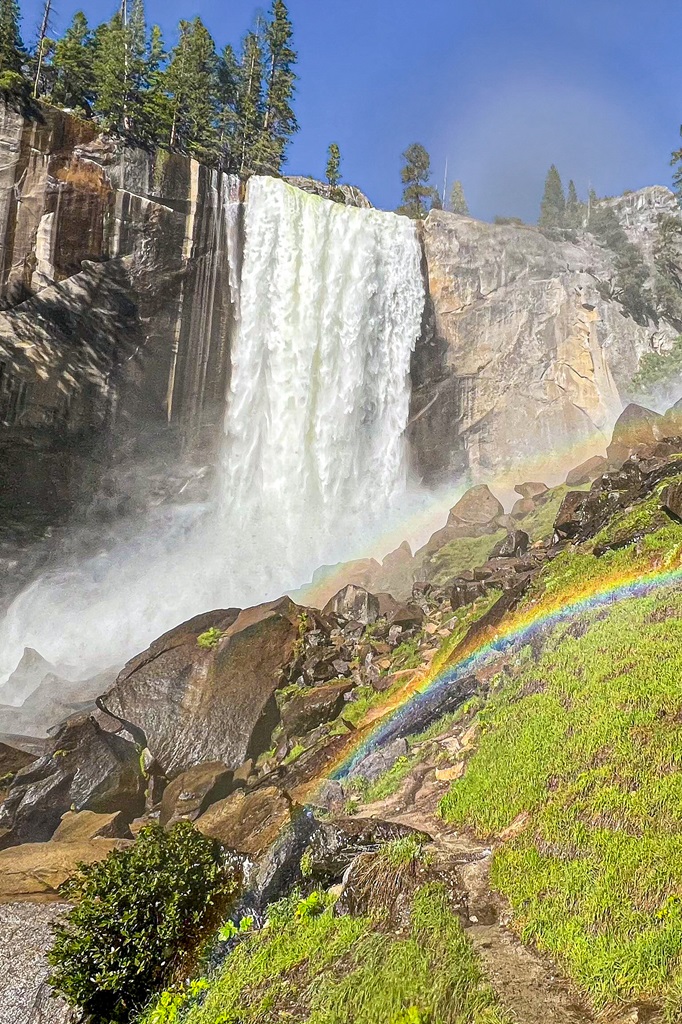
Location: Eastern end of Yosemite Valley
Waterfall Height: 317 feet (97 meters)
Flows: Year-round with peak flow in May
Best Spots to See this Waterfall: Vernal Fall Footbridge, Mist Trail steps, viewpoint near Clark Point, Glacier Point, Panorama Trail
Hiking Trail: Mist Trail (or winter route)
Fun Fact: You will be soaked when hiking along the Mist Trail steps during peak flow. Pack a rain jacket or poncho!
✨ READ THIS: How to Spend One Day in Yosemite National Park
3. Nevada Fall
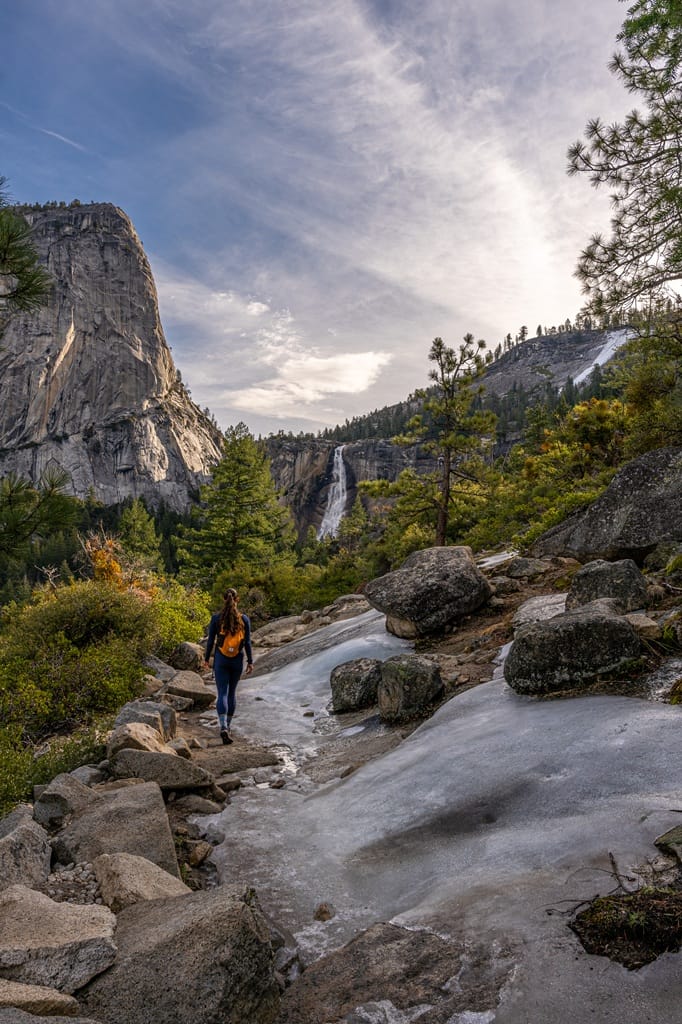
Location: Eastern end of Yosemite Valley
Waterfall Height: 594 feet (180 meters)
Flows: Year-round with peak flow in May
Best Spots to See this Waterfall: Mist Trail (upper portion), John Muir Trail, Clark Point, Glacier Point, Panorama Trail
Hiking Trail: Mist Trail, John Muir Trail, or winter route
Fun Fact: Local Native Americans called this waterfall “Yo-wy-we” which translates to “worm.” But the name Nevada Fall was given by Dr. Lafayette Bunnell because it reminded him of an avalanche and in Spanish, the name “Nevada” comes from the Spanish adjective meaning “snowy.”
4. Bridalveil Fall
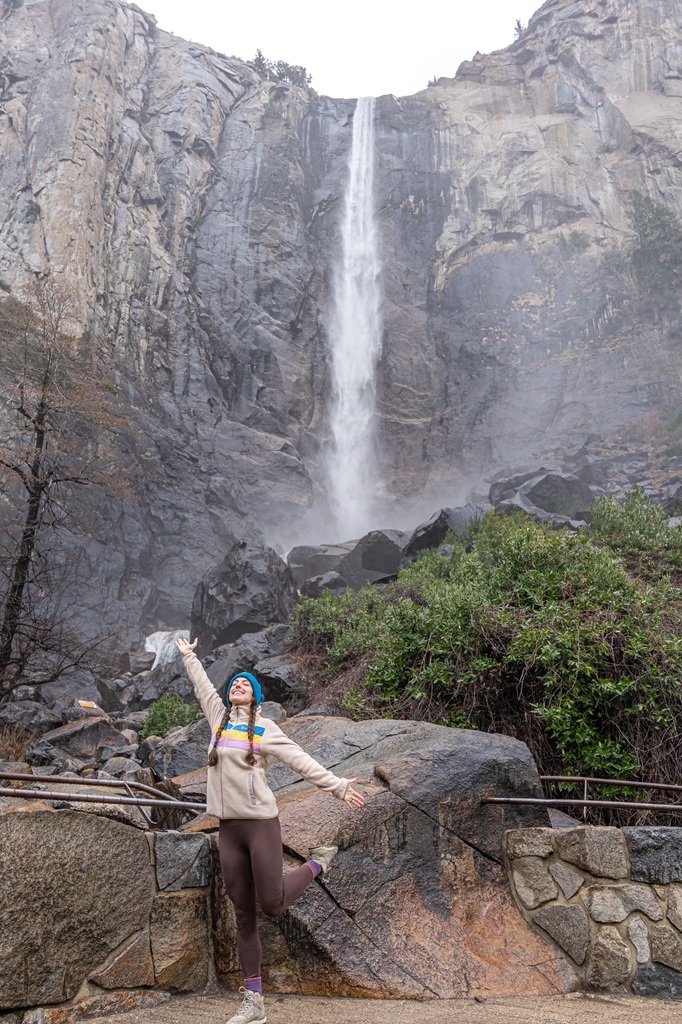
Location: Western end of Yosemite Valley
Waterfall Height: 620 feet (190 meters)
Flows: Year-round with peak flow in May
Best Spots to See this Waterfall: Tunnel View, Valley View, Bridalveil Fall parking lot, Bridalveil Fall viewpoint, Southside Drive, Valley Loop Trail between El Capitan Meadow and Valley View, Big Oak Flat Road
Hiking Trail: Bridalveil Fall Trail
Fun Fact: Bridalveil Fall was originally called Pohono by the Ahwahneechee people, a name meaning “spirit of the puffing wind.”
5. Horsetail Fall Firefall
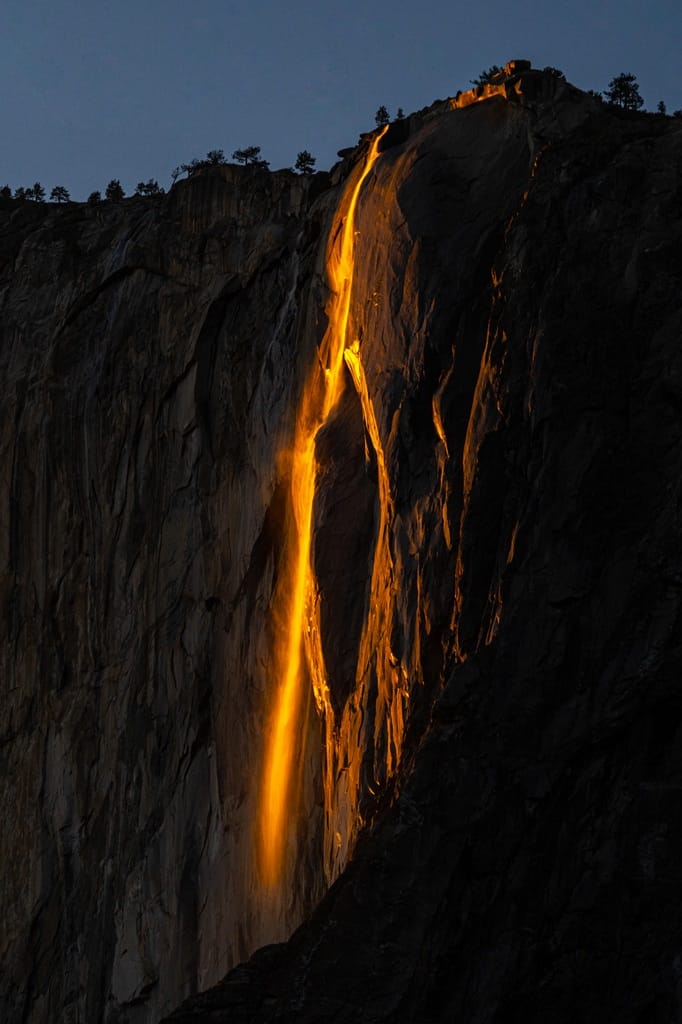
Location: El Capitan in Yosemite Valley
Waterfall Height: 2,130 feet (650 meters)
Flows: Seasonally from December through April with the firefall effect happening in mid to late February
Best Spots to See this Waterfall: El Capitan Picnic Area, roadside pullouts on Northside Drive just east and west of the picnic area
Fun Fact: Yosemite’s original “Firefall” was a man-made show where burning embers were pushed off Glacier Point from 1872 to 1968, while today’s natural Firefall is a rare event when sunlight turns Horsetail Fall a glowing orange.
✨ READ THIS: Ultimate Guide on Places to Stay Near Yosemite
6. Illilouette Fall
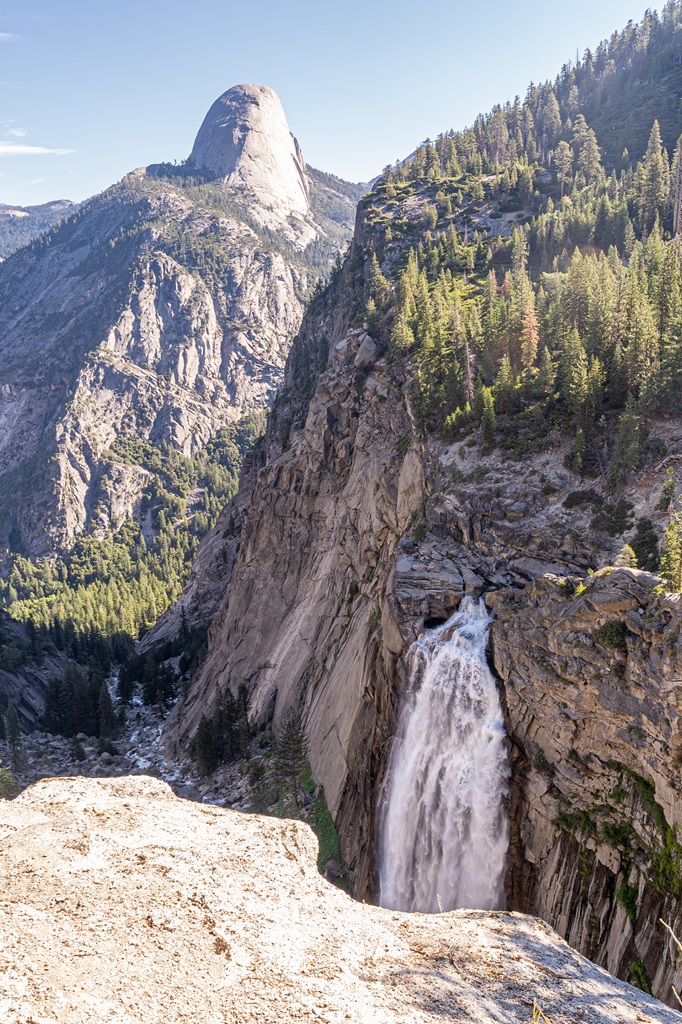
Location: Yosemite Valley near Glacier Point
Waterfall Height: 370 feet (113 meters)
Flows: Year-round with peak flow in May
Best Spots to See this Waterfall: Panorama Trail, Mist Trail
Hiking Trail: Panorama Trail from Glacier Point
Fun Fact: The origin of this waterfall’s name is a bit of a mystery. In the mid-1800s, Yosemite historian James Hutchings noted that while Professor J.D. Whitney called it “Illilouette,” local Indigenous people he spoke with called it as Too-lool-a-we-ack (or Too-lool-we-ack). So how did Whitney get the name Illilouette?
7. Wapama Falls
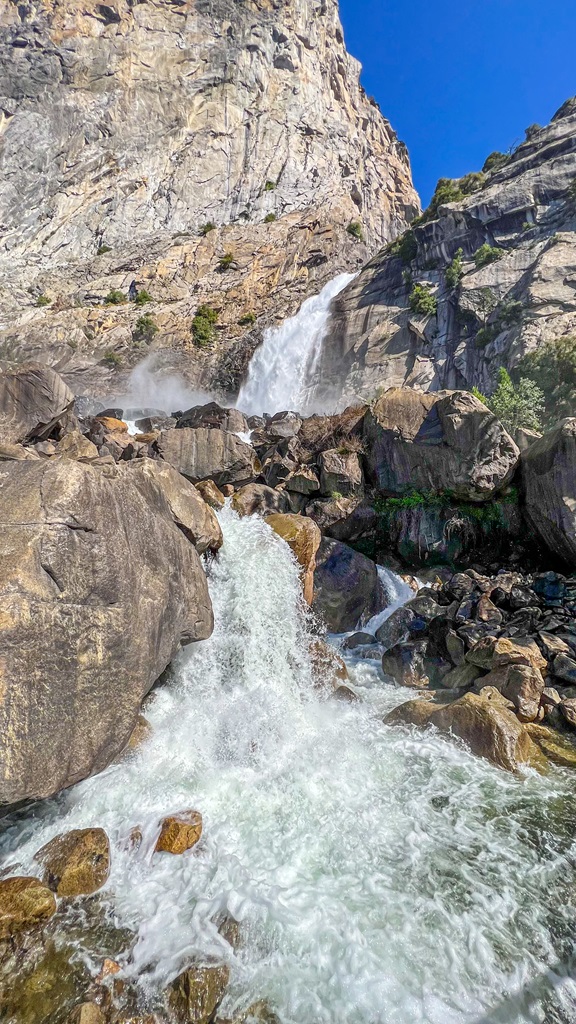
Location: Hetch Hetchy
Waterfall Height: 1,400 feet (427 feet)
Flows: Year-round with peak flow in May
Best Spots to See this Waterfall: O’Shaughnessy Dam, Wapama Falls Trail, Wapama Falls Footbridge
Hiking Trail: Wapama Falls Trail
Fun Fact: The name Hetch Hetchy comes from a Sierra Miwok word for a type of wild grass. Long before Yosemite became a national park, the Central Me-Wuk, Southern Sierra Miwok, and Mono Lake Paiute peoples lived in and cared for this land.
✨ Planning a trip to Hetch Hetchy but not sure where to begin?
Don’t worry – I created a comprehensive guide that provides everything you need to know, including the best time to visit, how to get there, camping and lodging options, and top hiking trails.
Also, I created one-day itineraries tailored to both family-friendly experiences and adventurous explorers!
8. Chilnualna Falls
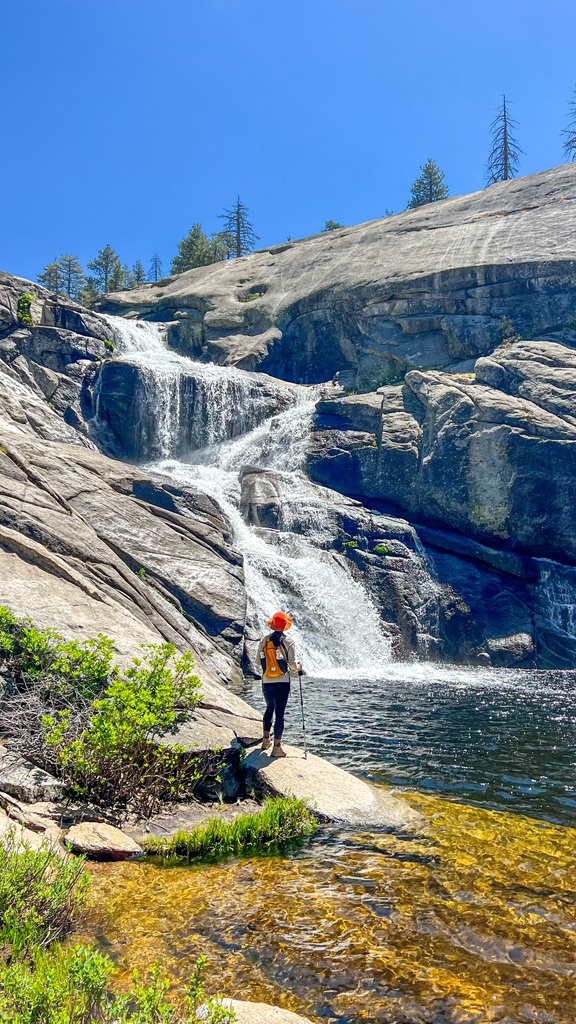
Location: Wawona
Waterfall Height: 2,200 feet (670 meters)
Flows: Year-round with peak flow in May
Best Spots to See this Waterfall: Chilnualna Falls Trail
Hiking Trail: Chilnualna Falls Trail
Fun Fact: Chilnualna Falls, pronounced “Chil-noo-al-na,” is made up of five large cascades flowing over massive granite slabs high above the Wawona Basin.
9. Ribbon Fall
Location: West of El Capitan in Yosemite Valley
Waterfall Height: 1,612 feet (490 meters)
Flows: Seasonally from March through June with peak flow in May
Best Spots to See this Waterfall: Southside Drive just beyond the Bridalveil Fall parking area
Fun Fact: It’s the longest single-drop waterfall in North America!
10. Rancheria Falls
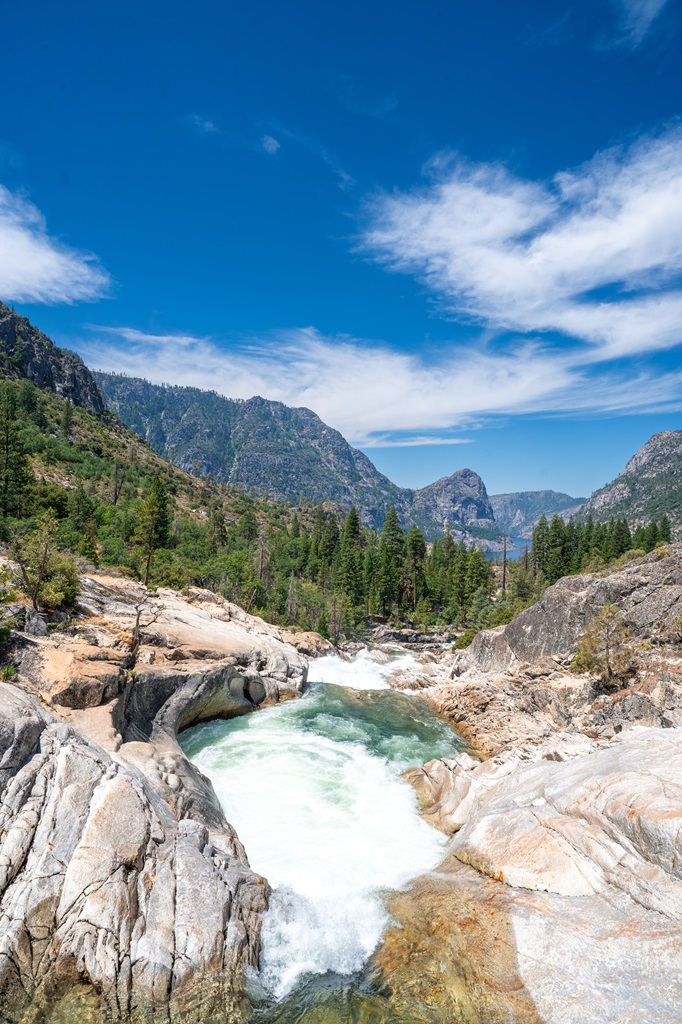
Location: Hetch Hetchy
Waterfall Height: 150 feet (45 meters)
Flows: Year-round with peak flow in May
Best Spots to See this Waterfall: O’Shaughnessy Dam, Rancheria Falls Trail as you get closer to the waterfall
Hiking Trail: Rancheria Falls Trail
Not-so-Fun Fact: Carved by the same glaciers as Yosemite Valley, Hetch Hetchy once looked strikingly similar but it was later dammed to create a reservoir for water supply.
11. Sentinel Falls
Location: Yosemite Valley near Roosevelt Point
Waterfall Height: 2,000 feet (610 meters)
Flows: Seasonally from March to June with peak flow in May
Best Spots to See this Waterfall: Southside Drive near Sentinel Beach Picnic Area, near the Four Mile Trailhead, Leidig Meadow, Upper Yosemite Fall Trail
Fun Fact: It features several cascades, with drops ranging from 50 to 500 feet tall.
12. Glen Aulin Waterfalls
Glen Aulin waterfalls is a group of waterfalls found along the Pacific Crest Trail in the Grand Canyon of the Tuolumne. These include:
- Tuolumne Falls (height is 128 feet or 39 meters)
- White Cascade/Glen Aulin Falls (height is 105 feet or 32 meters)
- California Falls (height is 120 feet or 37 meters)
- LeConte Falls (height is 229 feet or 70 meters)
- Waterwheel Falls (height is 314-355 feet or 95-108 meters)
Location: Grand Canyon of the Tuolumne in Yosemite’s high country
Flows: Year-round with peak flow in May/June
Best Spots to See these Waterfalls: Pacific Crest Trail (starting from the Glen Aulin Trailhead)
✨ READ THIS: Complete Guide to Visiting Tuolumne Meadows and Tioga Pass
13. Royal Arch Cascade
Location: Yosemite Valley near the Ahwahnee Hotel
Waterfall Height: 1,275 feet (389 meters)
Flows: Seasonally from December through June with peak flow in May
Best Spots to See this Waterfall: Ahwahnee Meadow, Stoneman Meadow, Valley Loop Trail near the Ahwahnee Hotel
Fun Fact: The falls were originally known by the Native American name “Sho-ko-ya”, meaning “basket fall,” a reference to the water flowing from behind North Dome, once called Basket Dome or “To-ko-ya.”
14. Foresta Falls
Location: In the town of Foresta within Yosemite National Park
Waterfall Height: 200 feet (60 meters)
Flows: Year-round with peak flow in May
Best Spots to See this Waterfall: Foresta Falls Trail at the bridge
Hiking Trail: Forest Falls Trail (more info and trail map here)
Not-so-Fun Fact: Throughout the 1900s, Foresta was home to about 80 cabins until the A-Rock Fire in 1990, followed by the Big Meadow Fire in 2009, which destroyed more than half of the structures.
15. Silver Strand Falls
Location: Yosemite Valley near Tunnel View
Waterfall Height: 574 feet (175 meters)
Flows: Seasonally from December through June with peak flow in May
Best Spot to See this Waterfall: Tunnel View (if you’re standing at the Tunnel View viewpoint, look above the parking lot across the street)
16. The Cascades (Cascade Falls)
Location: Yosemite National Park off El Portal Road near Arch Rock Entrance
Waterfall Height: 510 feet (155 meters)
Flows: Year-round with peak flow in May
Best Spot to See this Waterfall: The Cascades viewpoint off El Portal Road
Fun Fact: The Cascades is the first major waterfall you’ll see when entering Yosemite Valley through the Arch Rock Entrance.
17. Tueeulala Falls
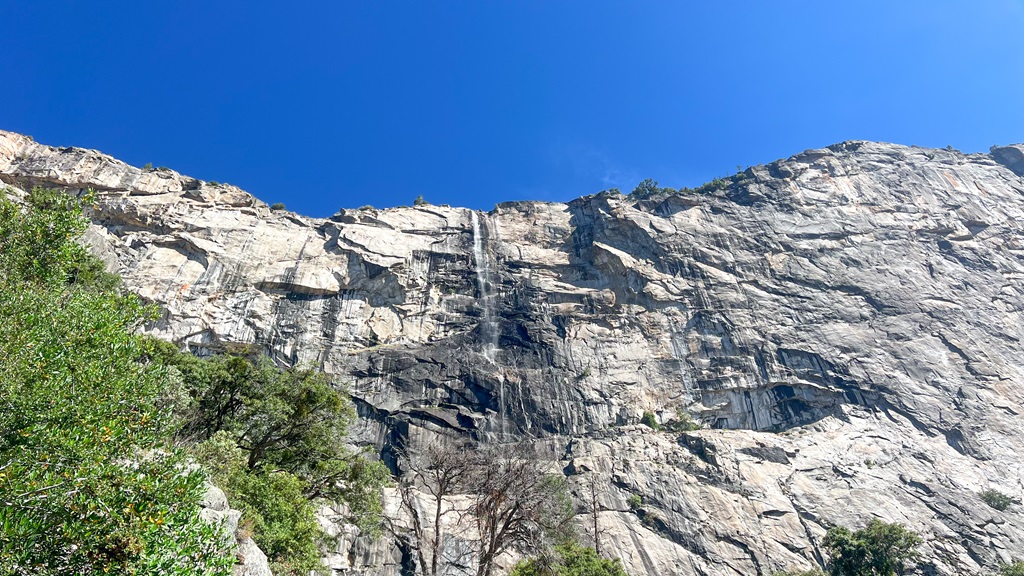
Location: Hetch Hetchy
Waterfall Height: 925 feet (282 meters)
Flows: Seasonally from December to June with peak flow in May
Best Spots to See this Waterfall: O’Shaughnessy Dam, Wapama Falls Trail
Hiking Trail: Wapama Falls Trail
Fun Fact: Tueeulala is a name of Miwok origin, though its exact meaning remains unclear. John Muir wrote about Tueeulala Falls in The Yosemite after visiting in 1871, confirming the name was already in use at that time.
18. Staircase Falls
Location: Yosemite Valley near Curry Village
Waterfall Height: 1,425 feet (434 meters)
Flows: Seasonally, very short-lived waterfall, with peak flow in May
Best Spots to See this Waterfall: Curry Village area, specifically near the Curry Village ice skating rink
Fun Fact: Staircase Falls is one of two named ephemeral waterfalls in Yosemite Valley, alongside Horsetail Fall. The waterfall likely earned its name from its stepped descent over granite ledges.
19. Quaken Aspen Falls (Tioga Pass Falls or Yosemite Creek Falls)
Location: Along Tioga Road near Yosemite Creek Picnic Area
Waterfall Height: 35 feet (11 meters)
Flows: Seasonally from February to June with peak flow in May
Best Spots to See this Waterfall: Off Tioga Road near Yosemite Creek Picnic Area
20. Wildcat Falls
Location: Yosemite National Park off El Portal Road near Arch Rock Entrance
Waterfall Height: 715 feet (218 meters)
Flows: Seasonally from January to June with peak flow in May
Best Spots to See this Waterfall: When driving east into Yosemite Valley (entering the park), the second and third tiers are easy to see from the road, but they’re far less visible when leaving the valley. There is also a parking lot nearby so you can get a closer look.
Fun Fact: This is one of the first waterfalls visitors see when entering Yosemite Valley through the Arch Rock Entrance.
Best Time to Visit Yosemite Waterfalls
📅 Best Time to See Waterfalls in Yosemite: Late spring (May to early June) is the best time to see Yosemite’s waterfalls in full force. This is when the park truly comes alive with rushing water and thunderous cascades!
Peak flow typically happens in May and lasts into early June, when snowmelt from the winter feeds Yosemite’s rivers and waterfalls.
If you can only pick one month, visiting Yosemite in May is my top recommendation. The weather is comfortably warm (but not too hot), crowds are lighter than peak summer, and the waterfalls are absolutely magical.
👉 Stay Updated: Want a real-time look at conditions? Check out the Yosemite Falls webcam to see current flow. This will also give you a good idea as to how the other waterfalls may be flowing.
🍂 Waterfalls in Summer and Fall: By August, many waterfalls will slow to a trickle or dry up completely. Late fall storms can briefly revive a few waterfalls, but flow is usually limited compared to spring.
☃️ Winter Waterfalls: Winter can still be a beautiful time to see waterfalls, especially after a major snowfall followed by warmer temperatures. While winter flows are typically smaller than spring peak runoff, they’re still stunning.
Some waterfalls form ice cones at their base during winter. These grow as spray freezes night after night, sometimes becoming massive by late winter. You may also spot frazil ice, which looks like slushy, floating ice crystals forming in fast-moving water.
One of the coolest winter sights is the ice cone at the base of Upper Yosemite Fall, which can grow hundreds of feet tall by the end of the season!
❄️ Yosemite Winter Guides
- Ultimate Guide to Visiting Yosemite in Winter
- The Only Yosemite Winter Itinerary You Need!
- Where to Stay in Yosemite in Winter: 15+ Best Lodges, Hotels, and Cozy Cabins
- The Ultimate Yosemite Winter Packing List
- 20 Best Yosemite Hikes in Winter (Guide to Snowy Adventures)
- 18 Best Yosemite Winter Activities You Can’t Miss!
- Yosemite Firefall: A Complete First-Timer’s Guide
- Beginner’s Guide to Visiting Mariposa Grove in Winter
Yosemite Waterfall Hikes
I’ve created a list of the best Yosemite waterfall hikes!
These hikes will leave you breathless. Some trails are so steep they’ll literally leave you breathless! 😮💨
I can assure you each hike is worth the effort to see each of these incredible waterfalls. Make sure to visit during peak flow (May to early June) for the best experience!
The hikes range from easy family-friendly type of hikes to challenging kick-your-butt type of hikes.
Vernal Fall via Mist Trail
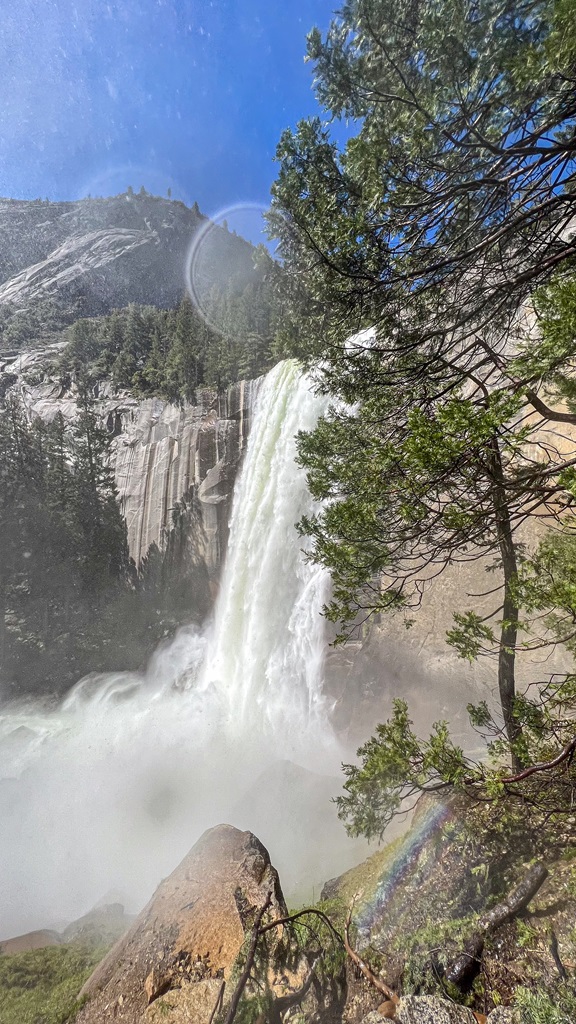
Starting Point: Mist Trail / John Muir Trail Trailhead
Length: 3 miles
Elevation Gain: 1,000 feet
Difficulty: Challenging
Route Type: Out-and-back
Hiking Time: 1.5 to 2 hours
Pet-friendly? No, pets are not allowed
Hike Features: Vernal Fall Footbridge, 600+ granite steps, and Vernal Fall
✨ READ THIS: Vernal Fall via Mist Trail Hiking Guide
Embark on one of Yosemite National Park’s most iconic hikes to Vernal Fall, a stunning 317-foot waterfall that showcases nature’s power and beauty.
The Mist Trail is the best way to experience this adventure, with a 1.5-mile (one-way) hike that leads you to jaw-dropping views at the top.
Along the way, you’ll climb over 600 granite steps, feeling the mist from Vernal Fall. Hiking the Mist Trail in the early summer of 2023 was one of the most memorable experiences I’ve ever had!
🅿️ Parking and Directions: The Mist Trail / John Muir Trail Trailhead is located near Happy Isles (shuttle stop #16). There is no parking available directly at the trailhead.
The closest parking option for the Mist Trail is either at the Yosemite Valley Trailhead Parking (0.5 miles from the trailhead) or Curry Village (1 mile from the trailhead).
If you’re parked farther away, take advantage of Yosemite’s convenient shuttle system to reach shuttle stop #16 at Happy Isles.
From Happy Isles, simply follow the signs across the bridge to the trailhead to being your hike!
✅ Pro Tips:
- Time your visit for late spring or early summer, when Vernal Fall is at its most powerful.
- Arrive early to beat the crowds.
- Bring a rain jacket, as the trail transforms into a natural waterpark, with mist swirling around you – it’s exhilarating!
- Keep an eye out for rainbows at the base of the waterfall.
- Take your time navigating the slick granite steps.
- For those seeking even more adventure, continue beyond Vernal Fall to Nevada Fall, a towering 594-foot waterfall that’s equally mesmerizing.
Nevada Fall via Mist Trail and John Muir Trail
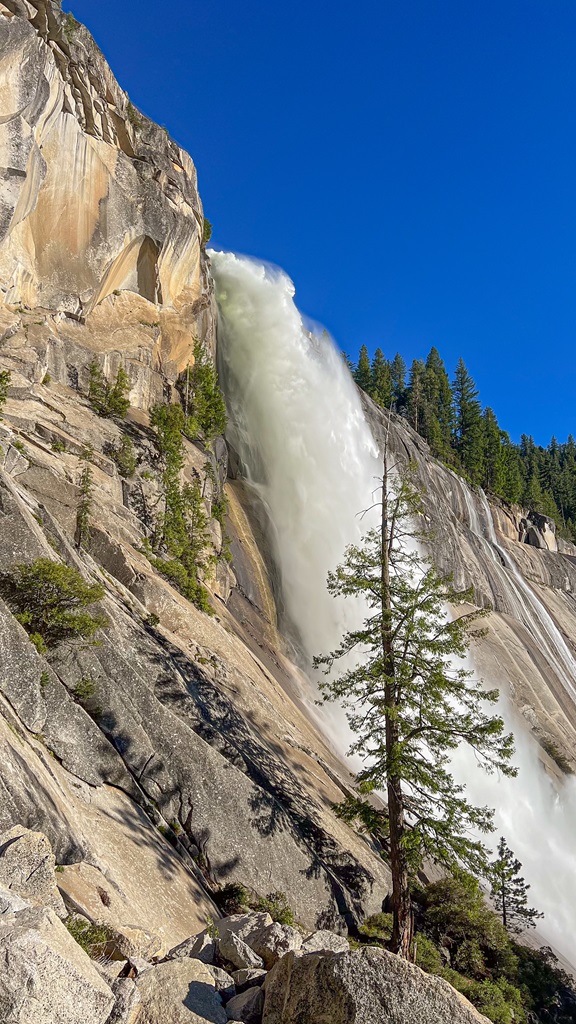
Starting Point: Mist Trail / John Muir Trail Trailhead
Length: 7 miles
Elevation Gain: 2,200 feet
Difficulty: Challenging
Route Type: Loop
Hiking Time: 5 to 6 hours
Pet-friendly? No, pets are not allowed
Hike Features: Vernal Fall Footbridge, 600+ granite steps, Vernal Fall, Nevada Fall, and amazing views at Clark Point
✨ READ THIS: Nevada Fall via Mist Trail and John Muir Trail Hiking Guide
Standing at an impressive 594 feet, Nevada Fall is one of Yosemite National Park’s most breathtaking waterfalls.
From the top of Nevada Fall, you’ll be rewarded with sweeping vistas of the Merced River and Yosemite Valley below, making it a must-see destination for any adventurer.
Most hikers combine Vernal Fall and Nevada Fall into one unforgettable adventure via the Mist Trail and John Muir Trail.
🅿️ Parking and Directions: The Mist Trail / John Muir Trail Trailhead is located near Happy Isles (shuttle stop #16). There is no parking available directly at the trailhead.
The closest parking option for the Mist Trail is either at the Yosemite Valley Trailhead Parking (0.5 miles from the trailhead) or Curry Village (1 mile from the trailhead).
If you’re parked farther away, take advantage of Yosemite’s convenient shuttle system to reach shuttle stop #16 at Happy Isles.
From Happy Isles, simply follow the signs across the bridge to the trailhead to begin your hike!
Upper Yosemite Fall Trail
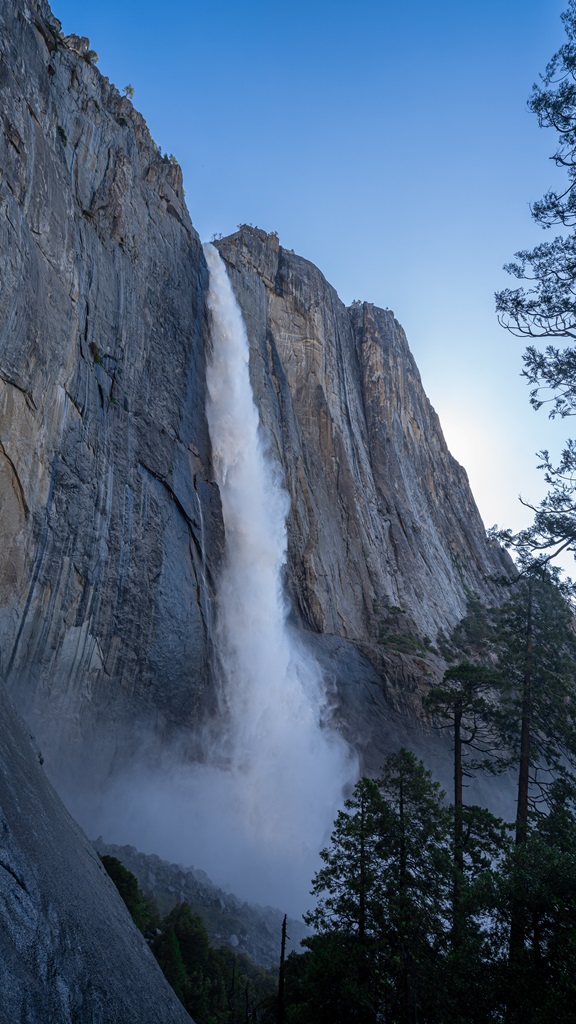
Starting Point: Upper Yosemite Fall Trailhead
Length: 7 miles
Elevation Gain: 3,200 feet
Difficulty: Challenging
Route Type: Out-and-back
Hiking Time: 4.5 to 7 hours
Pet-friendly? No, pets are not allowed
Hike Features: Columbia Rock, close up view of Upper Yosemite Fall, and Yosemite Falls Overlook
✨ READ THIS: Upper Yosemite Fall Hiking Guide
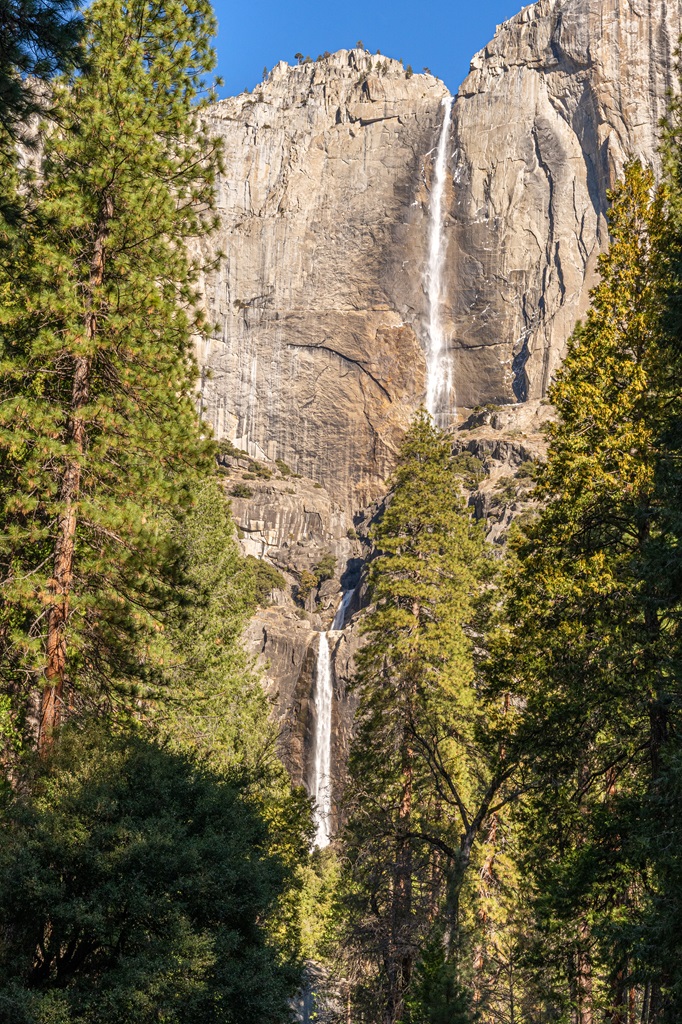
Yosemite Falls, one of the world’s tallest waterfalls, is actually made up of three separate falls: Upper Yosemite Fall (1,430 feet), the middle cascades (675 feet), and Lower Yosemite Fall (320 feet).
Upper Yosemite Fall is a rewarding adventure that offers breathtaking views, a challenging climb, and a memorable connection with the natural beauty of Yosemite.
Reaching the top of one of North America’s tallest waterfalls is an experience worth every step!
🅿️ Parking and Directions: The Upper Yosemite Fall Trailhead is located near Camp 4. Parking near the trailhead can be tricky (see options below).
Thankfully, Yosemite Valley has a free shuttle system. The Upper Yosemite Fall Trailhead is located at bus stop #7.
Upper Yosemite Fall parking options:
- Yosemite Fall parking area is located across the street from the trailhead.
- Yosemite Village parking area is located further away from the trailhead. You can either walk to the trailhead which is almost a 1.5-mile walk or take the free shuttle.
- Camp 4 parking area is designated only for those camping at Camp 4. If you are camping at Camp 4, congrats. You have the best parking spot for the Upper Yosemite Falls Trail!
🎦 Want to see what Yosemite Falls currently looks like? Check out this webcam!
Lower Yosemite Fall Trail
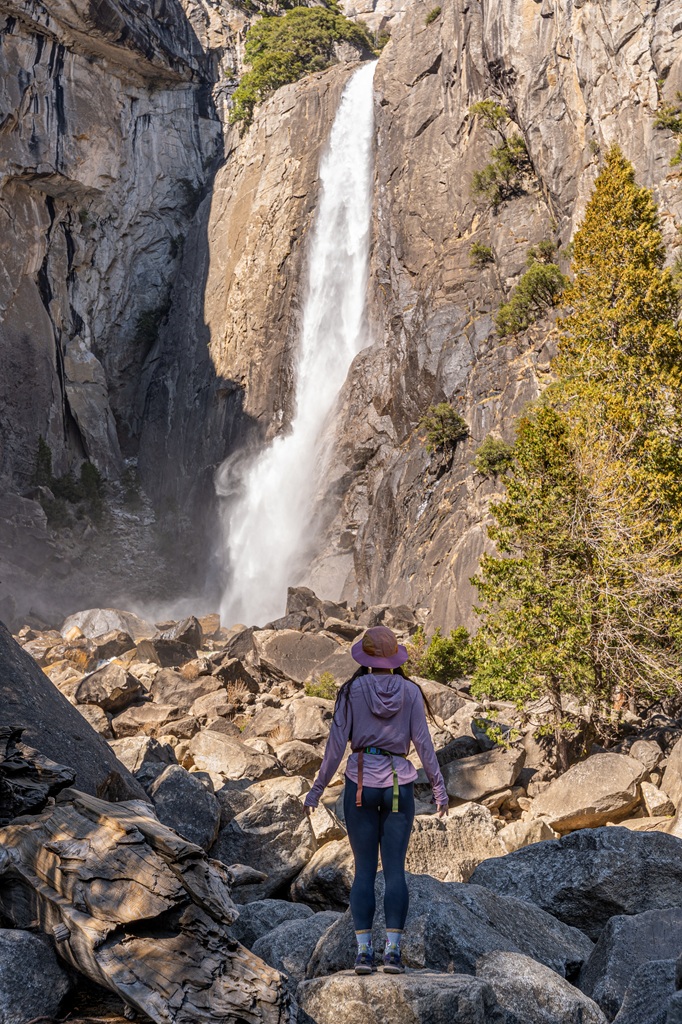
Starting Point: Lower Yosemite Fall Trailhead
Length: 1.2 miles
Elevation Gain: 55 feet
Difficulty: Easy
Route Type: Loop
Hiking Time: 30 to 45 minutes
Pet-friendly? Yes, must be on leash
Hike Features: Viewpoints of Lower Yosemite Fall and the entire Yosemite Falls
Take the easy 1.2-mile loop trail for an up-close view of the stunning Lower Yosemite Fall, which cascades 320 feet in a powerful display of nature’s beauty.
This hike is family friendly, dog-friendly (on leash), and wheelchair accessible (when not covered in snow and only from the east portion).
Perfect for all ages and abilities, this short walk is a great way to experience one of Yosemite’s iconic waterfalls up close!
✨ READ THIS: 10 Must-Do Easy Hikes in Yosemite
🅿️ Parking and Directions: Parking is not available at the trailhead. The Lower Yosemite Fall Trailhead is located off Northside Drive in Yosemite Valley, near shuttle stop #6.
Lower Yosemite Fall parking options:
- Yosemite Fall parking area is located across the street from the trailhead.
- Yosemite Village parking area is located further away from the trailhead. You can either walk to the trailhead which is almost a 0.8-mile walk or take the free shuttle.
- Camp 4 parking area is designated only for those camping at Camp 4.
Wapama Falls
Starting Point: Wapama Falls Trailhead
Length: 5 miles
Elevation Gain: 500 feet
Difficulty: Moderately challenging
Route Type: Out-and-back
Hiking Time: 2.5 to 3.5 hours
Pet-friendly? No, pets are not allowed
Hike Features: O’Shaughnessy Dam, Tueeulala Falls, and Wapama Falls
✨ READ THIS: Wapama Falls Hiking Guide
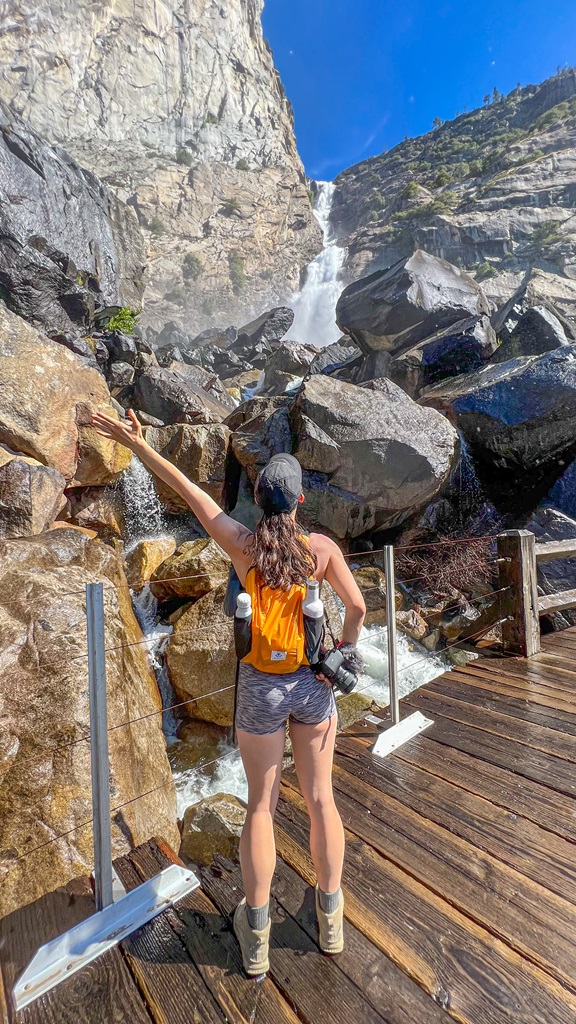
Wapama Falls is a hidden gem tucked away in Yosemite National Park’s less-visited Hetch Hetchy Valley.
This spectacular waterfall plunges 1,400 feet, creating a thunderous roar and a refreshing mist that’s especially nice on a warm day.
The adventure begins at the O’Shaughnessy Dam, where you can catch your first glimpse of the falls from the parking area.
For a closer view, embark on a moderately challenging 5-mile roundtrip hike that takes you along the edge of the stunning Hetch Hetchy Reservoir.
🅿️ Parking and Directions: The Wapama Falls Trailhead is located at the O’Shaughnessy Dam in Hetch Hetchy. A big parking lot is located next to the Dam at the end of Hetch Hetchy Road.
The Hetch Hetchy Road (also known as Evergreen Road) begins outside the park off Highway 120, near the Big Oak Flat Entrance Station.
- Due to the winding nature of Hetch Hetchy Road, vehicles and trailers longer than 25 feet or wider than 8 feet are not permitted.
- There is no public transportation to Hetch Hetchy.
- Hetch Hetchy is only accessible by car during daylight hours, from sunrise to sunset.
Hours of operation can vary by season, and the road may be closed during winter months due to hazardous conditions – check the current conditions before you go.
Chilnualna Falls Trail
Starting Point: Chilnualna Falls Trailhead
Length: 8.2 miles
Elevation Gain: 2,400 feet
Difficulty: Challenging
Route Type: Out-and-back
Hiking Time: 4 to 6 hours
Pet-friendly? No, pets are not allowed
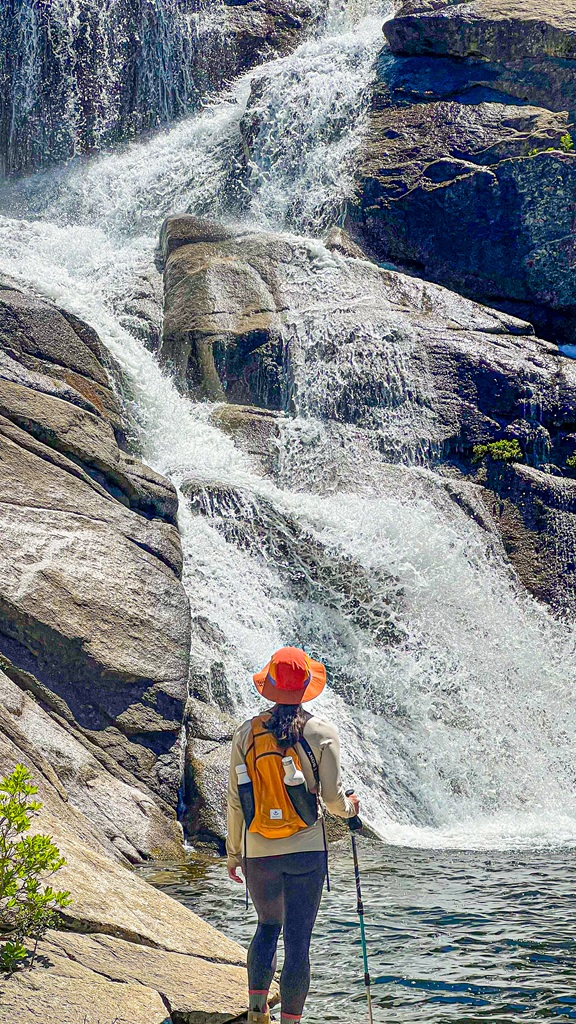
Hike Features: Chilnualna Falls (five cascades) and incredible views along the trail
✨ READ THIS: Chilnualna Falls Hiking Guide
Hiking to Chilnualna Falls should be on everyone’s Yosemite National Park itinerary!
Between the stunning waterfall with its five cascades and the amazing views along the trail, this 8-mile hike has a little bit of everything.
If you enjoy challenging waterfall hikes with fewer people, Chilnualna Falls is the perfect hike for you!
🅿️ Parking and Directions: The Chilnualna Falls Trailhead is located within Wawona towards the end of Chilnualna Falls Road. The trailhead parking area is on the right side off Chilnualna Falls Road.
There will be a sign so you don’t accidentally pass it (like we did lol).
The parking lot is fairly small, so even though this hike is not as popular as others, I would still try to get there early to secure a parking spot.
There are bathrooms at the trailhead parking area along with a trail map and more information about the hike.
Bridalveil Fall Trail
Starting Point: Bridalveil Fall Trailhead
Length: 0.5 miles
Elevation Gain: 80 feet
Difficulty: Easy
Route Type: Out-and-back
Hiking Time: 20 to 30 minutes
Pet-friendly? Yes, must be on leash
Hike Features: Bridalveil Fall Viewpoint
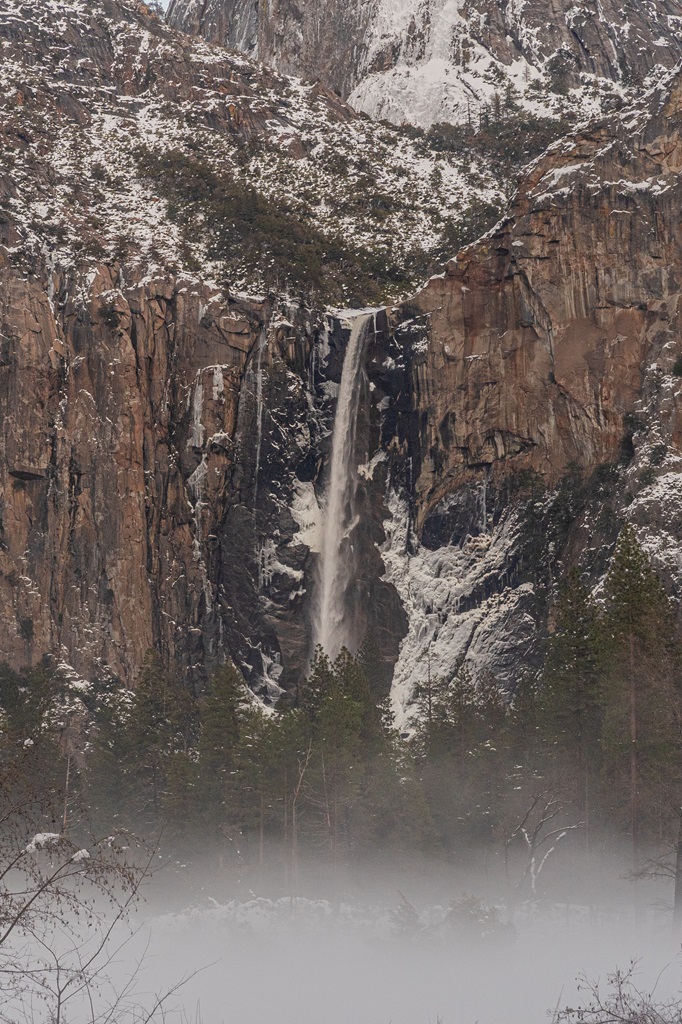
Bridalveil Fall is often the first waterfall to greet visitors upon entering Yosemite Valley, and it never fails to make an impression.
In spring, its powerful cascade roars with intensity, while the rest of the year reveals its delicate, swaying flow.
This easy 0.5-mile out-and-back trail takes just 20 minutes to complete and is paved, making it accessible for most visitors.
Along the way, you’ll be treated to stunning views, culminating in a close-up of the breathtaking 620-foot waterfall.
🅿️ Parking and Directions: The trailhead is located at the Bridalveil Fall Parking Area in Yosemite Valley.
During the busy summer months, the lot fills quickly, and traffic jams can make entering and exiting a challenge. For a less stressful option, consider driving a bit further east on Southside Drive, where roadside parking is available.
From here, a slightly longer trail (1 mile roundtrip) leads to the falls, offering unique and picturesque views as you approach the main area.
Illilouette Fall via Panorama Trail
Starting Point: Illilouette Fall Trailhead
Length: 5 miles
Elevation Gain: 1,400 feet
Difficulty: Challenging
Route Type: Out-and-back
Hiking Time: 2.5 to 4 hours
Pet-friendly? No, pets are not allowed
Hike Features: Beautiful views of Yosemite Valley and a closer look at Illilouette Fall
✨ READ THIS: Panorama Trail Hiking Guide
Illilouette Fall is a 370-foot cascade that can only be reached by hiking a steep, scenic trail known as the Panorama Trail.
This less-traveled trail is one of Yosemite’s most breathtaking routes, offering stunning vistas of Illilouette Fall, Yosemite Valley, Nevada Fall, Vernal Fall, and the iconic Half Dome.
🅿️ Parking and Directions: The trailhead is located at Glacier Point. You’ll find a spacious lot with nearly 200 parking spots.
While this lot fills up quickly, especially during peak season, spots tend to open up frequently, so a little patience often pays off.
At the trailhead, you’ll find convenient amenities, including restrooms and food storage lockers.
⚠️ The Glacier Point Road is open to cars approximately late May through October or November, depending on conditions. Check for updates on road closures HERE.
Rancheria Falls
Starting Point: Rancheria Falls Trailhead
Length: 13 miles
Elevation Gain: 2,600 feet
Difficulty: Challenging
Route Type: Out-and-back
Hiking Time: 6.5 to 7.5 hours
Pet-friendly? No, pets are not allowed
Hike Features: O’Shaughnessy Dam, Tueeulala Falls, Wapama Falls, and Rancheria Falls
Rancheria Falls is a beautiful and lesser-known waterfall located in Yosemite’s backcountry within Hetch Hetchy Valley.
The hike to the falls is a rewarding 13-mile round-trip journey, starting at the O’Shaughnessy Dam.
This hike provides a perfect escape from the crowds and is ideal for those looking to explore Yosemite’s quieter, more tranquil spots.
🅿️ Parking and Directions: The Rancheria Falls Trailhead is located at the O’Shaughnessy Dam in Hetch Hetchy. A big parking lot is located next to the O’Shaughnessy Dam at the end of Hetch Hetchy Road.
The Hetch Hetchy Road (also known as Evergreen Road) begins outside the park off Highway 120, near the Big Oak Flat Entrance Station.
- Due to the winding nature of Hetch Hetchy Road, vehicles and trailers longer than 25 feet or wider than 8 feet are not permitted.
- There is no public transportation to Hetch Hetchy.
- Hetch Hetchy is only accessible by car during daylight hours, from sunrise to sunset.
Hours of operation can vary by season, and the road may be closed during winter months due to hazardous conditions.
List of Yosemite Waterfalls (by region)
Yosemite Valley Waterfalls
- Yosemite Falls
- Lower Yosemite Fall
- Upper Yosemite Fall
- Vernal Fall
- Nevada Fall
- Bridalveil Fall
- Sentinel Falls
- Ribbon Fall
- Horsetail Fall
- Royal Arch Cascade
- Silver Strand Falls
- Snow Creek Falls
- Staircase Falls
The closest entrances to Yosemite Valley are Arch Rock Entrance (25-minute drive), Big Oak Flat Entrance (45-minute drive), and South Entrance (1-hour drive).
Glacier Point Waterfalls
- Illilouette Fall
- Sentinel Falls
The closest entrances to Glacier Point are Arch Rock Entrance and South Entrance (both are a 1 hour and 30-minute drive).
The Glacier Point Road is open to cars approximately late May through October or November, depending on conditions. Check for updates on road closures HERE.
Wawona Waterfalls
- Chilnualna Falls
The closest entrances to Wawona are South Entrance (10-minute drive), Arch Rock Entrance (50-minute drive), and Big Oak Flat Entrance (1 hour and 15-minute drive).
Hetch Hetchy Waterfalls
- Wapama Falls
- Tueeulala Falls
- Rancheria Falls
The closest entrances to Hetch Hetchy are Hetch Hetchy Entrance (15-minute drive), Big Oak Flat Entrance (40-minute drive), and Arch Rock Entrance (1 hour and 15-minute drive).
Tuolumne Meadows / Tioga Pass Waterfalls
- Tuolumne Falls
- White Cascade
- California Falls
- LeConte Falls
- Waterwheel Falls
The closest entrances to Tuolumne Meadows are Tioga Pass Entrance (15-minute drive), Big Oak Flat Entrance (1 hour and 15-minute drive), and Arch Rock Entrance (1 hour and 30-minute drive).
Tioga Road closes from November through late May or early June (depending on conditions). Check for updates HERE.
✨ READ THIS: Best Hikes in Tuolumne Meadows and Tioga Pass
Yosemite Waterfalls Map
FAQs: Best Yosemite Waterfalls
-
How many waterfalls are in Yosemite?
How many waterfalls you’ll see in Yosemite really depends on the season and when you visit.
Most of the park’s largest waterfalls flow from late fall through July, peaking in late spring as snowmelt fuels powerful cascades. By late summer, some falls may slow to a trickle or dry up entirely.
Fall storms can briefly revive waterfalls, and over the winter, snow slowly accumulates and melts, restoring flow by spring.
-
What are famous waterfalls in Yosemite?
Yosemite’s most famous waterfalls, like Yosemite Falls, Bridalveil Fall, and Vernal Fall, are all found within Yosemite Valley.
-
Are Yosemite waterfalls still flowing?
Some waterfalls will be flowing year-round while others flow seasonally during certain months, such as winter through spring and sometimes into early summer.
-
What is the biggest waterfall in Yosemite?
Yosemite Falls with a height of 2,425 feet (740 meters).
Tips for Seeing Waterfalls in Yosemite
1. Yosemite Entrance Fee and Reservations:
Entrance to Yosemite National Park costs $35 per vehicle for a 3-day pass. However, if you have the America the Beautiful Annual Pass, your entry is free!
For those who love exploring national parks, investing in the Annual Pass is a smart choice. At just $80, for U.S. residents, it grants you access to over 2,000 federal recreation sites across the country!
FEE UPDATES! Beginning January 1, 2026, non-U.S. residents (without an annual pass) will pay a $100 per person in addition to the standard entrance fee. The Annual Pass for non-US. residents will cost $250.
Reservations are not required at this time (updated January 12, 2026).
2. Visit in Peak Season: Late spring and early summer (May–June) is the best time to see waterfalls at their fullest. Snowmelt from winter fills the rivers and creeks, creating breathtaking cascades. By late summer, some falls may slow to a trickle or dry up completely.
3. Be Physically Prepared: Some of the hikes mentioned above can be quite challenging. It’s a good idea to train for the harder hikes by strength training and completing cardio exercises for endurance.
4. Pack a Rain Jacket: If you’re visiting during peak flow, don’t forget to pack a rain jacket or poncho! Some waterfalls may spray mist on you. The iconic Mist Trail can leave you soaked when Vernal Fall is flowing at its fullest!
5. Check Current Conditions: Water flow varies depending on snowmelt and recent storms. Check the Yosemite Falls webcam or current park conditions before your visit to see what’s flowing.
6. Waterfall Safety:
- Avoid climbing rocks near the waterfall as they can be slippery and cause you to fall.
- If swimming near the base of a waterfall, stay aware of strong currents and avoid getting too close to the cascade itself.
- Research if you’re allowed to swim in any swimming holes at the base of waterfalls.
- Never swim upstream near the edge of a waterfall, as the flow can unexpectedly pull you toward the drop.
- Always assess water depth before jumping in and be mindful of submerged rocks or debris.
- After heavy rain, water levels can rise rapidly, increasing the risk of strong currents – choose calmer conditions for a safer experience.
7. Be Bear Aware: Black bears are active within Yosemite. Follow these guidelines to avoid any negative interactions with a black bear.
🐻 Note: bear spray is prohibited in Yosemite!
8. Respect Nature: Follow Leave No Trace principles – plan ahead, pack out all trash, avoid disturbing wildlife, be considerate of others, and respect the natural beauty of Yosemite National Park.
Yosemite Waterfalls Packing List
🎟️ Entrance Pass – You will need to purchase an entrance pass once you reach the entrance station or you can buy the America the Beautiful Pass ahead of time and use that for the entire year.
📆 Reservation – Depending on when you plan to visit Yosemite, you may need a reservation.
👚 Layers of Clothing (top) – Pack a moisture-wicking base layer, a fleece mid-layer, an insulated jacket, and an outer shell to protect you from the elements, such as rain and wind. You may not need all these layers, especially in the summer months, but it’s always best to be over-prepared!
Check out my favorite tops 👇
- Base layer: REI Co-op Sahara Shade Hoodie (warm/mild conditions) and REI Co-op Midweight Long-Sleeve Base Layer (cooler conditions)
- Fleece mid layer: Cotopaxi Teca Fleece Full-Zip Jacket
- Down mid layer: Cotopaxi Fuego Hooded Down Jacket
- Outer shell: In the summer I always pack a light windbreaker, such as the Cotopaxi Teca Crop Windbreaker or the RevolutionRace Unit Light Windbreaker. Make sure to also pack a waterproof rain jacket – I like the Patagonia Torrentshell 3L Jacket.
🩳 Hiking Shorts or Pants – Pack a comfortable, durable, and stretchy pair of hiking shorts or pants. Also think about what conditions you might run into, such as warm or cold temperatures, wind and/or rain, bugs, and overgrown trails.
Check out my favorite hiking bottoms 👇
- Cotopaxi Losdos Zip-Off Pants
- RevolutionRace Breezy Ankle Outdoor Pants
- Baleaf Fleece-Lined Jogger Pants
- RevolutionRace Summit Pocket Tights
- Revolution Race Hike & Dive Shorts
🥾 Hiking Footwear – Bring a good pair of hiking boots or shoes with good traction. If I’m not expecting to hike in too much mud or snow, my go-to hiking shoes are the Altra Lone Peak trail runners. They have a wide-toe box, 0 mm heel-to-toe drop, and MaxTrac rubber outsole. Plus, they’re lightweight and so comfy!
🧦 Socks – Moisture-wicking, quick-drying socks are the way to go. My favorite pair of hiking socks are Darn Tough Hiker Micro Crew Cushion Socks. Always pack an extra pair!
🎒 Day Pack – What you plan to do (sightseeing, hiking, etc.), determines what size pack you’ll need. Here is what I typically bring based on what I’m doing that day 👇
- Short walks and sightseeing: Cotopaxi Kapai 1.5L Del Dia Hip Pack
- Short, easy to moderate day hikes: REI Co-op Flash 22L Pack
- Long, moderate to challenging day hikes: REI Co-op Trail 25L Pack or Cotopaxi Luzon Del Dia 24L Pack
🥢 Trekking Poles – Essential for stability, balance, and support when hiking trails, especially on tough, rocky, and uneven terrain. I use REI Co-op Trailmade Trekking Poles and love them!
❄️ Microspikes – Bring a pair of microspikes if you’re visiting in the winter and you’re planning to hike along icy trails. They will give you good traction to avoid slipping! I use Black Diamond Access Spike Traction Device.
🦟 Mosquito/Bug Repellants – In the warmer months, be prepared for annoying gnats, mosquitoes, and flies. Wear long-sleeve clothing, a head net, and use bug spray.
🧤 Extra Warm Layers – If you expect cooler conditions or hiking to higher elevations, make sure to pack extra layers for added warmth, such as gloves, beanie, neck gaiter, and a light jacket.
🗺️ Navigation – Carry a physical topographic map, compass, a satellite messenger (or personal locator beacon), and download offline maps to help you stay on course, find your way in unfamiliar terrain, and call for help if needed.
🔦 Headlamp/Flashlight – A reliable light source with extra batteries, in case you end up hiking in the dark or need it for emergency situations.
💧 Water – Water bottles to carry sufficient water to stay hydrated, along with a filtration system or purification tablets if you plan to refill from natural sources.
🍕 Food – Energy-rich snacks or meals to keep your energy levels up during the hike.
😎 Sun Protection – Sunscreen, sunglasses, and a sunhat to protect yourself from harmful UV rays, even when it’s cloudy. Also, polarized sunglasses are important when it’s bright outside and to reduce glare from reflective surfaces like water, snow, and roads.
🩹 First-Aid Kit – A basic first-aid kit with items like bandages, antiseptic, pain relievers, and any personal medications you may need.
🥶 Emergency Shelter – Pack an emergency bivy sack or space blanket for shelter in case of sudden weather changes.
🔥 Fire – A lighter, matches, or fire starter to help you build a fire for warmth or signaling in case of emergency. Along with matches, I also carry a multi-tool carabiner that has a fire starter, utility blade, screwdriver, and bottle opener.
🗡️ Multi-Tool and Repair Kit – A versatile tool/knife and repair kit to handle any task, from preparing food to making repairs.
Conclusion
Yosemite National Park is a waterfall lover’s paradise, and these 20 waterfalls are just the beginning of what makes the park so breathtaking. 💙
The best time to catch them at their peak is late spring and early summer. Winter also offers a unique time to see the waterfalls from snow cones to frazil ice.
Plan your hikes, check conditions, and don’t forget your camera! These waterfalls are memories you’ll want to relive again and again.
If this guide inspires you to see the best Yosemite waterfalls, I’d love to hear about your adventure. Leave a comment and share your experience!
🤩 Yosemite Trip Planning Resources
- 1-Day Yosemite Itinerary for First-Time Visitors
- Where to Stay Outside of Yosemite (best places in 2026)
- 13 Best Hikes in Yosemite Valley You Can’t Miss!
- Best Spots to Find Giant Sequoia Trees in Yosemite
- 10 Must-Do Easy Hikes in Yosemite for All Skill Levels
- Hetch Hetchy Hikes: Explore This Hidden Gem
- Best Yosemite Waterfall Hikes: Complete Guide
- Ultimate Guide to Visiting Yosemite in May
- Is Tioga Pass Open? Plan an Epic Trip with This Guide
- 12 Best Tioga Pass Hikes for Adventure Lovers
Enjoyed this post? Pin for later!