If you only have one day to explore Yosemite National Park for the first time, Yosemite Valley and Glacier Point are the best places to experience iconic views and short, scenic hikes!
This one-day itinerary will guide you through the must-see sights and best trails to make the most of your visit. ✨
However, logistics will vary just slightly depending on when you go. Visiting in winter is a bit different from summer, and certain hikes are best during specific seasons.
Our first time visiting Yosemite was in January 2023. Since then, we have visited Yosemite many, many times.
We can’t get enough! 😍
If you’re planning your first trip, you’re in the right place. This guide has everything you need for an unforgettable one day in Yosemite.
Not much of a hiker? No worries! Many of the scenic spots in this itinerary are easily accessible by car (or shuttle).
The hikes I do recommend are short and absolutely worth the effort. 🙌
And if you have more than a day, I’ve included extra ideas so you can explore even more of Yosemite.
The spots I mention are my top recommendations, but feel free to pick and choose what interests you most.
Are you ready to plan the best one-day trip to Yosemite? 🙂↕️
I’m going to assume you said yes, so with that being said, let’s get into it!
Affiliate Disclaimer: Some links on this page may be affiliate links, meaning I may earn a small commission at no extra cost to you. As an Amazon Associate, I earn from qualifying purchases. Thanks for supporting the blog! 🫶
One Day in Yosemite Itinerary
This guide is designed for a day trip in the summer when daylight lasts the longest, but it can be adapted for any season. ☀️🌷❄️🍂
Just keep in mind that days are shorter in fall, winter, and spring as compared to summer, so you may need to adjust your plans accordingly.
This itinerary is packed with must-see spots for a full day in Yosemite but don’t worry if you can’t fit everything in.
Prioritize what interests you most, whether that’s hiking multiple trails or sticking to easily accessible scenic viewpoints.
No matter your preference, this guide has something for everyone! 👇
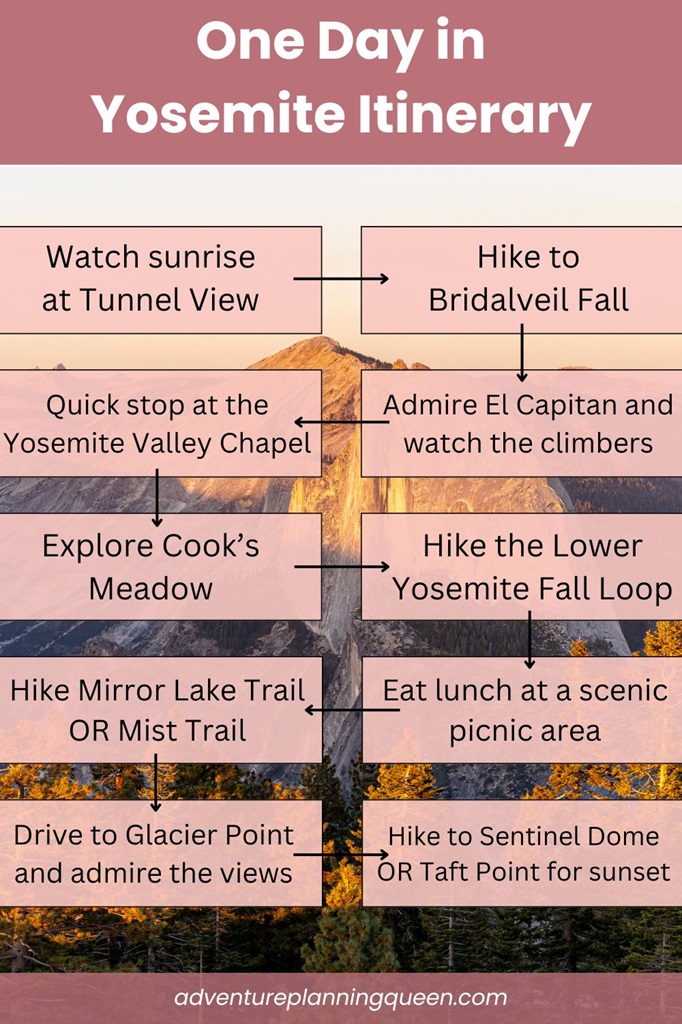
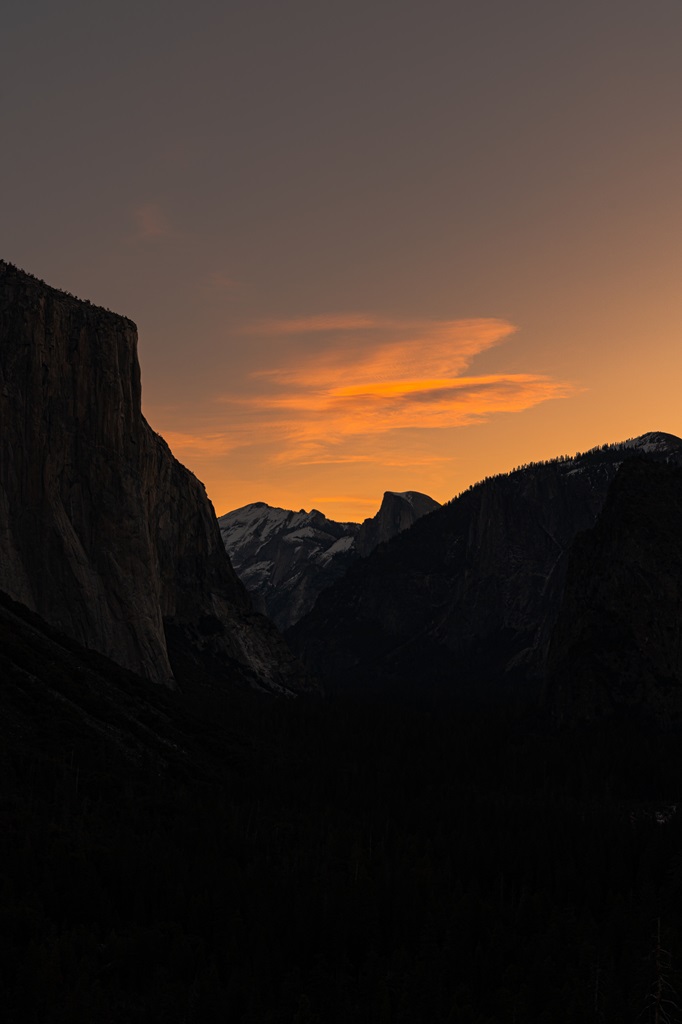
Sunrise at Tunnel View
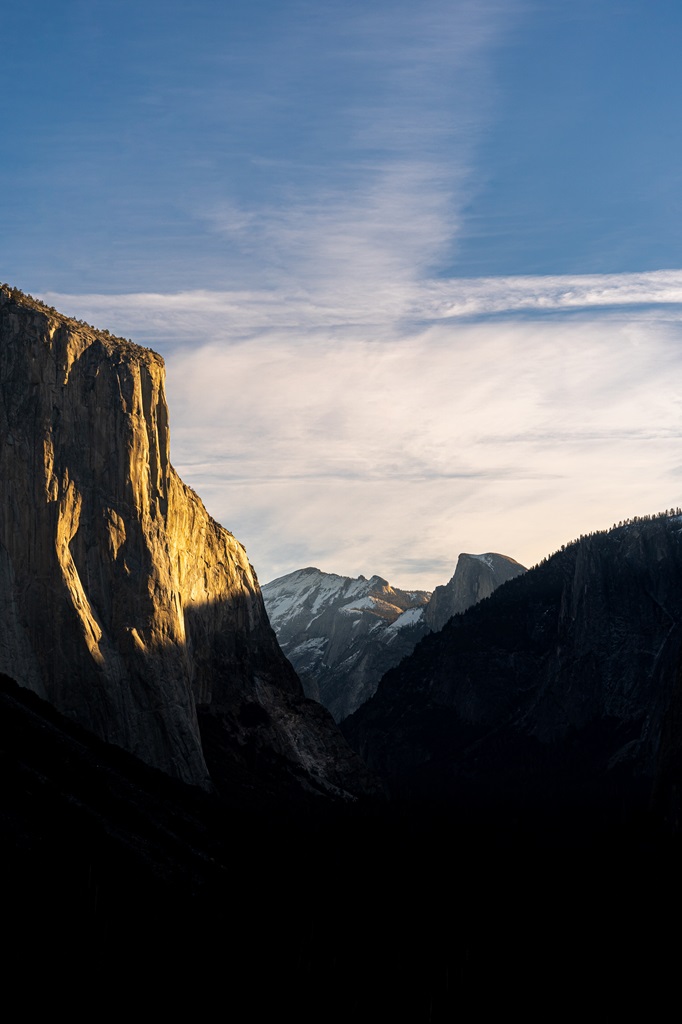
The best way to kick off your first visit to Yosemite National Park is by driving through Wawona Tunnel, where you’ll be greeted with the park’s most iconic view – Tunnel View.
This vantage point offers one of the best views of Yosemite Valley and showcases El Capitan, Half Dome, Sentinel Rock, Cathedral Rocks, and Bridalveil Fall.
To experience this unforgettable moment, enter the park through the South Entrance via Highway 41. But if you’re coming from a different direction, don’t worry, you can still access Tunnel View easily.
If you came from a different entrance and want that dramatic, jaw-dropping reveal, simply drive through the tunnel, turn around, and go back through it.
It’s important to beat the crowds and get to Yosemite as early as possible, so that’s why watching sunrise from Tunnel View is first on the list.
It’s also one of the best spots to watch the sunrise!
Just be sure to check the sunrise time before you go. During summer, it ranges from 5:30 AM to 7:00 AM, depending on the month.
🚗 Tip: Southside Drive and Northside Drive in Yosemite Valley are one-way roads, so if you miss something you will have to drive all the way around to return back to that spot.
Short Hike to Bridalveil Fall
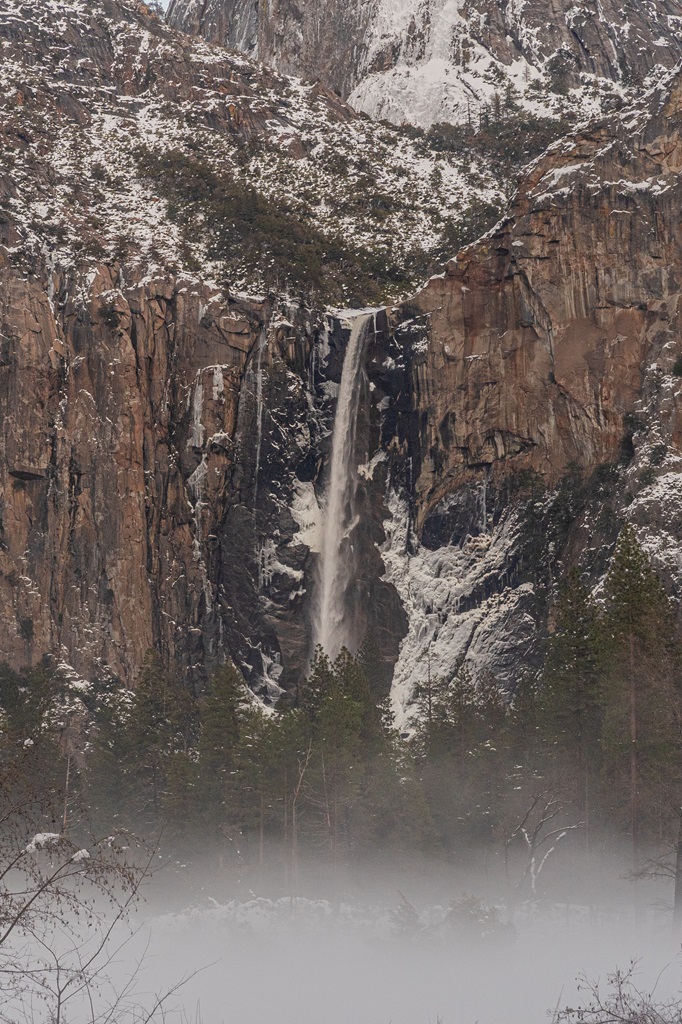
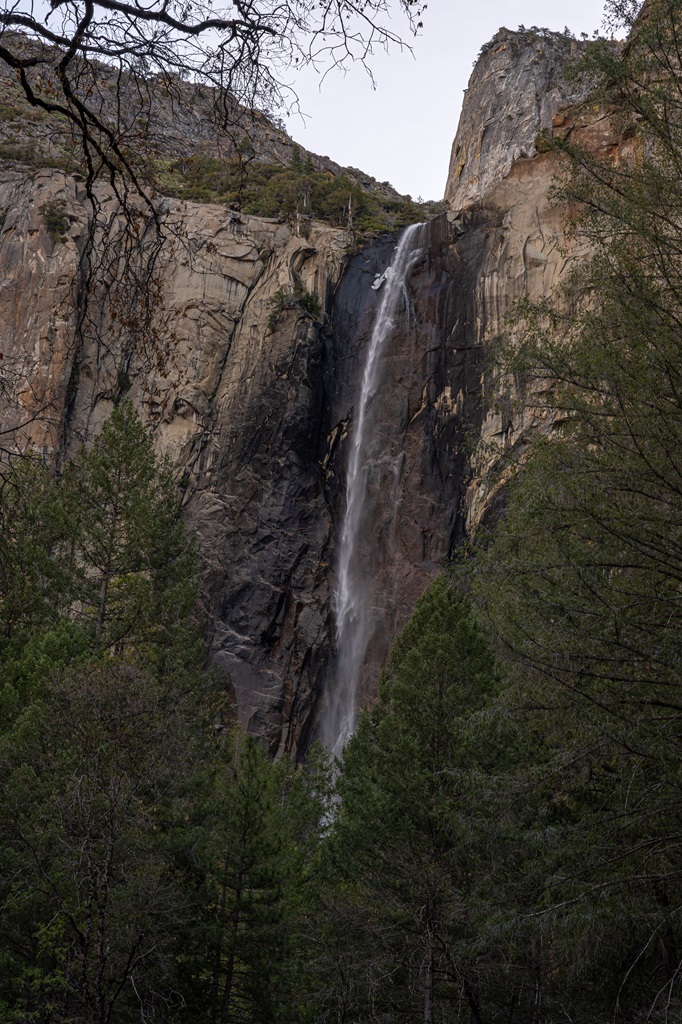
Bridalveil Fall is one of Yosemite’s most famous waterfalls and can be spotted from multiple viewpoints throughout the park, including Tunnel View and Valley View.
There are two starting points for a short hike to the base of the falls.
The main trailhead is just 1.6 miles from Tunnel View, leading to a scenic viewpoint via a short and easy 0.5-mile roundtrip walk along a paved path.
From there, you’ll get an up-close view of the stunning 620-foot waterfall.
✨ Bridalveil Fall Trailhead / Trail – Things to Know:
- Parking: The parking lot is fairly big (holds around 60 vehicles)
- Shuttle Stop: No shuttle stop here
- Restrooms: Available at the parking area
- Water: Available at trailhead, parking area, or viewing platform
- Pet-friendly? Leashed pets allowed on the Bridalveil Fall Trail
- Accessibility: This trail is paved and wheelchair accessible
Keep in mind that the Yosemite Valley Shuttle does not stop near Bridalveil Fall, so you’ll need to drive yourself and park at the trailhead.
If the main parking lot is full, continue driving a short distance along Southside Drive where you’ll find additional parking on either side of the road.
From here, you can take an alternative trail, which is slightly longer at 1 mile roundtrip.
🚞 Tip: If you are visiting during summer, a holiday, or weekend, find a parking spot before 9 AM at one of the three major parking lots (Yosemite Village, Curry Village, or Yosemite Falls).
From here, take the shuttle to all the other spots to avoid a parking nightmare. But keep in mind, not all locations have a shuttle bus stop, just like Bridalveil Fall.
If a spot does not have a shuttle bus stop and the parking area is full, simply go to your next location and return back later in the day.
Admire El Capitan
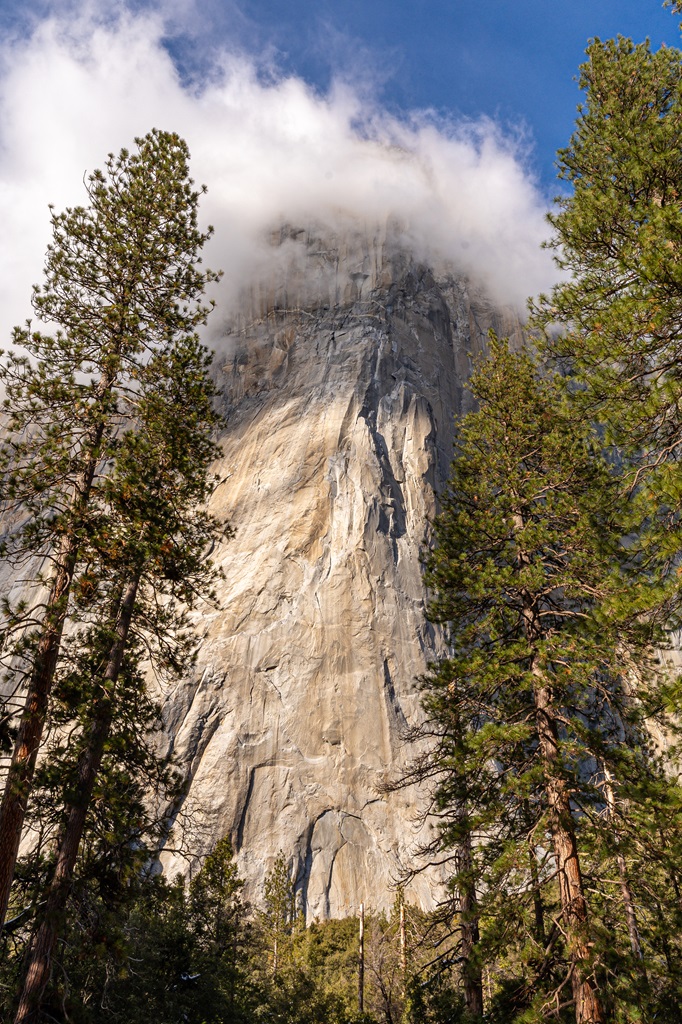
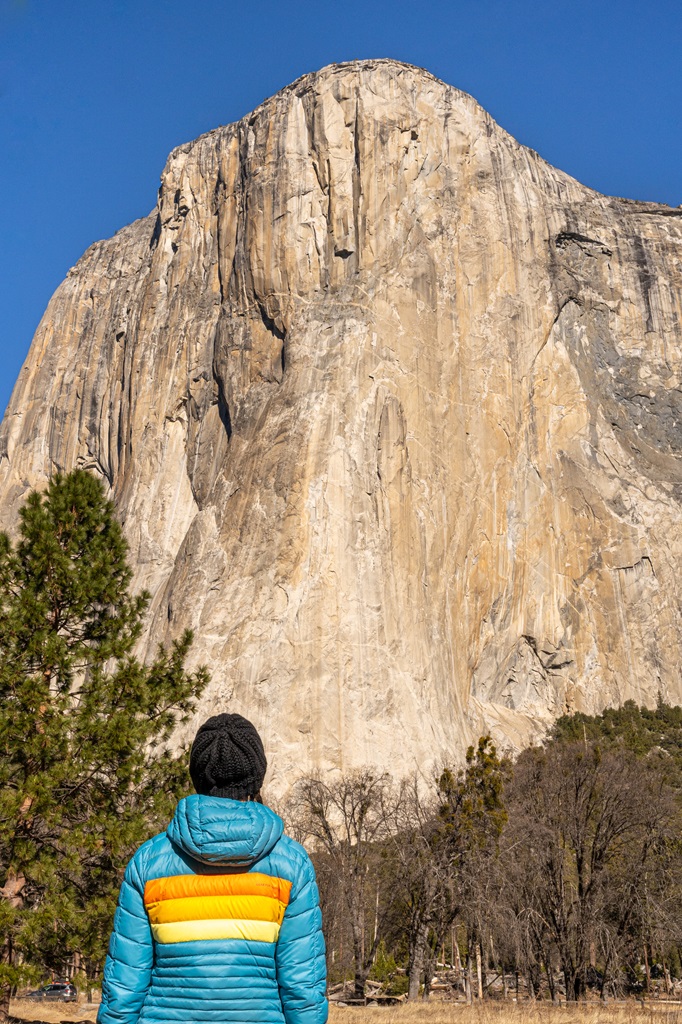
As you drive along Southside Drive, you’ll be treated to incredible views of El Capitan, one of Yosemite’s most iconic landmarks.
Towering over 3,000 feet above the valley floor, this massive granite monolith is a world-famous challenge for rock climbers and a breathtaking sight for visitors.
For a quick photo stop, pull over in one of the roadside parking spots near Bridalveil Fall.
If you want a closer look, head to El Capitan Meadow on Northside Drive, near the west end of Yosemite Valley.
This spot offers a stunning perspective of El Capitan’s sheer rock face and is a great place to watch climbers making their way up the wall.
Don’t forget your binoculars so you can watch them in action!
To protect the meadow, stay on designated trails and prevent the formation of unwanted social trails.
🚞 Shuttle Stop: The Yosemite Valley Shuttle stops at El Capitan Meadow (stop #9).
See the Picturesque Yosemite Valley Chapel
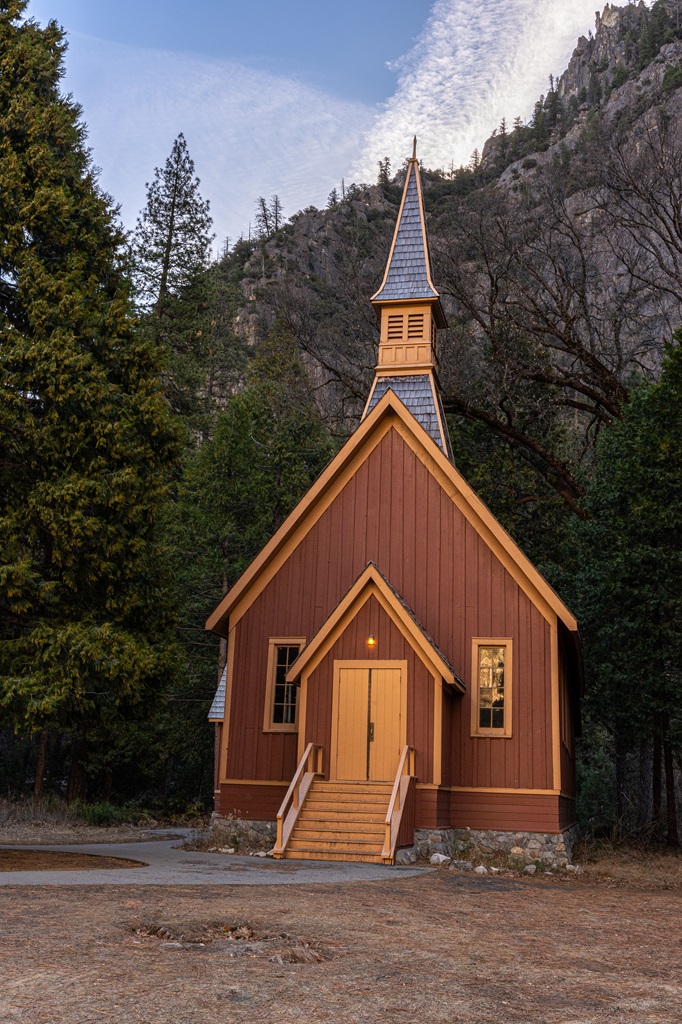
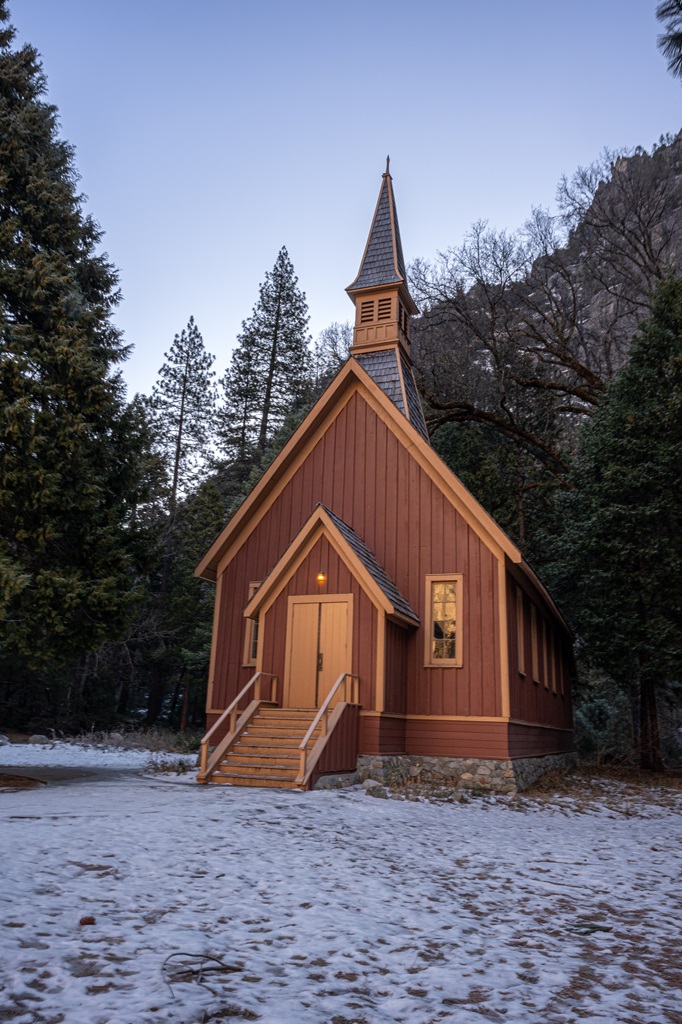
The Yosemite Valley Chapel, built in 1879, is the oldest structure in Yosemite Valley and was added to the National Register of Historic Places in 1973.
Located just a 4-mile drive from the Bridalveil Fall parking area, this charming historic church offers a picturesque setting with Yosemite Falls on the opposite side of the road.
While there is no shuttle stop here, the small parking lot has a quick turnover, making it easy to stop for a photo.
It’s a quaint and scenic spot, perfect for a quick photoshoot!
Explore Cook’s Meadow and See Lower Yosemite Fall
One of my favorite spots in Yosemite is Cook’s Meadow (also known as Sentinel Meadow)!
Cook’s Meadow consists of a 1-mile loop trail with stunning views of Yosemite Falls, Half Dome, Glacier Point, and Sentinel Rock.
Don’t miss stopping at the Sentinel Bridge for an amazing view of Half Dome!
There is a small parking area off Sentinel Drive where you can park and complete this hike.
If it’s the offseason, particularly on a weekday, you can get away with driving and parking just about anywhere.
✨ Cook’s Meadow – Things to Know:
- Parking: Nearest parking for this trail is located at the Yosemite Village Parking Area, Yosemite Falls Parking Area, and a small parking lot near Sentinel Bridge
- Shuttle Stop: The shuttle stops at three different locations near Cook’s Meadow: stop #1 at Yosemite Village parking area, stop #5 at Yosemite Exploration Center, and stop #6 at Lower Yosemite Fall Trailhead
- Water and Restrooms: Neither are available along this trail, but are available at the Yosemite Valley Visitor Center and Lower Yosemite Fall Trailhead
- Accessibility: This trail is wheelchair accessible and stroller-friendly when not covered in snow/ice
- Pet-friendly? Leashed pets are allowed on this trail
- Bike-friendly? Bikes are allowed on this trail
- Leave No Trace! Stay on the main trail to avoid damaging the meadow’s ecosystem
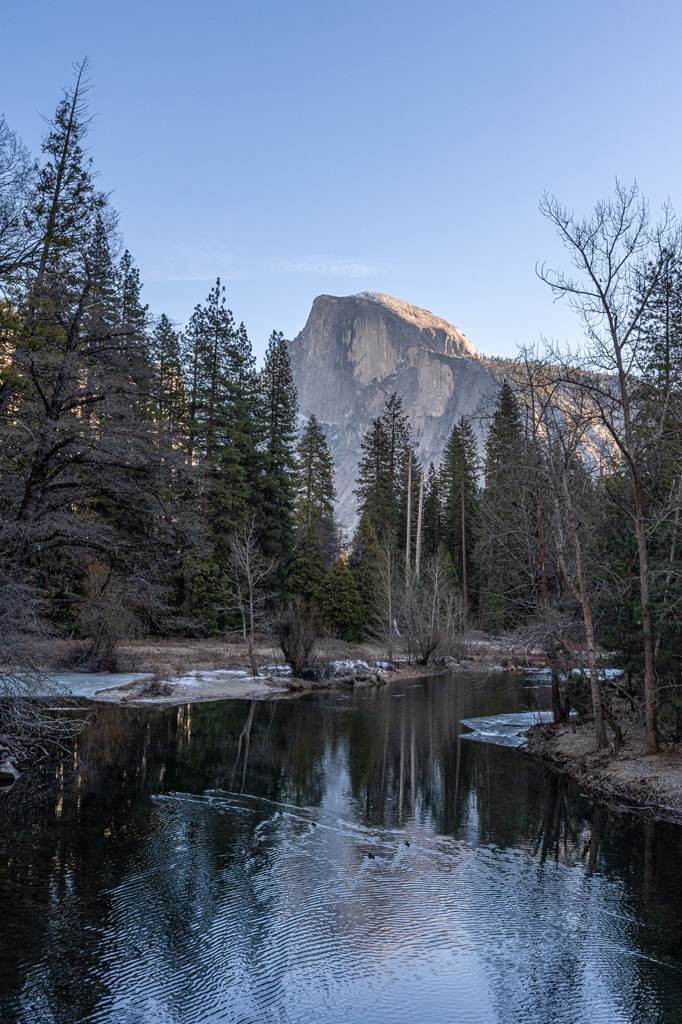
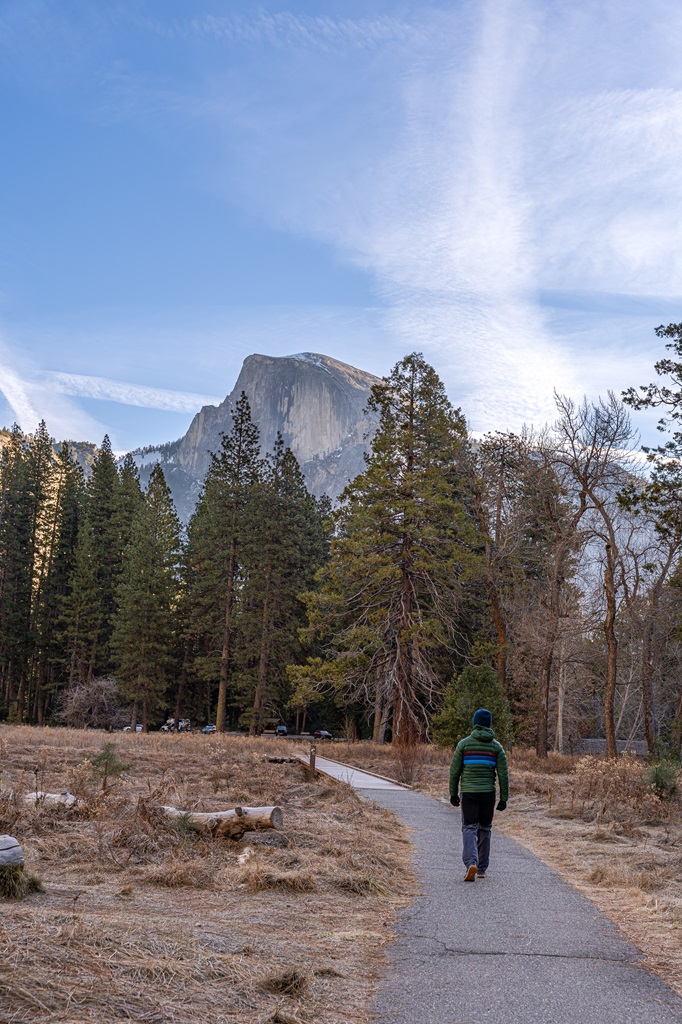
You can combine the Cook’s Meadow Trail with the Lower Yosemite Fall Trail for a scenic 2-mile double-loop hike!
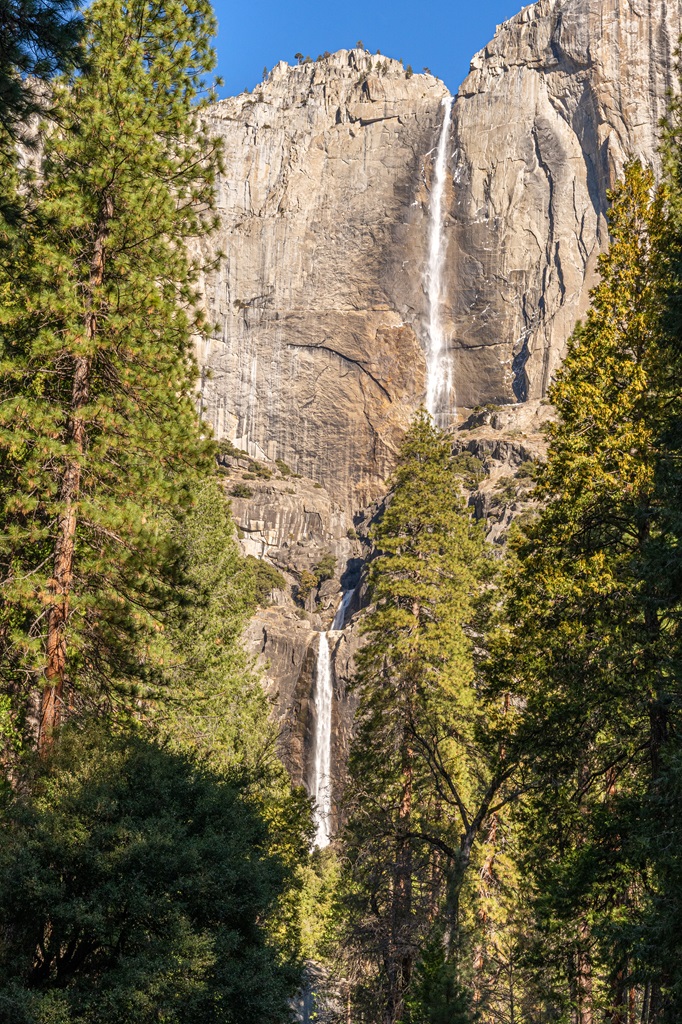
This hike offers a closer look at Lower Yosemite Fall, a 320-foot cascade and the lower portion of Yosemite Falls.
In the spring and early summer, prepared to be sprayed with the waterfall’s mist at the footbridge.
You might even see a beautiful rainbow near the base of Lower Yosemite Fall. 🌈
I cannot recommend this short and easy hike enough for first time Yosemite visitors!
✨ Lower Yosemite Fall Trailhead / Trail – Things to Know:
- Parking: Parking is not available at the trailhead – closest parking is available at the Yosemite Village and Yosemite Falls parking areas
- Shuttle Stop: The shuttle stop for Lower Yosemite Fall Trailhead is #6
- Accessibility: Eastern portion of the Lower Yosemite Fall Trail is wheelchair accessible when not covered in snow/ice
- Restrooms: Available at the trailhead near the western portion of the trail
- Water: Available near the restrooms
- Pet-friendly? Leashed pets are allowed on this trail
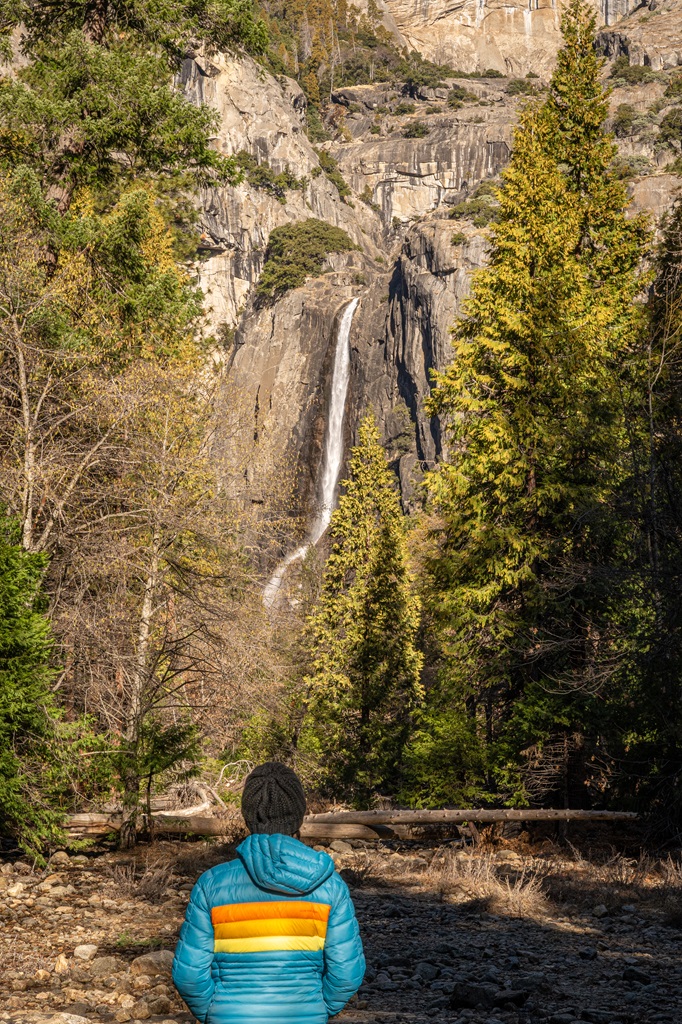
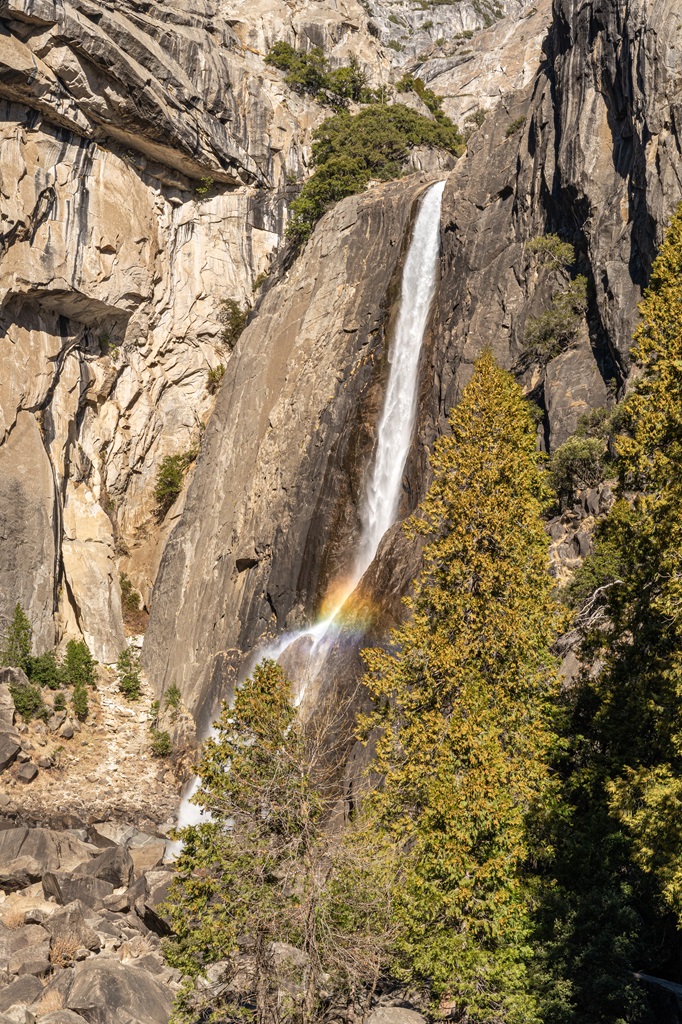
🥾 Alternative Option: If you’re up for a challenge and a full-day adventure, consider hiking to the top of Upper Yosemite Falls.
This strenuous 7-mile roundtrip trek climbs 3,200 feet, making it feel like a Stairmaster workout – only 5x more intense! The views along the trail and at the top make every step worth it.
If you’re a beginner hiker or visiting Yosemite for the first time, you might want to save this one for another trip. If you visit again, see if you can conquer Upper Yosemite Falls!
Relax and Eat Lunch
Wow, what an incredible morning of exploring and hiking! By now, you’re probably hungry.
I haven’t personally dined in Yosemite National Park, so I can’t recommend a favorite spot, but here’s a list of places that offer a variety of dining options:
Whenever my husband and I visit Yosemite, we always pack plenty of snacks and one to two meals to keep us fueled for the day.
Then, on our way home, we treat ourselves to something delicious – usually Indian food because it’s the best. 🤤
If you’re looking to save money, I highly recommend packing your own lunch (and lots of snacks) and enjoying it at one of Yosemite’s beautiful picnic areas!
🧺 There are plenty of picnic spots to choose from:
- Cathedral Beach Picnic Area (shuttle stop #10)
- Sentinel Beach Picnic Area (closest shuttle stop is #11 Four Mile Trailhead)
- Swinging Bridge Picnic Area (closest shuttle stop is #11 Four Mile Trailhead or you can walk 0.5 miles from Yosemite Falls Parking Area to this picnic area)
- Church Bowl Picnic Area (closest shuttle stops are #2 Yosemite Valley Welcome Center and #4 Degnan’s Kitchen)
- Lower Yosemite Fall Picnic Area (shuttle stop #6)
- El Capitan Picnic Area (shuttle stop #8)
Hike Mirror Lake or Mist Trail
I hope you’re feeling refreshed and ready for more adventure!
Next up is another short hike, and if you’re making good time, you might even be able to tackle both options.
But if the clock is ticking, just choose the one that interests you most.
The hike to Mirror Lake can be a quick 2-mile out-and-back or a longer 5-mile loop.
Since we’re packing so many amazing sights and hikes into one day, the shorter route might be the best choice, but it’s totally up to you!
✨ Mirror Lake Trailhead / Trail – Things to Know:
- Parking: Not available at the trailhead. Closest parking can be found at Curry Village Parking Area
- Shuttle Stop: The shuttle stop for Mirror Lake is #17
- Water: Drinking water is not available at the trailhead or on the trail
- Restrooms: Vault toilets are available 0.5 miles from the trailhead and at Mirror Lake (end of the paved service road)
- Pet-friendly? Leashed pets are allowed on the trail’s paved portion
- Bike-friendly? Bicycles and strollers are allowed on the trail’s paved portion
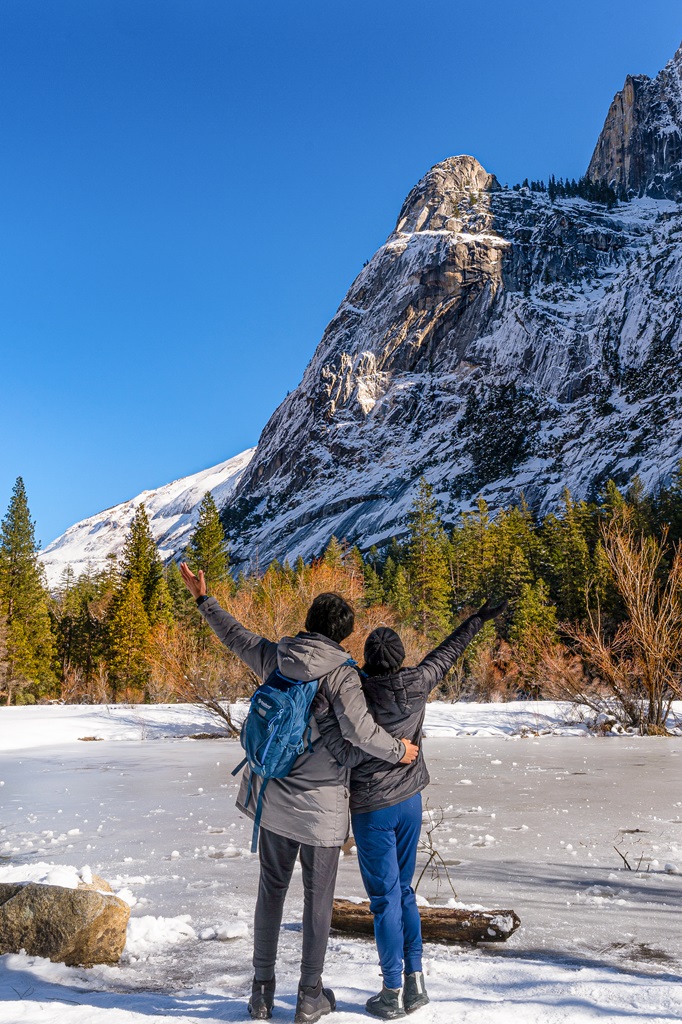
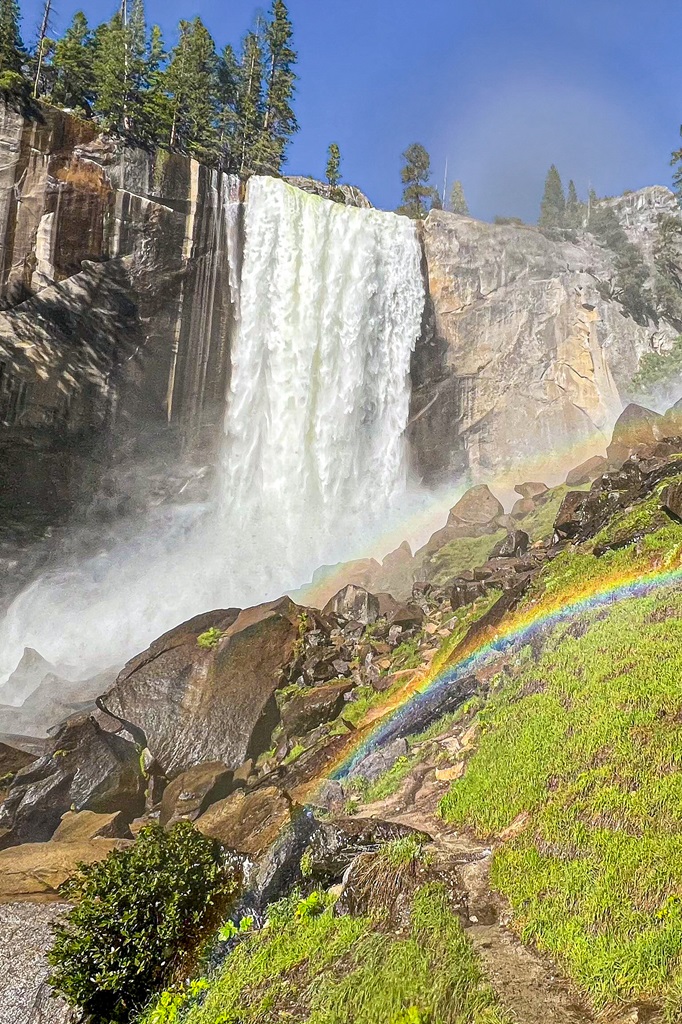
Another fantastic hike near Mirror Lake is one of Yosemite’s most popular trails – Vernal Fall via the Mist Trail.
If you’re in good physical shape and have the time, I highly recommend the 3-mile roundtrip hike to the top of Vernal Fall. It’s a strenuous trek, so know your limits!
If that feels like too much, you can opt for the shorter 1.6-mile roundtrip hike to the Vernal Fall Footbridge. From here, you’ll still get a great view of the waterfall.
This route follows a paved path but is fairly challenging, with a steady 400-foot climb over 0.8 miles. Be prepared with water and snacks and consider bringing hiking poles!
✨ Vernal Fall Trailhead / Mist Trail – Things to Know:
- Parking: Not available at the trailhead. Closest parking can be found at Yosemite Valley Trailhead Parking or Curry Village Parking Area
- Shuttle Stop: The shuttle stop for the Mist Trail is at Happy Isles at stop #16
- Water: Drinking water is available near the trailhead at shuttle stop #16 and at the Vernal Fall Footbridge (seasonally – May to October)
- Restrooms: Located at shuttle stop #16, Vernal Fall Footbridge, and beyond the top of Vernal Fall (along the Mist Trail)
- Accessibility: Although the first 0.8 miles of the Mist Trail to the footbridge is all paved, it is very steep and not recommended for wheelchair users
- Pet-friendly? Pets are not allowed on this trail
- Winter Closure: A portion of the Mist Trail is closed during winter, but you can still reach Vernal Fall via this winter route
Drive to Glacier Point
Now it’s time to leave Yosemite Valley and explore another breathtaking section of the park – Glacier Point!
To get there, you’ll need to drive, as the Glacier Point Tour bus doesn’t operate as a regular shuttle. While tickets can be reserved in advance, it only departs at two set times, making it impractical for this one-day itinerary.
The drive from Yosemite Valley to Glacier Point takes about an hour but trust me, it’s absolutely worth it. If you were impressed by Tunnel View, prepare to be absolutely blown away by the views from Glacier Point!
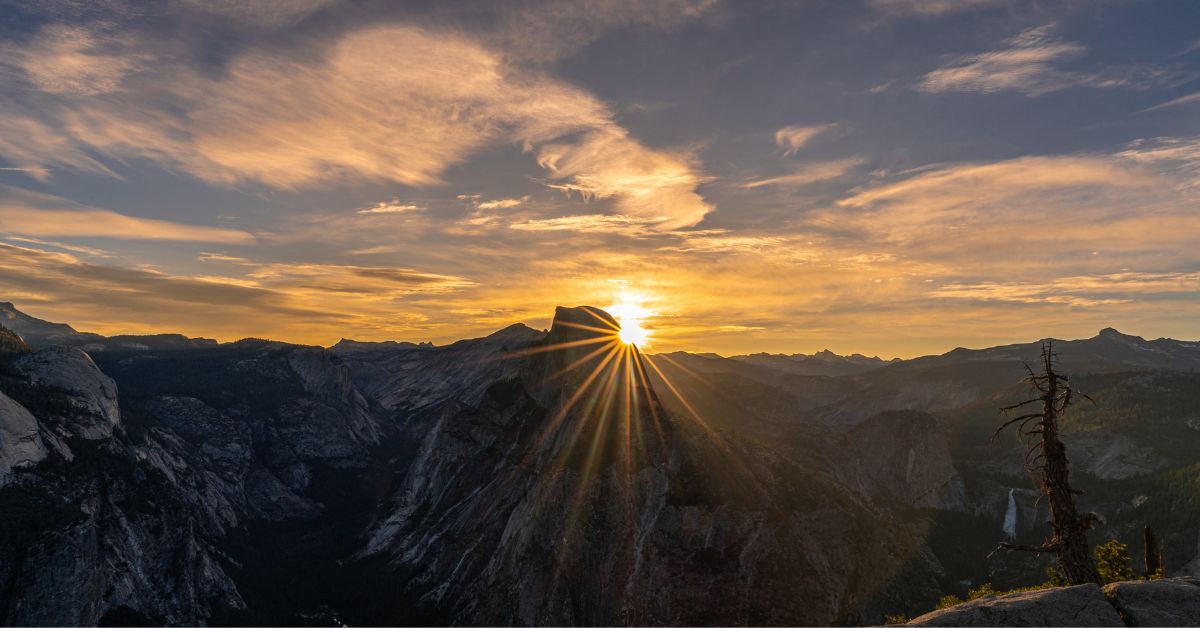
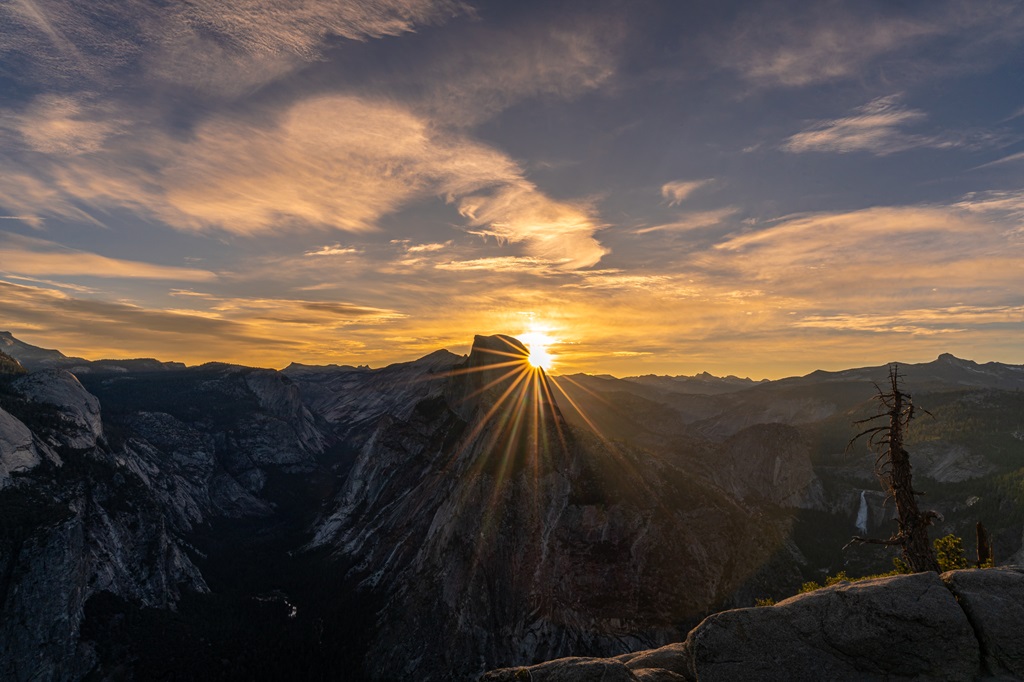
From the Glacier Point parking area, a short, paved, wheelchair-accessible trail leads to a jaw-dropping viewpoint perched 3,214 feet above Curry Village.
This overlook offers panoramic views of Yosemite Valley, Half Dome, Yosemite Falls, and the park’s stunning high country.
Another breathtaking viewpoint off Glacier Point Road is Washburn Point, offering similarly stunning vistas as Glacier Point.
While the parking area at Washburn Point is small, it’s often less crowded than Glacier Point, making it a great alternative for soaking in the views.
⚠️ Glacier Point Road is opened seasonally from late May through October or November, depending on road conditions.
🌄 Alternative Option: If you don’t have time to drive all the way to Glacier Point, head to Valley View – a stunning viewpoint in Yosemite Valley just off Northside Drive.
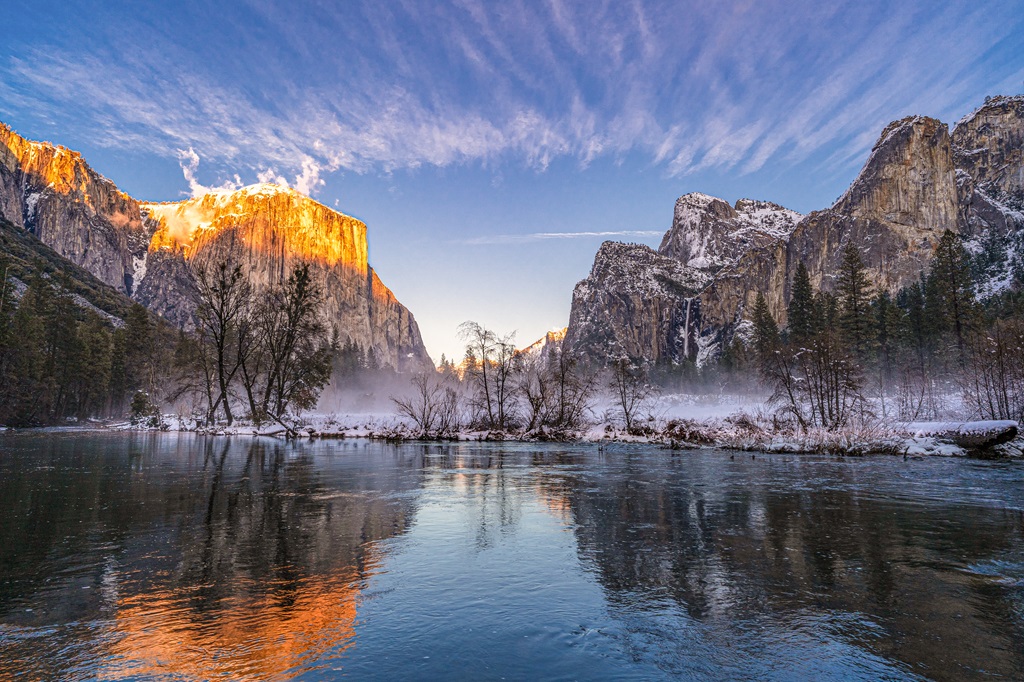
This scenic spot is perfect for watching the sunset, with breathtaking reflections of El Capitan in the Merced River and Bridalveil Fall cascading in the distance.
A favorite among photographers, Valley View offers an incredible vantage point to capture Yosemite’s beauty.
The parking lot is small, so plan accordingly, and keep in mind that there is no shuttle stop at this location.
Sunset at Taft Point or Sentinel Dome
I’ve got one final hike on today’s itinerary!
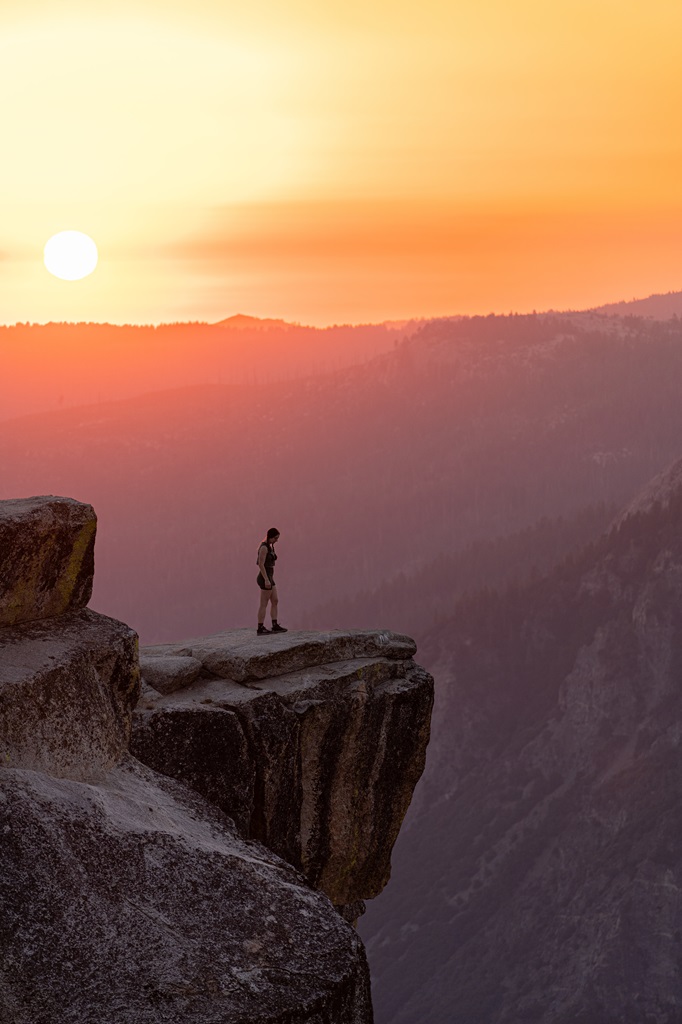
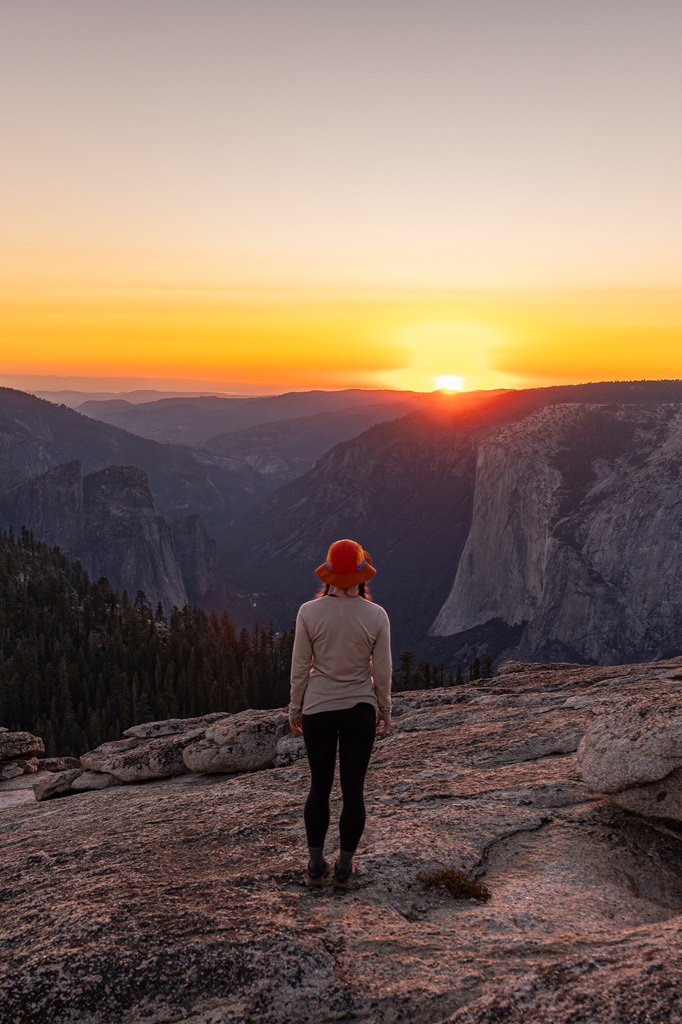
If you have the time and energy, watching the sunset from either Sentinel Dome or Taft Point will be an unforgettable highlight of your trip.
The trailhead for both Sentinel Dome and Taft Point is located off Glacier Point Road. Unlike the larger Glacier Point parking lot, the trailhead parking area here is smaller, so you may need to wait for a spot to open up or get there early enough.
If you’re heading to Sentinel Dome, you can start from either parking area and still make it in time for sunset.
However, if you’re planning to hike to Taft Point, be sure to park at the main trailhead. Starting from the Glacier Point parking lot adds more miles to the hike.
My husband and I have experienced sunset from both, and they’re equally stunning in their own way.
Since you won’t be able to catch sunset from both spots, choosing just one can be tough. To help, I’ll list the unique highlights of each so you can decide which sounds best for you!
⚠️ Don’t forget a flashlight or headlamp for the hike back, along with extra layers – temperatures can drop quickly after sunset!
Taft Point:
- 2.4 miles roundtrip hike from the main trailhead
- 6.8 miles roundtrip hike from Glacier Point parking area
- Stunning views of Yosemite Valley, Yosemite Falls, and El Capitan
- Popular “Instagram-worthy” spot
- Steep cliffs and fissures (deep cracks in the granite) – be careful
Sentinel Dome:
- 2.2 miles roundtrip hike from the main trailhead
- 2.8 miles roundtrip hike from Glacier Point parking area
- Steep scramble to the top (fun challenge)
- 360-degree views of Yosemite Valley, Half Dome, El Capitan, and Yosemite Falls
- Do not climb to the top of the dome during a thunderstorm or rainy conditions
Goodbye Yosemite (until next time)
Wow, what an incredible day of adventure! Now it’s time to head to your accommodation.
If you live really far away, please don’t attempt to drive back late at night after a full day of adventures.
I recommend booking a place to stay close by in advance and staying the night. You will feel refreshed and ready to go the next day.
I hope this one-day Yosemite itinerary was helpful and inspiring!
Continue reading for more information regarding best time to visit, logistics, what to bring, and first timer tips.
One Day in Yosemite Map
Best Time to Visit Yosemite
Seasonal Considerations
🌿 Spring (March – May): This season is best for waterfalls! Snowmelt fuels Yosemite’s waterfalls, making them the most powerful in May and June.
Crowds start to pick up, but it’s not peak season yet. Some higher-elevation areas (like Glacier Point and Tioga Road) may still be closed due to snow.
☀️ Summer (June – August): This season is best for accessibility! Everything in the park is open, including Glacier Point and Tioga Road.
Also, summer days as much longer as compared to other months of the year allowing for more time to explore. However, this is also the busiest time, and temperatures can be hot in Yosemite Valley.
🍂 Fall (September – November): This season is best for fewer crowds and pleasant weather! Waterfalls may be dry, but hiking conditions are excellent.
Glacier Point and Tioga Road usually remain open until late October or early November, offering access to stunning high-country scenery.
🌨️ Winter (December – March): This season is best for a peaceful experience! Yosemite Valley is open year-round and transforms into a winter wonderland.
Waterfalls begin flowing again after rain or snowfall, and you can enjoy fewer crowds. However, Glacier Point Road (beyond Badger Pass) and Tioga Road are closed, limiting access to certain areas.
❄️ Yosemite Winter Guides
- Ultimate Guide to Visiting Yosemite in Winter
- The Only Yosemite Winter Itinerary You Need!
- Where to Stay in Yosemite in Winter: 15+ Best Lodges, Hotels, and Cozy Cabins
- The Ultimate Yosemite Winter Packing List
- 20 Best Yosemite Hikes in Winter (Guide to Snowy Adventures)
- 18 Best Yosemite Winter Activities You Can’t Miss!
- Yosemite Firefall: A Complete First-Timer’s Guide
- Beginner’s Guide to Visiting Mariposa Grove in Winter
Best Overall Time
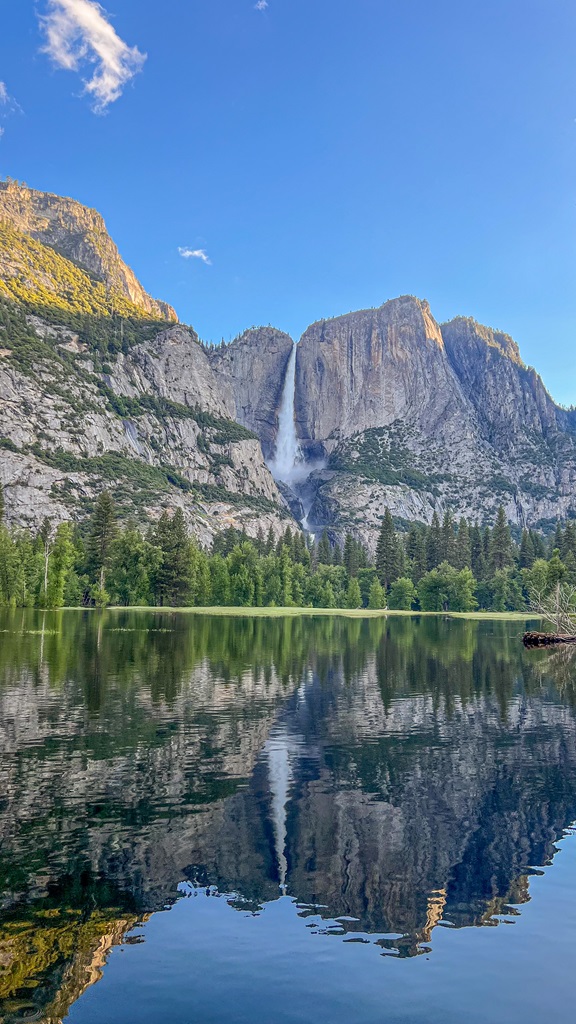
If you want to experience Yosemite’s famous waterfalls, pleasant weather, and fewer crowds, visit in late May or early June.
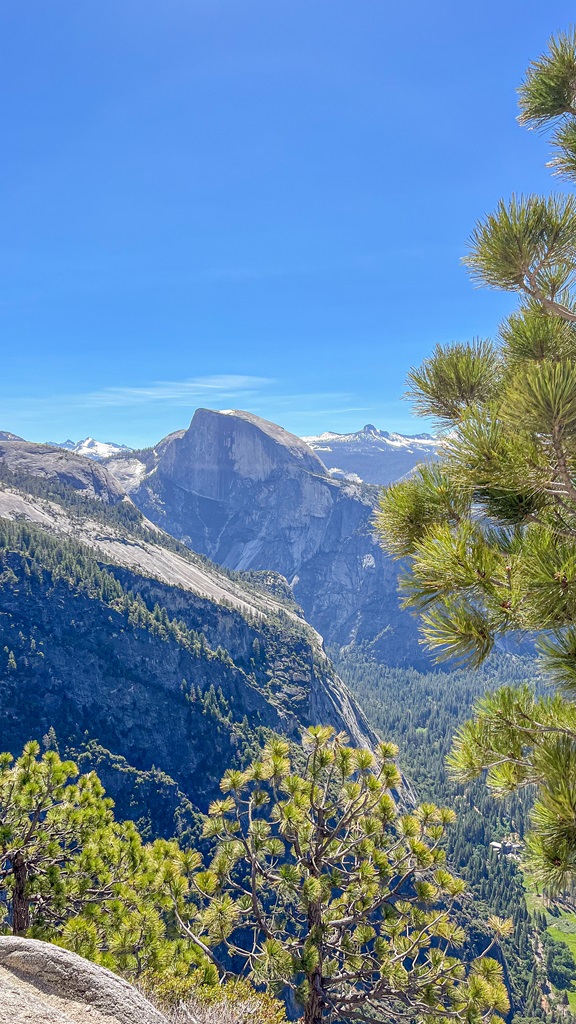
If you prefer hiking and fewer people, September to early October is a fantastic time. Also, Tioga Road and Glacier Point Road are typically still open during this time!
Day Trip to Yosemite Logistics (driving, parking, places to stay)
Driving from Major Cities
Many first-time visitors to Yosemite will likely be driving long distances to get there. The closest major airport to Yosemite is Fresno Yosemite International Airport which is about a 2.5-hour drive to reach Yosemite Valley.
My husband and I have made many day trips from Fresno to Yosemite. The very first time we did this was back in 2023.
We reached Tunnel View around 5:30 AM, hiked three trails totaling about 20 miles, and drove back home that same night. We got back around midnight.
While the day trip was amazing, we learned the hard way that it’s much better to book a place to stay in advance, so you don’t have to drive so late into the night!
It was a last-minute plan, and all the affordable options were already taken, leaving us with no choice but to drive home – lesson learned! 😅
✈️ Now, let’s take a look at the driving times from nearby major cities with airports to help you plan your visit more easily.
- Fresno Yosemite International (FAT)
- City: Fresno, CA
- Distance to Yosemite Valley: 95 miles (153 km)
- Drive Time: 2.5 hours
- Entrance / Highway: South Entrance (Hwy 41)
- Oakland International (OAK)
- City: Oakland, CA
- Distance to Yosemite Valley: 175 miles (282 km)
- Drive Time: 3.5 to 4 hours
- Entrance / Highway: Big Oak Flat Entrance (Hwy 120)
- Sacramento International (SMF)
- City: Sacramento, CA
- Distance to Yosemite Valley: 180 miles (290 km)
- Drive Time: 4 hours
- Entrance / Highway: Big Oak Flat Entrance (Hwy 120)
- San José Mineta International (SJC)
- City: San José, CA
- Distance to Yosemite Valley: 197 miles (317 km)
- Drive Time: 4 to 4.5 hours
- Entrance / Highway: Arch Rock Entrance (Hwy 140)
- San Francisco International (SFO)
- City: San Francisco, CA
- Distance to Yosemite Valley: 194 miles (312 km)
- Drive Time: 4.5 to 5 hours
- Entrance / Highway: Big Oak Flat Entrance (Hwy 120)
- Reno/Tahoe International (RNO)
- City: Reno, NV
- Distance to Yosemite Valley: 218 miles (350 km) or 248 miles (400 km)
- Drive Time: 4.5 hours if Tioga Road is open or 5.5 hours if Tioga Road is closed
- Entrance / Highway: Tioga Pass Entrance (Hwy 120) or Big Oak Flat Entrance (Hwy 120)
- Los Angeles International Airport (LAX)
- City: Los Angeles, CA
- Distance to Yosemite Valley: 320 miles (515 km)
- Drive Time: 6.5 hours
- Entrance / Highway: South Entrance (Hwy 41)
Now that you know which cities to fly into and how far they are from Yosemite National Park, specifically Yosemite Valley, it’s time to figure out the best way to get there.
The most popular option is renting a car or driving your own if you have one. This gives you the flexibility to explore more of the park at your own pace.
If you prefer not to drive, public transportation is a great option, especially for exploring Yosemite Valley.
🚌 Here are a few public transportation options:
Yosemite’s Entrance Fee and Reservations
Entrance to Yosemite National Park costs $35 per vehicle for a 3-day pass. However, if you have the America the Beautiful Annual Pass, your entry is free!
For those who love exploring national parks, investing in the Annual Pass is a smart choice. At just $80, for U.S. residents, it grants you access to over 2,000 federal recreation sites across the country!
FEE UPDATES! Beginning January 1, 2026, non-U.S. residents (without an annual pass) will pay a $100 per person in addition to the standard entrance fee. The Annual Pass for non-US. residents will cost $250.
Reservations are not required at this time (updated January 12, 2026).
Parking in Yosemite Valley
If you are planning to visit Yosemite National Park during the summer, on a holiday, or on a weekend, be prepared for lots and lots of people.
Trying to find a good parking spot during the summer months on a weekend will be a huge pain in the booty!
I mentioned this briefly above, but let’s go over it again.
For the purpose of this blog, we will focus on the parking situation and shuttle system within Yosemite Valley since this is the area of the park that most people visit for their first time.
If you are visiting Yosemite during peak season or a holiday, get into the park early and snag a parking spot in one of the three major parking lots within Yosemite Valley – Yosemite Village, Curry Village, or Yosemite Falls.
Once you find the perfect parking spot, leave your car there until you are ready to leave Yosemite Valley.
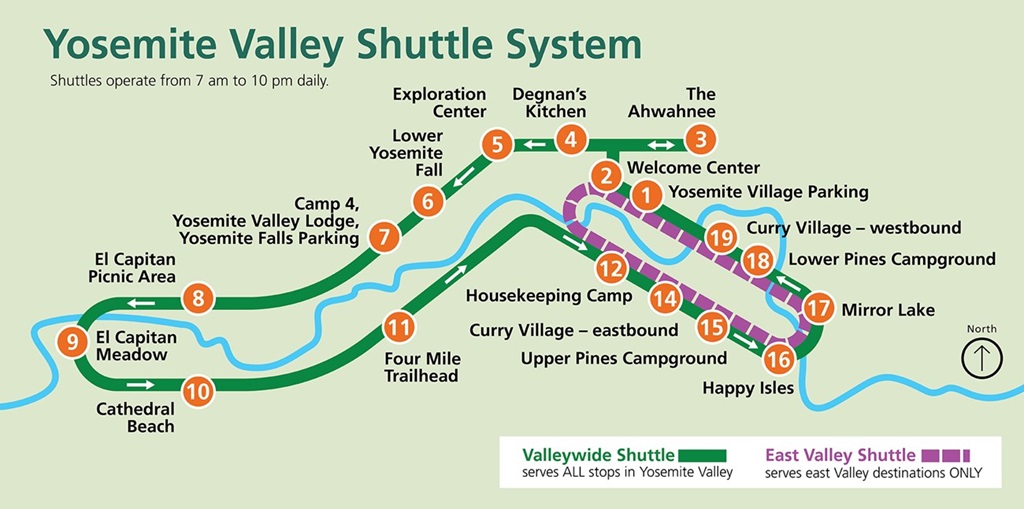
Yosemite Valley Shuttle System
Now that you’ve secured your parking spot, make sure to remember where you parked! Take a quick photo and jot down a note in your phone to make finding your car later a breeze.
From here, you’ll be able to take advantage of the free Yosemite Valley Shuttle System to get around the valley easily.
🚍 There are two shuttle routes available:
- Valleywide Shuttle – This route covers all stops in Yosemite Valley, including lodges, food service, campgrounds, and trailheads. Buses run every 12 to 22 minutes from 7 AM to 10 PM.
- East Valley Shuttle – This route serves Yosemite Village, Curry Village, Pines Campgrounds, and trailheads in eastern Yosemite Valley. Buses run every 8 to 12 minutes from 7 AM to 10 PM.
With these shuttles, you’ll be able to explore the valley without the hassle of driving or parking!
Places to Stay
There are plenty of places to stay both inside and outside Yosemite National Park, but if you plan to stay inside the park, be sure to book well in advance – like far in advance!
If you’re only staying for one night, you may be able to find something easier as compared to staying multiple nights, but lodging fills up fast, especially during the summer months.
If you’re making last-minute plans (like I often do) and can’t find a place to stay, don’t lose hope! Keep checking back, as cancellations happen frequently, and you might be able to snag an opening.
This applies to both lodging and campgrounds inside and outside the park.
In this guide, I’ll share accommodation options inside Yosemite Valley as well as a few places to stay outside the park.
Since this itinerary focuses on Yosemite Valley and Glacier Point, I’ll highlight lodging near the South Entrance, Arch Rock Entrance, and Big Oak Flat Entrance, which provide the quickest access to these areas.
Staying Inside Yosemite National Park
🏨 Accommodations in Yosemite Valley:
- The Ahwahnee Hotel
- Yosemite Valley Lodge
- Wawona Hotel (currently closed due to roof replacement project)
- Curry Village
- Housekeeping Camp
🏕️ Campgrounds in Yosemite Valley:
Learn more about reserving a campsite HERE.
Staying Outside Yosemite National Park
🏞️ Accommodations Near the South Entrance:
- Tenaya Lodge at Yosemite
- Sierra Sky Ranch
- Best Western Plus Yosemite Gateway Inn
- Yosemite Southgate Hotel & Suites
✨ Is staying at Tenaya Lodge worth it? Read my honest, in-depth Tenaya Lodge review!
🪨 Accommodations Near the Arch Rock Entrance:
✨ Should you stay at Yosemite View Lodge? Read my Yosemite View Lodge guide and review!
🌳 Accommodations Near the Big Oak Flat Entrance:
✨ Having trouble finding the perfect place to stay near Yosemite?
Don’t worry, I got you covered! I created an ultimate guide to help you find a place to stay when visiting Yosemite National Park. I’ve broken everything down by town, organized by the park entrance they’re closest to.
From there, I list different types of accommodations, including hotels, resorts, B&Bs, vacation rentals, campgrounds, and RV parks. Click the button below and explore top-rated places to stay outside of Yosemite, based on your travel style, budget, and the parts of the park you plan to visit!
One Day in Yosemite: What to Bring
🎟️ Entrance Pass – You will need to purchase an entrance pass once you reach the entrance station or you can buy the America the Beautiful Pass ahead of time and use that for the entire year.
📆 Reservation – Depending on when you plan to visit Yosemite, you may need a reservation.
👚 Layers of Clothing (top) – Pack a moisture-wicking base layer, a fleece mid-layer, an insulated jacket, and an outer shell to protect you from the elements, such as rain and wind. You may not need all these layers, especially in the summer months, but it’s always best to be over-prepared!
Check out my favorite tops 👇
- Base layer: REI Co-op Sahara Shade Hoodie (warm/mild conditions) and REI Co-op Midweight Long-Sleeve Base Layer (cooler conditions)
- Fleece mid layer: Cotopaxi Teca Fleece Full-Zip Jacket
- Down mid layer: Cotopaxi Fuego Hooded Down Jacket
- Outer shell: In the summer I always pack a light windbreaker, such as the Cotopaxi Teca Crop Windbreaker or the RevolutionRace Unit Light Windbreaker. Make sure to also pack a waterproof rain jacket – I like the Patagonia Torrentshell 3L Jacket.
🩳 Hiking Shorts or Pants – Pack a comfortable, durable, and stretchy pair of hiking shorts or pants. Also think about what conditions you might run into, such as warm or cold temperatures, wind and/or rain, bugs, and overgrown trails.
Check out my favorite hiking bottoms 👇
- Cotopaxi Losdos Zip-Off Pants
- RevolutionRace Breezy Ankle Outdoor Pants
- Baleaf Fleece-Lined Jogger Pants
- RevolutionRace Summit Pocket Tights
- Revolution Race Hike & Dive Shorts
🥾 Hiking Footwear – Bring a good pair of hiking boots or shoes with good traction. If I’m not expecting to hike in too much mud or snow, my go-to hiking shoes are the Altra Lone Peak trail runners. They have a wide-toe box, 0 mm heel-to-toe drop, and MaxTrac rubber outsole. Plus, they’re lightweight and so comfy!
🧦 Socks – Moisture-wicking, quick-drying socks are the way to go. My favorite pair of hiking socks are Darn Tough Hiker Micro Crew Cushion Socks. Always pack an extra pair!
🎒 Day Pack – What you plan to do (sightseeing, hiking, etc.), determines what size pack you’ll need. Here is what I typically bring based on what I’m doing that day 👇
- Short walks and sightseeing: Cotopaxi Kapai 1.5L Del Dia Hip Pack
- Short, easy to moderate day hikes: REI Co-op Flash 22L Pack
- Long, moderate to challenging day hikes: REI Co-op Trail 25L Pack or Cotopaxi Luzon Del Dia 24L Pack
🥢 Trekking Poles – Essential for stability, balance, and support when hiking trails, especially on tough, rocky, and uneven terrain. I use REI Co-op Trailmade Trekking Poles and love them!
❄️ Microspikes – Bring a pair of microspikes if you’re visiting in the winter and you’re planning to hike along icy trails. They will give you good traction to avoid slipping! I use Black Diamond Access Spike Traction Device.
🦟 Mosquito/Bug Repellants – In the warmer months, be prepared for annoying gnats, mosquitoes, and flies. Wear long-sleeve clothing, a head net, and use bug spray.
🧤 Extra Warm Layers – If you expect cooler conditions or hiking to higher elevations, make sure to pack extra layers for added warmth, such as gloves, beanie, neck gaiter, and a light jacket.
🗺️ Navigation – Carry a physical topographic map, compass, a satellite messenger (or personal locator beacon), and download offline maps to help you stay on course, find your way in unfamiliar terrain, and call for help if needed.
🔦 Headlamp/Flashlight – A reliable light source with extra batteries, in case you end up hiking in the dark or need it for emergency situations.
💧 Water – Water bottles to carry sufficient water to stay hydrated, along with a filtration system or purification tablets if you plan to refill from natural sources.
🍕 Food – Energy-rich snacks or meals to keep your energy levels up during the hike.
😎 Sun Protection – Sunscreen, sunglasses, and a sunhat to protect yourself from harmful UV rays, even when it’s cloudy. Also, polarized sunglasses are important when it’s bright outside and to reduce glare from reflective surfaces like water, snow, and roads.
🩹 First-Aid Kit – A basic first-aid kit with items like bandages, antiseptic, pain relievers, and any personal medications you may need.
🥶 Emergency Shelter – Pack an emergency bivy sack or space blanket for shelter in case of sudden weather changes.
🔥 Fire – A lighter, matches, or fire starter to help you build a fire for warmth or signaling in case of emergency. Along with matches, I also carry a multi-tool carabiner that has a fire starter, utility blade, screwdriver, and bottle opener.
🗡️ Multi-Tool and Repair Kit – A versatile tool/knife and repair kit to handle any task, from preparing food to making repairs.
First Timer Tips for Visiting Yosemite in One Day
If it’s your first time visiting Yosemite and you only have one day, here are some key tips to maximize your time, avoid common mistakes, and make the most of your adventure!
1. Get to Yosemite Early (like, really early): Arrive before sunrise to beat the crowds and secure parking.
If possible, enter the park before 7:00 AM – especially in peak season (summer). Avoid entering between 9 AM – 12 PM or else you will likely have to wait in a long line of cars to enter.
2. Plan Your Route and Check Road Conditions: Plan your route into Yosemite Valley ahead of time and download offline maps on Google as the cellular service in Yosemite is limited. And don’t forget to check road conditions – this is especially important in the winter months!
3. Park Once and Use the Free Shuttle: Parking fills up fast, so grab a spot in Yosemite Valley early. Once parked, use the Yosemite Valley Shuttle to reach different destinations within the valley.
4. Prioritize Short and Scenic Hikes: Since you only have one day to explore, focus on short hikes in Yosemite Valley and Glacier Point 👇
- Cook’s Meadow (1 mile roundtrip) – Easy stroll through a scenic meadow.
- Lower Yosemite Fall (1.2 miles roundtrip) – Easy hike to a stunning waterfall.
- Bridalveil Fall (0.5 miles roundtrip) – Short, scenic waterfall hike.
- Mirror Lake (2 miles roundtrip) – Beautiful lake with Half Dome reflections.
- Vernal Fall Footbridge (1.6 miles roundtrip) – Short, steep hike along the Mist Trail to a footbridge with view of Vernal Fall.
- Vernal Fall via Mist Trail (3 miles roundtrip) – This one is tough but oh so worth it.
- Sentinel Dome (2.2 miles roundtrip) – Epic 360-degree views, great for sunset.
- Taft Point (2.4 miles roundtrip) – Dramatic cliffs, breathtaking views, great for sunset.
✨ READ THIS: 10 Must-Do Easy Hikes in Yosemite
5. Bring Your Own Food and Water: Save money and time by packing lunch, snacks, and plenty of water. The most scenic picnic areas include Cathedral Beach, Sentinel Beach, Swinging Bridge, El Capitan, and Lower Yosemite Fall.
Water refill stations are available at the Yosemite Valley Visitor Center, Yosemite Village, Lower Yosemite Fall Trailhead, Church Bowl Picnic Area, Happy Isles, and Curry Village – bring a reusable bottle!
6. Prepare for the Weather and Changing Conditions: Weather in the mountains can be unpredictable. Always check the weather forecast before heading out and be prepared for anything.
Always pack extra layers and rain gear! Also, make sure to apply sunscreen and wear sun protective clothing, such as long-sleeves, sunglasses, and a sunhat.
7. Must-See Scenic Stops for One Day in Yosemite:
- Tunnel View – Classic view of Yosemite Valley featuring El Capitan and Half Dome.
- Sentinel Bridge – Incredible view of Half Dome and its reflection in the Merced River.
- El Capitan Meadow – Best spot to see climbers on El Capitan.
- Valley View – Stunning river reflection of Yosemite’s unique landmarks.
- Glacier Point – Epic view of Half Dome and Yosemite Valley.
8. Be Bear Aware and Follow Leave No Trace: Black bears are active within Yosemite. Follow these guidelines to avoid any negative interactions with a black bear.
🐻 Note: bear spray is prohibited in Yosemite!
Stay on designated trails, pack out all trash, and avoid picking plants or disturbing wildlife. Help keep Yosemite National Park pristine for future hikers.
9. Book Accommodations in Advance: Lodging inside the park fills up months in advance – book early! If you are unable to book a place in advance, check for last-minute cancellations.
10. Be Flexible and Enjoy the Every Moment in Yosemite: You won’t see everything in one day and that’s okay! Prioritize what excites you most and soak in the experience.
Aside from the big crowds during peak season, a trip to Yosemite never disappoints. I’ve never had a bad day in this incredible park. 💁🏻♀️
If you follow these tips and use my itinerary, you will have an amazing full day in Yosemite!
FAQs: One Day in Yosemite
-
Is it possible to do Yosemite in one day?
Yes, it is possible to visit Yosemite National Park in one day. However, I recommend at least 3 days if you want to experience other parts of the park.
-
Where should I go for my first time in Yosemite?
Yosemite Valley is a great starting point for first-time visitors. Iconic viewpoints and landmarks, such as Tunnel View, El Capitan, Half Dome, and Yosemite Falls are located in this area.
-
Can I go to Yosemite without a reservation?
During peak months, you need a reservation to visit Yosemite National Park. However, there are a few exceptions where you may be able to visit without a reservation, such as entering the park before 5 AM or after 4 PM, or visiting during times a reservation is not required. Check the NPS.gov website for more information.
-
What not to miss in Yosemite National Park?
The top attractions in Yosemite National Park include Tunnel View, El Capitan, Half Dome, Yosemite Falls, Mist Trail, Glacier Point, Mariposa Grove of Giant Sequoias, and Tuolumne Meadows.
-
What is the most famous site in Yosemite?
The most famous sites in Yosemite National Park include El Capitan, Half Dome, and Yosemite Falls.
-
When not to go to Yosemite?
You might want to avoid visiting Yosemite National Park during the peak summer months (July and August), as well as major holidays when crowds and traffic are heaviest.
-
Can you just drive through Yosemite?
Yosemite requires an entrance fee to access the park. You can drive from one side of the park to the other via Tioga Road when it is open.
-
What is the best part of Yosemite to visit?
Yosemite Valley is the best part of Yosemite to visit if it’s your first time.
-
How much time is needed at Yosemite National Park?
Most visitors spend 2 to 3 days at Yosemite National Park to see the main highlights.
More Things to Do in Yosemite
If you plan to spend a few more days in Yosemite, visit other areas of the park for more incredible adventures.
1. Explore Mariposa Grove
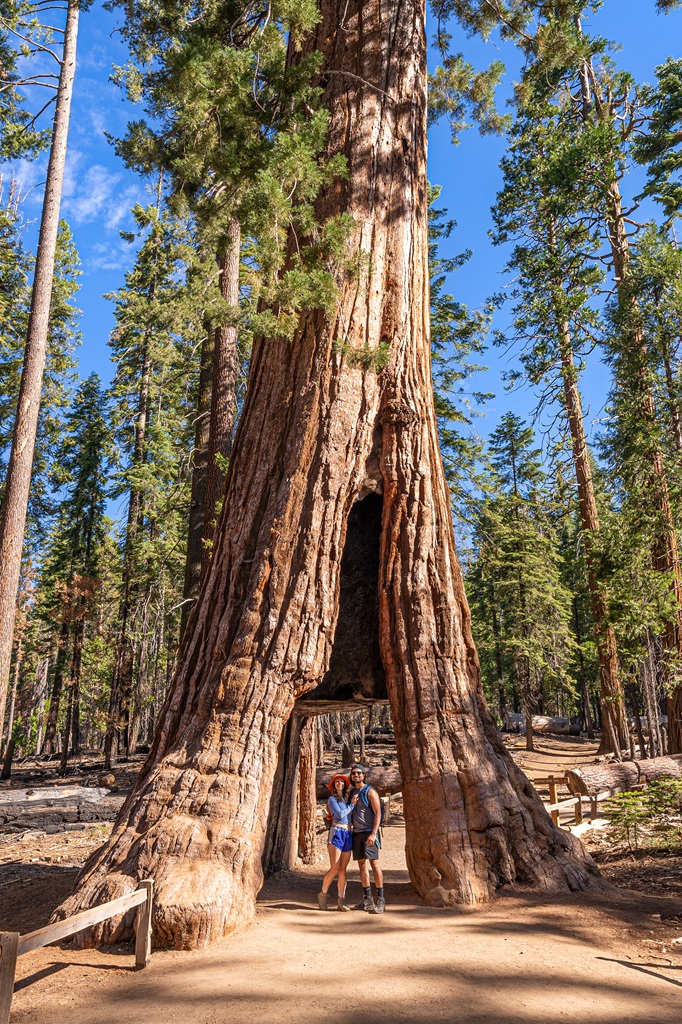
Mariposa Grove, located near the southern entrance of Yosemite National Park, is the largest sequoia grove in the park and home to over 500 mature giant sequoias.
A few of the famous giant sequoia trees include the 3,000-year-old Grizzly Giant, the California Tunnel Tree, and the Fallen Tunnel Tree.
The grove is accessible via a shuttle from the Mariposa Grove Welcome Plaza (when in season) or by hiking the Washburn Trail (2 miles one way).
There are several hiking trails within the grove that will lead you to unique giant sequoias of all shapes and sizes.
2. Hike Stunning Trails in Tuolumne Meadows and Tioga Pass
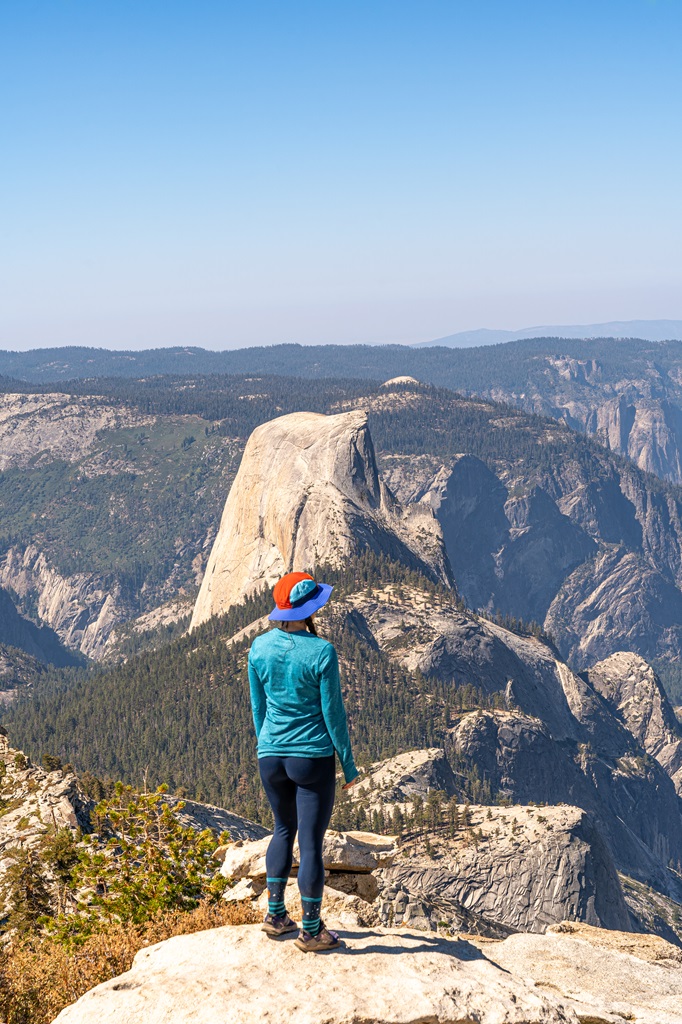
Tuolumne Meadows and Tioga Pass, Yosemite’s beautiful high-country, is home to some of the most incredible hikes in the Sierra Nevada.
Hike to the top of Lembert Dome for breathtaking 360-degree views, tackle the challenging Clouds Rest hike, see the famous Cathedral Peak and Cathedral Lakes, or explore the lesser-visited Gaylor Lakes.
Yosemite Valley may be the most popular area in Yosemite, but Tioga Pass is by far my favorite place to visit.
✨ READ THIS: Best Hikes in Tuolumne Meadows and Tioga Pass
3. Explore Hetch Hetchy
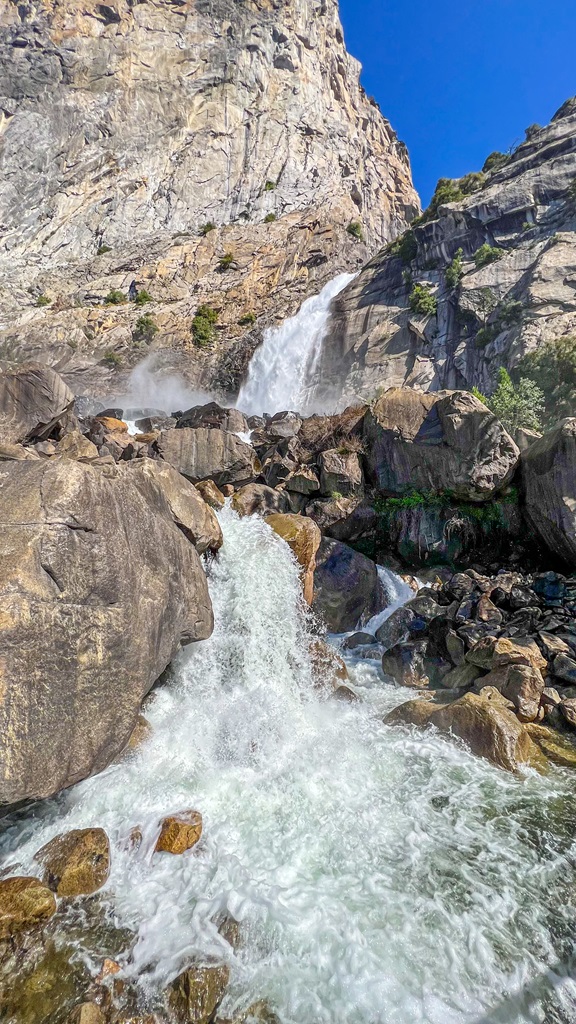
Often called Yosemite’s hidden gem, Hetch Hetchy offers stunning waterfalls, a scenic reservoir, and fewer crowds.
The Wapama Falls Trail is a must-do, leading to a powerful waterfall cascading over granite cliffs.
Spring is the best time to visit when the waterfalls are at their peak. You can also hike to Rancheria Falls or simply take in the beauty of the O’Shaughnessy Dam.
4. Visit Wawona and Hike to a Lesser-Known Waterfall
Escape the crowds and explore Wawona, a peaceful area rich in history and natural beauty.
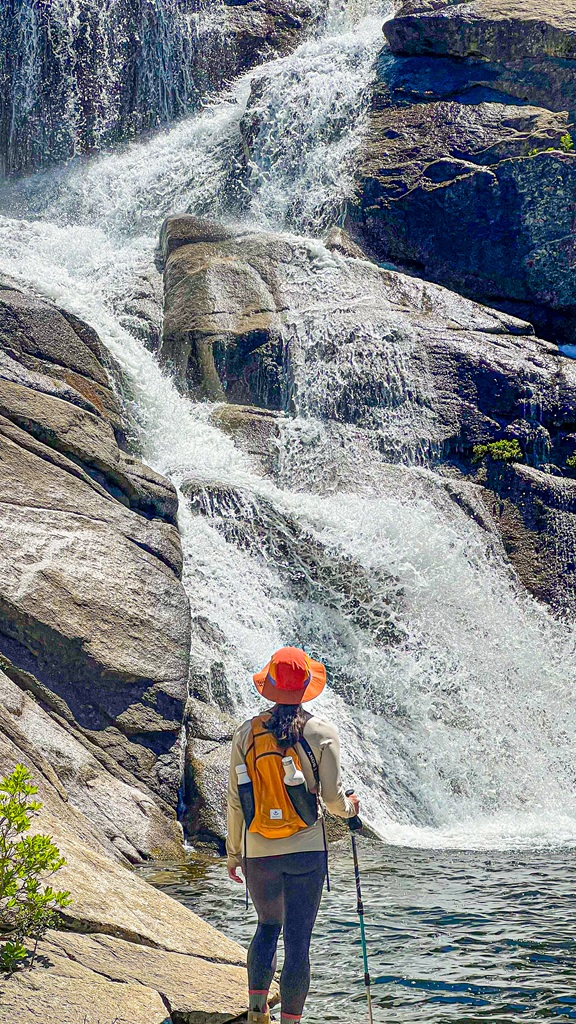
The highlight of this area is the Chilnualna Falls Trail where you’ll encounter a dramatic multi-tiered waterfall.
This 8.2-mile roundtrip hike offers incredible scenery without the crowds! It’s one of the most beautiful yet underrated hikes in Yosemite National Park.
Conclusion
I hope this guide on how to spend one day in Yosemite helps you plan an unforgettable trip! Yosemite National Park is vast, with so many amazing areas to explore.
The best way to spend one day in Yosemite, especially for a first-time visitor, is to explore Yosemite Valley and Glacier Point.
If you plan everything ahead of time, using this guide as a tool, you should have an incredible and smooth trip! Yosemite holds a special place in my heart, and it makes me so happy to see others wanting to experience its magic.
As you explore, please remember to follow Leave No Trace principles and respect this beautiful landscape so it can be enjoyed for generations to come.
If this guide inspires you to take a day trip to Yosemite, I’d love to hear about your adventure!
Leave a comment and share your experience!
🤩 Yosemite Trip Planning Resources
- 1-Day Yosemite Itinerary for First-Time Visitors
- Where to Stay Outside of Yosemite (best places in 2026)
- 13 Best Hikes in Yosemite Valley You Can’t Miss!
- Best Spots to Find Giant Sequoia Trees in Yosemite
- 10 Must-Do Easy Hikes in Yosemite for All Skill Levels
- Hetch Hetchy Hikes: Explore This Hidden Gem
- Best Yosemite Waterfall Hikes: Complete Guide
- Ultimate Guide to Visiting Yosemite in May
- Is Tioga Pass Open? Plan an Epic Trip with This Guide
- 12 Best Tioga Pass Hikes for Adventure Lovers
Enjoyed this post? Pin for later!