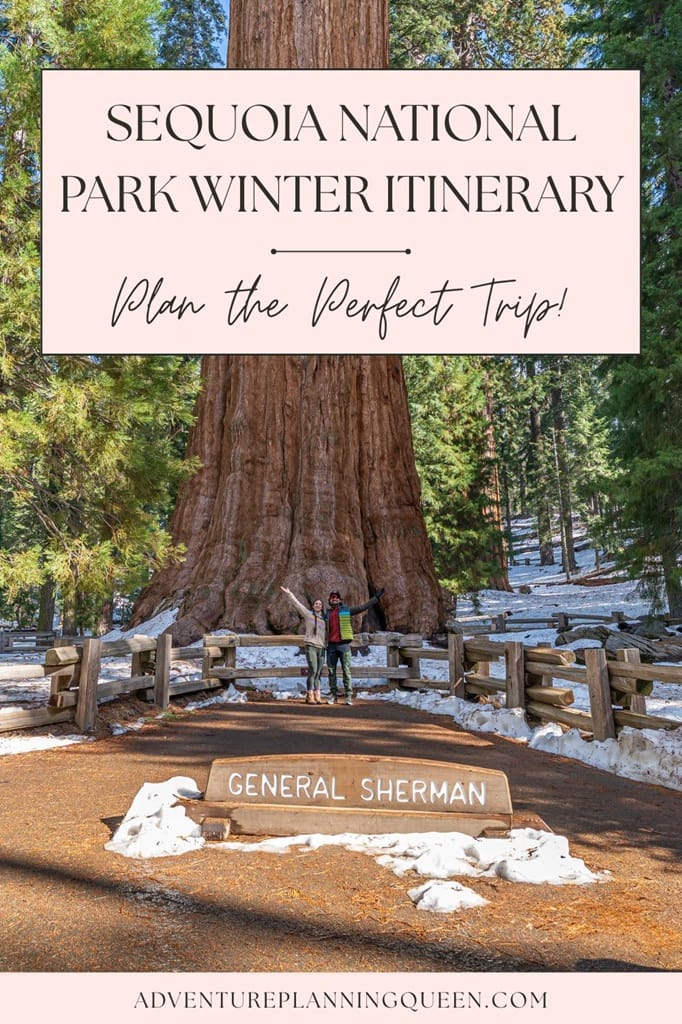
Planning a trip to Sequoia National Park in winter and looking for an epic, pre-planned itinerary packed with fun activities? You’re in the right place! 🙌
Winter is one of the most underrated times to visit the park, and having a solid Sequoia National Park winter itinerary can make your trip so much smoother.
Instead of stressing about what to do, possible road closures, winter weather conditions, or where to stay, this ultimate guide and itinerary breaks everything down step by step. 🙂↕️
In this Sequoia winter itinerary, you’ll discover the top things to do, the best winter hikes, scenic viewpoints you won’t want to miss, and unforgettable snowy adventures that might just have you planning your next trip before this one even ends!
There are plenty of reasons to visit Sequoia National Park in winter. The crowds are smaller, the park feels more peaceful, and the scenery transforms into a stunning snowy landscape. ❄️
Winter also opens the door to unique activities like snowshoeing and cross country skiing, plus you’ll often find more affordable accommodations outside the park compared to peak season.
If you’re dreaming of a magical winter getaway surrounded by giant sequoias and snow-covered trails, this 2-day itinerary will help you plan the perfect trip from start to finish! ☃️
Affiliate Disclaimer: Some links on this page may be affiliate links, meaning I may earn a small commission at no extra cost to you. As an Amazon Associate, I earn from qualifying purchases. Thanks for supporting the blog! 🫶
- What to Know About Sequoia National Park in Winter
- Day 1 Sequoia National Park Winter Itinerary (scenic drive + Giant Forest hikes)
- Day 2 Sequoia National Park Winter Itinerary (largest tree on earth + fun winter adventures)
- Have An Extra Day? Visit Kings Canyon National Park in Winter
- More Things to Do in Sequoia National Park in Winter
- Best Places to Stay Near Sequoia National Park in Winter
- Sequoia National Park Winter Tips and Packing List
- Conclusion
What to Know About Sequoia National Park in Winter
Before we get into this 2-day Sequoia National Park winter itinerary, let’s quickly go over the entrance fees, weather, road closures, chain requirements, and travel advice for a safe trip.
🎟️ Sequoia’s Entrance Fee
Entrance to Sequoia National Park costs $35 per vehicle for a 7-day pass. However, if you have the America the Beautiful Annual Pass, your entry is free!
For those who love exploring national parks, investing in the Annual Pass is a smart choice. At just $80, it grants you access to over 2,000 federal recreation sites across the country!
FEE UPDATES! Beginning January 1, 2026, non-U.S. residents (without an annual pass) will pay a $100 per person in addition to the standard entrance fee. The Annual Pass for non-US. residents will cost $250.
🌨️ Winter Weather in Sequoia
Winter in Sequoia National Park can be an incredible time to visit, but it’s important to be prepared! Temperatures can vary 20–30 degrees simply by driving higher or lower on the mountain.
While the foothills may feel mild and comfortable, the giant sequoia groves can be cold and snowy. The Giant Forest area, home to the General Sherman Tree, Moro Rock, Lodgepole, and Wuksachi Lodge, sits between 5,000 and 7,000 feet in elevation, which is why it experiences true winter conditions.
Lower-elevation areas such as Potwisha Campground, Buckeye Flat Campground, and Hospital Rock sit around 4,000 feet and typically stay warmer with little to no snow.
From November through March, you can expect cold temperatures, snow, and icy roads—especially in the Giant Forest and Lodgepole areas. This part of the park averages about 40–45 inches of precipitation each year, most of it falling in winter and creating a deep snowpack that can last well into May.
❄️ Average winter temperatures in the Giant Forest area:
- November: 50°F high / 31°F low (10°C / -1°C)
- December: 44°F high / 27°F low (7°C / -3°C)
- January: 42°F high / 24°F low (6°C / -4°C)
- February: 44°F high / 25°F low (7°C / -4°C)
- March: 46°F high / 26°F low (8°C / -3°C)
Keep in mind that mountain weather can change quickly. Clear blue skies can turn into a snowstorm in a matter of hours, and tire chain restrictions are common during the winter months.
Before your visit, check the Sequoia’s weather forecast and road conditions, and always carry tire chains just in case!
🛣️ Winter Road Conditions and Closures in Sequoia
Winter weather can heavily impact roads in Sequoia National Park, and seasonal closures typically happen sometime between November and May. The exact timing varies each year depending on snow and weather conditions.
Even roads that usually stay open in winter may close temporarily during or after storms. Snow, ice, and debris can make driving unsafe until park crews clear the roads.
During major winter storms, the entire park may temporarily close for visitor safety due to hazards like rockslides, avalanches, fallen trees, and debris on the roadway.
This actually happened earlier this year! In mid-February, the park closed for about two weeks after a large snowstorm. When we visited a few days after it reopened, the Giant Forest was still covered in deep snow and absolutely beautiful, but we also saw fallen rocks along the roadside and downed trees on some trails.
⛔ Seasonal road closures in Sequoia often include:
- Generals Highway between Sequoia and Kings Canyon National Park
- Moro Rock / Crescent Meadow Road
- Mineral King Road
- Crystal Cave Road
- The road to the main Sherman Tree Trailhead parking area
✅ Always check conditions before visiting. For the latest road updates, call (559) 565-3341 (press 1, then 1), and have a backup plan in case of closures.
⛓️ Chain Control Zones and Tire Chain Requirements in Sequoia
If you’re visiting Sequoia National Park in winter, plan on bringing tire chains. When chain control is in effect, all vehicles must carry chains, even those with AWD/4WD or snow tires.
Chain control levels:
- R1 – Chains or traction devices required unless you have snow-tread tires on at least two drive wheels.
- R2 – Chains required unless your vehicle has AWD/4WD and snow-tread tires on all four wheels.
- R3 – Chains required on all vehicles, no exceptions.
✅ Pro tip: Buy or rent chains ahead of time, make sure they fit your tires, and practice putting them on before your trip.
☃️ Sequoia in Winter – Important Travel Tips
- Travel may be slower than usual due to icy or snow-covered roads.
- Bring tire chains, make sure they fit your tires, and know how to install them.
- Dress in layers – temperatures can drop quickly the higher in elevation you go.
- Remember that daylight hours are shorter during the winter months.
- Expect traffic and limited parking during busy holiday periods like Christmas and New Year’s (late December–early January) and Presidents’ Day weekend in mid-February.
- Keep emergency supplies in your car, such as water, snacks, blankets, a flashlight, and extra warm clothing.
- Fill up your gas tank or charge your electric vehicle before entering Sequoia National Park! There are no fuel or charging stations inside the park, but you’ll find both in Three Rivers, just outside the entrance.
- No lodging is open inside the park this winter, so plan to stay in Three Rivers near the Ash Mountain Entrance for the most convenient access.
- Free winter shuttles operate in the Giant Forest and Lodgepole areas on limited dates (Nov 27–30, Dec 24–Jan 1, Jan 17–18, Feb 14–15 for the 2026 season) from 10:00 am–4:30 pm, so be sure to check schedules and plan your visit accordingly.
Day 1 Sequoia National Park Winter Itinerary (scenic drive + Giant Forest hikes)
Day 1 of this Sequoia National Park winter itinerary will include a scenic drive along the Generals Highway and enjoying peaceful and easy hikes through the Giant Forest.
This itinerary assumes you’re staying in the nearby town of Three Rivers, which is where most visitors stay when visiting Sequoia National Park.
If you’re staying inside the park at Wuksachi Lodge, this itinerary will still work perfectly for you, except you’ll have the added bonus of not having to drive up and down the mountain each day. Lucky you! 😊
Ok, let’s get into day one! ⬇️
🛣️ Generals Highway Scenic Stops
One of the best ways to experience Sequoia National Park in winter is simply driving the beautiful Generals Highway.
This winding mountain road climbs dramatically from the foothills at the Ash Mountain Entrance (1,700 feet in elevation) up to the Giant Forest (6,500 feet in elevation).
The road includes steep elevation gain, tight curves, and a few hairpin turns, so take it slow and use pullouts if cars start stacking up behind you. If it’s your first time on this road, you will likely be driving way under the speed limit and that’s totally fine! That’s why there’s plenty of pullouts.
Along the way, there are several easy scenic stops with incredible views over the Kaweah Canyon and surrounding mountains.
Stop #1 Sequoia National Park Sign – A classic wooden park sign installed in 1935 by the Civilian Conservation Corps. It’s one of the most popular photo spots near the entrance to Sequoia National Park and a great place to snap a quick picture before continuing your drive up the mountain.
Stop #2 Foothills Visitor Center – A great stop to learn a bit about the park. Inside you’ll find exhibits about the foothills ecosystem and local history, along with maps, water, restrooms, and a small bookstore. It’s also a good place to check current park conditions before heading farther into the mountains.
Stop #3 Tunnel Rock – This massive granite boulder once formed a natural tunnel for Generals Highway, creating one of the park’s most unique features. The road has since been rerouted, but you can still get a closer look via roadside parking and a short paved path that leads underneath the boulder along the old roadway.
Stop #4 Hospital Rock – A historic site where you can see Native American pictographs and grinding mortars from a former village area. It offers a fascinating glimpse into the lives of the Native American communities who once lived here and their deep connection to the land.
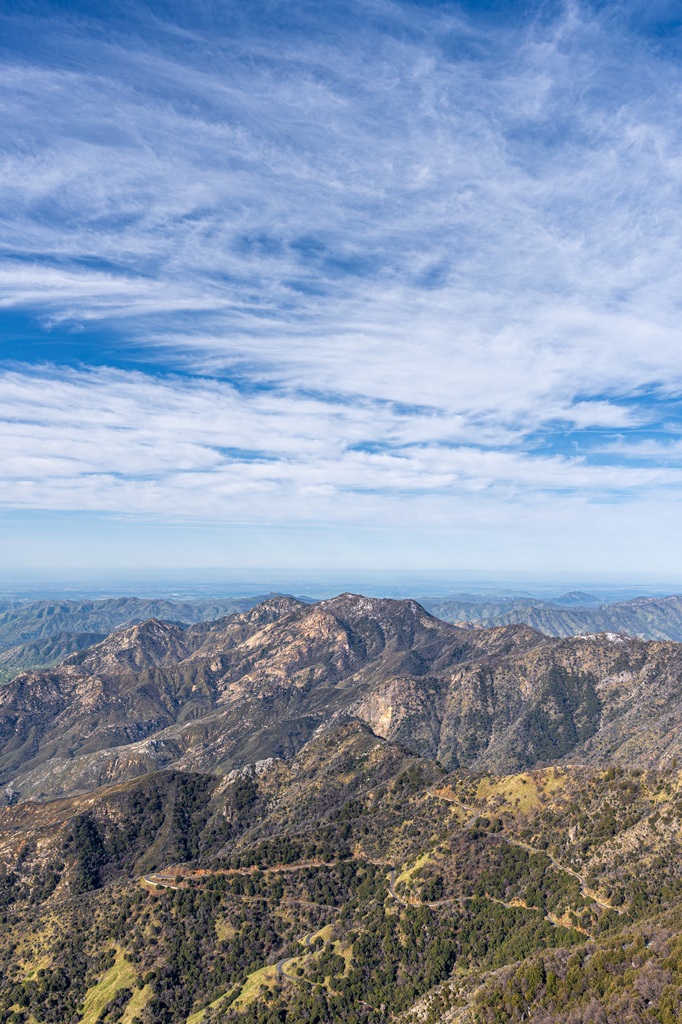
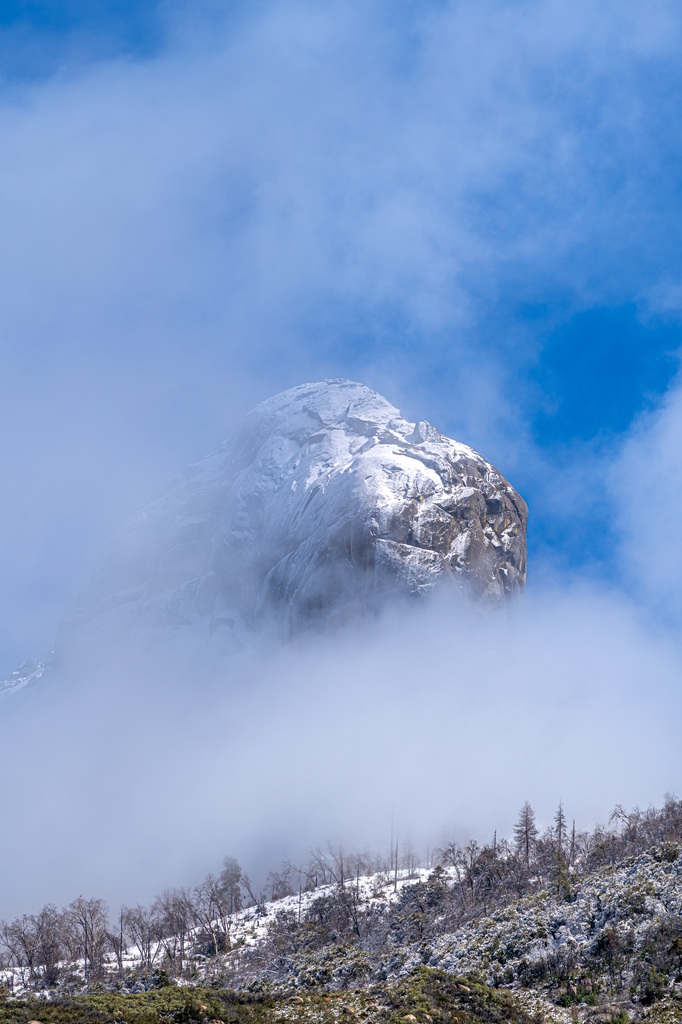
Stop #5 Amphitheater Point – A scenic pullout at a sharp hairpin turn with great views of Moro Rock and the canyon landscape below. It’s one of the first viewpoints where you really start to see how dramatic the terrain becomes.
Stop #6 Eleven Range Overlook – A viewpoint with sweeping views across Kaweah Canyon toward California’s Central Valley. On clear days, the layered mountain ridges stretch for miles in the distance.
Stop #7 Four Guardsmen – A cluster of four giant sequoias standing close together right beside Generals Highway. These towering trees give you your first real look at the massive sequoias before reaching the larger groves deeper in the park.
Stop #8 Giant Forest Museum – This museum sits at 6,500 feet in the Giant Forest of Sequoia National Park. This is the final stop along this scenic drive. Find a parking spot across the street and check out the museum to learn about giant sequoias and their ecosystem.
Pick up maps, books, gifts, water, and use the restrooms before exploring hands-on exhibits about these towering trees. It’s open year-round but it can temporarily close depending on the weather and conditions.
Even if the Giant Forest Museum is closed, you can still park in the large parking lot across the street. Next on the itinerary are two incredible hikes!
Generals Highway Map 👇
🌳 Hike the Big Trees Trail
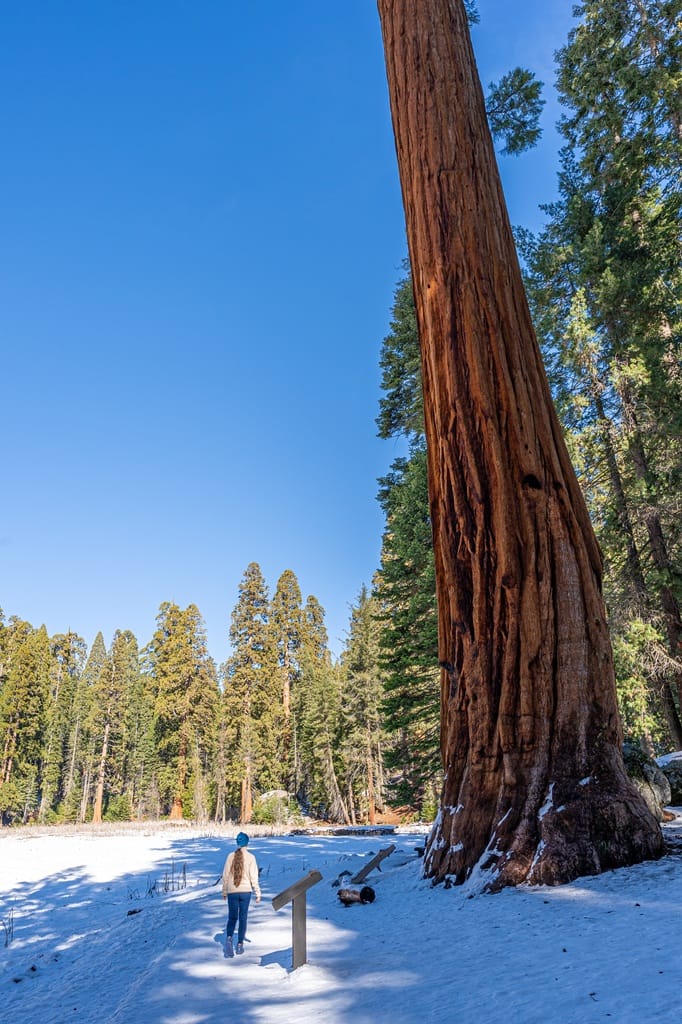
This family-friendly paved loop circles Round Meadow and offers a peaceful walk among towering giant sequoias.
Along the trail, educational displays explain the unique ecosystem that supports these giants.
🥾 Trail Stats:
- Starting Point: Giant Forest Museum
- Length: 1.2 miles roundtrip
- Elevation Gain: 105 feet
- Difficulty: Easy
- Pet-Friendly? No, pets are not allowed
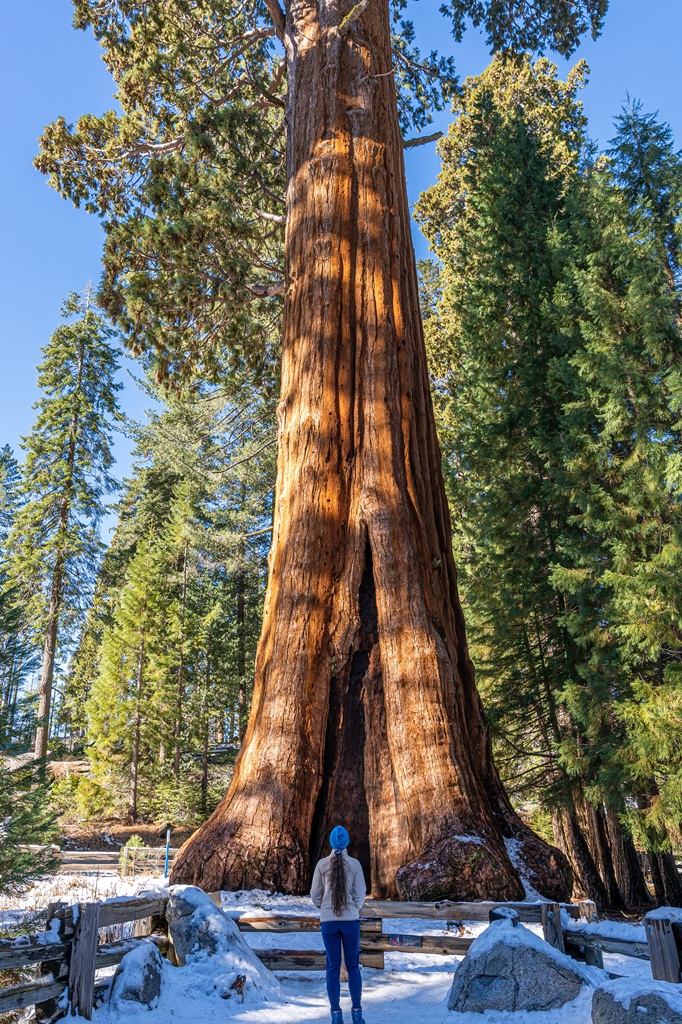
🌳 Big Trees Trail Highlights:
- Sentinel Tree – One of the largest sequoias along the trail, standing impressively near the museum.
- Clara Barton Tree – Named after the founder of the American Red Cross, this massive tree is a highlight of the loop.
- Round Meadow – A quiet meadow surrounded by sequoias, perfect for spotting wildlife and taking in the scenery.
Parking is available at the small accessible trailhead lot (open to everyone in winter) or the larger lot across from the museum.
❄️ Hike Crescent Meadow Road to Tunnel Log
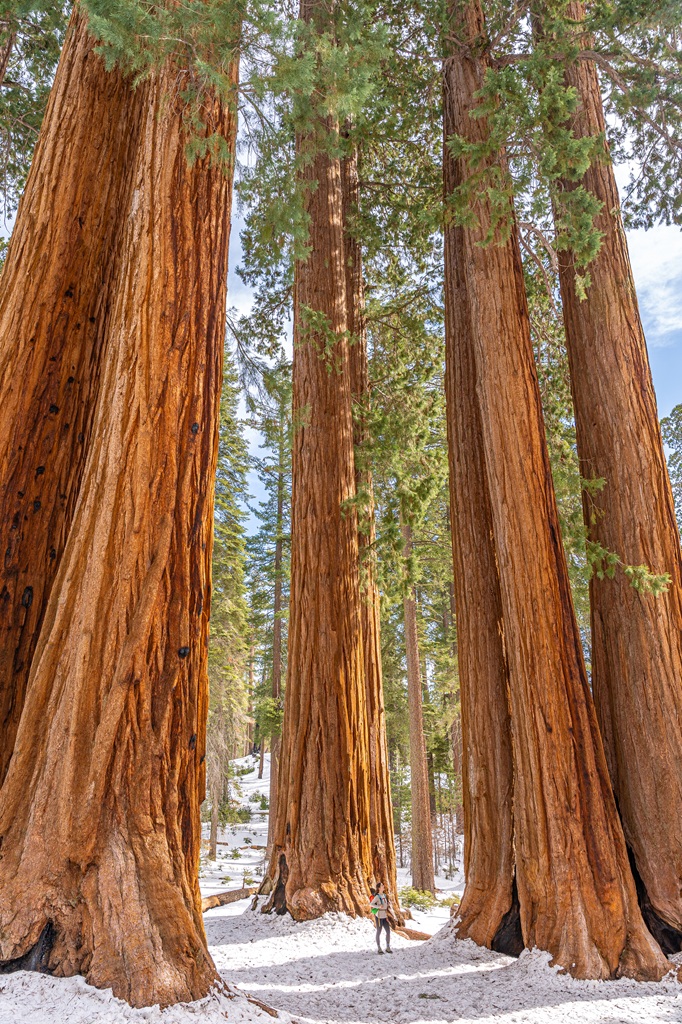
During winter, the Crescent Meadow Road closes to vehicles and becomes a perfect scenic route for snowshoers and cross country skiers.
If snow coverage is light, you can even hike along the road to reach the meadow. Just avoid walking on the ski tracks!
🥾 Trail Stats:
- Starting Point: Giant Forest Museum
- Length: 3 miles roundtrip
- Elevation Gain: 160 feet
- Difficulty: Easy
- Pet-friendly? No, pets are not allowed
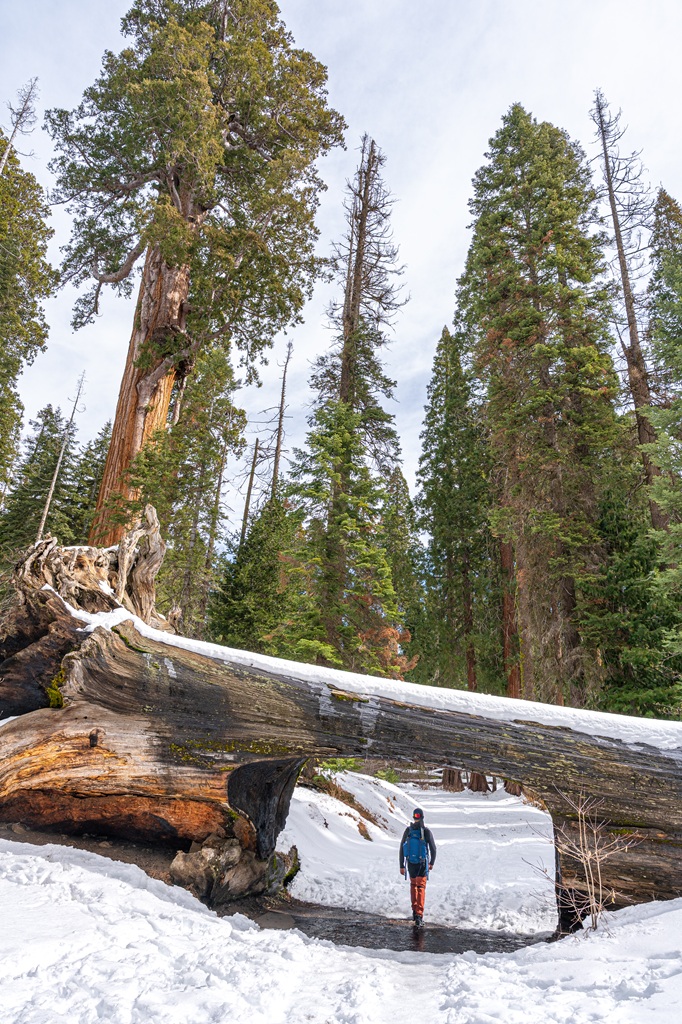
🌳 Crescent Meadow Road Highlights:
- Booker T. Washington Tree – One of the largest sequoias in the park, named for the influential African American educator.
- Auto Log – A massive fallen sequoia that early visitors once drove cars over.
- Parker Group – A beautiful cluster of sequoias named for Captain James Parker’s family, former Acting Superintendent of the park.
- Tunnel Log – A fallen giant sequoia with a tunnel you can still drive under. This is the most popular stop on this route!
🍔 Drive Back to Three Rivers for Dinner
After a full day exploring the giant sequoias, make the scenic drive back down the mountain toward Three Rivers and stop for dinner at The Gateway Restaurant & Lodge.
This local favorite is known for its great service, delicious continental-style cuisine, and beautiful views of the Kaweah River. The menu features a variety of options for breakfast, lunch, and dinner, along with daily specials like seasonal soups, fresh salads, and seafood.
If the weather’s nice, grab a table on the outdoor patio and enjoy open-air dining with the sound of the river in the background.
Day 2 Sequoia National Park Winter Itinerary (largest tree on earth + fun winter adventures)
Day 2 of this winter itinerary in Sequoia National Park is packed with some of the park’s most iconic experiences.
You’ll see the largest tree on Earth, hike through the famous Giant Forest surrounded by towering sequoias, and enjoy some classic winter fun at a snow play area.
If you’re up for more of a challenge, there’s also an alternate option for a longer winter hike to a beautiful alpine lake.
Alright, let’s dive into day two! ⬇️
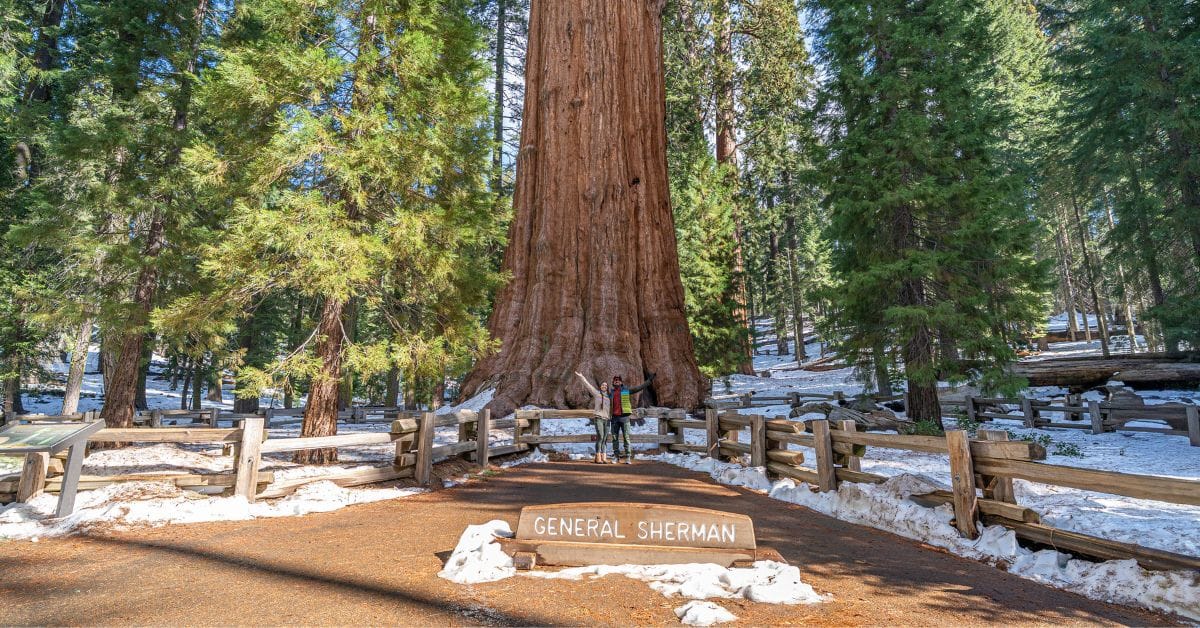
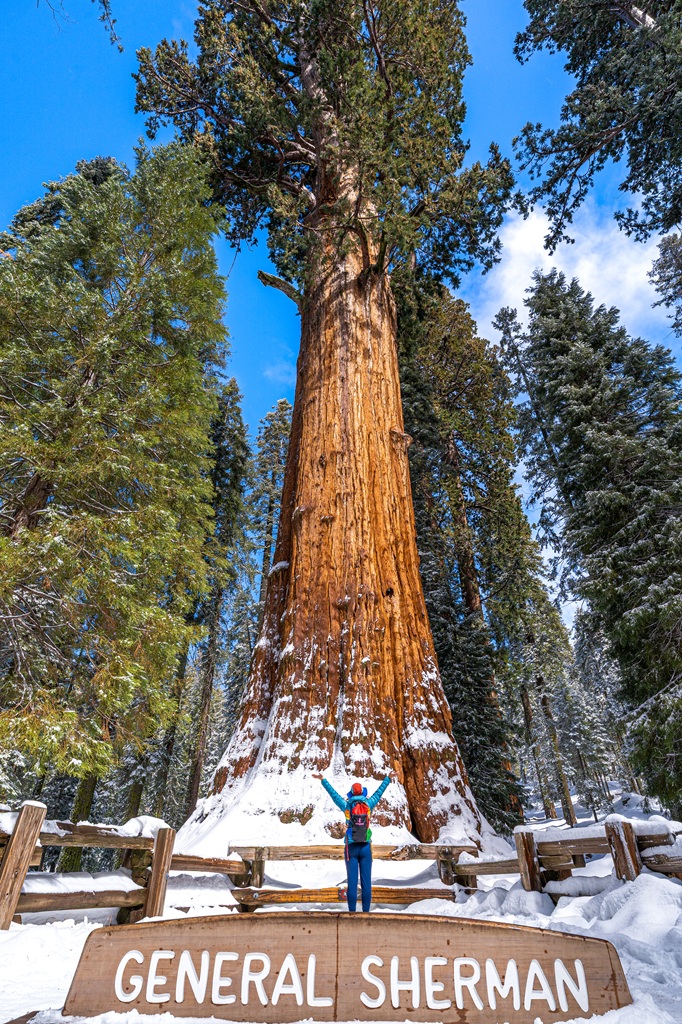
🌳 See the Largest Tree on Earth – General Sherman Tree
The General Sherman Tree is the most popular attraction in Sequoia National Park. Even in winter, this is where you’ll find the biggest crowds.
This massive giant sequoia stands over 275 feet tall, measures about 36 feet in diameter at the base, and weighs close to 1,400 tons. It’s something you have to see in person to understand just how enormous it is!
Estimated to be more than 2,000 years old, it was officially named the largest tree in the world by volume in 1931. Even more incredible, it’s still growing today – adding enough wood each year to equal a new 60-foot-tall tree.
🥾 Trail Stats:
- Starting Point: General Sherman Accessible Parking Lot
- Length: 0.3 miles roundtrip
- Elevation Gain: 50 feet
- Difficulty: Easy
- Pet-friendly? No, pets are not allowed
In winter, the main Sherman Tree parking lot closes due to snow. Visitors must park at the smaller accessible lot along Generals Highway. This lot normally requires a disability placard, but during winter it opens to all visitors.
Parking is limited, so arriving before 8 AM is a good idea since this is one of the park’s most popular stops.
From the lot, follow the short paved trail to the General Sherman Tree. The path can get icy in winter, so traction devices are recommended.
There’s also a popular photo spot near the base where you may have to wait your turn. Just be sure to stay behind the fence to help protect the tree’s fragile root system.
🥾 Hike the Congress Trail
Next up is the Congress Trail, conveniently located right next to the General Sherman Tree.
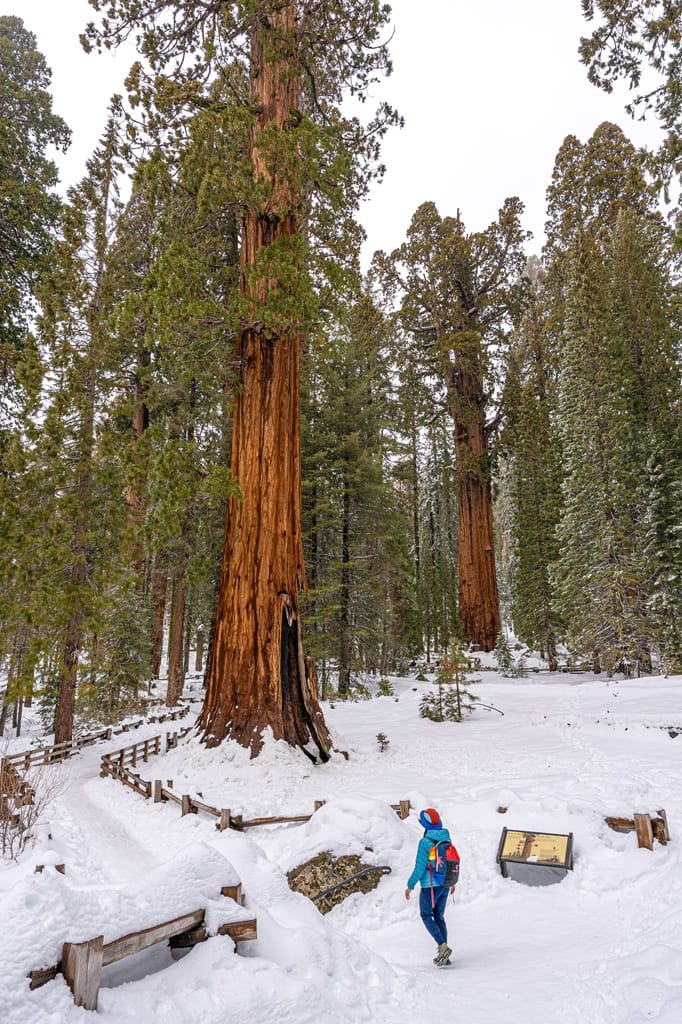
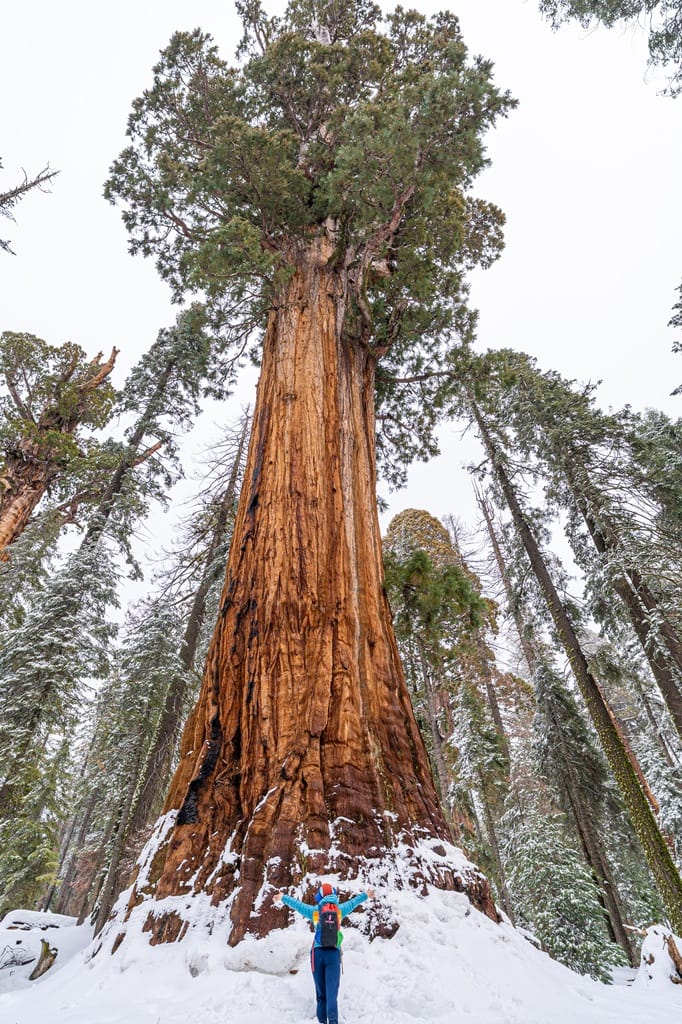
This is my favorite trail in the park for seeing giant sequoias. The loop takes you through the heart of the Giant Forest where you’ll see so many incredible giant sequoias, some so special that they have their own name.
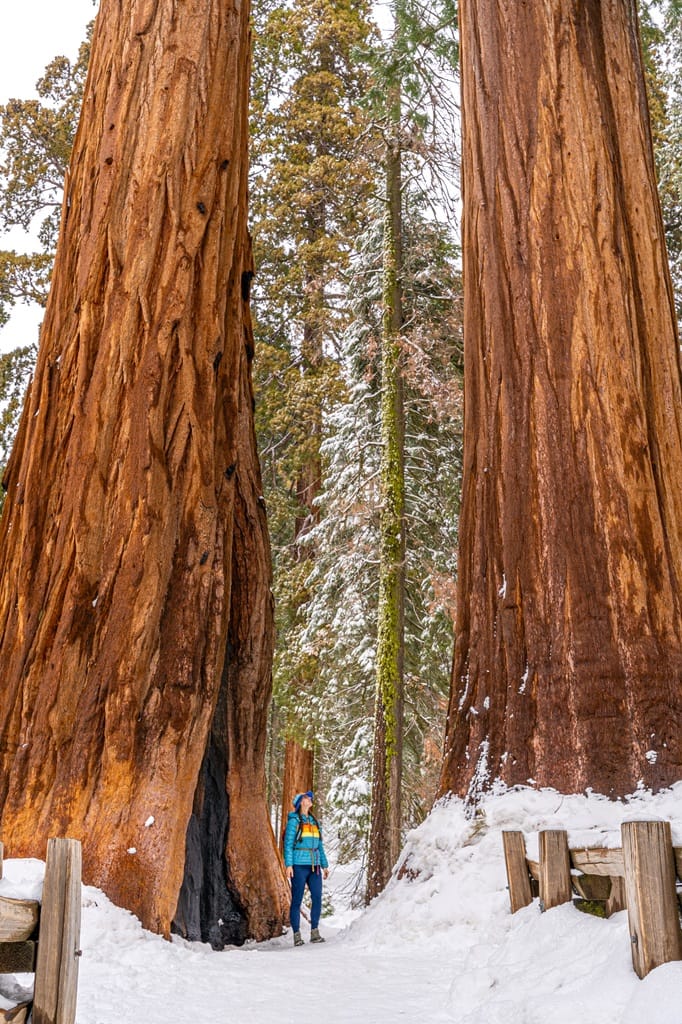
The hike is beautiful year-round, but winter might be the most magical time to experience it. Seeing these massive trees towering above a blanket of snow is unforgettable.
If there’s only a little snow on the trail, regular hiking boots (and possibly traction devices) usually work fine. After a fresh storm, though, it can turn into a fun snowshoe adventure.
🥾 Trail Stats:
- Starting Point: General Sherman Accessible Parking Lot
- Length: 2 miles roundtrip
- Elevation Gain: 350 feet
- Difficulty: Moderately challenging
- Pet-friendly? No, pets are not allowed


🌳 Congress Trail Highlights:
- President Tree – The third-largest tree in the world (by volume), estimated to be around 3,200 years old.
- Chief Sequoyah – Named after the Cherokee leader who created the Cherokee syllabary.
- The Senate and House Groups – Towering clusters of sequoias named in the 1920s.
- McKinley Tree – A massive sequoia standing over 240 feet tall.
- Room Tree – A hollow sequoia with a natural opening created by past fire damage.
Parking for this hike is the same lot used for the General Sherman Tree. Many visitors only come to see the General Sherman then leave, so the Congress Trail in a lot quieter.
From the accessible parking area along Generals Highway, follow the short paved path to the General Sherman Tree, then continue a little farther to reach the Congress Trail loop.
The trail winds through towering sequoias, mossy forest, and a small creek crossing before opening up to even more massive trees deeper in the grove.
✨ READ THIS: General Sherman Tree and Congress Trail Hiking Guide

⛄ Wolverton Snow Play Area
Located at the end of Wolverton Road in the Giant Forest (about two miles north of the General Sherman accessible parking lot), the Wolverton Snow Play Area is one of the best spots in the park for playing in the snow!
Visitors come here to go sledding, build snowmen, have snowball fights, snowshoe, or try cross country skiing.
The area sits at about 7,250 feet in elevation and has a large parking lot with a few picnic tables. Be sure to store food properly in the provided bear-proof containers or inside your vehicle.
After winter storms, it can take several hours for plows to clear Wolverton Road since crews prioritize the main park road first. It’s always a good idea to check road conditions before heading out.
When Wuksachi Lodge is open, visitors can often rent snowshoes and trekking poles, and sometimes purchase basic snow gear as well.
⚠️ Safety tip: Snow can hide hazards like rocks, roots, or stumps on the sledding hill. Too little or too much snow can make sledding unsafe, so be sure to use caution.
❄️ Hike, Snowshoe, or Ski to Heather Lake (alternate option)
If you’re looking for a longer, more challenging winter adventure, this hike to Heather Lake is perfect!
Start your day by visiting the General Sherman Tree early in the morning, if you want, then head to the Wolverton Trailhead to begin this hike.
Depending on conditions, this hike can take 5–6 hours or more. Since daylight ours are shorter in the winter, this will basically be a full day adventure. But so worth it!
🥾 Trail Stats:
- Starting Point: Wolverton Trailhead (Lakes Trail Trailhead)
- Length: 8 miles roundtrip
- Elevation Gain: 2,430 feet
- Difficulty: Challenging
- Pet-friendly? No, pets are not allowed
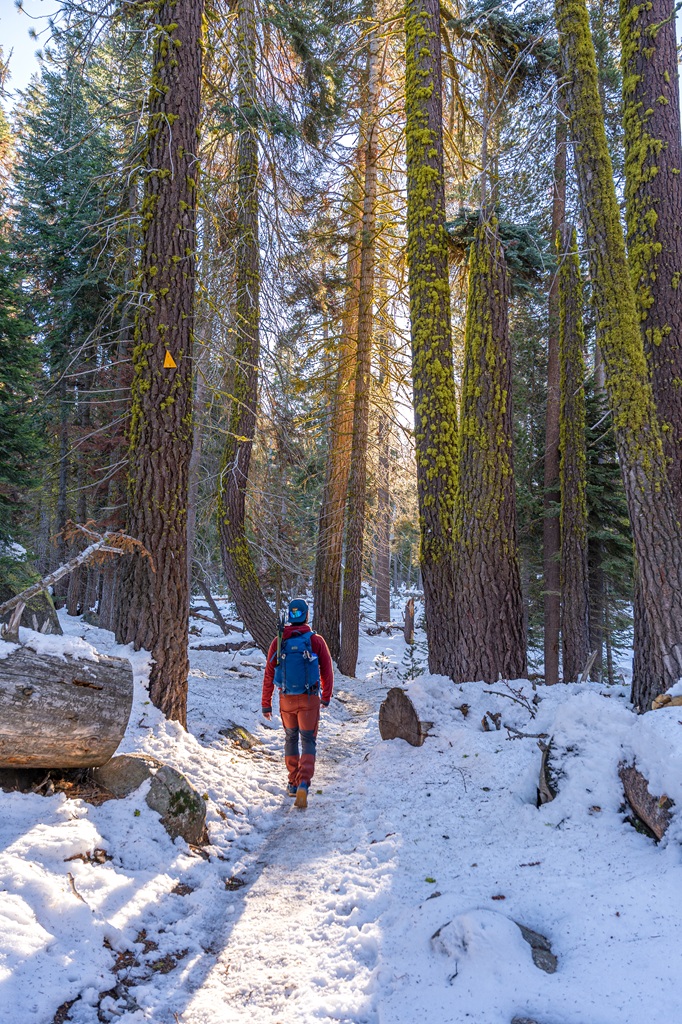
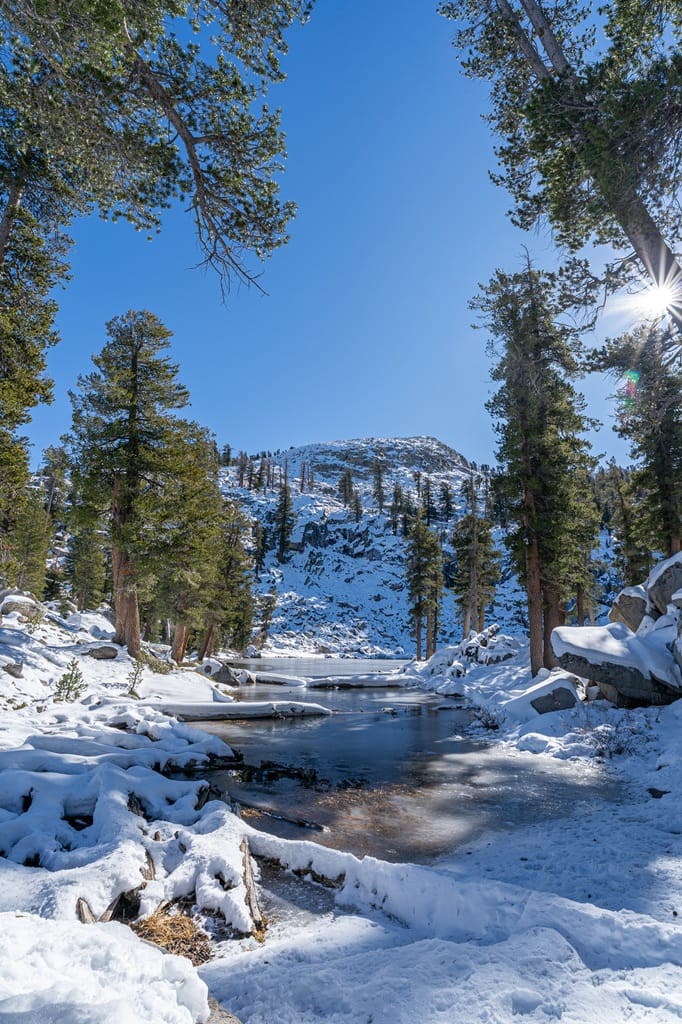
Sitting at 9,280 feet and surrounded by snow-covered granite peaks, Heather Lake is the first lake you’ll reach along the Lakes Trail.
In winter, the trail is usually easy to follow if others have packed it down, but make sure you bring the right gear – microspikes, snowshoes, or even skis if there’s heavy snow.
The hike follows the Lakes Trail most of the way. In winter, the Watchtower Trail is closed, so you’ll take the Hump Trail instead, which eventually rejoins the Lakes Trail. Once at the lake, take a moment to enjoy the peaceful winter scenery.
The trailhead has a large parking area but check road conditions and carry tire chains before heading up. This is a tough winter hike, so be prepared, know your limits, and pack the proper gear!
✨ READ THIS: Lakes Trail Hiking Guide
🍝 Drive Back to Three Rivers for Dinner
Staying in Three Rivers? After a full day exploring Sequoia, it’s time to head back down the mountain and grab some dinner.
Here are a few popular spots to choose from:
- River View Grill & Bar – American-style dishes
- Casa Mendoza – Classic Mexican food
- Pizza Factory – Pizza and Italian favorites
- Tony’s Taverna On Wheels – Mediterranean and Greek cuisine
And that’s it for this exciting 2-day Sequoia National Park winter itinerary!
I hope this guide helps you plan an amazing winter trip to Sequoia. You don’t have to follow the itinerary exactly, but it includes many of the park’s most popular winter activities and is very family friendly.
Keep reading for more helpful trip planning information, including more things to do, the best places to stay, winter tips, what to pack, and how to visit Kings Canyon National Park if you have an extra day.
Have An Extra Day? Visit Kings Canyon National Park in Winter
If you have an extra day and don’t mind spending a few hours driving, consider visiting Kings Canyon National Park. From Three Rivers, it’s about a 3-hour roundtrip drive.
Winter access in Kings Canyon is limited compared to Sequoia National Park, but there are still a few easy and worthwhile stops that make the trip worth it.
Things to Do in Kings Canyon National Park in Winter
🌳 See the General Grant Tree
The highlight of the park is the General Grant Tree, often called the Nation’s Christmas Tree. It’s the second-largest tree in the world by volume and is surrounded by other impressive sequoias.
The short loop trail to the tree is only about 0.7 miles and usually remains accessible in winter, making it an easy stop for most visitors.
☃️ Big Stump Snow Play Area
If you’re visiting with kids (or just want to have some fun in the snow), stop at the Big Stump Snow Play Area. This is a popular place for sledding, building snowmen, and enjoying classic winter activities.
🐻 Grant Grove Village
Before leaving the park, take a quick walk around Grant Grove Village. This small visitor area has a market, restaurant, and visitor center where you can warm up and grab a snack.
Places to Stay in and Near Kings Canyon National Park in Winter
If you’d rather stay closer to the park instead of driving back to Three Rivers, here are a few good lodging options.
John Muir Lodge – A cozy lodge located in Grant Grove Village. It’s one of the most convenient places to stay if you want to explore the park. This lodge is typically open from spring through fall – I’ve seen it re-open for the season as early as March, so this could possibly be an option during your visit.
There aren’t too many hotels or luxury lodges outside of Kings Canyon National Park, but you’ll still find plenty of great places to stay near Kings Canyon. Many of the options are independently owned and include cozy cabins, vacation homes, glamping domes, and charming inns.
More Things to Do in Sequoia National Park in Winter
Looking for more things to do in Sequoia National Park in winter? Here’s a quick list of other fun activities to try if you have extra days to explore – or if this is your second winter visit and you’re ready for something new!
🪨 Hike Moro Rock
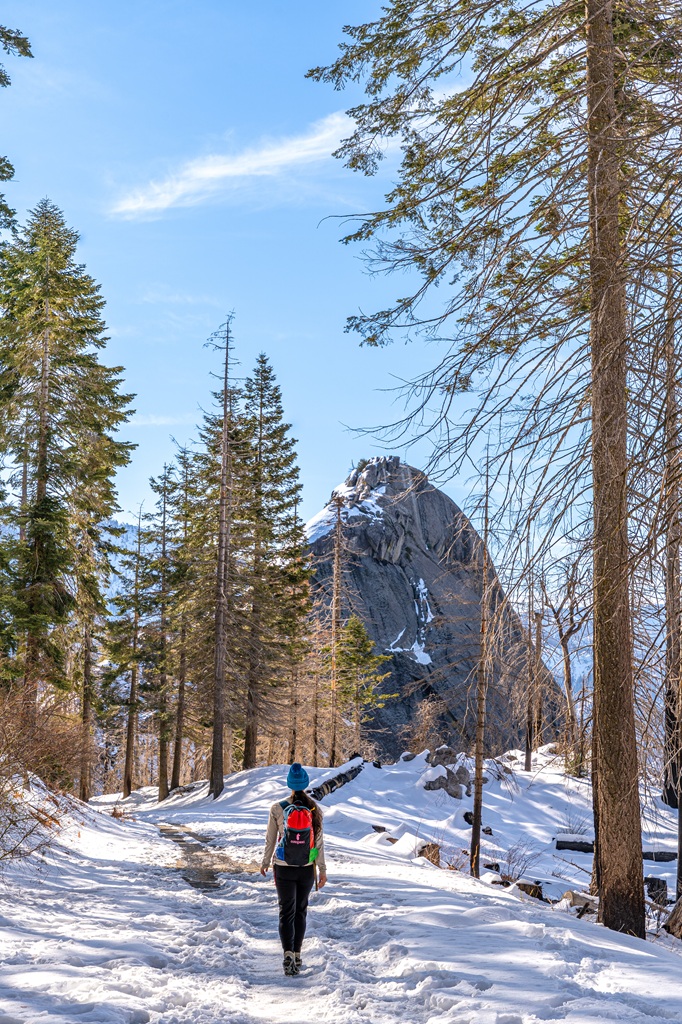
One of Sequoia’s most iconic landmarks, Moro Rock sits at 6,725 feet and offers incredible 360° views in a clear day.
🥾 Trail Stats:
- Starting Point: Giant Forest Museum
- Length: 3.8 miles roundtrip
- Elevation Gain: 475 feet
- Difficulty: Moderate to hard
- Pet-friendly: No, pets are not allowed
Moro Rock / Crescent Meadow Road closes, so park at the Giant Forest Museum and hike the trail or follow the closed road.
The steps to Moro Rock’s summit can be closed if ice buildup makes it unsafe. Hike it only when conditions are clear, as snow and ice can make it very slippery.
If Moro Rock is inaccessible, try the nearby Hanging Rock Trail for stunning views and a giant “balancing” boulder!
✨ READ THIS: Moro Rock Hiking Guide

⛷️ Snowshoe or Ski the Crescent Meadow Loop Trail
Winter transforms Crescent Meadow into a peaceful, snow-covered wonderland. Fewer crowds make it perfect for exploring.
🎿 Trail Stats:
- Starting Point: Giant Forest Museum
- Length: 6.5–7 miles roundtrip
- Elevation Gain: 1,000 feet
- Difficulty: Moderately challenging
- Pet-friendly: No, pets are not allowed
Follow the closed road 2.6 miles from the museum, stopping at Parker Group and Tunnel Log along the way.
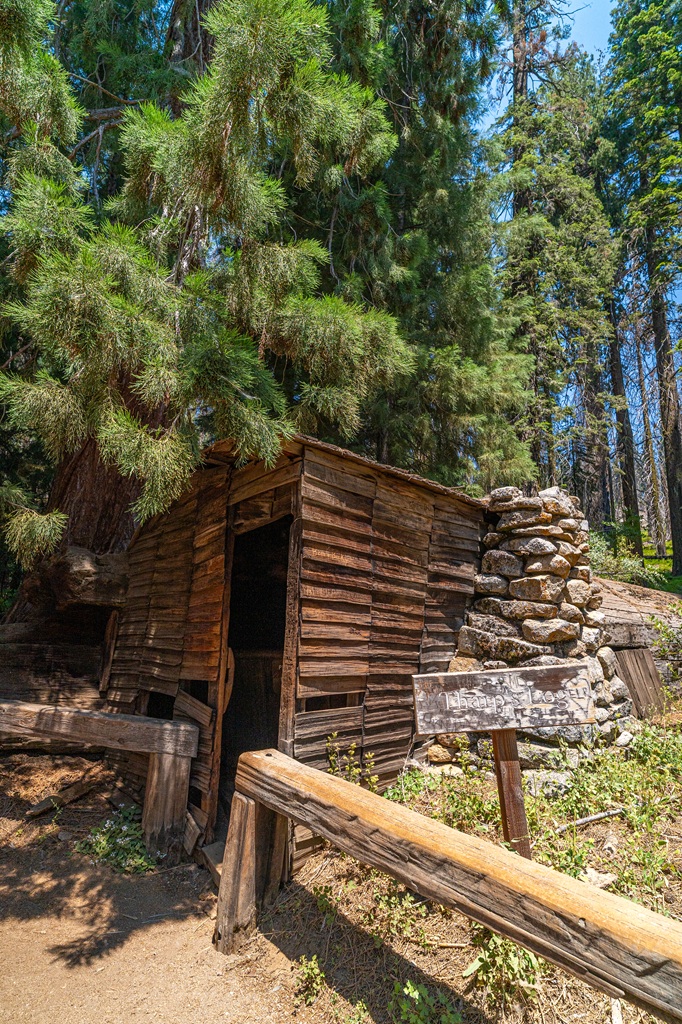
The loop around the meadow is about 1.3 miles, or 1.8 miles including the short detour to Tharp’s Log, a hollowed-out sequoia once used as a cabin.
Popular with cross country skiers, but hikers and snowshoers are welcome – just avoid walking on ski tracks.
✨ READ THIS: Crescent Meadow Loop Hiking Guide

❄️ Ranger-Led Snowshoe Walks
Don’t miss free ranger-led snowshoe walks, usually running from mid-January as long as snow allows. If snow is scarce, rangers may offer guided hikes instead. Check the NPS calendar for this season’s ranger-led walks.
- Length: 1–2 miles
- Duration: About 1.5 hours
- Difficulty: Moderately challenging
- Ages: 10+ (snowshoes sized for older kids and adults)
Snowshoes provided, just bring warm layers, waterproof boots, gloves, hat, sunglasses, sunscreen, water, and snacks. Traction devices or cleats are recommended if conditions are icy.
This is a fun, easy way to explore Sequoia’s winter wonderland without needing prior experience.
✨ Looking for even more winter adventures? Read this 👉 Best things to do in Sequoia National Park this winter!
Best Places to Stay Near Sequoia National Park in Winter
You might be wondering where you can stay when visiting Sequoia National Park in winter. Lodging options inside the park are limited this time of year.
In fact, typically only one lodge remains open throughout the winter months, and even that may close temporarily if severe winter storms move through the area.
If you enjoy camping, there’s also one campground that stays open in winter – Potwisha Campground. Just keep in mind that reservations are required and must be made online through Recreation.gov.
If you’re unable to stay inside the park, don’t worry! The nearby town of Three Rivers has plenty of great lodging options located just outside the park entrance.
Here are the top 5 places to stay in and near Sequoia National Park during winter. 👇
Wuksachi Lodge
Wuksachi Lodge is the signature hotel of Sequoia National Park, ideally located near the park’s top attractions, including the General Sherman Tree, Giant Forest trails, Wolverton Snow Play Area, and Lodgepole Market.
Open year-round, it’s a perfect base for exploring the park without extra travel time. Rooms fill up months in advance, so be sure to plan ahead!
The lodge offers 102 spacious guest rooms to suit a variety of travelers.
🏨 Room Options:
- Standard Rooms – Classic mountain lodge accommodations with either a king bed or two queen beds. Queen rooms include a pull-out sofa bed. Sleeps up to 4.
- Deluxe Rooms – Larger rooms ideal for families or groups, featuring a king bed with sofa bed or two queen beds with a table and chairs. Sleeps up to 5 with a rollaway bed or crib.
- Superior Rooms – Corner rooms offering the most space, perfect for families. Options include a king or two queen beds, plus a sofa bed, seating alcove, coffee table, and sliding door for added privacy. Sleeps up to 6 with a rollaway bed or crib.
🌲 Amenities and Features: Enjoy The Peaks Restaurant, meeting and event spaces, a gift shop, free parking, WiFi, and pet-friendly rooms.
🤩 Book your stay at Wuksachi Lodge!
Lazy J Ranch Motel
Escape to a relaxed, scenic retreat in historic Three Rivers. Nestled in the rolling Sierra foothills, Lazy J Ranch Motel has been family-owned and operated since 1975.
Just 15 minutes from the Ash Mountain Entrance to Sequoia National Park, it’s a perfect home base for exploring the park’s giant sequoias, scenic hiking trails, and outdoor adventures.
All accommodations are one-story with private entrances, and the motel is pet-friendly!
🏨 Room Options:
- King Rooms – Comfortable king bed, sleeps 2.
- Two-Bed Rooms – Ideal for families or friends, sleeps up to 4.
- Cottages – Spacious option with a kitchen, sleeps up to 6, perfect for longer stays or larger groups.
🌲 Amenities and Features: Guests enjoy free WiFi, on-site parking, river access, and guest laundry facilities. Rooms come equipped with a mini-fridge, microwave, Keurig coffee maker, and TV with basic cable.
🤩 Book your stay at Lazy J Ranch Motel!
Buckeye Tree Lodge
Just under half a mile from the Ash Mountain Entrance to Sequoia National Park, Buckeye Tree Lodge is a stylish, updated lodge set along the Kaweah River, right next to the historic Pumpkin Hollow Bridge.
As the last hotel before entering the park, the Buckeye has been a cherished part of Three Rivers and the Sequoia landscape since the late 1940s.
The lodge offers 12 rooms and 10 cabins, many with stunning river views and the calming sound of rushing water.
🏨 Accommodations:
Lodge Rooms – Spread across two buildings: odd-numbered rooms are pet-friendly and on the ground floor with patios, while even-numbered rooms are on the second floor with balconies. Amenities include complimentary WiFi, TV, microwave, mini-fridge, AC/heating, and direct river access.
Cabins and Cottages – Located across the street, these 10 individually styled cabins feature hand-crafted wood trim and cabinetry, private outdoor spaces, and barbecue grills. Select units include fireplaces for cozy winter nights. Options range from intimate queen rooms to multi-bedroom cabins accommodating up to 8 guests.
Buckeye River House (Presidential Suite) – Perfect for larger families or groups seeking space and luxury. This 3-bedroom, 2-bath multi-level cabin offers private balconies with river views, a full open-layout kitchen with outdoor grill, laundry facilities, and a wood-burning stove for ultimate comfort.
🤩 Book your stay at the Buckeye Tree Lodge!
AutoCamp Sequoia
Located in Three Rivers, just 15 minutes from the Ash Mountain Entrance of Sequoia National Park, AutoCamp Sequoia offers a one-of-a-kind glamping experience.
Set along the scenic Kaweah River, this upscale outdoor resort combines the thrill of camping with boutique hotel comforts, perfect for travelers who want to enjoy nature without sacrificing modern amenities.
The resort features plenty of ways to relax and have fun, including a seasonal outdoor pool, complimentary bike rentals, outdoor grilling areas, a fireplace lounge, general store,
The Kitchen (on-site restaurant), WiFi, and lawn and board games available at the Clubhouse. Seasonal activities may include live music, yoga and Pilates classes, stargazing programs, and community events.
🏕️ Lodging Options:
- Airstream Suites – Climate-controlled, custom Airstreams with spa-inspired bathrooms and private outdoor spaces.
- Premium Airstream Suites – Custom Airstreams with added privacy.
- Vista Airstream Suites – Located along the Kaweah River for stunning scenic views.
- Explorer Suites – Custom Airstreams that include a complimentary premium AllTrails subscription to explore local hikes.
- BaseCamp Suites – A blend of modern Airstream suite and canvas tent, offering the best of glamping and traditional camping.
- Premium BaseCamp Suites – Airstream plus tent setup with extra privacy.
- Vista BaseCamp Suites – Secluded location with river views.
- Premium Cabin – Tiny home-style accommodations with added privacy.
- Accessible Suite – Fully accessible tiny home-style suite with spa-inspired bathroom and private outdoor space.
- Double Queen Bunk Rooms – Traditional hotel-style rooms, ideal for families or larger groups.
- King Bunk Room – Boutique hotel-style room with extra sleeping space.
- Accessible King Room – Fully accessible boutique hotel-style room located centrally on the property.
🤩 Book your stay at AutoCamp Sequoia!
Comfort Inn & Suites Sequoia Kings Canyon
Located in the charming foothills town of Three Rivers, Comfort Inn & Suites Sequoia Kings Canyon provides a comfortable and convenient stay just 15 minutes from the Ash Mountain Entrance of Sequoia National Park.
After a day of exploring the parks, relax in spacious rooms and suites designed for comfort and rest. All rooms feature flat-screen TVs, free WiFi, premium bedding, and comfortable seating areas.
🏨 Room Options:
- Standard Rooms – Cozy hotel rooms with comfortable beds and modern amenities.
- Suites – Ideal for families or longer stays, offering extra space and seating areas.
🌲 Amenities & Features: Guests can enjoy a continental breakfast, pet-friendly rooms, EV charging stations, outdoor pool and hot tub, sauna, fitness center, laundry facilities, gift shop, and a picnic area.
🤩 Book your stay at Comfort Inn & Suites Sequoia Kings Canyon!
Sequoia National Park Winter Tips and Packing List
Sequoia Winter Tips
1. Check Road Status: Some roads in Sequoia National Park close during winter or may temporarily close after snowstorms. Even when open, roads can be icy or snow-covered, so drive cautiously and use tire chains when required.
⚠️ Check current road conditions online or call (559) 565-3341 (press 1, then 1) before heading out.
2. Always Carry Tire Chains: If snow is possible, you’re required to have tire chains in your vehicle. They help maintain traction on snowy or icy roads. Make sure your chains fit your tires and that you know how to install them before your trip! Chain controls are typically in effect November through March, but this can vary depending on weather.
3. Download Offline Maps: Snow can completely cover trails, especially at higher elevations, making navigation tricky. Download offline maps to your phone beforehand and bring a paper map and compass as a backup.
4. Check the Weather Forecast: Winter conditions in the Sierra Nevada can change quickly. Always check the weather forecast before heading out, and avoid hiking during storms or heavy snowfall.
5. Winter Trail Closures: Most trails remain open in winter, but conditions vary. Some trails may be icy, snow-covered, or temporarily closed due to hazards. Check trail conditions before heading out!
6. Dress for Winter Conditions: Bring plenty of layers and use proper layering techniques to regulate your body temperature. Overheating and sweating can make you colder once you stop moving, so adjust layers as needed throughout the day.
7. Be Bear Aware: Black bears are active within Sequoia National Park. Follow these guidelines to avoid any negative interactions with a black bear.
🐻 Note: bear spray is prohibited in Sequoia!
8. Respect Nature: Follow Leave No Trace principles – plan ahead, pack out all trash, avoid disturbing wildlife, be considerate of others, and respect the natural beauty of Sequoia National Park.
Sequoia Winter Packing List
🎒 Backpack – A pack around 22–30 liters works well to carry layers, snacks, water, and gear. I’ve been using the Cotopaxi Luzon Del Dia 24L Pack and my husband uses the REI Co-op Trail 25L Pack.
🥾 Winter Boots – Waterproof, insulated boots are a must!
🧊 Microspikes – Bring a pair of microspikes if you’re visiting in the winter and you’re planning to hike along icy trails. They will give you good traction to avoid slipping! I use Black Diamond Access Spike Traction Device.
❄️ Snowshoes – Best used when hiking on deep, soft, or loose snow, usually anything over six inches, to prevent sinking, also known as postholing.
☃️ Gaiters – Keep snow out of your boots when snowshoeing or hiking in deep snow.
🥢 Trekking Poles – Essential for stability on snow and slippery trails. I use REI Co-op Trailmade Trekking Poles and love them!
🧥 Warm Layers (top) – Pack a moisture-wicking base layer, a fleece mid-layer, an insulated jacket, and an outer shell to protect you from the elements, such as rain, snow, and wind. Check out my favorite tops 👇
- Base layer: REI Co-op Midweight Long-Sleeve Base Layer
- Fleece mid layer: Cotopaxi Teca Fleece Full-Zip Jacket
- Down mid layer: Cotopaxi Fuego Hooded Down Jacket
- Outer shell: Patagonia Torrentshell 3L Jacket
👖 Warm Layers (bottom) – Pack a breathable base layer, fleece-lined mid-layer, and soft-shell pants. A pair of hard-shell pants might be overkill but depends on the conditions and the winter adventure you plan to go on. My favorite fleece bottoms are the Baleaf Fleece Jogger Pants and the Baleaf Fleece Leggings.
🤠 Warm Hat/Beanie – Keeps your head and ears warm on cold winter hikes. My favorite beanie is the Cotopaxi Tozo Beanie!
🧦 Socks – Moisture-wicking, quick-drying socks are the way to go. My favorite pair of hiking socks are Darn Tough Hiker Micro Crew Cushion Socks. I’m obsessed with them!
🥶 Emergency Shelter – Pack an emergency bivy sack or space blanket for shelter in case of sudden weather changes.
🗺️ Navigation – Carry a physical topographic map, compass, a satellite messenger (or personal locator beacon), and download offline maps to help you stay on course, find your way in unfamiliar terrain, and call for help if needed.
🔦 Headlamp/Flashlight – A reliable light source with extra batteries, in case you end up hiking in the dark or need it for emergency situations.
🩹 First-Aid Kit – A basic first-aid kit with items like bandages, antiseptic, pain relievers, and any personal medications you may need.
💧 Water – Water bottles to carry sufficient water to stay hydrated, along with a filtration system or purification tablets if you plan to refill from natural sources.
🍕 Food – Energy-rich snacks or meals to keep your energy levels up during the hike.
😎 Sun Protection – Sunscreen, sunglasses, and a sunhat to protect yourself from harmful UV rays, even when it’s cloudy. Also, polarized sunglasses are important when it’s bright outside and the ground is covered in snow/ice.
🔥 Fire – A lighter, matches, or fire starter to help you build a fire for warmth or signaling in case of emergency. Along with matches, I also carry a multi-tool carabiner that has a fire starter, utility blade, screwdriver, and bottle opener.
🗡️ Multi-Tool and Repair Kit – A versatile tool/knife and repair kit to handle any task, from preparing food to making repairs.
🚙 Winter Car Kit – Pack a basic winter car kit in case you get stranded in a snowstorm, including blankets or sleeping bags, extra warm layers, ice scraper, small shovel, extra water, snacks, flashlights, portable power bank with chargers, and signaling devices. And don’t forget tire chains!
Conclusion
Visiting Sequoia National Park in winter is an incredible experience, especially right after a fresh snowfall!
In this guide, I’ve covered a complete 2-day itinerary along with helpful tips for visiting in winter, things to know before you go, the best seasonal activities, where to stay, and what to pack.
If this Sequoia National Park winter itinerary inspired you to plan your own trip, feel free to drop a comment below and share your adventure!
Enjoyed this post? Pin for later!