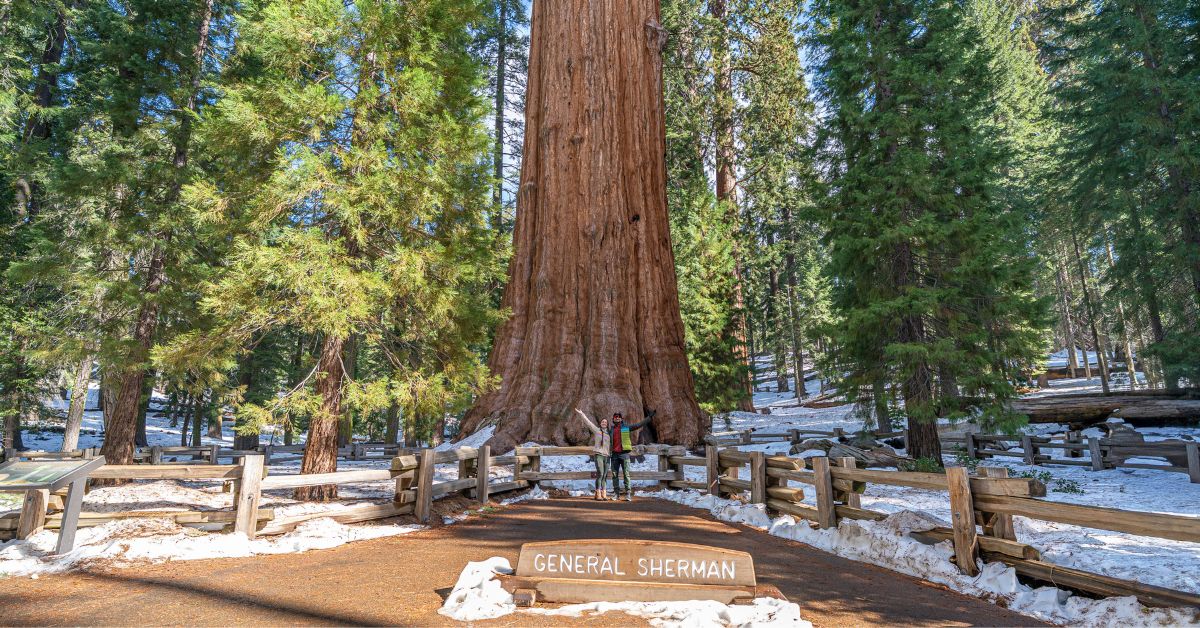
Want to see the largest tree on earth? Hike the General Sherman Tree Trail in Sequoia National Park! Your mind will be blown when you are standing in front of this ancient giant. 🤯
The General Sherman Tree Trail is a short, paved walk that leads to the largest living tree (by volume). If you’re just spending one day in Sequoia National Park, the General Sherman Tree is something you don’t want to miss!
I recommend seeing the General Sherman first thing in the morning to avoid big crowds – this is the most popular attraction in the park!
Read my full guide to learn everything you need to know about hiking the General Sherman Tree Trail in Sequoia National Park!
Affiliate Disclaimer: Some links on this page may be affiliate links, meaning I may earn a small commission at no extra cost to you. As an Amazon Associate, I earn from qualifying purchases. Thanks for supporting the blog! 🫶
- General Sherman Tree Trail Stats and Map
- General Sherman Tree Trailhead and Parking
- Best Time to Hike the General Sherman Tree Trail
- General Sherman Tree Trail in Sequoia National Park: Step-by-Step Directions
- Tips for Hiking the General Sherman Tree Trail
- FAQs: General Sherman Tree in Sequoia National Park
- What to Bring to Sequoia National Park
- Conclusion
Sequoia National Park Trip Info
📍 Location: California, USA
🗓️ Best Time to Visit: Year-round but most accessible time is May-October
🏞️ Ideal Trip Length: 2–3 days
✈️ Closest Airport: Fresno Yosemite International (2 to 2.5 hours away)
🏨 Where to Stay: Wuksachi Lodge in Sequoia, John Muir Lodge in Kings Canyon, or Lazy J Ranch Motel, Buckeye Tree Lodge, and AutoCamp Sequoia in Three Rivers
🚙 Getting Around: Rent a vehicle from rentalcars.com or discovercars.com
💵 Entrance Fee: $35 per vehicle (7 days) or buy an America the Beautiful Pass (covers the entrance fee for 1 year). There are new non-resident fees – learn more here
🤩 Check out my Sequoia National Park Guide for more travel, hiking, and seasonal guides
General Sherman Tree Trail Stats and Map
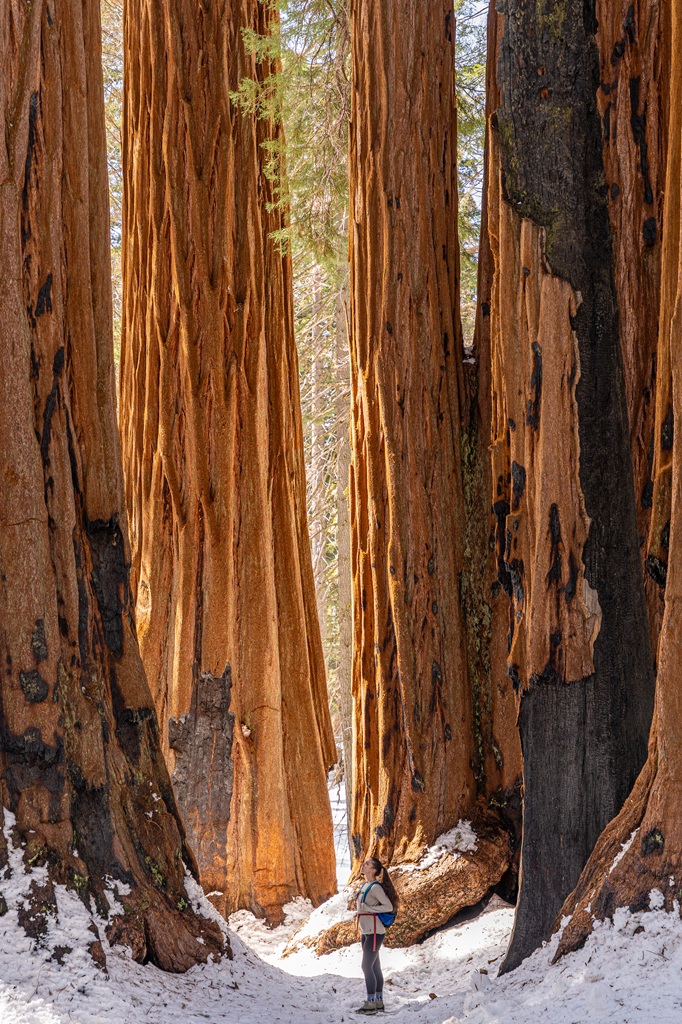
When you stand in front of the General Sherman Tree for the first time, don’t be surprised if you get a bit emotional. It’s mind blowing that trees like this can live for so long and grow to such an enormous size.
This iconic giant sequoia stands over 275 feet tall, is more than 36 feet in diameter at the base, and weighs nearly 1,400 tons.
General Sherman is estimated to be over 2,000 years old, and it continues to grow every year. It was officially declared the largest tree by volume in 1931.
General Sherman Tree Trail Stats

Length: 1.1 miles (1.7 km) roundtrip
Elevation Gain: 190 feet
Difficulty: Easy to moderate
Hiking Time: 30 to 45 minutes
Route Type: Lollipop
Pet-friendly? No
Wheelchair Accessible? Yes, via the wheelchair accessible route
Highlights: General Sherman Tree
➡️ Wheelchair Accessible Route: This 0.3-mile roundtrip trail with about 40 feet of elevation gain offers an accessible way to see the world’s largest tree, General Sherman. Visitors with a disability placard can park in the small lot off Generals Highway and follow the paved path to this towering giant sequoia.
General Sherman Tree Trail Map
Sequoia National Park Entrance Fee
Entrance to Sequoia National Park costs $35 per vehicle for a 7-day pass. However, if you have the America the Beautiful Annual Pass, your entry is free!
For those who love exploring national parks, investing in the Annual Pass is a smart choice. At just $80, it grants you access to over 2,000 federal recreation sites across the country!
FEE UPDATES! Beginning January 1, 2026, non-U.S. residents (without an annual pass) will pay a $100 per person in addition to the standard entrance fee. The Annual Pass for non-US residents will cost $250.
General Sherman Tree Trailhead and Parking
🅿️ Trailhead Parking: The main access point for the General Sherman Tree Trail is the General Sherman Tree Trailhead (also known as the Sherman Tree Trailhead), located off Wolverton Road about 10 minutes south of Lodgepole Visitor Center.
From here, a paved 0.5 mile (0.8 km) trail leads downhill to the General Sherman Tree, the largest tree in the world by volume.
📍 Google Maps Location: General Sherman Tree Trailhead (main parking lot)
🅿️ Alternate Trailhead Parking: For those with a disability placard, there’s a small accessible parking lot located directly off the Generals Highway, offering a much shorter and more level route to the General Sherman Tree.
A paved, wheelchair-accessible trail (about 0.3 miles / 0.4 km roundtrip with 40 feet of elevation gain) leads directly to the tree.
This lot is open to all visitors during the winter months when the main trailhead is often closed due to snow.
🗺️ Distance to Trailhead: The main trailhead parking lot is about 3 miles (4.8 km) from the Lodgepole Visitor Center and 4 miles (6.4 km) from the Giant Forest Museum.
The accessible parking lot is about 2 miles (3.2 km) from the Giant Forest Museum and 2.4 miles (3.9 km) from the Lodgepole Visitor Center.
🚗 Parking Tips: The General Sherman Tree main parking lot is big with lots of spots, but this is the most popular area in the entire park. I recommend getting there early or waiting later in the day. The lot can fill up by mid-morning on busy summer days or holidays.
In the winter months, the main parking lot off Wolverton Road closes. The accessible parking lot off Generals Highway becomes available for everyone!
🚻 Facilities: Restrooms (flush toilets) and drinking water are available at the General Sherman Tree main parking lot. Vault toilets and drinking water are available at the General Sherman Tree accessible parking lot.
🚌 Shuttle Option: During the busy season (typically late May through early September), the free Sequoia Shuttle is the easiest way to access the General Sherman Tree area.
Route 1 (green) takes you to the General Sherman accessible parking area and Route 4 (orange) takes you to the General Sherman Tree Trailhead as well as the General Sherman accessible parking area.
If you’re planning to explore the Giant Forest all day, it’s best to find a good parking spot early and use the shuttle to get to different spots. Parking lots fill early, especially on weekends and holidays.
If the General Sherman Tree main parking lot is full, you can park at Wolverton, Lodgepole Campground, or Giant Forest Museum and catch a shuttle from there.
Best Time to Hike the General Sherman Tree Trail
🌷 Spring (March – May): Spring in the Giant Forest is unpredictable but beautiful. Expect daytime temperatures between 50–70°F and the possibility of lingering snow, especially in March and April.
Wildflowers begin to bloom, and the trails are less crowded than in summer. You might still need traction gear early in the season, but by late spring or early summer, the General Sherman Tree Trail is usually free of snow.
☀️ Summer (June – August): Summer is the most popular time to visit Sequoia National Park. Days are warm (usually between 70–80°F), the skies are mostly clear, and the General Sherman Tree Trail is easily accessible and snow-free.
It’s a great time for hiking, but it’s also the busiest season. To avoid the biggest crowds and score a good parking spot, plan to hit the trail early in the morning.
Late summer can sometimes bring wildfire smoke, so keep an eye on air quality conditions before you go. If you’re not a fan of busy trailheads, consider using the free park shuttle to avoid the hassle of finding parking.
🍂 Fall (September – November): Fall is a great time to hike the General Sherman Tree Trail. Daytime temperatures range from 40–70°F, the summer crowds start to fade, and the crisp air and golden light give the forest a peaceful, magical feel.
While giant sequoias stay green year-round, you’ll still spot some colorful foliage from dogwoods and other nearby trees.
September usually still feels like summer, while October and November start to cool off, especially in the mornings and evenings. Be aware that early winter storms can happen in the fall so be prepared and check the weather forecast!
☃️ Winter (December – February): Hiking the General Sherman Tree Trail in winter is a completely different experience. It’s my favorite season to visit Sequoia National Park!
Temperatures can get really cold so dress appropriately and pack plenty of layers, and the trail may be icy and slippery so bring microspikes and hiking poles.
The main parking lot off Wolverton Road closes in the winter but the small accessible parking lot off Generals Highway is open for anyone.
Even in the winter this parking lot does get full quick, so get there early! You still might find quite a crowd at the General Sherman Tree but it’s nowhere near as crazy as the summer months.
⛓️ Chain Requirements: From November through March, it’s common for Sequoia National Park to activate chain control zones when road conditions get snowy or icy. All vehicles, including 4WD and AWD, are required by state law to carry tire chains or cables when entering these zones.
❄️ Sequoia National Park Winter Guides
General Sherman Tree Trail in Sequoia National Park: Step-by-Step Directions
General Sherman Tree Trail
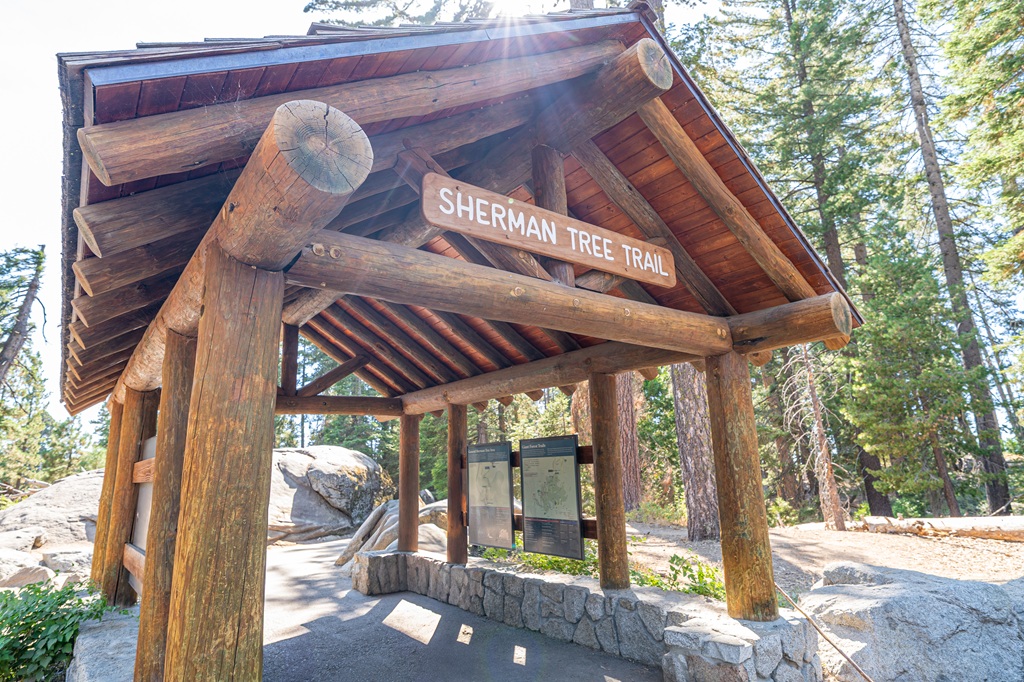
Your journey to the world’s largest tree starts at the General Sherman Tree Trailhead, just off Wolverton Road. From the parking lot, head toward the wooden trailhead shelter, where you’ll find maps of the Giant Forest and a helpful overview of the trail.
Start following the paved path downhill. Just remember, you’ll have to come back up! Or you can take the shuttle from the accessible parking area near the General Sherman Tree.
As you walk along this trail into the Giant Forest sequoia grove, you can read interpretive signs about these ancient giants. There is even a footprint showing the General Sherman Tree’s 102.6-foot circumference!
General Sherman Tree – Congress Trail Junction
At the 0.4-mile (0.6-km) mark there will a junction – take a right towards the General Sherman Tree. The trail to the left is the Congress Trail.
General Sherman Tree
You’ll know you’re at the tree when you see a line of people waiting to get their picture taken in front of this stunning giant beauty! Even if you go super early and there isn’t a crowd, you won’t miss it.
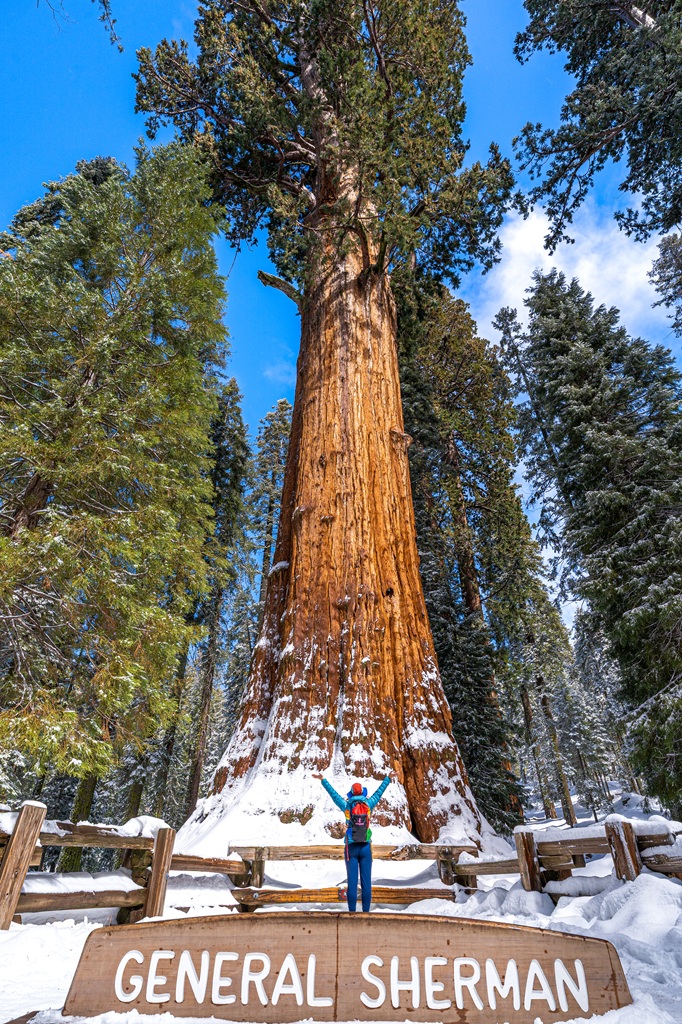
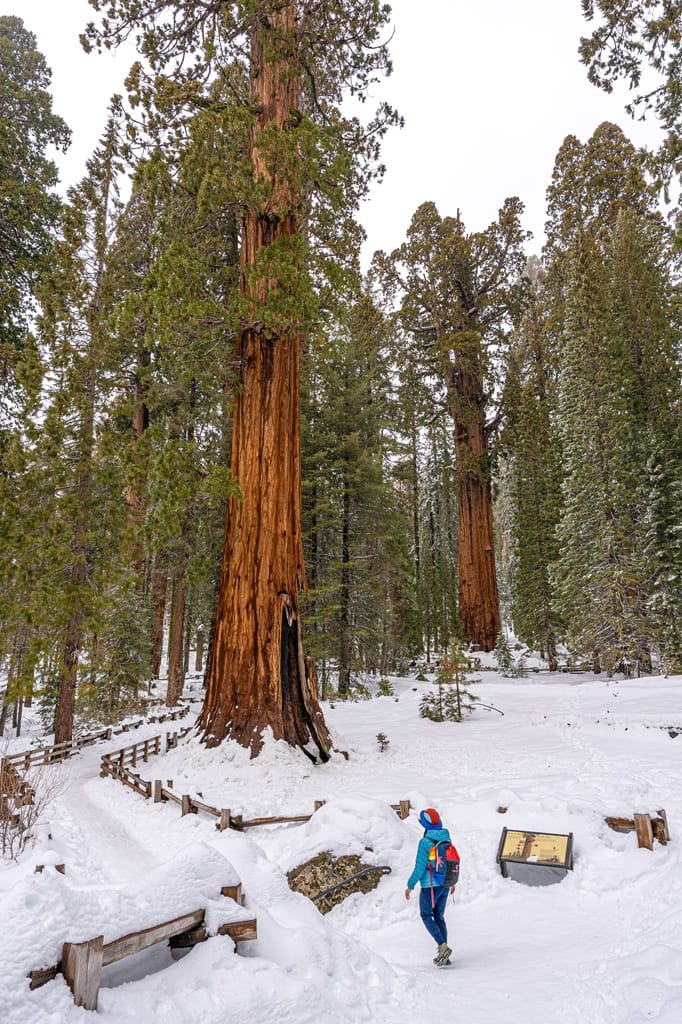
A paved path loops around the General Sherman Tree, giving you the chance to see this incredible giant from every angle.
While some visitors snap a quick photo and move on, I highly recommend taking the time to walk the loop around the tree. Standing beneath this 275-foot-tall giant and circling its enormous base really puts its size into perspective!
You’ll appreciate the sheer scale so much more when you slow down and take it all in.
If you’re up for more, the Congress Trail begins just past the General Sherman Tree and takes you deeper into the forest among other towering sequoias.
Uphill Climb to Parking Lot or Take the Shuttle
Otherwise, brace yourself for the return hike. What was a gentle downhill stroll is now a steady uphill climb, and it can feel even tougher as you’re at around 7,000 feet in elevation. Thankfully, there are benches where you can sit and rest.
If the shuttle is running, you can skip the climb by walking down to the accessible lot on the Generals Highway and catching a ride on the shuttle back to the main trailhead.
🥾 Explore more of Sequoia National Park with these hikes!



Tips for Hiking the General Sherman Tree Trail
1. Start Early: Beat the crowds and enjoy cooler temperatures by starting your hike early in the morning, especially during peak season.
2. Take the Shuttle if Lots Are Full: If parking is unavailable, head to the Wolverton lot and catch the free Sequoia Shuttle. It runs every 15 minutes and drops you right near the trail.
3. Hiking at High Elevation: You’ll be hiking at around 7,000 feet, so don’t be surprised if you feel winded faster than usual. The elevation can make even a short walk feel more intense, so take it slow and use the benches to rest.
4. Don’t Cross the Fence: A fence protects the shallow roots of the General Sherman Tree. Help protect this giant sequoia by not crossing the fence.
5. Be Bear Aware: Black bears are active within Sequoia. Follow these guidelines to avoid any negative interactions with a black bear.
🐻 Note: Bear spray is prohibited in Sequoia National Park!
6. Respect Nature: Follow Leave No Trace principles – plan ahead, pack out all trash, avoid disturbing wildlife, be considerate of others, and respect the natural beauty of Sequoia National Park.
FAQs: General Sherman Tree in Sequoia National Park
-
Is General Sherman the tallest tree in the world?
The General Sherman Tree is not the tallest tree in the world, but it is the largest by volume.
-
Is General Sherman Tree worth visiting?
Yes, the General Sherman Tree is worth visiting! It is the largest tree in the world by volume. It’s an incredible sight to see in person.
-
How long is the General Sherman Tree hike?
From the Sherman Tree Trailhead, it’s about 1.1 miles (1.7 km) roundtrip. From the accessible parking lot, it’s about 0.3 miles (0.4 km) roundtrip.
-
Can you touch the General Sherman Tree?
No, you cannot touch the General Sherman Tree due to it being surrounded by a fence that you are not allowed to cross.
-
Is General Sherman still growing?
The General Sherman Tree adds enough wood each year to equal a new 60-foot-tall tree. Its height changes little, but its massive yearly growth is impressive.
What to Bring to Sequoia National Park
🎟️ Entrance Pass – You will need to purchase an entrance pass once you reach the entrance station or you can buy the America the Beautiful Pass ahead of time and use that for the entire year.
👚 Layers of Clothing (top) – Pack a moisture-wicking base layer, a fleece mid-layer, an insulated jacket, and an outer shell to protect you from the elements, such as rain and wind. You may not need all these layers, especially in the summer months, but it’s always best to be over-prepared!
Check out my favorite tops 👇
- Base layer: REI Co-op Sahara Shade Hoodie (warm/mild conditions) and REI Co-op Midweight Long-Sleeve Base Layer (cooler conditions)
- Fleece mid layer: Cotopaxi Teca Fleece Full-Zip Jacket
- Down mid layer: Cotopaxi Fuego Hooded Down Jacket
- Outer shell: In the summer I always pack a light windbreaker, such as the Cotopaxi Teca Crop Windbreaker or the RevolutionRace Unit Light Windbreaker. Make sure to also pack a waterproof rain jacket – I like the Patagonia Torrentshell 3L Jacket.
🩳 Hiking Shorts or Pants – Pack a comfortable, durable, and stretchy pair of hiking shorts or pants. Also think about what conditions you might run into, such as warm or cold temperatures, wind and/or rain, bugs, and overgrown trails.
Check out my favorite hiking bottoms 👇
- Cotopaxi Losdos Zip-Off Pants
- RevolutionRace Breezy Ankle Outdoor Pants
- Baleaf Fleece-Lined Jogger Pants
- RevolutionRace Summit Pocket Tights
- Revolution Race Hike & Dive Shorts
🥾 Hiking Footwear – Bring a good pair of hiking boots or shoes with good traction. If I’m not expecting to hike in too much mud or snow, my go-to hiking shoes are the Altra Lone Peak trail runners. They have a wide-toe box, 0 mm heel-to-toe drop, and MaxTrac rubber outsole. Plus, they’re lightweight and so comfy!
🧦 Socks – Moisture-wicking, quick-drying socks are the way to go. My favorite pair of hiking socks are Darn Tough Hiker Micro Crew Cushion Socks. Always pack an extra pair!
🎒 Day Pack – What you plan to do (sightseeing, hiking, etc.), determines what size pack you’ll need. Here is what I typically bring based on what I’m doing that day 👇
- Short walks and sightseeing: Cotopaxi Kapai 1.5L Del Dia Hip Pack
- Short, easy to moderate day hikes: REI Co-op Flash 22L Pack
- Long, moderate to challenging day hikes: REI Co-op Trail 25L Pack or Cotopaxi Luzon Del Dia 24L Pack
🥢 Trekking Poles – Essential for stability, balance, and support when hiking trails, especially on tough, rocky, and uneven terrain. I use REI Co-op Trailmade Trekking Poles and love them!
❄️ Microspikes – Bring a pair of microspikes if you’re visiting in the winter and you’re planning to hike along icy trails. They will give you good traction to avoid slipping! I use Black Diamond Access Spike Traction Device.
🦟 Mosquito/Bug Repellants – In the warmer months, be prepared for annoying gnats, mosquitoes, and flies. Wear long-sleeve clothing, a head net, and use bug spray.
🧤 Extra Warm Layers – If you expect cooler conditions or hiking to higher elevations, make sure to pack extra layers for added warmth, such as gloves, beanie, neck gaiter, and a light jacket.
🗺️ Navigation – Carry a physical topographic map, compass, a satellite messenger (or personal locator beacon), and download offline maps to help you stay on course, find your way in unfamiliar terrain, and call for help if needed.
🔦 Headlamp/Flashlight – A reliable light source with extra batteries, in case you end up hiking in the dark or need it for emergency situations.
💧 Water – Water bottles to carry sufficient water to stay hydrated, along with a filtration system or purification tablets if you plan to refill from natural sources.
🍕 Food – Energy-rich snacks or meals to keep your energy levels up during the hike.
😎 Sun Protection – Sunscreen, sunglasses, and a sunhat to protect yourself from harmful UV rays, even when it’s cloudy. Also, polarized sunglasses are important when it’s bright outside and to reduce glare from reflective surfaces like water, snow, and roads.
🩹 First-Aid Kit – A basic first-aid kit with items like bandages, antiseptic, pain relievers, and any personal medications you may need.
🥶 Emergency Shelter – Pack an emergency bivy sack or space blanket for shelter in case of sudden weather changes.
🔥 Fire – A lighter, matches, or fire starter to help you build a fire for warmth or signaling in case of emergency. Along with matches, I also carry a multi-tool carabiner that has a fire starter, utility blade, screwdriver, and bottle opener.
🗡️ Multi-Tool and Repair Kit – A versatile tool/knife and repair kit to handle any task, from preparing food to making repairs.
💩 Waste Disposal Supplies – WAG bags, trowel, toilet paper, pee cloth, wipes, Ziploc bags – be sure to pack out everything!
Planning to visit Kings Canyon National Park? Check out my travel guides! 👇
Conclusion
Hiking the General Sherman Tree Trail is an unforgettable experience and a must-do if you’re a first-time visitor! Seeing the largest tree on earth (by volume) is something everyone needs to do at least once in their lives.
The trail is short, easy, and accessible for everyone of all ages and abilities. I can’t put into words the feeling of standing in front of this ancient giant sequoia.
If this guide inspires you to hike the General Sherman Tree Trail in Sequoia National Park, I’d love to hear about your adventure. Leave a comment and share your experience!
📌 Enjoyed this post? Pin for later!
🏞️ Explore more incredible places in California!