Winter has honestly become one of my favorite times to visit Yosemite National Park. You can expect fewer crowds, quieter trails, and beautiful snow-covered scenery. ❄️😍
My husband and I have visited Yosemite many times during the winter months, and I know it can feel a little intimidating if you’re not used to mountain winter conditions.
But with the right planning and enough preparation, it can turn into one of the most memorable trips you’ll ever take!
If you’re wondering what roads are open, what the weather is really like, what to do, or where to stay, don’t worry, I got you. This guide walks you through it all step by step so you can plan with confidence. ☃️
Winter also unlocks experiences you won’t get other times of year, such as snowshoeing, cross country skiing, ice skating, and downhill skiing and snowboarding.
Also, campgrounds are typically easier to book in Yosemite Valley this time of year, and accommodations inside and outside the park are often cheaper as compared to other seasons.
If visiting Yosemite in winter is on your bucket list, this guide will walk you through everything you need to know! 🙌
Affiliate Disclaimer: Some links on this page may be affiliate links, meaning I may earn a small commission at no extra cost to you. As an Amazon Associate, I earn from qualifying purchases. Thanks for supporting the blog! 🫶
- What to Know Before Visiting Yosemite in Winter
- Best Time to Visit Yosemite in Winter
- How to Get to Yosemite in Winter
- Best Places to Stay in Yosemite in Winter
- Things to Do in Yosemite in Winter
- What to Pack for Yosemite in Winter
- Where to Eat in Yosemite in Winter
- FAQs: Yosemite Winter Visit
- Yosemite in Winter Itinerary
- Conclusion
What to Know Before Visiting Yosemite in Winter
Visiting Yosemite in winter is a magical experience but it can also be tricky and potentially dangerous if unprepared!
Let’s go over the most important things to know before planning your trip to Yosemite National Park this winter.
🎟️ Yosemite’s Entrance Fee and Reservations in Winter
Entrance to Yosemite National Park costs $35 per vehicle for a 3-day pass. However, if you have the America the Beautiful Annual Pass, your entry is free!
For those who love exploring national parks, investing in the Annual Pass is a smart choice. At just $80, for U.S. residents, it grants you access to over 2,000 federal recreation sites across the country!
FEE UPDATES! Beginning January 1, 2026, non-U.S. residents (without an annual pass) will pay a $100 per person in addition to the standard entrance fee. The Annual Pass for non-US. residents will cost $250.
A reservation is not required to visit Yosemite in winter this year! In the past, reservations were required during the Firefall event which takes places in mid to late February. But this year, 2026, reservations are NOT required!
🛣️ Yosemite Winter Road Closures
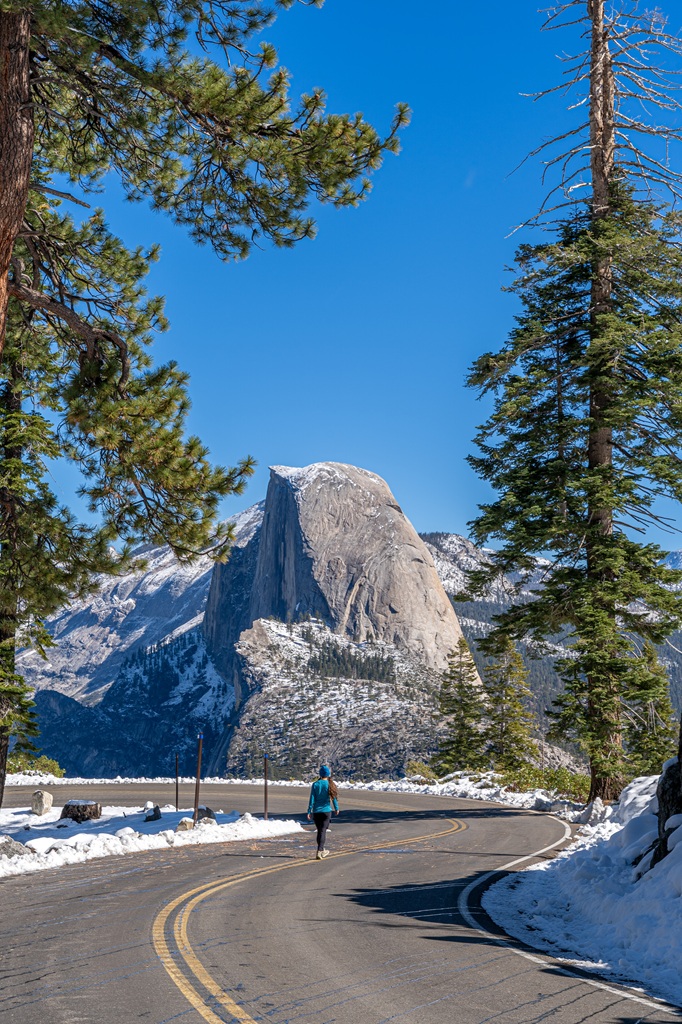
Some roads in Yosemite close for the season due to hazardous winter conditions, including Tioga Road (Highway 120), Glacier Point Road, and Mariposa Grove Road.
Even roads that remain open can be icy or snowy, so plan for slower driving, possible delays, and occasional temporary closures. Always check current road conditions before heading into the park.
Roads that remain open year-round in and near Yosemite:
- Highway 41 to South Entrance
- Highway 140 to Arch Rock Entrance
- Highway 120 to Big Oak Flat Entrance
- Hetch Hetchy Road
- All roads within Yosemite Valley
⚠️ For the latest updates, call Yosemite’s road conditions hotline at 209-372-0200 (press 1, then 1 again).
⛓️ Yosemite Chain Requirements
Tire chains are commonly required in winter, and if chain controls are in effect, you’re legally required to carry them and know how to use them, even if you have AWD/4WD or snow tires.
Levels of chain control:
- R1 – You’ll need to put chains on your car unless you’re in a car, pickup, or SUV under 6,000 pounds AND you have snow tires with at least 6/32 inches of tread or deeper.
- R2 – You’ll need to put chains on your car unless you’re in a car, pickup truck, or SUV under 6,500 pounds AND you have snow tires with at least 6/32 inches of tread or deeper AND your car has 4WD or AWD engaged.
- R3 – Chains are required on ALL vehicles, no exceptions.
❄️ Yosemite in Winter Tips
- Be cautious and drive slower on icy and snowy roads.
- Bring or buy tire chains and practice putting them on before your trip.
- Pack plenty of layers, as temperatures can drop quickly throughout the day.
- Winter brings shorter daylight hours, so plan your activities accordingly. And always carry a reliable light source with you just in case!
- Many of the trails within Yosemite Valley remain open in winter which means they can be icy and slippery – bring a pair of microspikes and hiking poles for traction and stability.
- Be prepared for heavier traffic and limited parking during winter holidays (late December to early January) and the Firefall (mid to late February).
- Wildlife, such as bears, coyotes, bobcats, and deer, are still active during the winter months. Keep your distance and store food properly. If you encounter a bear, follow these guidelines.
- Keep emergency supplies in your car, including water, snacks, blankets, and flashlights, in case of delays, breakdowns, or sudden winter storms.
- If you can, stay inside the park to avoid driving on the roads in winter. Lodging in Yosemite Valley includes Yosemite Valley Lodge, The Ahwahnee, and Curry Village.
- The Yosemite Valley Shuttle System operates year-round and is a convenient way to get around the valley in winter, making it easier to explore without the stress of driving and parking.
✨ Planning a trip to Yosemite this season? Before you book anything, read through my ultimate guide to the best lodges, hotels, and cozy cabins in Yosemite in winter. It’ll save you time and help you find the perfect snowy getaway!
Best Time to Visit Yosemite in Winter
Yosemite Weather in Winter
Winter in Yosemite runs from December through March, but snowfall can happen earlier or later. It’s not uncommon to see snow as early as October or November and as late as April, depending on the year.
Winter conditions vary a lot depending on where you are in the park. Yosemite Valley tends to be much milder than the high country. Daytime highs in the valley range from mid 40s°F (~8°C) to mid 50s°F (13°C), while overnight lows range from upper 20s°F (-2°C) to mid 30s°F (1°C).
Yosemite Valley doesn’t always get buried in snow every winter. Average annual snowfall in the valley is often quoted around 30–40 inches, but this can vary greatly year to year. Some winters are magical and snowy, while others are surprisingly light.
Even if there isn’t much snow on the valley floor, you’ll always see snow on the higher peaks surrounding the valley, and trails that climb above the valley often have snow in the winter months.
If you were to head to higher elevations in the winter months (only accessible by foot, snowshoes, or skis), expect colder temperatures and significantly more snow as compared to the valley.
Always be prepared for the winter conditions! Before you head out, check the weather forecast for snowstorms and look at the Yosemite webcams for real-time look at current conditions.
Now, let’s go over what to expect during each month during the winter season in Yosemite National Park, specifically in Yosemite Valley since this is where most people will be visiting during this season.
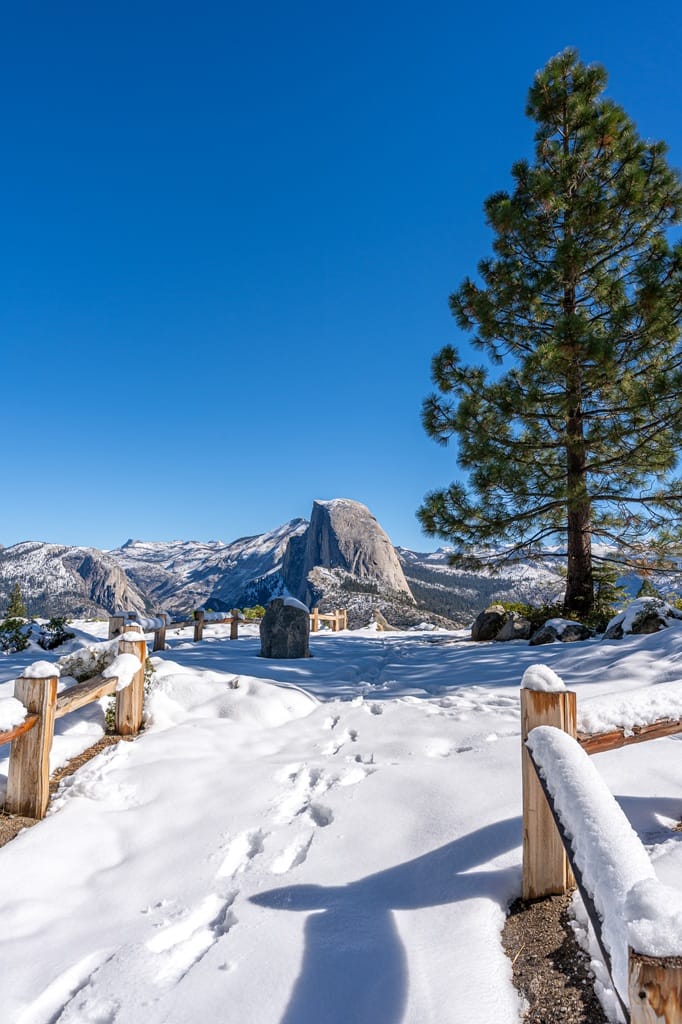
Visiting Yosemite in December
- Average highs are ~46°F (8°C)
- Average lows are ~28°F (-2°C)
- Festive holiday atmosphere
- Moderate chance of major snowstorms
- Fewer crowds early in the month and busier around Christmas and New Year
- Glacier Point Road and Tioga Road are most likely closed but always check road conditions – there could be a very rare chance that they’re still open in early December
- Waterfalls may start flowing more if early winter storms come through
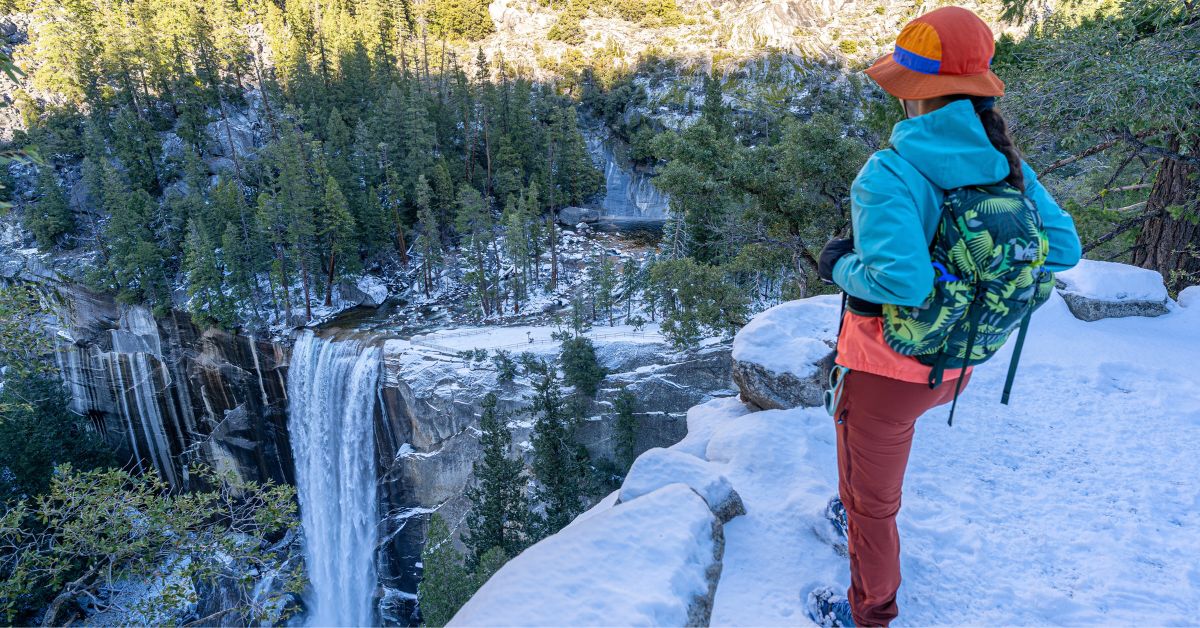
- Trails, such as the Mist Trail and Four Mile Trail, may still be open but check current trail conditions before heading out
Visiting Yosemite in January
- Average highs are ~48°F (9°C)
- Average lows are ~29°F (-2°C)
- After New Year holiday, this month is quiet with low crowd levels
- Higher chance of major snowstorms
- Winter activities are usually in full swing by this time due to winter storms, such as snowshoeing, cross country skiing, and downhill skiing and snowboarding at Badger Pass
- Trails such as a portion of the Mist Trail and John Muir Trail and Four Mile Trail are closed for the season (check trail conditions to make sure)
Visiting Yosemite in February
- Average highs are ~51°F (11°C)
- Average lows are ~30°F (-1°C)
- Higher chances of major snowstorms
- Typically the snowiest month in Yosemite
- Increasing visitor numbers mid to late February due to Firefall
- Waterfall flow often improving from melting snow
Visiting Yosemite in March
- Average highs are ~57°F (14°C)
- Average lows are ~34°F (1°C)
- Transition toward spring at valley level
- Moderate crowd level
- Snow remains at higher elevations
- Low to moderate chances of major snowstorms
- Increasing waterfall flow as snow continues to melt at higher elevation
How to Get to Yosemite in Winter
Let’s look into how to get to Yosemite National Park, including nearest airports, driving into Yosemite, which entrances are open in the winter, and public transportation.
Flying into Yosemite in Winter
Fresno Yosemite International (FAT)
- City: Fresno, CA
- Distance to Yosemite Valley: 95 miles (153 km)
- Drive Time: 2.5 hours
- Entrance / Highway: South Entrance (Hwy 41)
Oakland International (OAK)
- City: Oakland, CA
- Distance to Yosemite Valley: 175 miles (282 km)
- Drive Time: 3.5 to 4 hours
- Entrance / Highway: Big Oak Flat Entrance (Hwy 120)
Sacramento International (SMF)
- City: Sacramento, CA
- Distance to Yosemite Valley: 180 miles (290 km)
- Drive Time: 4 hours
- Entrance / Highway: Big Oak Flat Entrance (Hwy 120)
San José Mineta International (SJC)
- City: San José, CA
- Distance to Yosemite Valley: 197 miles (317 km)
- Drive Time: 4 to 4.5 hours
- Entrance / Highway: Arch Rock Entrance (Hwy 140)
San Francisco International (SFO)
- City: San Francisco, CA
- Distance to Yosemite Valley: 194 miles (312 km)
- Drive Time: 4.5 to 5 hours
- Entrance / Highway: Big Oak Flat Entrance (Hwy 120)
Reno/Tahoe International (RNO)
- City: Reno, NV
- Distance to Yosemite Valley: 218 miles (350 km) or 248 miles (400 km)
- Drive Time: 4.5 hours if Tioga Road is open or 5.5 hours if Tioga Road is closed
- Entrance / Highway: Tioga Pass Entrance (Hwy 120) or Big Oak Flat Entrance (Hwy 120)
Los Angeles International Airport (LAX)
- City: Los Angeles, CA
- Distance to Yosemite Valley: 320 miles (515 km)
- Drive Time: 6.5 hours
- Entrance / Highway: South Entrance (Hwy 41)
Now that you know which cities you can fly into and how far they are from Yosemite Valley, the next step is choosing how you’ll get to the park.
The most popular choice is renting a car or driving your own since it gives you the most flexibility to explore Yosemite at your own pace.
If you’d rather not drive, public transportation is also an option!
Public Transportation to Yosemite in Winter
If you’re planning a winter trip to Yosemite and want to skip driving, there are several public transportation options. ⬇️
- Amtrak – Take the train to nearby towns where you can connect to bus services that reach Yosemite Valley.
- Yosemite Area Regional Transportation System (YARTS) – Operates year-round, including winter, with routes from Merced, Fresno, and other gateway communities.
This way, you can enjoy Yosemite’s winter wonderland without worrying about snowy/icy roads!
Driving to Yosemite in Winter
If you’re driving to Yosemite in winter, be prepared for snow and icy conditions. It’s required by law to carry tire chains when entering chain control zones whenever there’s a chance of snow (typically November–March, sometimes October or April).
Here’s a quick overview of the park entrances and winter access:
- South Entrance (Highway 41) – A commonly used route due to nearby lodging and easier access to Mariposa Grove and Badger Pass. There’s a higher chance of needing tire chains as this route gains some elevation resulting in more snowy/icy road conditions.
- Arch Rock Entrance (Highway 140) – This route is considered the safest option in the winter due to it being at lower elevation. There’s still a chance of needing tire chains but it’s much lower as compared to the other routes.
- Big Oak Flat Entrance (Highway 120) – Just like the South Entrance, this route has a higher chance of requiring tire chains due to the elevation so be prepared!
- Hetch Hetchy Entrance (Hetch Hetchy Road) – Provides access only to Hetch Hetchy. This route is usually less traveled and lower elevation so tire chains are rarely required but still check road conditions.
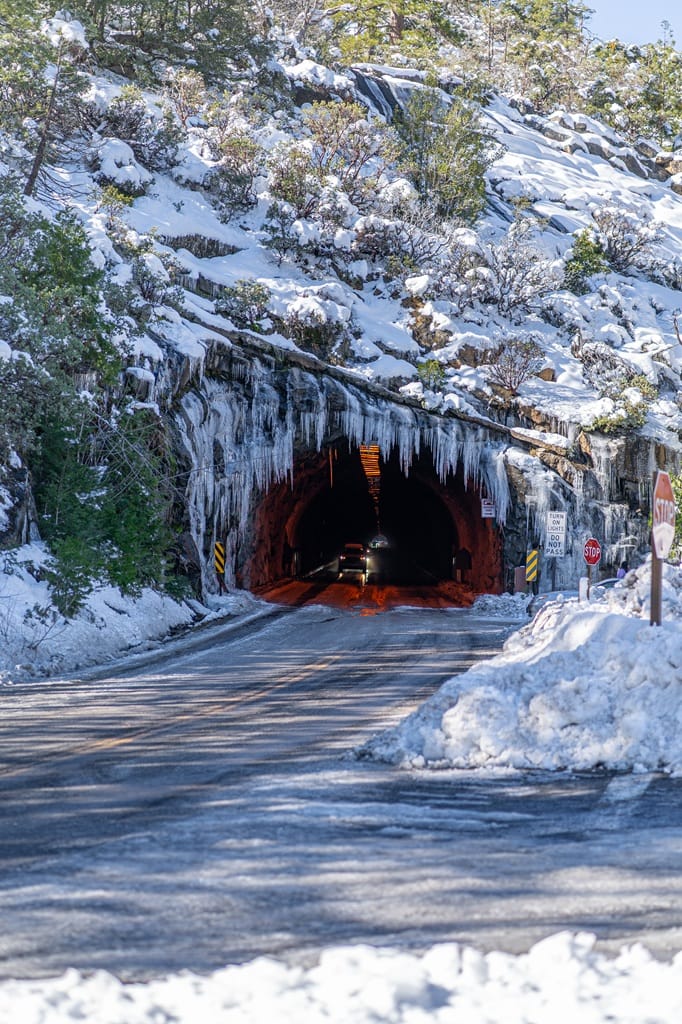
- Tioga Pass Entrance and Tioga Road – Closed in winter from roughly November to May (dates vary).
Plan extra time for slower speeds, always check the latest road conditions, and carry warm layers, food, and water in case of delays.
Parking and Yosemite Valley Shuttle System
Parking in winter is usually much easier than during peak season in Yosemite Valley. Outside of holiday weekends and Firefall season in mid to late February, you generally won’t have to stress as much about finding a spot.
If you are planning to visit during Firefall season or a holiday weekend, get into the park early and snag a parking spot in one of the three major parking lots within Yosemite Valley – Yosemite Village, Curry Village, or Yosemite Falls.
There are other small parking lots here and there around the park but these are the largest ones and you’re almost guaranteed to find a spot! Also, there’s a shuttle stop at each of the big parking areas.
Once you find a parking spot, leave your car there and use the Yosemite Valley shuttle to get around!
🚍 There are two shuttle routes available:
- Valleywide Shuttle – This route covers all stops in Yosemite Valley, including lodges, food service, campgrounds, and trailheads. Buses run every 12 to 22 minutes from 7 AM to 10 PM.
- East Valley Shuttle – This route serves Yosemite Village, Curry Village, Pines Campgrounds, and trailheads in eastern Yosemite Valley. Buses run every 8 to 12 minutes from 7 AM to 10 PM.
There’s also a shuttle from Yosemite Valley to Badger Pass which runs daily when the ski area is open. Seats are limited so get there early to secure a spot!
❄️ Yosemite Winter Guides
- Ultimate Guide to Visiting Yosemite in Winter
- The Only Yosemite Winter Itinerary You Need!
- Where to Stay in Yosemite in Winter: 15+ Best Lodges, Hotels, and Cozy Cabins
- The Ultimate Yosemite Winter Packing List
- 20 Best Yosemite Hikes in Winter (Guide to Snowy Adventures)
- 18 Best Yosemite Winter Activities You Can’t Miss!
- Yosemite Firefall: A Complete First-Timer’s Guide
- Beginner’s Guide to Visiting Mariposa Grove in Winter
Best Places to Stay in Yosemite in Winter
If you’re able to book a place to stay within Yosemite Valley, that’ll be your best option! The location is perfect and you don’t have to worry about driving back and forth on potentially icy curvy roads.
But if you must stay outside the park, that’s fine too! There are plenty of options. And if the roads are wintery, don’t stress. Bring tire chains, know how to put them on, and check road conditions before heading out.
Here’s a list of the best places to stay in and outside Yosemite National Park in winter!
Yosemite Lodging in Winter
👉 Places to Stay in Yosemite Valley
- Luxury – The Ahwahnee Hotel
- Midrange – Yosemite Valley Lodge
- Budget – Curry Village
👉 Places to Stay Near Yosemite’s South Entrance
- Luxury – Tenaya Lodge
- Midrange – Sierra Sky Ranch
- Budget – Best Western Plus Yosemite Gateway Inn
✨ Is staying at Tenaya Lodge worth it? Read my honest, in-depth Tenaya Lodge review!
👉 Places to Stay Near Yosemite’s Arch Rock Entrance
- Luxury Glamping – AutoCamp Yosemite
- Midrange – Yosemite View Lodge
- Budget – Yosemite Bug Rustic Mountain Resort
✨ Should you stay at Yosemite View Lodge? Read my Yosemite View Lodge guide and review!
👉 Places to Stay Near Yosemite’s Big Oak Flat/Hetch Hetchy Entrance
- Luxury – Rush Creek Lodge at Yosemite
- Midrange – Yosemite Westgate Lodge
- Budget – Berkshire Inn
✨ Looking for more winter lodging options? Here are the best places to stay in and around Yosemite!
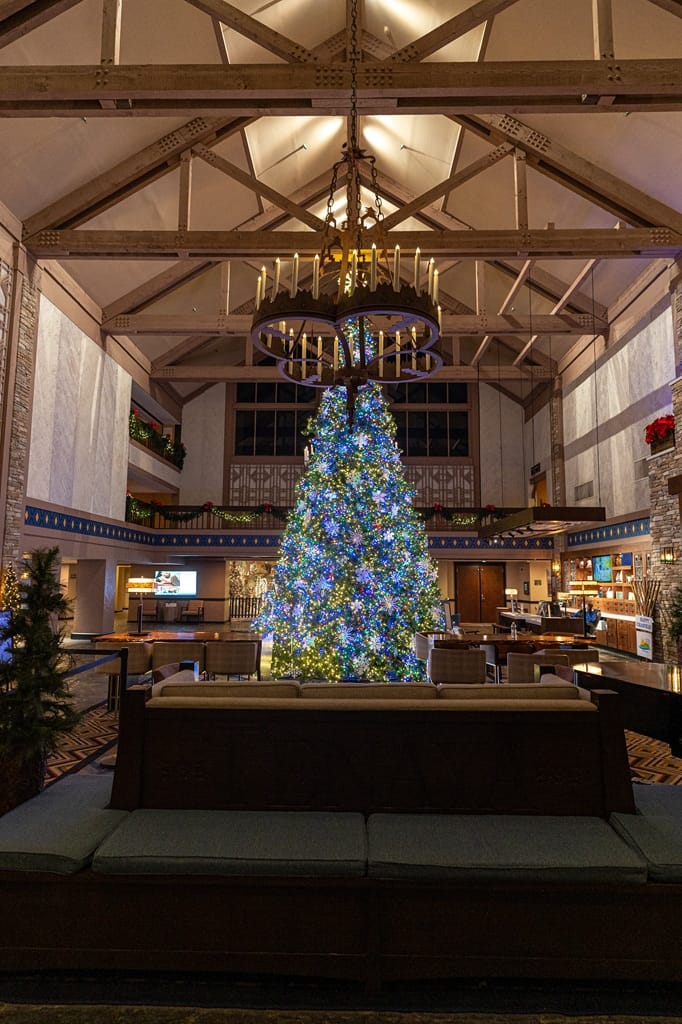
Yosemite Camping in Winter
During winter, four campgrounds remain open in Yosemite:
- Wawona Campground (near Wawona, 45 minutes south of Yosemite Valley)
- Upper Pines (Yosemite Valley)
- Camp 4 (Yosemite Valley)
- Hodgdon Meadow Campground (near Big Oak Flat Entrance, 45 minutes northwest of Yosemite Valley)
Things to Do in Yosemite in Winter
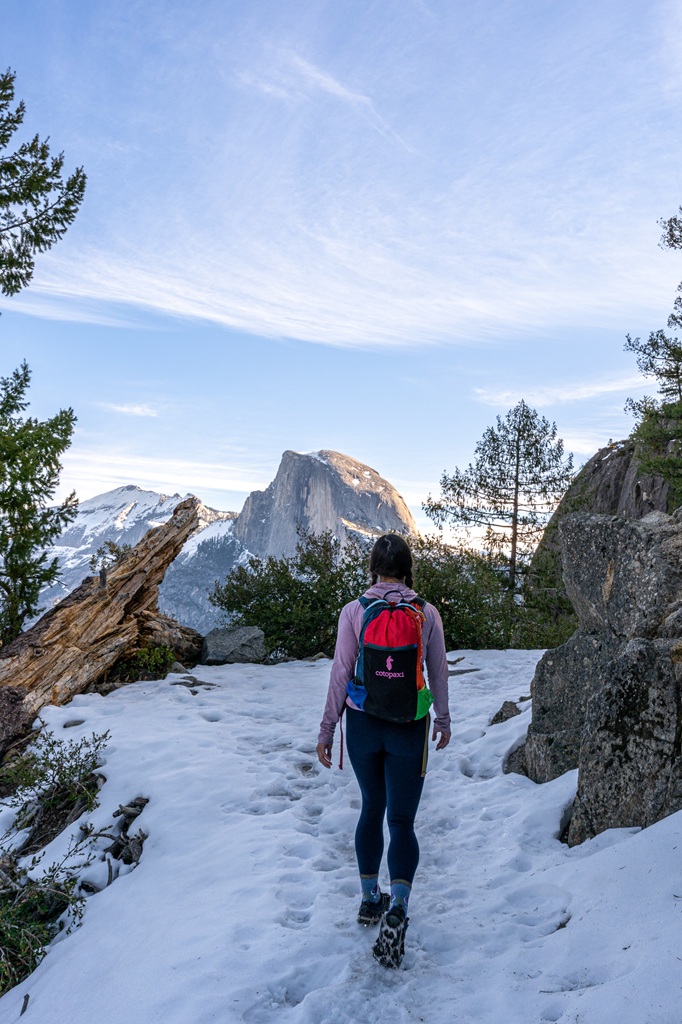
Yosemite Hikes in Winter
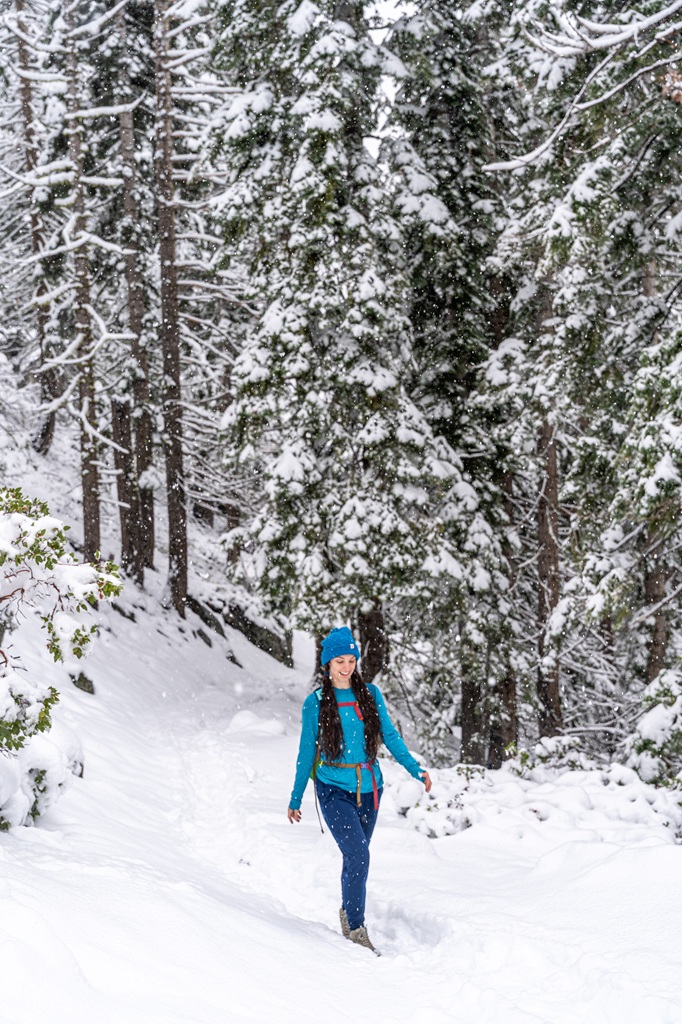
Hiking in Yosemite Valley is one of the best things to do in winter! Many of the trails within the valley are manageable for most skill levels. Keep in mind, some routes may become more challenging due to snow and ice – know your limits and be prepared!
Remember to always follow Leave No Trace principles! Plan ahead, pack out all trash, avoid disturbing wildlife, be considerate of others, and respect the natural beauty of Yosemite National Park.
Wear waterproof boots, pack extra layers, microspikes, and trekking poles. And don’t forget the 10 essentials! Have fun and stay safe. 🫶
🥾 Easy winter hikes in Yosemite Valley:
- Bridalveil Fall (0.5 to 1 mile roundtrip with 80 to 115 feet of elevation gain)
- Cook’s Meadow (1 mile roundtrip with 30 feet elevation gain)
- Lower Yosemite Fall Trail (1.2 miles roundtrip with 55 feet of elevation gain)
- Mirror Lake Paved Trail (2 miles roundtrip with 110 feet of elevation gain)
🥾 Moderate to hard winter hikes in Yosemite Valley:
- Artist Point Trail (2.2 miles roundtrip with 800 feet of elevation gain)
- Mirror Lake Loop (5 miles roundtrip with 300 feet of elevation gain)
- Valley Loop Trail (7.2 to 11.5 miles roundtrip with minimal elevation gain)
- Mist Trail and John Muir Trail to Vernal Fall and Nevada Fall winter route (10.4 miles roundtrip with 2,000 feet of elevation gain)
- Four Mile Trail below Union Point (5.6 miles roundtrip with 2,000 feet of elevation gain)
- Upper Yosemite Fall Trail (7 miles roundtrip with 3,200 feet of elevation gain)
- El Capitan from Yosemite Valley (16 miles roundtrip with ~5,000 feet of elevation gain)
✨ Want more snowy trail ideas? I put together a full guide to the best Yosemite winter hikes with detailed breakdowns and extra trail options!

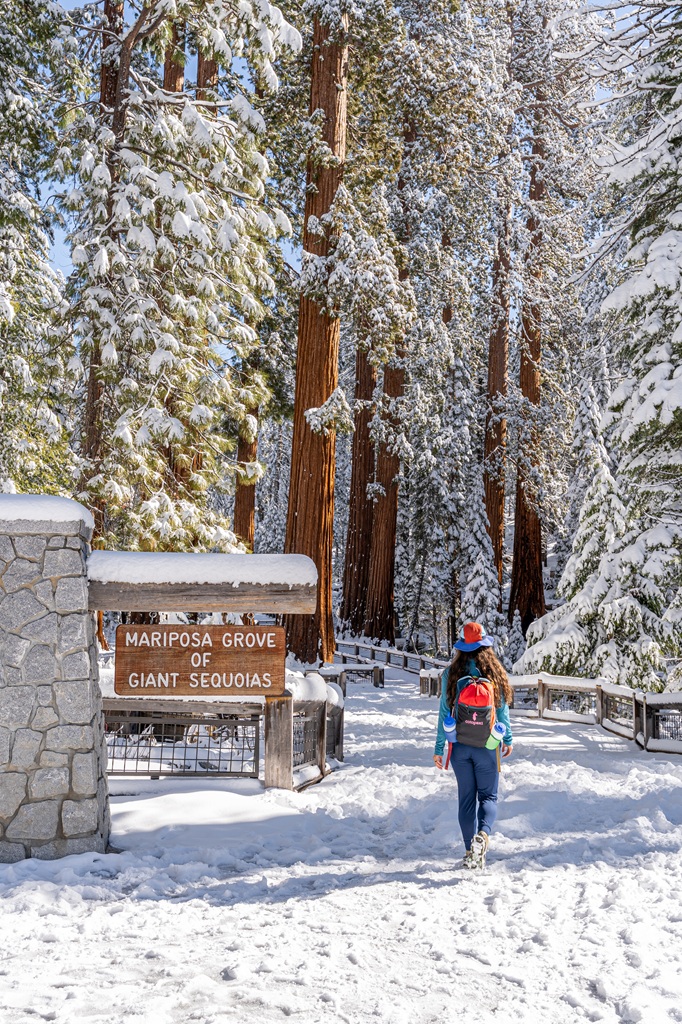
Explore Mariposa Grove in Winter
Mariposa Grove of Giant Sequoias is one of the most magical spots to visit in Yosemite in winter. If you haven’t seen giant sequoias dusted in snow, you should! The grove’s beauty after a good snowfall blows me away every time. 🥹
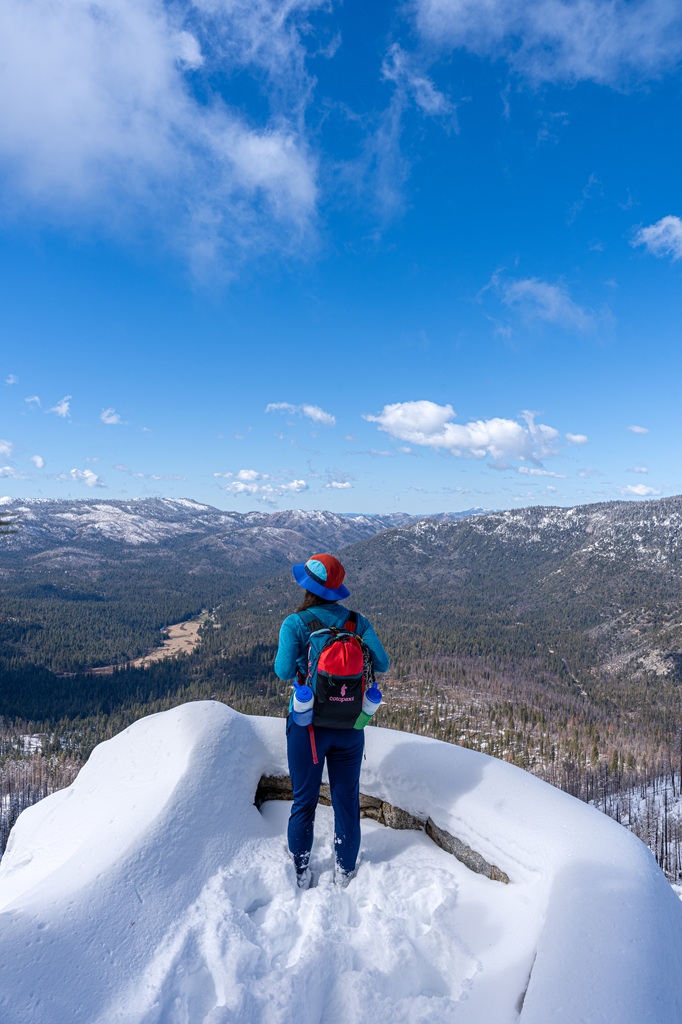
Mariposa Grove is located near the South Entrance and is the park’s largest sequoia grove, with 500+ giant trees. After a fresh snowfall, it’s perfect for snowshoeing or cross country skiing.
There is an incredible system of trails that will take you through stunning giant sequoias. The lower grove has easy, beginner-friendly trails whereas the upper grove has more challenging trails.
🌳 Lower grove trails:
- Big Trees Loop (0.3 miles)
- Grizzly Giant Loop (2.1 miles)
- Unique sequoia trees you’ll see include Fallen Monarch, Bachelor and Three Graces, California Tunnel Tree, and Grizzly Giant
🌳 Upper grove trails:
- Guardians Loop (6.5 miles)
- Mariposa Grove Trail (7 miles)
- Unique sequoia trees you’ll see include Faithful Couple, Clothespin Tree, Mariposa Tree, Telescope Tree, Fallen Wawona Tunnel Tree, Columbia Tree, and Galen Clark Tree.
👉 Important things to know:
- Mariposa Grove Road usually closes November to April, and when it’s closed, the shuttle doesn’t run
- The Mariposa Grove Welcome Plaza parking lot is open year-round – this is where you will park
- You’ll need to hike in via Washburn Trail or Mariposa Grove Road – both routes are about 2 miles one way with 500 feet of gain
- Start early! Snow travel is slower and winter daylight is short
- Stay on designated routes and don’t walk on ski tracks
- Be courteous to skiers, hikers, and snowshoers and please share the trail
- No gear? You can rent snowshoes or skis at Badger Pass
✨ READ THIS: Beginner’s Guide to Visiting Mariposa Grove in Winter

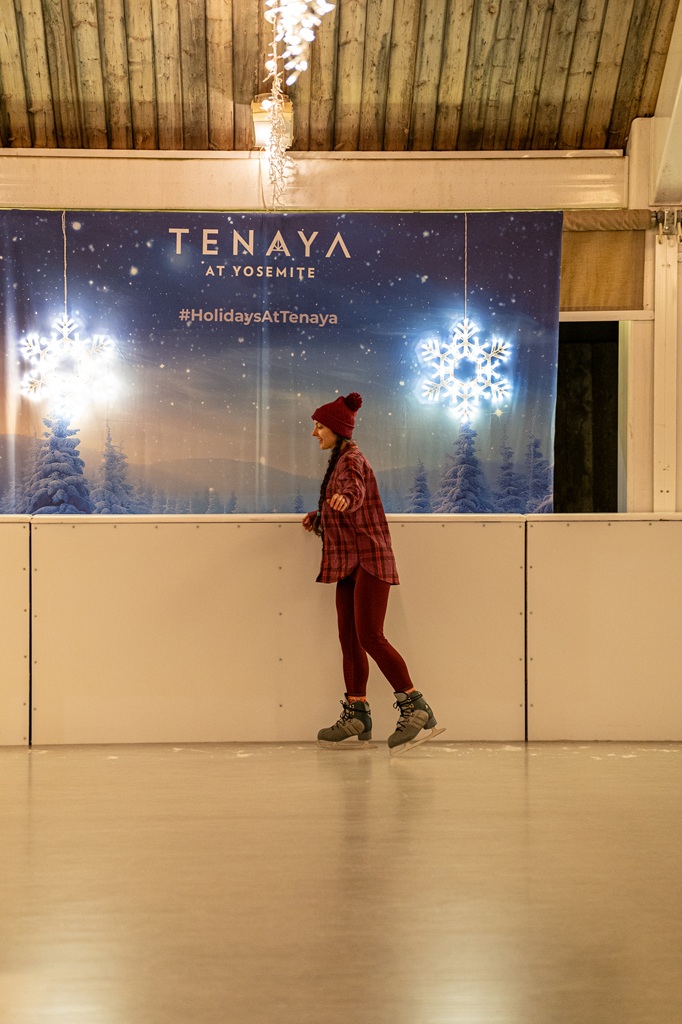
Ice Skate at Curry Village
Ice skating at the Curry Village outdoor rink is one of the most classic winter experiences in Yosemite!
It’s been a favorite with visitors since 1928 and feels extra special with Half Dome towering in the background.
⛸️ Important things to know:
- Usually open from mid-November through early March, weather depending (2026 season is from November 14 to March 2)
- There are typically 3–4 skating sessions offered each day
- Tickets can be bought online ahead of time or in person at the Curry Village Tour & Activity Desk
Go on a Winter Adventure at Badger Pass
Badger Pass Ski Area sits along Glacier Point Road, about 5 miles from the Wawona Road junction. In winter, tire chains are often required to drive up, so don’t head out without them.
There’s a lot you can do here in winter! It’s Yosemite’s main hub for snowy adventures. Here’s the quick rundown. ⬇️
🏂 Downhill Skiing and Snowboarding
Badger Pass usually opens from mid-December through March (snow permitting).
You can buy full-day lift tickets online, with some ticket options available on-site. Rentals for skis, boards, helmets, and snowshoes are available.
The area ranges from 7,200–8,000 feet and has a good mix of runs: mostly beginner and intermediate with a few advanced. Lessons are available too, including programs for young kids.
There’s also a shuttle that picks you up from Yosemite Valley and takes you to Badger Pass. Pick-up times and seats are limited so get there early!
⛷️ Cross Country Skiing
When Glacier Point Road closes to cars, it becomes a groomed ski route with set tracks. The full out-and-back route to Glacier Point is about 22 miles roundtrip, so it’s best suited for cross country skiing or an overnight ski hut trip.
Snowshoeing is allowed but stay off the ski tracks and stick to the edges. Don’t hike it in boots or spikes as this damages the track and creates hazards!
❄️ Snowshoeing
One of the best half-day snowshoe trips starts at Badger Pass and heads toward Dewey Point.
The loop is about 7.4 miles roundtrip with 900 feet of elevation gain, with options through forest or along a more open ridge. It’s recommended to go clockwise!
Snowshoes and guided tours are available at Badger Pass. This route is for skis or snowshoes only.
☃️ Snowtubing
Looking for something easy and fun? The tubing hill at Badger Pass is great for families!
It’s built from natural snow, so it opens once conditions allow. There’s no lift to the top so you’ll have to walk your tube up. But it’ll be worth it!
Watch Firefall
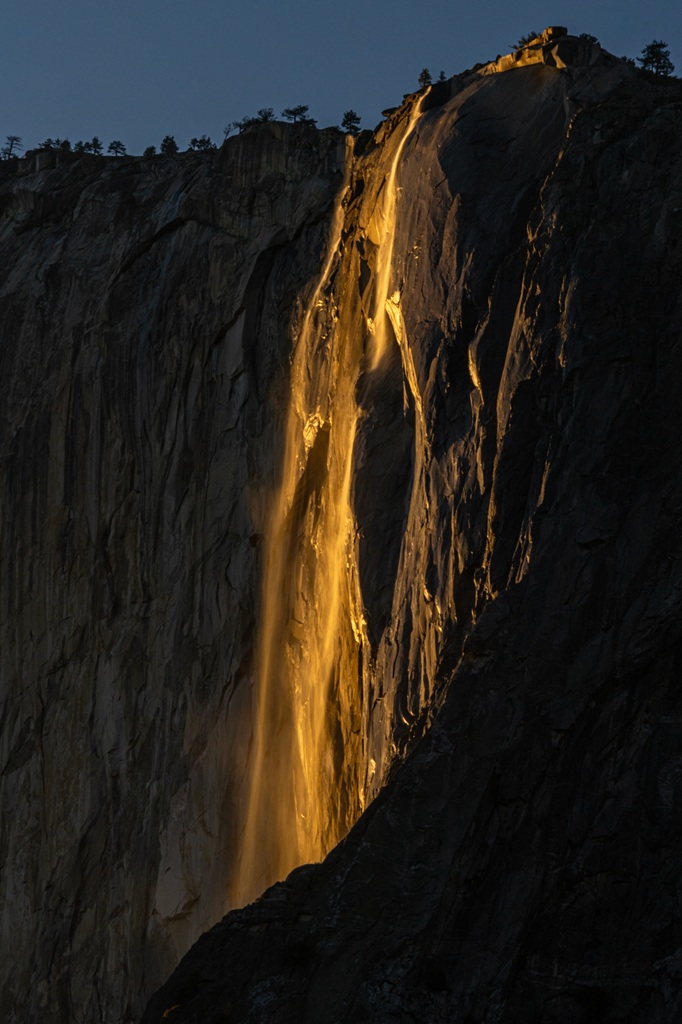
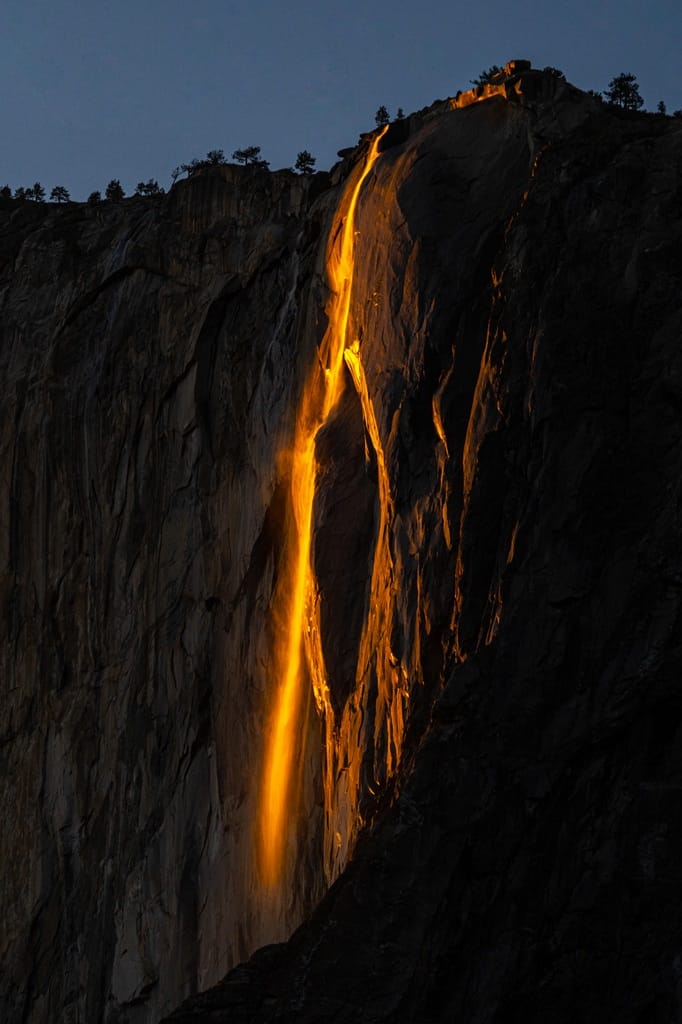
Horsetail Fall drops 2,130 feet over the eastern edge of El Capitan in Yosemite Valley. It’s completely snowmelt-fed, so it usually dries up by summer.
In mid to late February, if conditions line up just right, the setting sun can light it up bright orange creating the famous “Firefall” effect that looks like lava pouring down the cliff.
My husband and I saw the Firefall for the first time in February 2025. I was honestly nervous about the crowds, but it ended up being such an incredible experience and totally worth it!
👉 Good to know before you go:
- Reservations: In the past, reservations have been required to enter Yosemite National Park during Firefall season. (NO RESERVATIONS FOR 2026)
- Parking: Closest parking is at Yosemite Falls Parking Area. During Firefall season, traffic is restricted near El Capitan. If lots fill up, park at Yosemite Village or Curry Village and use the free shuttle.
- Best viewing area: El Capitan Picnic Area is the most popular and easily accessible spot.
- Timing: The glow usually happens about 5–15 minutes before sunset. But plan to arrive a few hours early to get a good place.
- Tips: Dress warm, expect crowds, be patient, and be respectful of others waiting to watch!
✨ READ THIS: Complete First-Timer’s Guide to Seeing Yosemite Firefall
Yosemite Winter Backpacking
Exploring Yosemite’s wilderness in the winter is like stepping into a totally different park. It’s a lot quieter and more peaceful as compared to other seasons. But winter travel is a lot less forgiving, so preparation is key for a safe and enjoyable adventure!
Winter backpacking and camping can be amazing if you’re honest about your skill level and know how to handle backcountry snow travel. From December through April, most trips involve snow camping and getting around by skis or snowshoes.
Most winter backpackers stick to marked routes near Badger Pass and Crane Flat, where you’ll find options from short beginner trips to multi-day advanced routes.
A more advanced winter route starts in Yosemite Valley and climbs toward Tuolumne Meadows via the Snow Creek Trail. This trip crosses avalanche-prone terrain and is only recommended for experienced winter backcountry travelers with strong route-finding skills, avalanche awareness, and winter survival competency.
❄️ Know before you go:
- You must obtain a wilderness permit at a visitor center or ranger station closest to your starting point. These include Big Oak Flat Information Station, Yosemite Valley Welcome Center, Badger Pass Ranger Station, Wawona Visitor Center, or Hetch Hetchy Entrance Station.
- Reservations are not required for winter backpacking (November to April), but trailhead quotas still apply.
- If you’re camping off Glacier Point Road, camp at least 1 mile from the road, avoid camping near Badger Pass, and don’t camp directly at places like Dewey Point or Glacier Point (nearby is okay).
- Most winter travel is cross country, since many trails and markers get buried under snow and only a handful of routes are marked for winter use. Good navigation and route-finding skills are essential!
- Streams are often frozen or covered, so plan on bringing a stove to melt snow for drinking water if needed.
- Winter storms can move in quickly. Check the forecast before you go, and pack plenty of layers and safety gear in case conditions change suddenly.
- For human waste, dig down through the snow and at least six inches into the frozen ground or pack it out.
- Snow counts as a durable surface, which makes campsite selection more flexible. Just make sure you’re still at least 100 feet from trails and water sources.
Yosemite Winter Tours
If you’d rather skip the planning and just show up ready to explore, booking a guided Yosemite winter tour is a great option. You won’t have to worry about winter driving, road conditions, or building an itinerary. Just book the tour, pack the essentials, show up, and enjoy the experience!
You can find a variety of Yosemite tours on GetYourGuide, including day trips, guided sightseeing, and winter experiences led by knowledgeable guides.
You can also find more Yosemite tour options on Viator. Booking a guided tour is an easy, low-stress way to see Yosemite in winter!
Here’s a winter hiking guided tour on GetYourGuide ⬇️
You can also book a winter experience with a park ranger, including walk and talks, tours, and snowshoe hikes. You can find all regularly scheduled programs on the official park calendar.
From mid-December through March (weather and staffing permitting), park rangers often lead free guided snowshoe walks from Badger Pass Ski Area. This experience is perfect if you’re new to snowshoeing!
You can also book guided snowshoe hikes and other tours through the Yosemite Conservancy or Yosemite Mountaineering School.
✨ READ THIS: 18 Best Yosemite Winter Activities You Can’t Miss!
What to Pack for Yosemite in Winter
🎒 Backpack – A pack around 22–30 liter works well to carry layers, snacks, water, and gear. I’ve been using the Cotopaxi Luzon Del Dia 24L Pack and my husband uses the REI Co-op Trail 25L Pack.
🥾 Winter Boots – Waterproof, insulated boots are a must!
🧊 Microspikes – Bring a pair of microspikes if you’re visiting in the winter and you’re planning to hike along icy trails. They will give you good traction to avoid slipping! I use Black Diamond Access Spike Traction Device.
❄️ Snowshoes – Best used when hiking on deep, soft, or loose snow, usually anything over six inches, to prevent sinking, also known as postholing. Don’t own any? You can rent them at the Badger Pass Ski Area!
☃️ Gaiters – Keep snow out of your boots when snowshoeing or hiking in deep snow.
🥢 Trekking Poles – Essential for stability on snow and slippery trails. I use REI Co-op Trailmade Trekking Poles and love them!
🧥 Warm Layers (top) – Pack a moisture-wicking base layer, a fleece mid-layer, an insulated jacket, and an outer shell to protect you from the elements, such as rain, snow, and wind. Check out my favorite tops 👇
- Base layer: REI Co-op Midweight Long-Sleeve Base Layer
- Fleece mid layer: Cotopaxi Teca Fleece Full-Zip Jacket
- Down mid layer: Cotopaxi Fuego Hooded Down Jacket
- Outer shell: Patagonia Torrentshell 3L Jacket
👖 Warm Layers (bottom) – Pack a breathable base layer, fleece-lined mid-layer, and soft-shell pants. A pair of hard-shell pants might be overkill but depends on the conditions and the winter adventure you plan to go on. My favorite fleece bottoms are the Baleaf Fleece Jogger Pants and the Baleaf Fleece Leggings.
🤠 Warm Hat/Beanie – Keeps your head and ears warm on cold winter hikes. My favorite beanie is the Cotopaxi Tozo Beanie!
🧦 Socks – Moisture-wicking, quick-drying socks are the way to go. My favorite pair of hiking socks are Darn Tough Hiker Micro Crew Cushion Socks. I’m obsessed with them!
🥶 Emergency Shelter – Pack an emergency bivy sack or space blanket for shelter in case of sudden weather changes.
🗺️ Navigation – Carry a physical topographic map, compass, a satellite messenger (or personal locator beacon), and download offline maps to help you stay on course, find your way in unfamiliar terrain, and call for help if needed.
🔦 Headlamp/Flashlight – A reliable light source with extra batteries, in case you end up hiking in the dark or need it for emergency situations.
🩹 First-Aid Kit – A basic first-aid kit with items like bandages, antiseptic, pain relievers, and any personal medications you may need.
💧 Water – Water bottles to carry sufficient water to stay hydrated, along with a filtration system or purification tablets if you plan to refill from natural sources.
🍕 Food – Energy-rich snacks or meals to keep your energy levels up during the hike.
😎 Sun Protection – Sunscreen, sunglasses, and a sunhat to protect yourself from harmful UV rays, even when it’s cloudy. Also, polarized sunglasses are important when it’s bright outside and the ground is covered in snow/ice.
🔥 Fire – A lighter, matches, or fire starter to help you build a fire for warmth or signaling in case of emergency. Along with matches, I also carry a multi-tool carabiner that has a fire starter, utility blade, screwdriver, and bottle opener.
🗡️ Multi-Tool and Repair Kit – A versatile tool/knife and repair kit to handle any task, from preparing food to making repairs.
🚙 Winter Car Kit – Pack a basic winter car kit, including blankets or sleeping bags, extra warm layers, ice scraper, small shovel, extra water, snacks, flashlights, portable power bank with chargers, and signaling devices. Just in case you get stranded or caught in an unexpected winter storm!
✨ Need help figuring out exactly what to pack for Yosemite this winter? Read my complete Yosemite winter packing list and download the PDF checklist to make packing quick and easy!
Where to Eat in Yosemite in Winter
Yosemite Valley has quite a few dining options. I’ve personally only eaten at the Base Camp Eatery, which was good, so I can’t say how the others are. But I don’t think you can go wrong with any of the options.
Some restaurants close in winter, but here’s a list of all the ones that are open during the winter months.
🥪 Yosemite Village
- Degnan’s Kitchen – Offers classic deli sandwiches, signature salads, and breakfast favorites. Pair your meal with coffee, espresso, or fresh baked goods for a perfect start or midday boost during your Yosemite adventures.
- Village Store – Centrally located in Yosemite Village, this store offers a wide range of groceries, grab-and-go food, firewood, and essential camping gear.
🍔 Yosemite Valley Lodge
- Base Camp Eatery – This food court is open year-round and serves breakfast, lunch, and dinner. There’s also a Starbucks if you to grab a warm coffee before your adventure!
- Mountain Room – An upscale-casual dinner spot at Yosemite Valley Lodge that’s open year-round and offers fantastic views of Yosemite Falls.
- Mountain Room Lounge – Open year-round at Yosemite Valley Lodge, you’ll find a cozy spot serving appetizers, light bites, and drinks.
🍕 Curry Village
- Seven Tents Pavilion – A wide range of casual dining options is available year-round in a spacious, cozy indoor setting.
- The Deck – Open January to November and during holidays, dine on hand-tossed pizza, fresh salads, and refreshing drinks on the outdoor deck at Curry Village, surrounded by breathtaking views of Glacier Point and Royal Arches.
- Coffee Corner – They serve a variety of breakfast options and coffee. It’s the perfect spot to fuel up before a day of Yosemite adventures.
- Bar 1899 – Relax with creative cocktails, enjoy a selection of tap beers, and snack on flavorful small plates in a cozy indoor setting.
🍷 The Ahwahnee
- The Ahwahnee Dining Room – They serve breakfast, lunch, and dinner with an a-la-carte menu. It’s required to wear nice attire for dinner (no hiking attire, shorts, t-shirts, tank tops, flip-flops, and baseball caps). If you want a fancy experience, this is for you!
- The Ahwahnee Bar – They serve cocktails and light dining options with indoor and outdoor seating in a more relaxed atmosphere.
If you’re looking for more dining options or staying outside the park, nearby towns like Oakhurst, Mariposa, and Groveland have plenty of restaurants, bars, and fast food spots.
Some lodges just outside Yosemite also have restaurants open to the public, so you don’t need to be a guest to dine there.
FAQs: Yosemite Winter Visit
-
Is it worth going to Yosemite in winter?
Yes, it is worth going to Yosemite in winter! There is still so much to do and see, such as sightseeing and hiking in Yosemite Valley, skiing or snowboarding at Badger Pass, and snowshoeing near Glacier Point Road and Crane Flat.
-
Can you get into Yosemite in winter?
Yes, you can get into Yosemite in winter. Always check road conditions before you go and be aware that tire chains may be required at any time.
-
What’s open in Yosemite in winter?
Yosemite National Park is open year-round, however, in the winter, some areas are more accessible than others. The best areas to visit in Yosemite for first-timer visitors are Yosemite Valley and Mariposa Grove. If you’re into winter activities, such as snowshoeing, cross country skiing, or downhill skiing and snowboarding, then Badger Pass Ski Area is a great place to visit.
-
Is it safe to drive to Yosemite in winter?
Generally, yes, driving to Yosemite in winter is safe. The national park service does a great job of clearing the roads. However, it is up to you to carry tire chains, know how to put them on if they’re required, and drive slowly and carefully.
-
What is the snowiest month in Yosemite?
The snowiest months in Yosemite range from December to February. Every year is different and it’s not possible to predict what the weather will do this upcoming season. But for the most part, expect winter conditions with higher chances of winter storms December to February.
Yosemite in Winter Itinerary
Visiting Yosemite this winter? Here’s an epic 1-day itinerary that packs in all the best viewpoints, short trails, and top things to do in winter.
🌄 Sunrise at Tunnel View
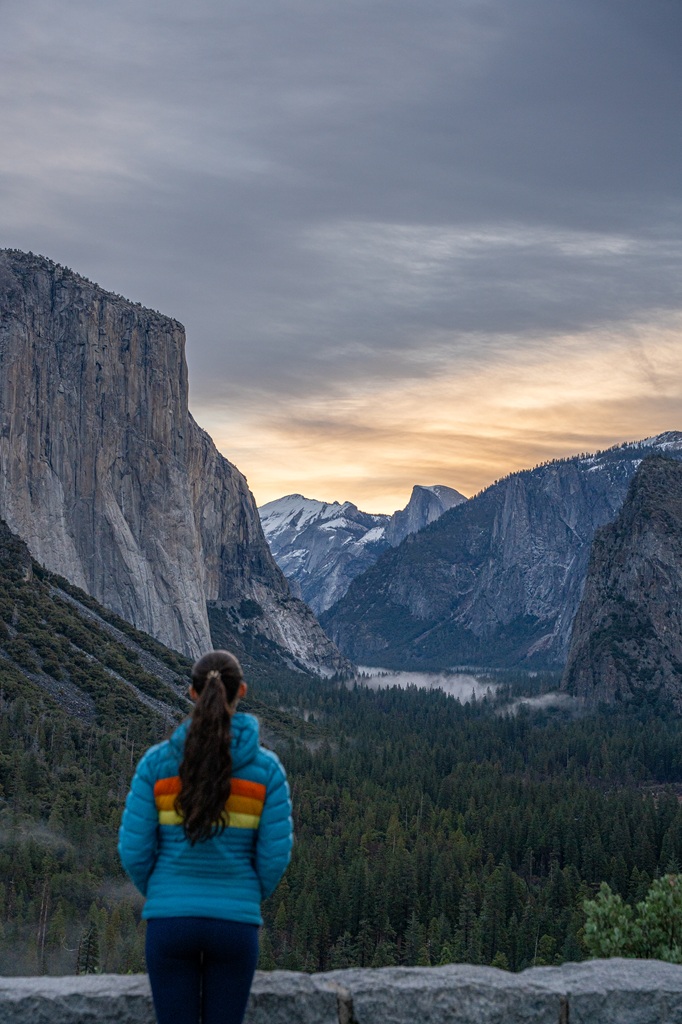
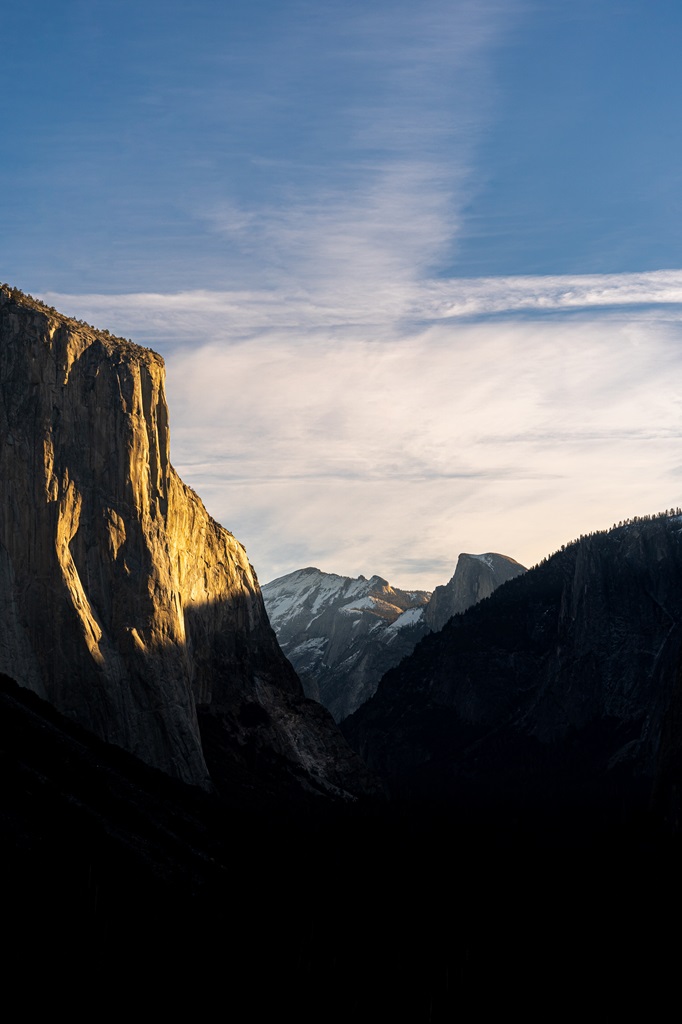
Start your morning at Tunnel View by watching the sunrise! This iconic viewpoint offers stunning views of El Capitan, Half Dome, Bridalveil Fall, Clouds Rest, Sentinel Rock, and Cathedral Rocks, especially magical in winter when snow dusts the granite.
If you’re coming from the South Entrance on Highway 41, you’ll drive through the Wawona Tunnel, California’s longest highway tunnel. Don’t forget to check the exact sunrise time before you go!
🅿️ Parking area: There are two decent size parking lots at Tunnel View. In the winter, you can typically find a spot easily.
🚌 Shuttle stop: There is no shuttle stop.
🚽 Restrooms: There are no restrooms in this area.
🥾 Hike to Bridalveil Fall
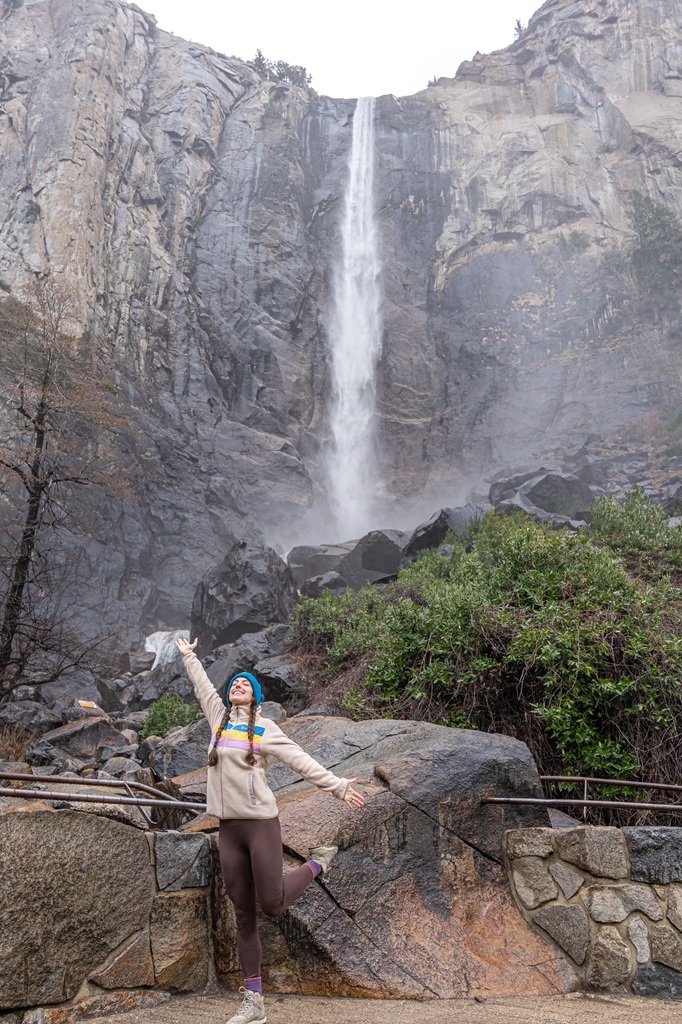
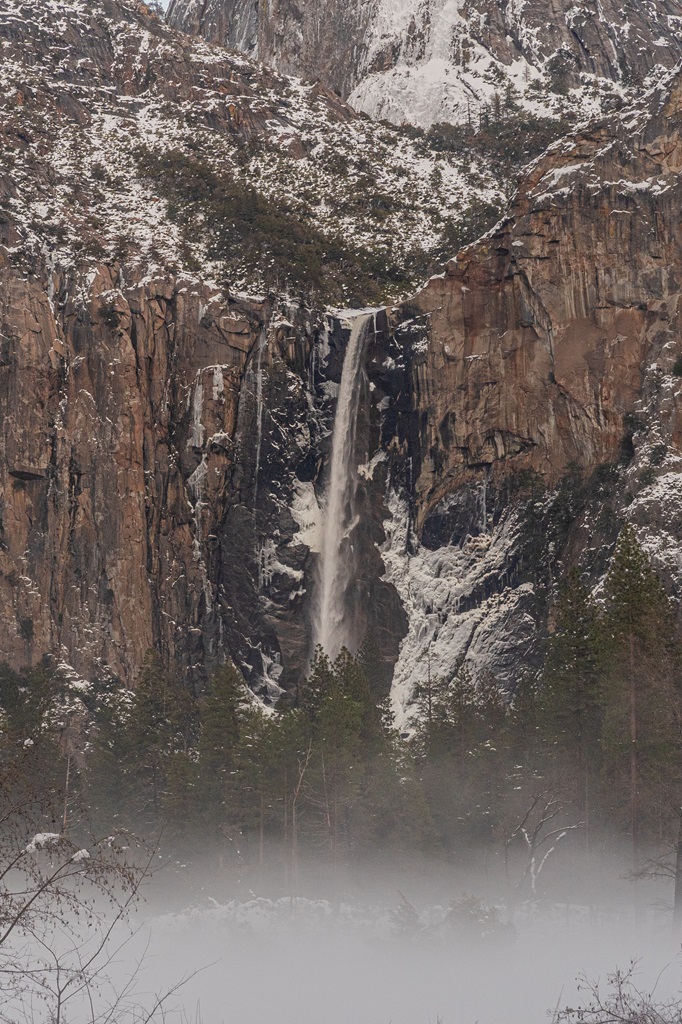
Bridalveil Fall, one of Yosemite’s most iconic waterfalls at 620 feet, is especially stunning in winter and visible from viewpoints like Tunnel View and Valley View.
There is a trail that leads to a viewing area at the base of the falls! The trail can be icy, so wear shoes with good traction or consider bringing microspikes. To reach the viewpoint, you have two options:
- 1-mile roundtrip hike from Southside Drive (not pet-friendly)
- 0.5-mile paved walk from the main trailhead (pet-friendly, leashes required)
🅿️ Trailhead parking area: ~60 spaces in the main lot, with extra roadside spots along Southside Drive.
🚌 Shuttle stop: There is no shuttle stop.
🚽 Restrooms: Flush toilets are available at the main parking area.
🧺 Stop by the Swinging Bridge Picnic Area
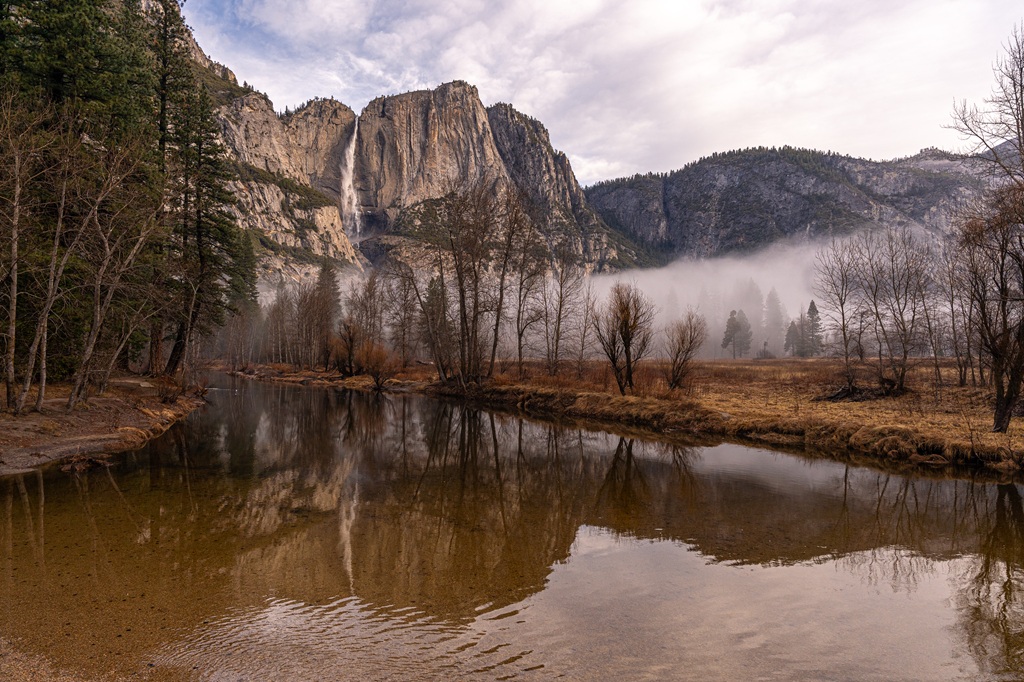
Swinging Bridge Picnic Area is a scenic stop along the Merced River with picnic tables and a paved walking and biking path. From the bridge, you’ll enjoy great views of Yosemite Falls and the surrounding cliffs.
Despite its name, the bridge doesn’t swing. The original swinging bridge was damaged by floods and replaced with a permanent bridge after the 1964 flood.
🅿️ Parking area: The parking lot is not very big and does fill up pretty quick. If it’s full, you can park in the designated roadside spots along Southside Drive just down the road and walk along a paved path to the picnic area.
🚌 Shuttle stop: The closest shuttle stop is #11 Four Mile Trailhead which is only 0.2 miles to the picnic area.
🚽 Restrooms: There are vault toilets at the picnic area.
❄️ Hike the Cook’s Meadow Loop and Lower Yosemite Fall Trail
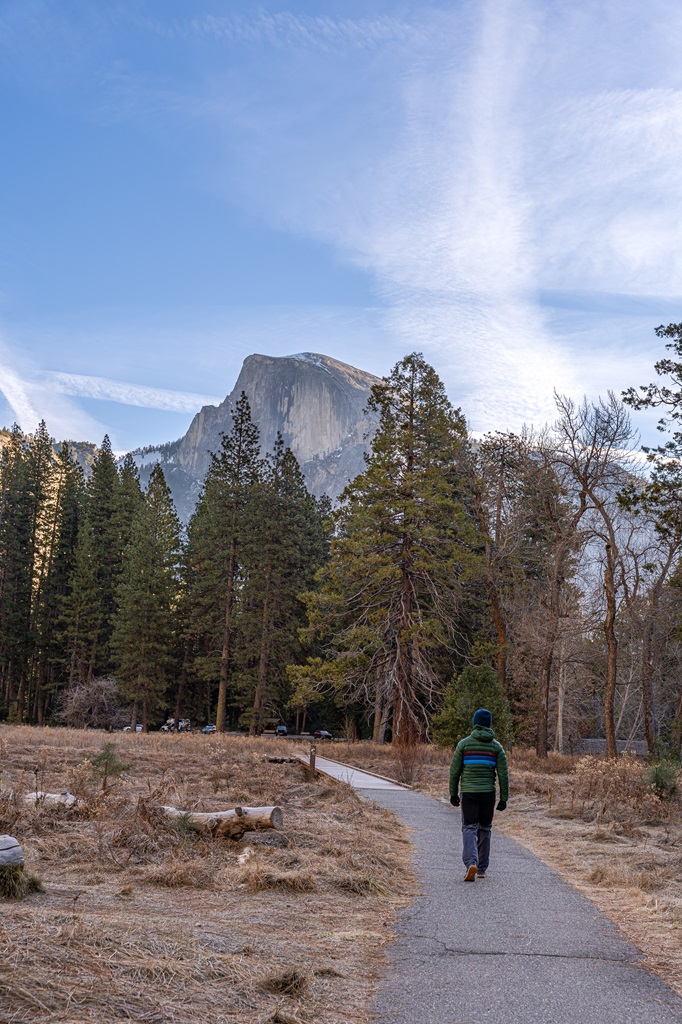
Cook’s Meadow, also called Sentinel Meadow, is a wide-open meadow surrounded by stunning scenery, including Yosemite Falls, Half Dome, Glacier Point, and Sentinel Rock. The loop is about 1 mile roundtrip and a great option for families or anyone looking for an easy stroll.
Along the way, you’ll find great photo spots at Superintendent’s Bridge, Yosemite Valley Chapel, and Sentinel Bridge, which offers an iconic view of Half Dome reflected in the Merced River.
Winter conditions can make the trails and boardwalks icy, so microspikes and hiking poles are recommended. Leashed pets, bikes, and strollers are allowed, and the trail is wheelchair accessible when snow-free.
⚠️ To help protect Cook’s Meadow, stay on the designated trails and avoid creating unofficial paths!
🅿️ Parking near Cook’s Meadow: Yosemite Falls parking area, Yosemite Village, Sentinel Bridge parking area, or Southside Drive.
🚌 Shuttle stop: The closest shuttle stop to Cook’s Meadow is #6 Lower Yosemite Fall.
🚽 Restrooms: The closest bathrooms are at the Lower Yosemite Fall Trailhead or Yosemite Valley Welcome Center.
I recommend combining Cook’s Meadow Loop with the Lower Yosemite Fall Trail for an easy 2.2-mile roundtrip hike.
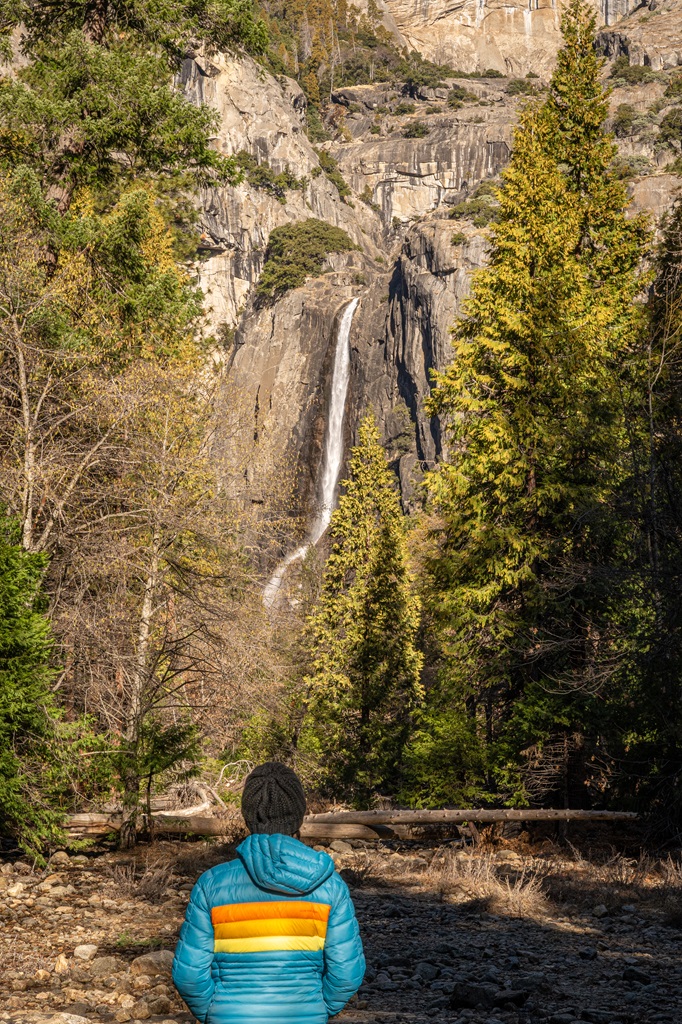
The Lower Yosemite Fall Trail takes you to the base of Yosemite Falls, one of North America’s tallest waterfalls. Along the trail, the footbridge offers a close-up view of the lower cascade, while the Yosemite Falls viewpoint shows the entire waterfall from top to bottom.
The western portion of the loop provides the best view of all three tiers. Winter can make sections of the trail icy, especially on the climb to the footbridge so be careful!
🅿️ Parking near Lower Yosemite Fall Trailhead: There’s no parking directly at the trailhead, so you can park at either Yosemite Falls parking area (0.5 miles from trailhead), Yosemite Village (0.8 miles from trailhead), or Curry Village and take the shuttle.
🚌 Shuttle stop: There is a shuttle stop directly at the trailhead – Stop #6 Lower Yosemite Fall.
🚽 Restrooms: Flush toilets are available on the western portion of the trail.
✨ READ THIS: Must-Do Easy Hikes in Yosemite for All Skill Levels
🥾 Hike to Mirror Lake or Vernal Fall Footbridge
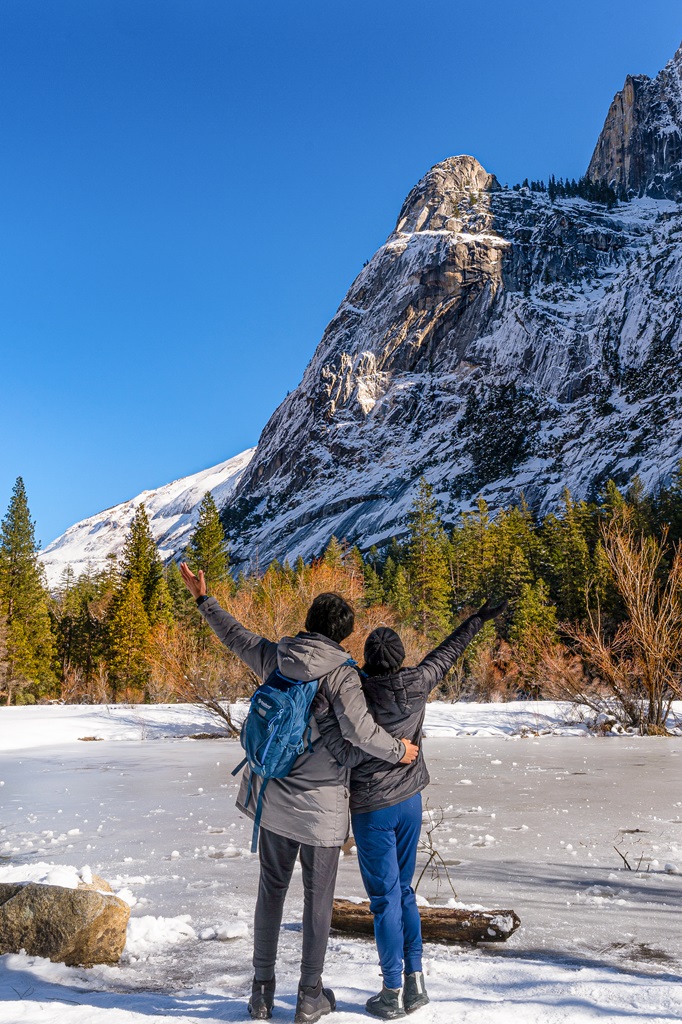
Mirror Lake is one of Yosemite Valley’s most picturesque spots, with views of Half Dome, Mountain Watkins, and Washington Column. In winter, the lake often freezes, but the snow-covered landscape still makes it a magical place to explore.
The easiest route is a short 2-mile out-and-back along a paved path, ideal for a leisurely, family-friendly walk. Watch for icy patches along the way.
🅿️ Parking near Mirror Lake: There is no parking directly at the trailhead. I recommend parking at any of the major parking lots and taking the shuttle to the trailhead.
🚌 Shuttle stop: There is a shuttle stop directly at the trailhead – Stop #17 Mirror Lake.
🚽 Restrooms: There are vault toilets about half a mile from the trailhead and near the lake.
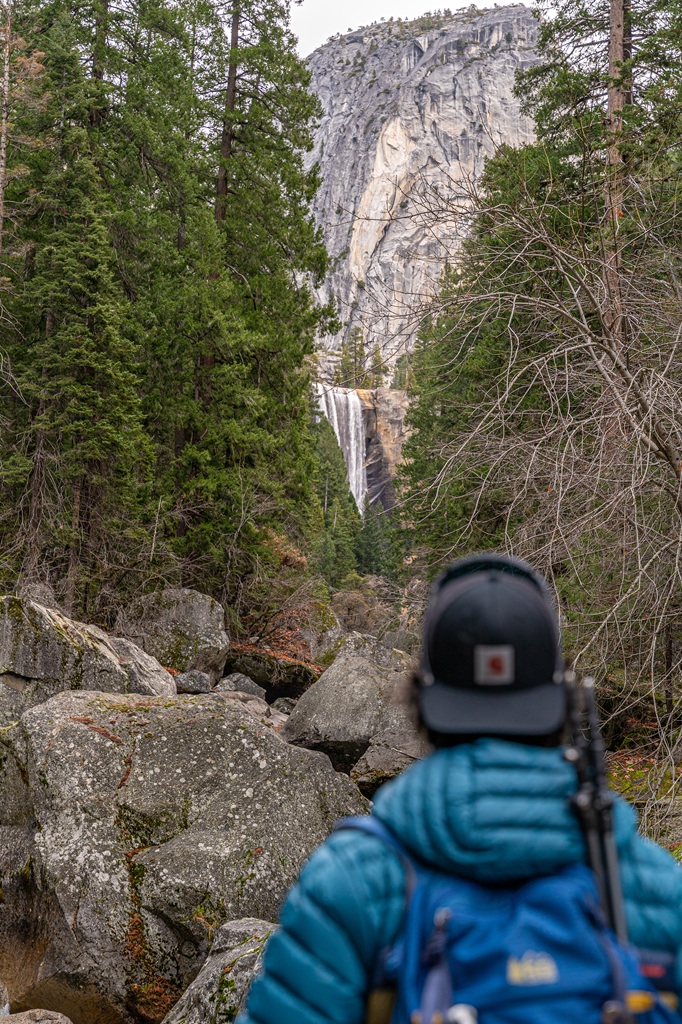
If you’re up for a challenge, hike to the Vernal Fall Footbridge! This route is about 1.6 miles roundtrip with 400 feet of elevation gain. It’s a short but pretty tough hike along a paved path.
At the footbridge, you’ll see a distant view of Vernal Fall. If you have the time and energy, you could continue to the top of Vernal Fall via the John Muir Trail and Clark Point cut-off (this is the winter route as the steps section of the Mist Trail closes during this time).
🅿️ Parking near Mist Trail Trailhead: There is no parking directly at the trailhead. The closest parking lots are Yosemite Valley Trailhead Parking (0.5 miles from trailhead) or Curry Village (1 mile from trailhead).
🚌 Shuttle stop: Stop #16 Happy Isles.
🚽 Restrooms: Flush toilets can be found near the shuttle stop #16. The restrooms near the Vernal Fall Footbridge are closed in the winter months.
✨ READ THIS: Complete Mist Trail Hiking Guide
🍔 Eat lunch at Degnan’s Kitchen or Base Camp Eatery
For lunch, stop at Degnan’s Kitchen or Base Camp Eatery for a tasty meal to refuel!
Degnan’s Kitchen serves deli sandwiches, salads, and breakfast items. Pair your meal with a coffee or pastry from Peet’s Coffee and enjoy indoor or outdoor seating.
The restaurant started as a small home bakery in the 1880s by Irish immigrant Bridget Degnan and has been serving Yosemite visitors for over 130 years!
🅿️ Parking near Degnan’s Kitchen: There is a big parking lot at Yosemite Village.
🚌 Shuttle stop: Stop #4 Degnan’s Kitchen.
🚽 Restrooms: There are flush toilets at the restaurant.
Base Camp Eatery, open for breakfast, lunch, and dinner, offers a variety of fresh, seasonal foods with front-of-house cooking and grab-and-go options. There’s also a Starbucks in the food court.
🅿️ Parking near Base Camp Eatery: There is a day-use parking lot beside the Base Camp Eatery. If this lot is full, you can park at Yosemite Falls parking area and walk over or park at Yosemite Village and take the shuttle.
🚌 Shuttle stop: Stop #7 Camp Four/Yosemite Valley Lodge/Yosemite Falls Parking.
🚽 Restrooms: There are flush toilets at the food court.
🦉 Explore Yosemite Village
Explore Yosemite Village and learn more about the park’s rich history and culture.
The Yosemite Valley Welcome Center, next to the Village Store, is open year-round and features a ranger-staffed information desk, bookstore, and exhibits with helpful directions and park info.
The Yosemite Museum highlights the cultural history of Yosemite’s indigenous tribes from 1850 to today, including traditional skill demonstrations and rotating art exhibits.
At the Indian Village of Ahwahnee, walk through a reconstructed village showcasing bark houses, a ceremonial roundhouse, acorn granaries, and more. The site honors the Ahwahneechee people and is still used by local Native American communities for ceremonies. Open year-round.
The Yosemite Exploration Center features the Spirit of Yosemite film and exhibits on the park’s geology, wildlife, history, and rock climbing.
At the Ansel Adams Gallery, enjoy fine art, books, photography supplies, and an incredible collection of Ansel Adams’ original photos. Founded in 1902 as Best’s Studio, it also offers free and paid photography programs. Open year-round.
The Valley Wilderness Center provides wilderness permits, maps, guidebooks, and bear canisters, plus advice on pre-trip planning and low-impact camping. Open May through October.
🧗♀️ Stop by El Capitan Meadow
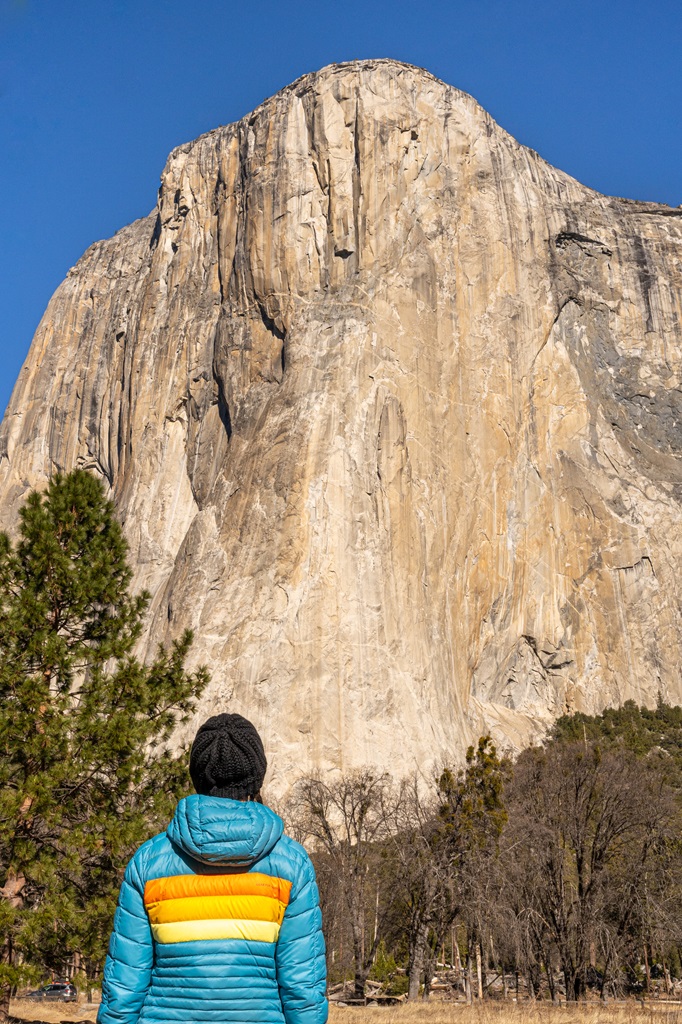
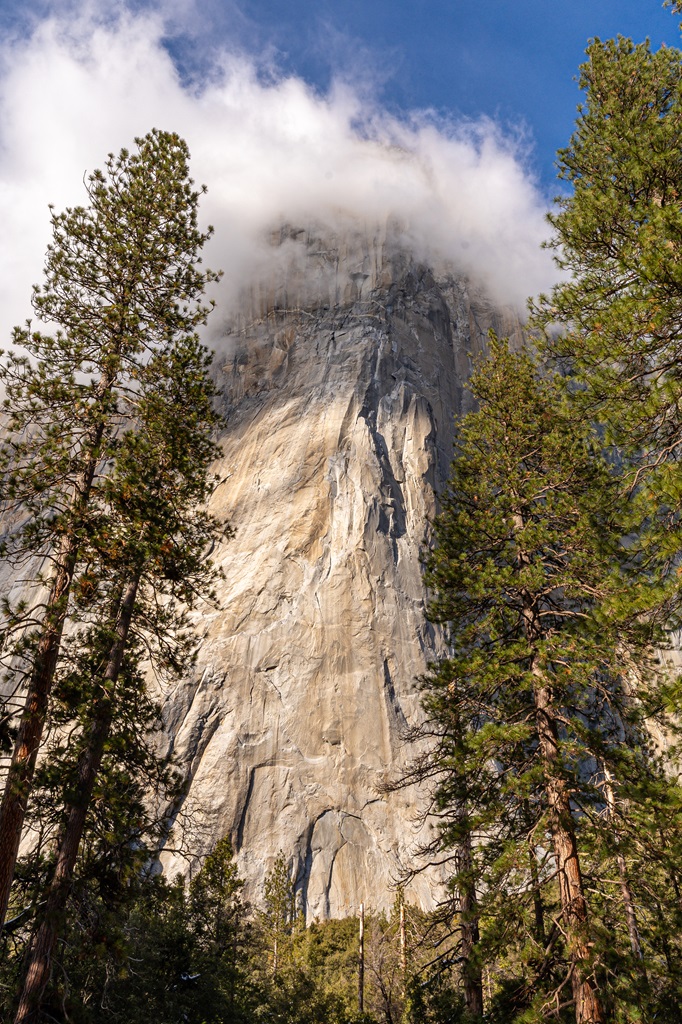
As you drive through Yosemite Valley, you’ll get stunning views of El Capitan, one of the park’s most iconic landmarks.
Rising over 3,000 feet above the valley floor, this massive granite monolith is a world-famous challenge for rock climbers and an unforgettable sight for visitors.
For a closer look, head to El Capitan Meadow on Northside Drive near the west end of the valley. From here, you can admire the sheer rock face up close, and with binoculars, you might even spot climbers making their way up!
⚠️ Stay on the designated trails and avoid creating unofficial paths to protect El Capitan Meadow!
🅿️ Parking area: There are designated roadside parking spots near El Capitan Meadow. The other closest parking lot is at El Capitan Picnic Area (1 mile away) – you can take the shuttle from here.
🚌 Shuttle stop: Stop #9 El Capitan Meadow.
🚽 Restrooms: There are no restrooms at the meadow. You can find vault toilets at the El Capitan Picnic Area. Sometimes there are porta-potties near the meadow.
🌄 Watch sunset at Valley View
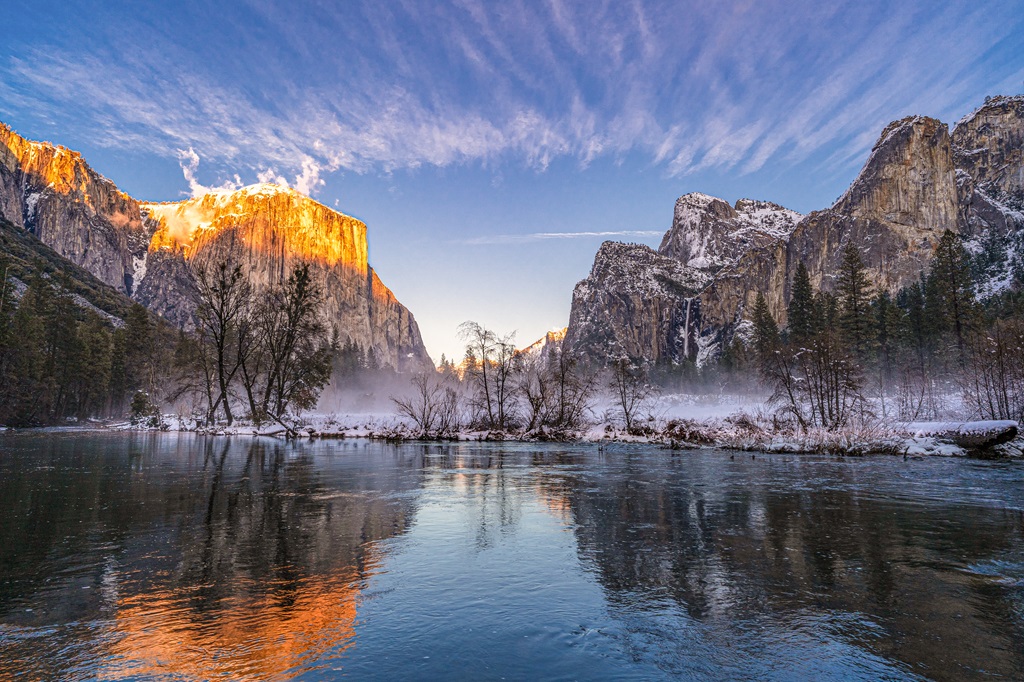
Valley View is a stunning viewpoint in Yosemite Valley, located just off Northside Drive. It’s an incredible spot for sunset, with the Merced River reflecting El Capitan, Bridalveil Fall in the distance, and Cathedral Rocks towering above the valley.
The first time my husband and I visited this spot, we watched the sunset and was beyond perfect. There was a light dusting of snow on the peaks and a soft layer of fog over the valley and Merced River. It is one of my favorite memories of Yosemite, and one of my favorite pictures we’ve taken!
🅿️ Parking area: There is a small parking area at this viewpoint. It can fill up quick so get there early if you want to watch the sunset!
🚌 Shuttle stop: There is no shuttle stop.
🚽 Restrooms: There are vault toilets across the street.
✨ Planning to spend more than one day in Yosemite? Follow this 3-day Yosemite winter itinerary for must-see views, top-rated hikes, and can’t-miss experiences.
Conclusion
Winter has quickly become one of my favorite times to experience Yosemite. With fewer crowds, peaceful trails, and snow-dusted landscapes, the park feels magical and quiet. ❄️
Winter opens up experiences you can’t enjoy in other seasons, like snowshoeing, cross country skiing, ice skating, and downhill skiing or snowboarding.
Visiting in winter may seem intimidating if you’re not used to these conditions in the mountains, but with the right planning, it can become one of your most memorable trips ever.
If visiting Yosemite in winter is on your bucket list, this guide covers everything you need to plan an amazing winter trip! ☃️🩵
🤩 Yosemite Trip Planning Resources
- 1-Day Yosemite Itinerary for First-Time Visitors
- Where to Stay Outside of Yosemite (best places in 2026)
- 13 Best Hikes in Yosemite Valley You Can’t Miss!
- Best Spots to Find Giant Sequoia Trees in Yosemite
- 10 Must-Do Easy Hikes in Yosemite for All Skill Levels
- Hetch Hetchy Hikes: Explore This Hidden Gem
- Best Yosemite Waterfall Hikes: Complete Guide
- Ultimate Guide to Visiting Yosemite in May
- Is Tioga Pass Open? Plan an Epic Trip with This Guide
- 12 Best Tioga Pass Hikes for Adventure Lovers
Enjoyed this post? Pin for later!