Have you ever typed in Google “what to do in Yosemite during winter?” Trust me, you are not alone. You’ve probably seen lots of beautiful pictures of Yosemite covered in snow and wanted to plan a trip for yourself.
As you should queen (or king). 💅
But a lot of people steer clear from visiting Yosemite National Park in winter due to seasonal road and trail closures, portions of the park not being easily accessible, and tire chains possibly being required.
So, what is there to do when much of the park is inaccessible? 🤔
Well, it’s actually more accessible than you think! You just have to get out of your comfort zone, maybe take some skiing lessons or strap on a pair of snowshoes, and explore the snow-covered landscape.
If those types of winter adventures are a bit too extreme for you, don’t worry, there’s plenty more to do that doesn’t require any sort of technical skills, such as sightseeing, photography, and easy hiking.
There are exciting Yosemite winter activities for all ages and skill level from tubing down snowy slopes and snowshoeing beginner-friendly trails to downhill snowboarding and cross country skiing to a campsite at higher elevations in the wilderness in deep snow.
If you’re planning a trip to Yosemite this winter season, here’s your guide to the best things to do in Yosemite in winter! ☃️
Affiliate Disclaimer: Some links on this page may be affiliate links, meaning I may earn a small commission at no extra cost to you. As an Amazon Associate, I earn from qualifying purchases. Thanks for supporting the blog! 🫶
What to Know Before Visiting Yosemite in Winter
🎫 Yosemite Entrance Fees and Reservations in Winter
Entrance to Yosemite National Park costs $35 per vehicle for a 3-day pass. However, if you have the America the Beautiful Annual Pass, your entry is free!
For those who love exploring national parks, investing in the Annual Pass is a smart choice. At just $80, for U.S. residents, it grants you access to over 2,000 federal recreation sites across the country!
FEE UPDATES! Beginning January 1, 2026, non-U.S. residents (without an annual pass) will pay a $100 per person in addition to the standard entrance fee. The Annual Pass for non-US. residents will cost $250.
A reservation is not required to visit Yosemite in winter this year! In the past, reservations were required during the Firefall event which takes places in mid to late February. But this year, 2026, reservations are NOT required!
❄️ Winter Weather in Yosemite
Winter in Yosemite usually runs from December through March, but you can see snowfall as early as October or November and as late as April and May.
In Yosemite Valley, winter temperatures are pretty mild. In January and February, daytime highs are usually in the upper 40s °F (~9 °C), while overnight lows are often in the upper 20s °F (~-2 °C).
If you were to head up to higher elevations, expect much colder temperatures and a lot more snow.
The valley itself doesn’t get buried in snow every winter. Average annual snowfall, in the valley, is often around 30-40 inches, but it varies depending on the year.
Some winters are magical and snowy, and others are pretty light. If you want a winter wonderland, make sure to do a snow dance! 💃
🛣️ Winter Road Conditions, Closures, and Chain Control
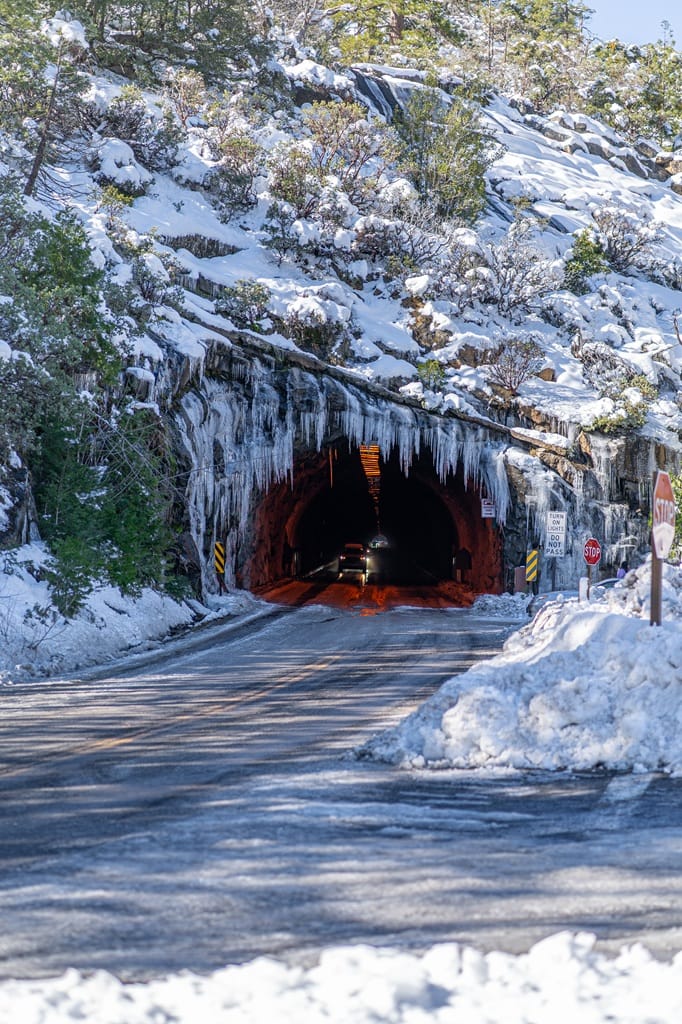
Some roads in Yosemite shut down seasonally, such as Tioga Road (Highway 120), Glacier Point Road, and Mariposa Grove Road. They typically remain closed from November to May (dates vary year to year).
Even the roads that do stay open can be icy and snowy, so drive cautiously and expect delays. Sometimes roads may close temporarily if a big snowstorm comes through, but it’ll reopen once they plow it. Always check road conditions before you go!
⚠️ For the most up-to-date information on Yosemite’s road conditions, call 209-372-0200 (press 1 then 1 again)
Tire chains are often required in winter, and if chain control is in effect, you MUST carry them and know how to use them, even if you’re in a 4WD/AWD vehicle or have snow tires.
⛓️ Levels of chain control:
- R1 – You’ll need to put chains on your car unless you’re in a car, pickup, or SUV under 6,000 pounds AND you have snow tires with at least 6/32 inches of tread or deeper.
- R2 – You’ll need to put chains on your car unless you’re in a car, pickup truck, or SUV under 6,500 pounds AND you have snow tires with at least 6/32 inches of tread or deeper AND your car has 4WD or AWD engaged.
- R3 – Chains are required on ALL vehicles, no exceptions.
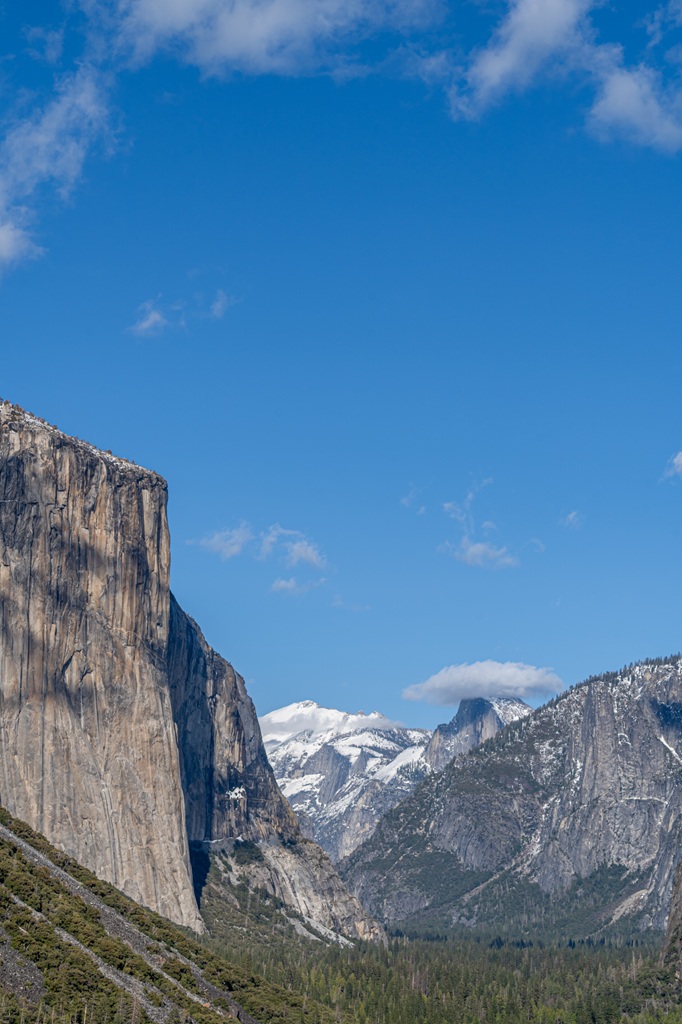
🐻 Wildlife in Yosemite in Winter
Winter is a great time to spot wildlife roaming around Yosemite. You might see their tracks in the snow or see the actual animal itself! Be on the lookout for mule deer, coyotes, bobcats, and black bears.
Yes, black bears are still active in the winter. Follow these guidelines to avoid any negative interactions with a black bear.
🚫 Bear spray is prohibited in Yosemite!
🌲 Respect Mother Nature and Leave No Trace
Follow Leave No Trace principles and help protect Yosemite National Park for future generations.
- Plan ahead and be prepared
- Travel and camp on durable surfaces
- Dispose of waste properly
- Leave what you find
- Minimize campfire impacts
- Respect wildlife
- Be considerate of others
⛷️ Winter Adventuring Safety Tips
- Check weather and trail conditions before heading out.
- Pack layers – temperatures can drop quickly, especially the higher in elevation you go.
- Wear waterproof hiking boots and moisture-wicking socks. Dry, warm feet are happy feet!
- Pack essential safety gear, such as map/compass/GPS device, extra layers, headlamps/flashlights, first aid kit, fire starter, sun protection, repair kit/tools, extra food and water, and emergency bivy/blanket.
- Start early – daylight hours in the winter are limited.
- Know your limits – winter activities, such as snowshoeing and cross country skiing, can be challenging, especially for beginners. Take it slow, pace yourself, and be safe.
- Watch for signs of hypothermia, such as intense shivering (may stop if hypothermia gets worse), confusion, drowsiness, slurred speech, clumsy movements, pale/cold skin, and slowed heart rate/breathing.
- Bring proper equipment (skis, snowshoes, microspikes, etc.) and make sure they’re in good condition before heading out.
- Travel with a buddy and let someone know your plans.
☃️ Winter Yosemite Travel Tips
- Expect slower travel due to icy/snowy roads.
- Bring or purchase tire chains (and know how to use them).
- Be aware that daylight hours are shorter in the winter.
- Expect traffic congestion and limited parking during winter holidays (late December and early January) as well as during the Firefall event (mid to late-February).
- Always have emergency items, such as water, snacks, blankets, and flashlights, in your car in case you break down or get stranded during an unexpected winter storm.
- The Yosemite Valley Shuttle System operates all year long, making it super easy to get around the valley, especially when winter weather rolls in. Take advantage of it to keep your visit stress-free and hassle-free.
- Book a stay inside the park to avoid driving back and forth on the roads. Lodging in Yosemite Valley includes Yosemite Valley Lodge, The Ahwahnee, and Curry Village.
✨ Planning a trip to Yosemite this season? Before you book anything, read through my ultimate guide to the best lodges, hotels, and cozy cabins in Yosemite in winter. It’ll save you time and help you find the perfect snowy getaway!
Best Yosemite Winter Activities (18 things to do this season)
Winter Hiking in Yosemite Valley
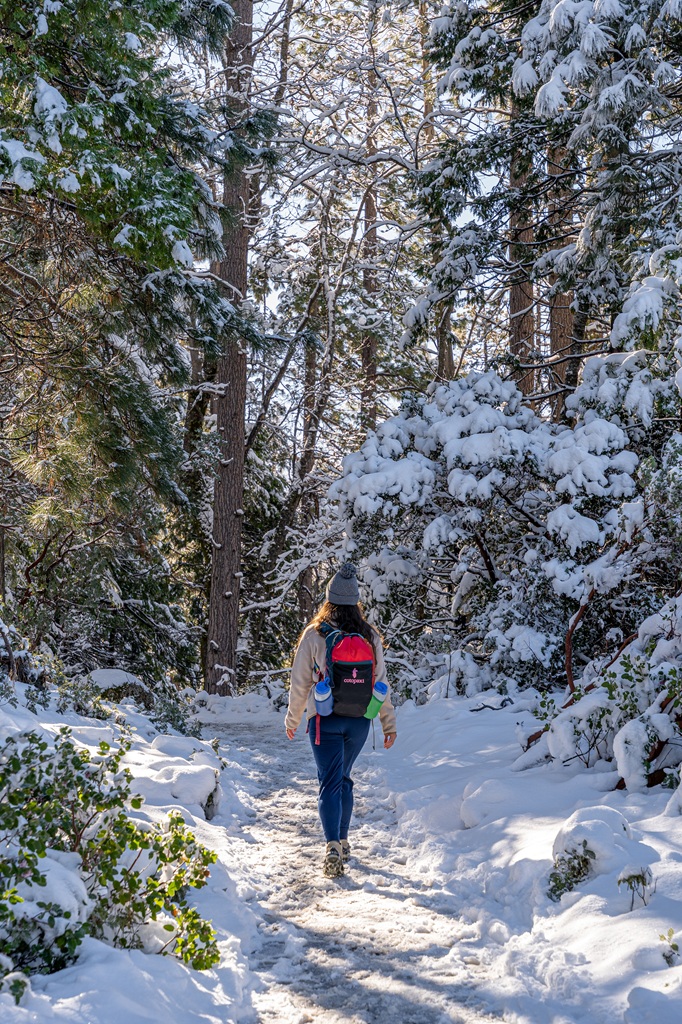
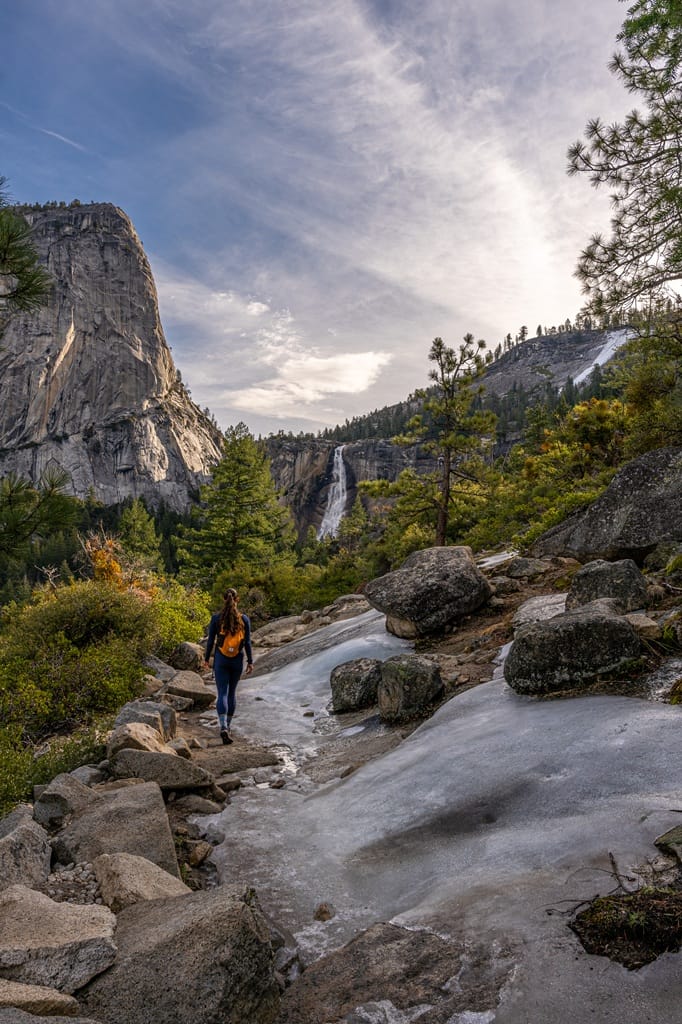
Winter hiking in Yosemite Valley is one of the best winter activities because many of the trails are doable for most skill levels. That said, there are also more challenging routes if you’re looking for something that requires more skill, endurance, and specific winter gear.
Since Yosemite Valley sits at around 4,000 feet, it gets less snow than higher elevations. When it does snow, though, the entire valley turns into a dreamy winter wonderland.
Just be ready for winter conditions on any of the trails! Bring extra layers, microspikes, and hiking poles, and if you’re going up to higher elevations, snowshoes may be necessary.
For many valley trails, waterproof hiking boots are often enough but it’s always smart to carry winter essentials in your pack, just in case.
✨ I have another blog post that dives deeper into each of these Yosemite winter hikes plus even more trails, so be sure to check it out!
🥾 Easy winter hikes in Yosemite Valley:
- Cook’s Meadow (1 mile roundtrip with 30 feet elevation gain)
- Lower Yosemite Fall Trail (1.2 miles roundtrip with 55 feet of elevation gain)
- Mirror Lake Paved Trail (2 miles roundtrip with 110 feet of elevation gain)
- Bridalveil Fall (0.5 to 1 mile roundtrip with 80 to 115 feet of elevation gain)
🥾 Moderate to hard winter hikes in Yosemite Valley:
- Mirror Lake Loop (5 miles roundtrip with 300 feet of elevation gain)
- Valley Loop Trail (7.2 to 11.5 miles roundtrip with minimal elevation gain)
- Artist Point Trail (2.2 miles roundtrip with 800 feet of elevation gain)
- Mist Trail and John Muir Trail to Vernal Fall and Nevada Fall winter route (10.4 miles roundtrip with 2,000 feet of elevation gain)
- Four Mile Trail below Union Point (5.6 miles roundtrip with 2,000 feet of elevation gain)
- Upper Yosemite Fall Trail (7 miles roundtrip with 3,200 feet of elevation gain)
- El Capitan from Yosemite Valley (16 miles roundtrip with ~5,000 feet of elevation gain)
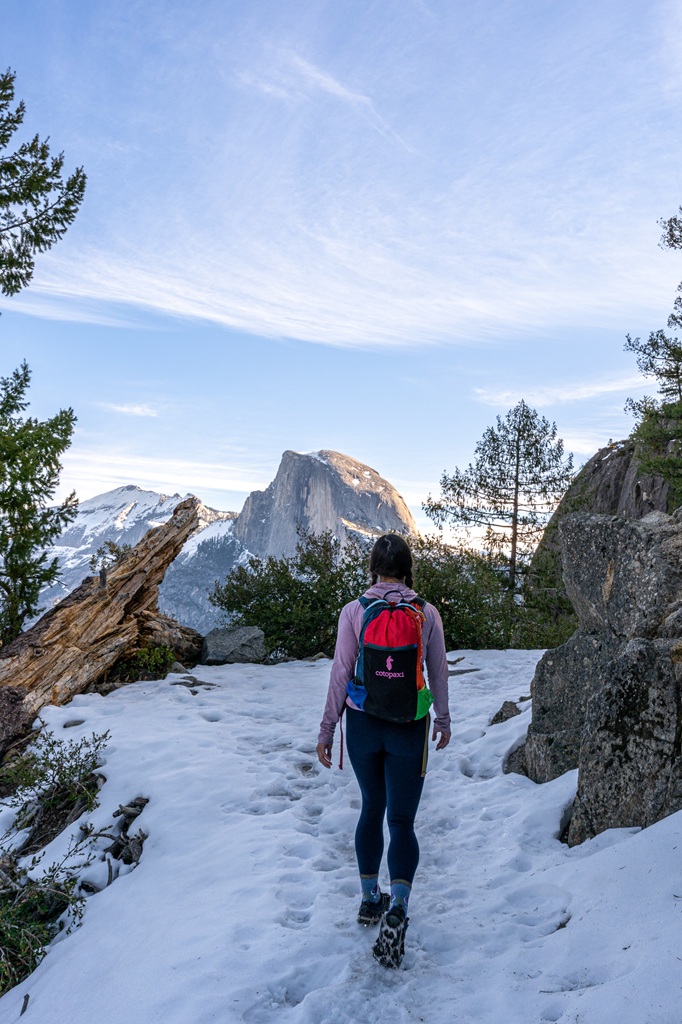
Ice Skating at Curry Village
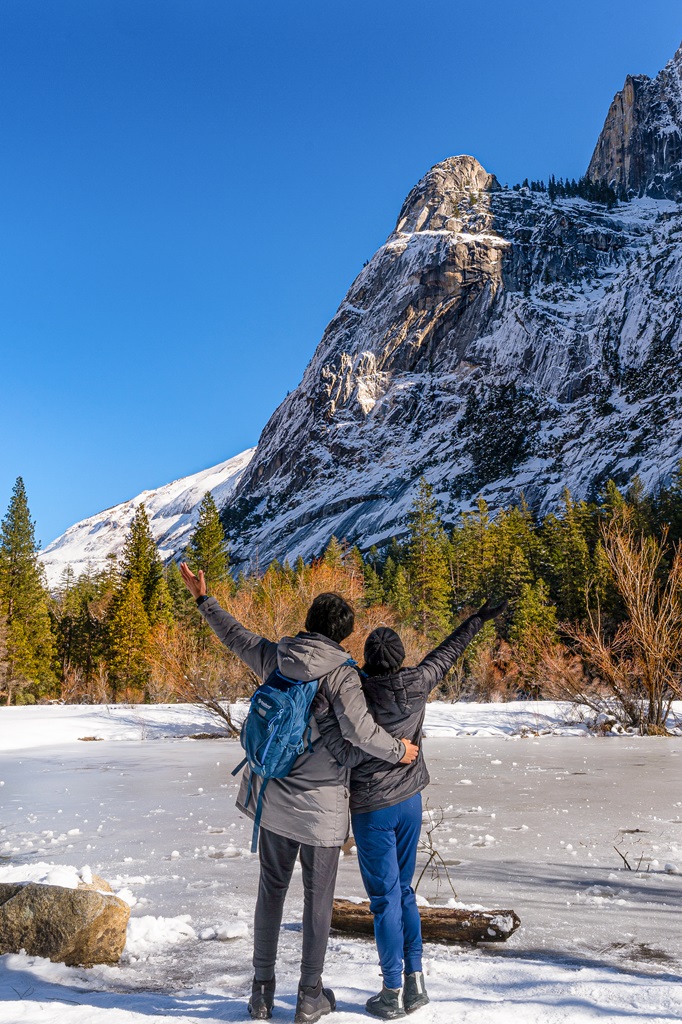
Ice skating at the Curry Village outdoor rink is one of the most iconic things to do in Yosemite in winter.
This outdoor ice skating rink has been a favorite for families and visitors since 1928. It’s fun, festive, and scenic with an amazing view of Half Dome.
⛸️ What to know before you go:
- Season: Typically runs from mid-November through early March, depending on weather
- This season’s dates: November 14, 2025 – March 2, 2026
- Daily sessions: Usually 3–4 skating sessions per day
- Tickets: They can be purchased online or in person at the Curry Village Tour & Activity Desk.
Exploring Mariposa Grove in Snowshoes or Skis
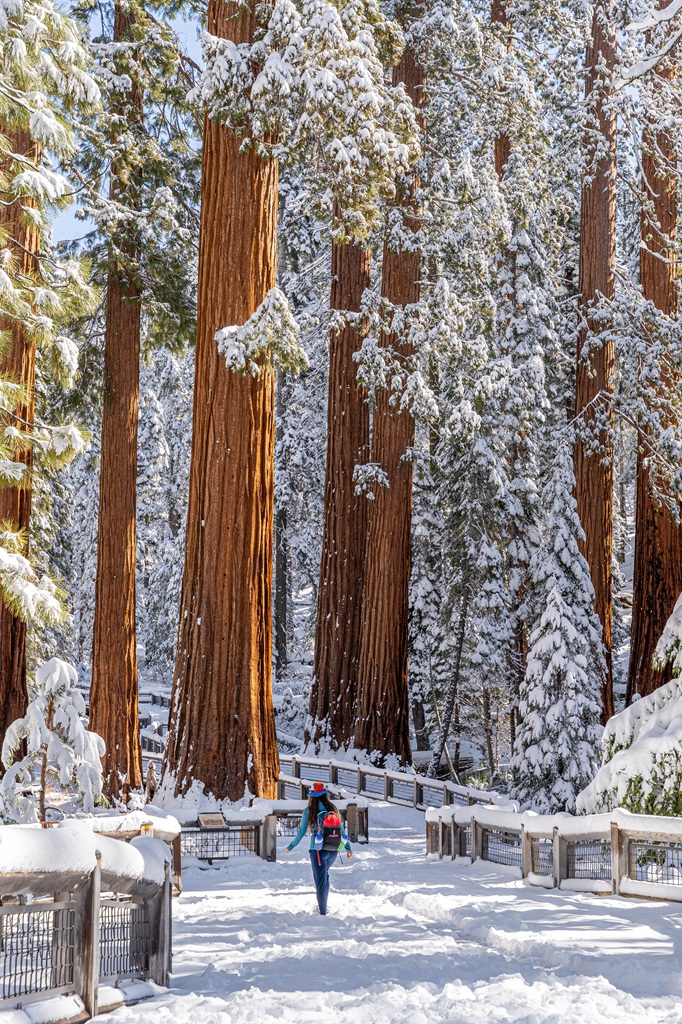
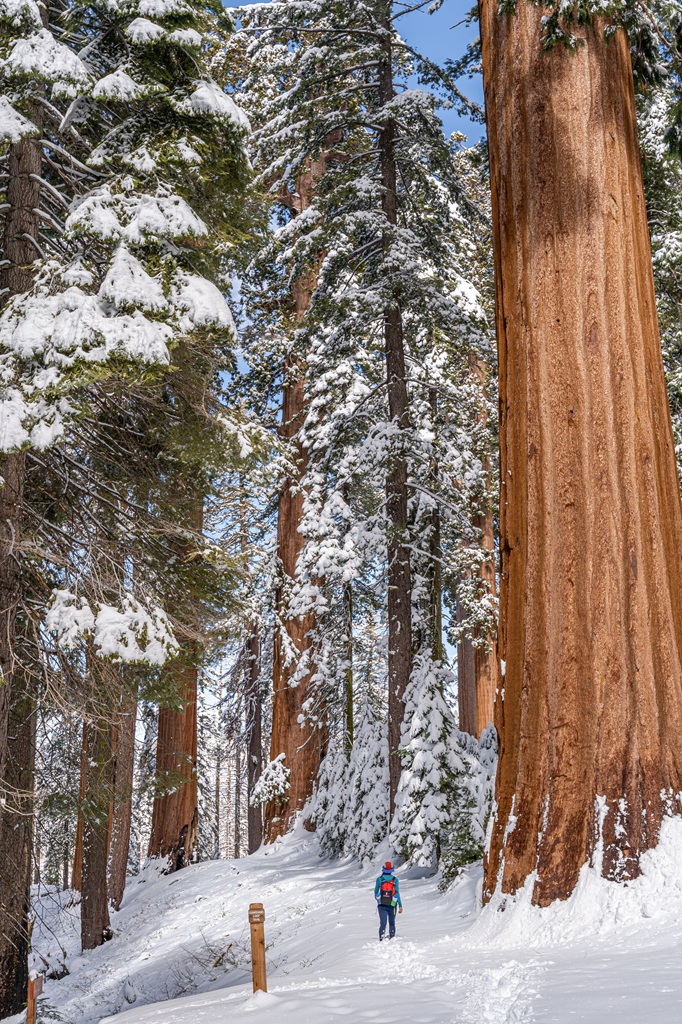
Mariposa Grove of Giant Sequoias is one of the most magical places to visit in Yosemite during the winter months! It’s personally my favorite time of the year to visit the grove.
Located just inside Yosemite’s South Entrance along Highway 41, Mariposa Grove is the park’s largest sequoia grove with over 500 mature giant sequoias. In the winter, after a good snowfall, it’s the perfect place for snowshoeing or cross country skiing.
👉 Important things to know:
- Mariposa Grove Road closes seasonally from November through April (exact dates vary each year). When the road is closed, the shuttle does not run.
- When the shuttle isn’t operating, the only way to reach the grove is by taking the Washburn Trail or Mariposa Grove Road. Each route is about 2 miles one-way with 500 feet of elevation gain.
- Start early if you’re heading to the upper grove (snow slows you down and winter daylight is limited).
- Don’t walk on the ski tracks and stay on designated routes.
- If you’re skiing, be mindful of hikers and snowshoers (and vice versa).
- Don’t have your own snowshoes or skis? Rent them from Badger Pass Ski Area!
Trails in the lower grove include the Big Trees Loop (0.3 miles) and Grizzly Giant Loop (2.1 miles). These trails are beginner-friendly and you’ll pass special sequoia trees, such as Fallen Monarch, Bachelor and Three Graces, California Tunnel Tree, and Grizzly Giant.
Trails in the upper grove include Guardians Loop (6.5 miles) and Mariposa Grove Trail (7 miles). These trails are much more challenging than the trails in the lower grove! Special trees in this area include Faithful Couple, Clothespin Tree, Mariposa Tree, Telescope Tree, Fallen Wawona Tunnel Tree, Columbia Tree, and Galen Clark Tree.
✨ READ THIS: Beginner’s Guide to Visiting Mariposa Grove in Winter
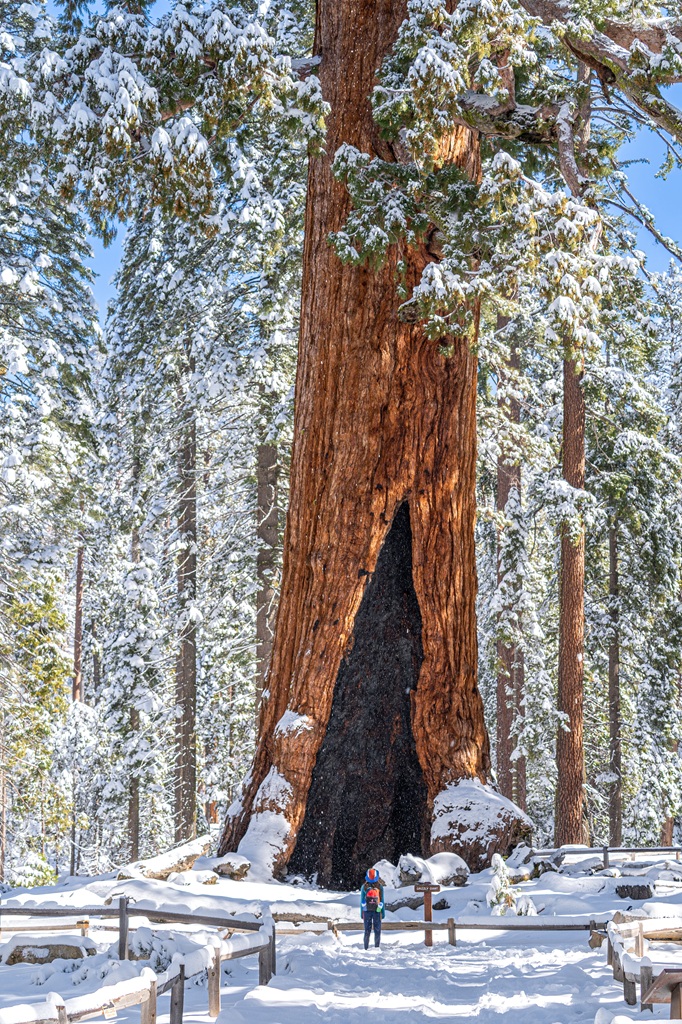
Winter Photography in Yosemite Valley & Visiting The Ansel Adams Gallery
Yosemite Valley is packed with picture-perfect spots, and after a fresh dusting of snow, every view practically turns into a postcard.
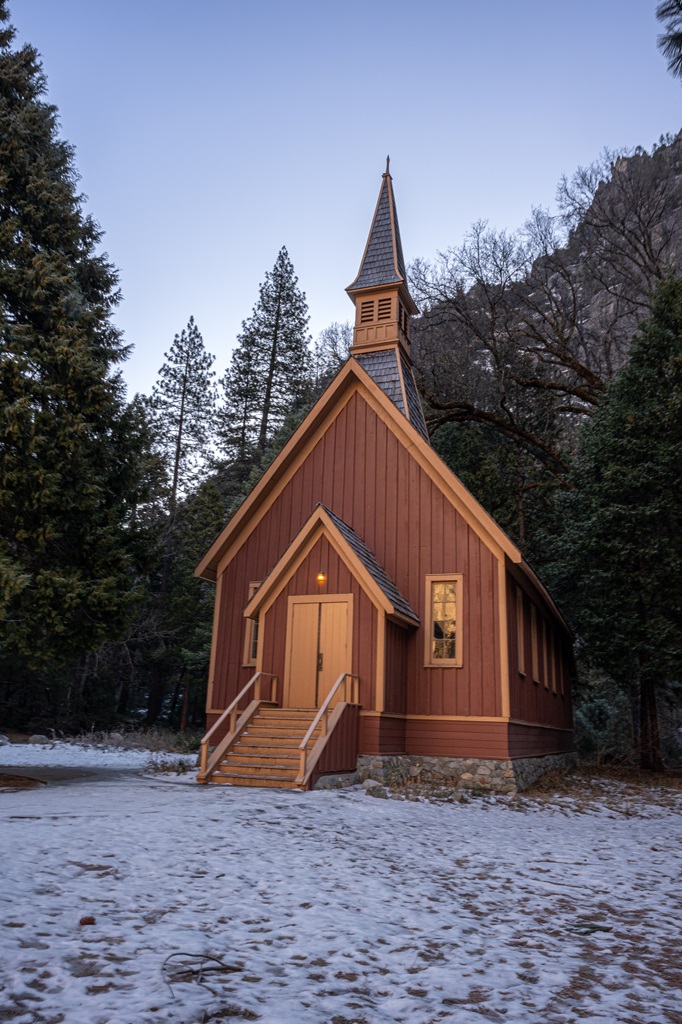
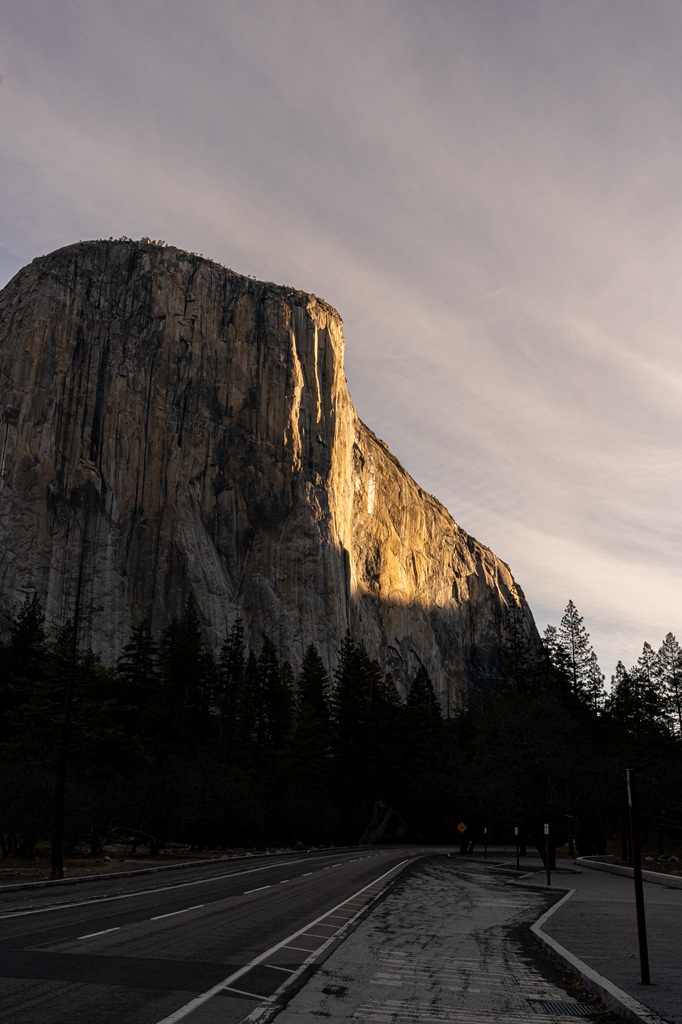
In winter, photographers love capturing scenes like frazil ice and a moonbow at Yosemite Falls, the Yosemite Valley Chapel in snow, Half Dome from Cook’s Meadow and Sentinel Bridge, snow-covered peaks from Tunnel View, El Capitan from Cathedral Beach, and the snowy landscape from Valley View and Swinging Bridge.
One iconic winter photo-op that only happens in mid to late February is the famous Firefall (more on this below).
For even more inspiration, check out The Ansel Adams Gallery. This family-owned gallery has been a Yosemite Valley staple since 1902 and offers both free and paid photography programs.
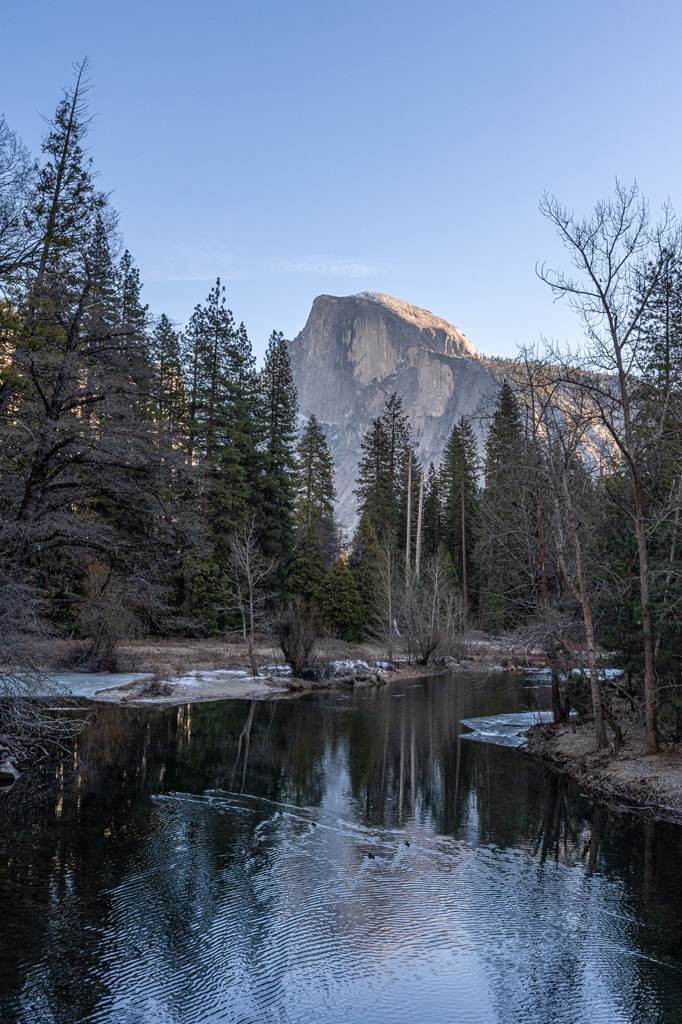
Downhill Skiing or Snowboarding at Badger Pass Ski Area
Ever been downhill skiing or snowboarding at Badger Pass Ski Area? Well, you should. It’s California’s oldest ski area! How cool is that.
Badger Pass is located off Glacier Point Road just 5 miles from the Wawona Road junction. Make sure you have your tire chains because they are often required to drive up this road.
👉 Important things to know:
- Usually opens mid-December through March (conditions permitting).
- All-day lift tickets can be purchased online whereas half-day and lower lift tickets are available on-site.
- You can rent skis, snowboards, boots, poles, helmets, and snowshoes on-site.
- Badger Pass sits at 7,200 to 8,000 feet in elevation.
- The average temperature in winter ranges from 30° to 60°F.
- Ski runs include 35% beginner, 50% intermediate, and 15% advanced.
- Chairlifts include 1 triple, 3 double, and 1 handle tow.
- There’s a shuttle from Yosemite Valley to Badger Pass which runs daily when the ski area is open. Seats are limited so get there early to secure a spot!
Need lessons? The Badger Pass Ski School offers skiing and snowboarding lessons from PSIA-certified professionals! There is even the “Badger Pups” where kids ages 4-6 can learn to ski and snowboard.
✨ Planning a winter trip to Yosemite? Follow this 3-day Yosemite winter itinerary for must-see views, top-rated hikes, and can’t-miss experiences.
Cross Country Skiing Glacier Point Road
In winter, Glacier Point Road closes to cars and becomes one of Yosemite’s most iconic routes for cross country skiing and snowshoeing. The road is machine-groomed with set ski tracks, making it “beginner-friendly” while offering incredible winter scenery.
I put beginner-friendly in quotations because if you’re very new to winter adventures and cross country skiing then this route might be strenuous! But for those who have the endurance and appropriate skills, then this route is a great introduction to cross country skiing due to it being groomed and easy to navigate as compared to winter routes in the wilderness.
This route is popular because the views at Glacier Point in winter are spectacular, plus you get to enjoy the area without the usual summer crowds!
⛷️ Route Details:
- Starting Point: Badger Pass Ski Area
- Distance: 22 miles with 2,660 feet of elevation gain
- Backpacking Option: One-way 11 miles to Glacier Point with an overnight stay at the Glacier Point Ski Hut
- Glacier Point Road Winter Route
Cross country skiing is a better option in my opinion as this route is quite long for snowshoeing in a day (unless you plan to camp overnight).
But if you do plan to snowshoe along Glacier Point Road, make sure to stay on the edges of the groomed road, outside the parallel ski tracks. The wide center lane is reserved for skate skiing and beginner skiers who need extra space to stop and turn.
⚠️ Hiking this route in boots or microspikes is not recommended! It creates divots in the tracks and can be hazardous to skiers. Stick to either snowshoes or skis!
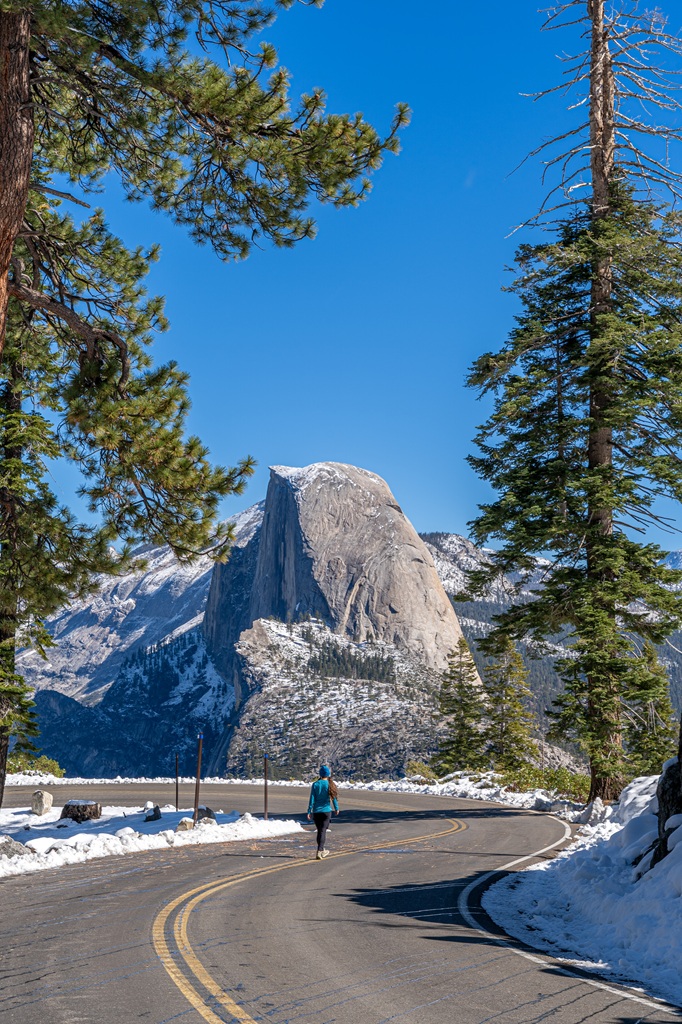
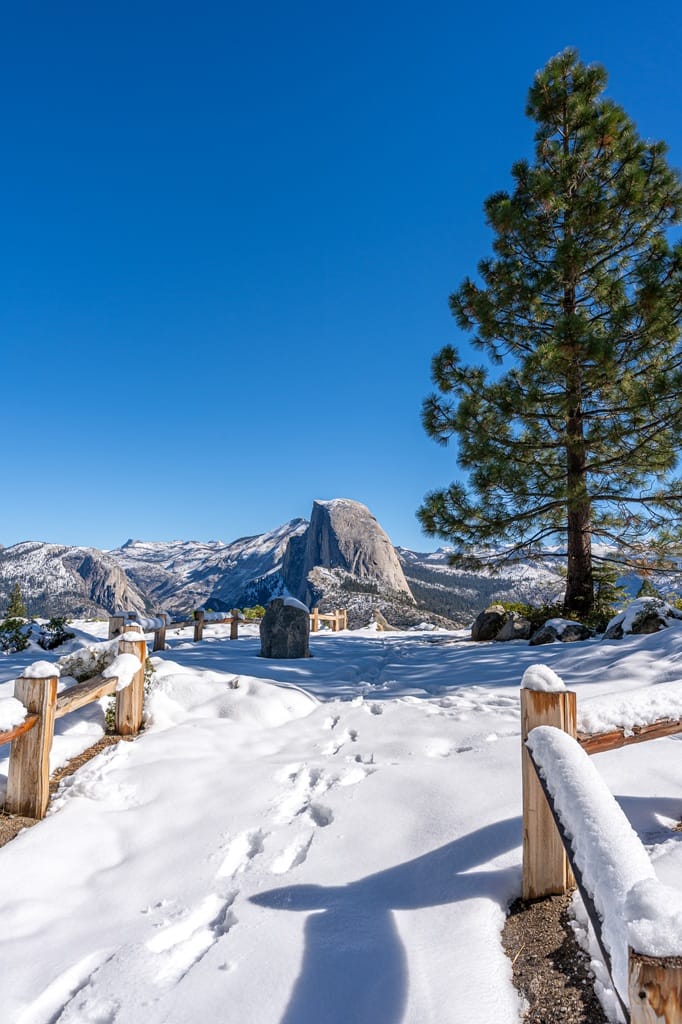
Snowshoeing to Dewey Point from Badger Pass
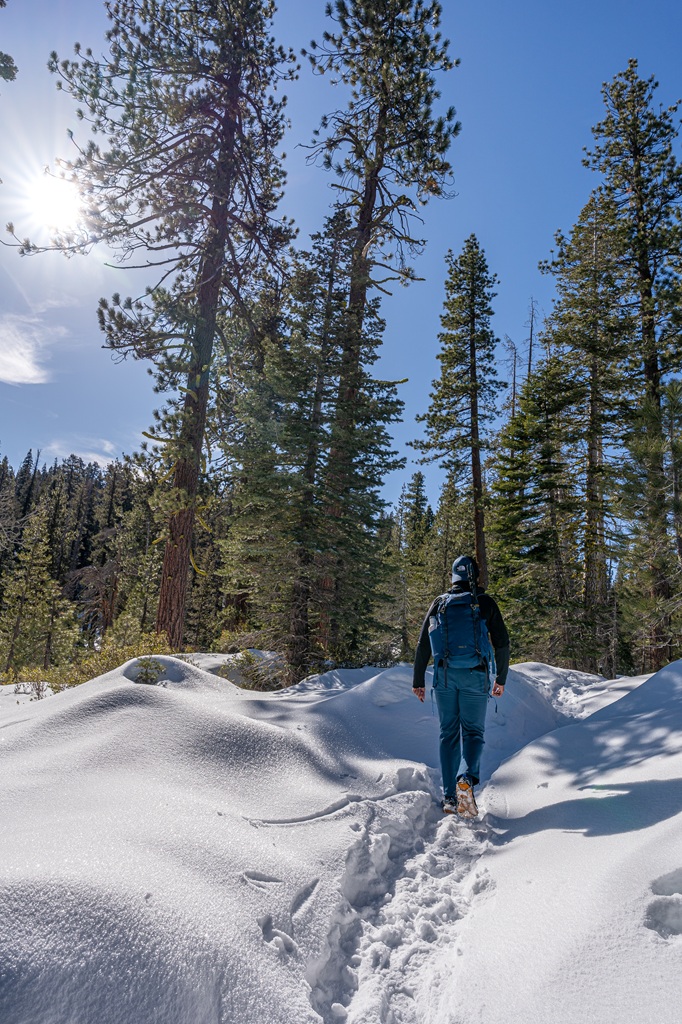
This is an epic half-day snowshoe adventure that starts at Badger Pass Ski Area. You’ll begin with about a mile along Glacier Point Road before turning into the forest onto the winter trail.
The trail splits onto Ridge Trail (#14), which is more open and challenging, or Meadow Trail (#18), which winds through peaceful forest clearings. As you approach Dewey Point, the trees thin and stunning mountain peaks come into view.
The recommended direction is clockwise. This makes the return easier and lets you enjoy the ridge views early. You can choose an out-and-back or complete the full loop with the latter being the preferred option.
🎿 Route Details:
- Starting Point: Badger Pass Ski Area off Glacier Point Road
- Length: 7.4 miles roundtrip
- Elevation Gain: 900 feet
- Dewey Point Winter Loop Map
Snowshoes and cross country skis are available for rent at Badger Pass Ski Area, and guided tours are also offered.
⚠️ This trail is only for snowshoeing or cross country skiing. Hiking in boots or microspikes can damage the trail and create hazards for others.
Experiencing Yosemite’s Firefall
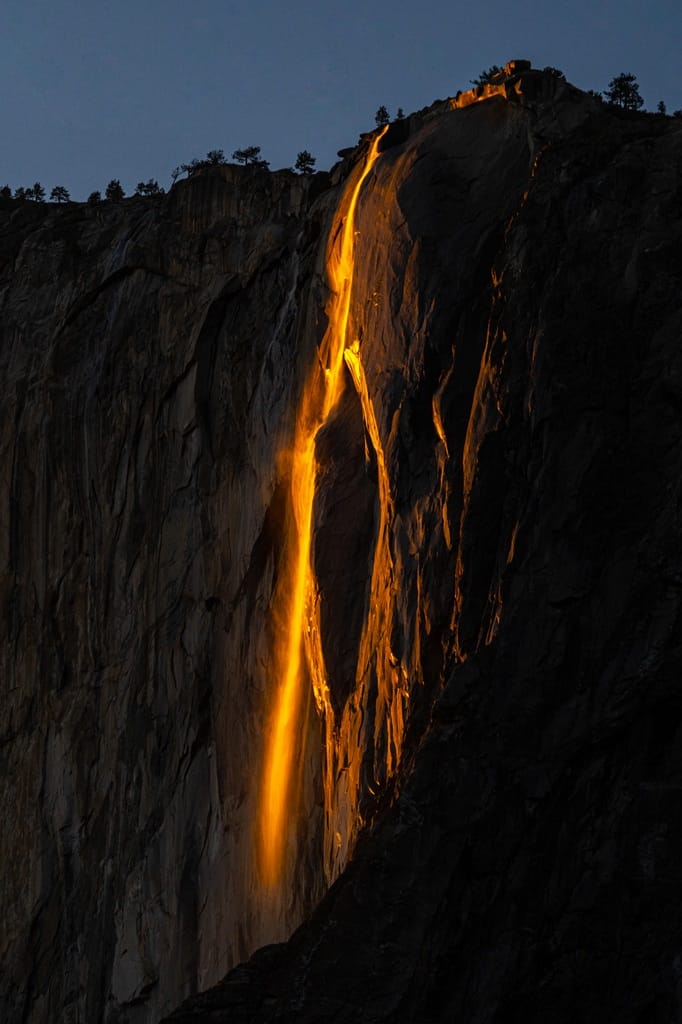
Horsetail Fall drops 2,130 feet and flows over the eastern edge of El Capitan in Yosemite Valley. It’s fed entirely by snowmelt and disappears in summer.
During mid- to late February, under perfect conditions, the waterfall can glow bright orange at sunset, creating a breathtaking effect that looks like molten lava cascading down the cliff.
My husband and I saw Horsetail Fall transform into Firefall for the first time in February 2025. I was a bit hesitant because I don’t love huge crowds, but it turned out to be amazing! Seeing what nature can do was worth it. I can’t wait to go back. Hopefully next time there will be some snow!
👉 Important things to know:
- Reservations: May be required for visitors without in-park lodging or camping. Guests with in-park lodging or camping do not need a reservation. Check the National Park Service website for updates.
- Parking and Access: Closest parking is Yosemite Falls Parking Area near Yosemite Valley Lodge. During Firefall season, traffic is limited to one lane between Camp 4 and El Capitan (except for vehicles with a disability placard). If full, park at Yosemite Village and take the free shuttle.
- Best Viewing Spot: El Capitan Picnic Area is most popular, though it gets crowded.
- Timing: The waterfall lights up 5–15 minutes before sunset, but plan to arrive hours early to secure a good spot.
- Tips: Bring warm clothes, be patient and considerate of others, and enjoy the show. It’ll be worth it!
✨ READ THIS: Complete First-Timer’s Guide to Seeing Yosemite Firefall
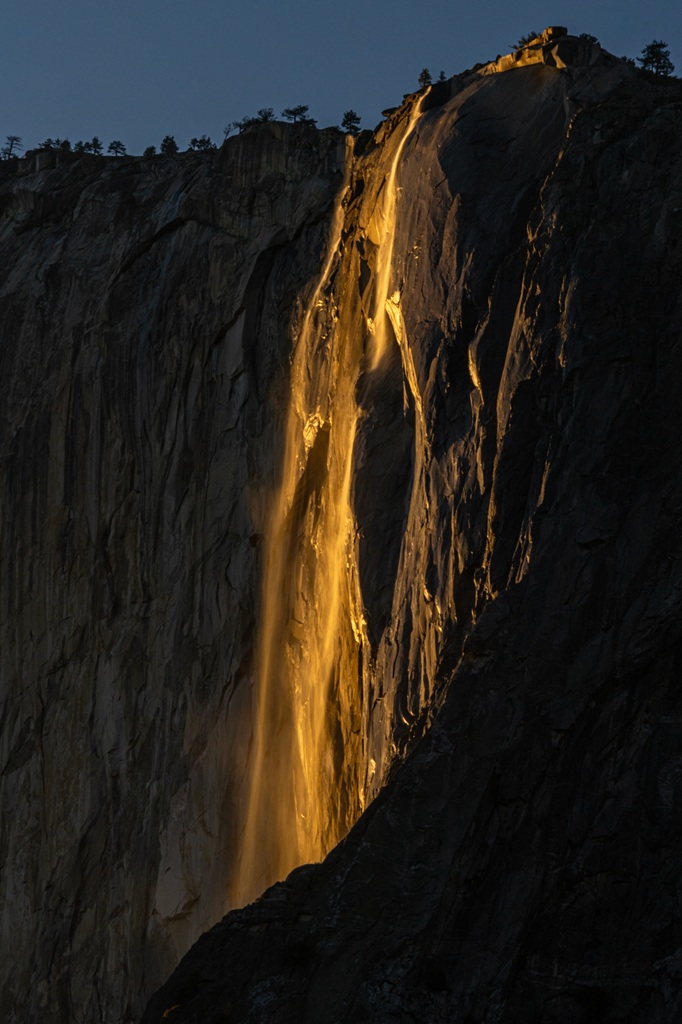
Snow Tubing at Badger Pass
Want a winter activity that’s fun for the whole family? Try snow tubing at Badger Pass! Yosemite Hospitality operates the snow tubing hill with tubes available for rent.
The Badger Pass Tubing Hill is built entirely with natural snow which means it usually opens later in the season once there’s enough snow for safe, fun tubing.
There’s no conveyor belt so be prepared to haul the tube back up the hill for another run. It’s not a massive hill so don’t worry, you’ll still have fun!
Snowshoeing to Tuolumne Grove
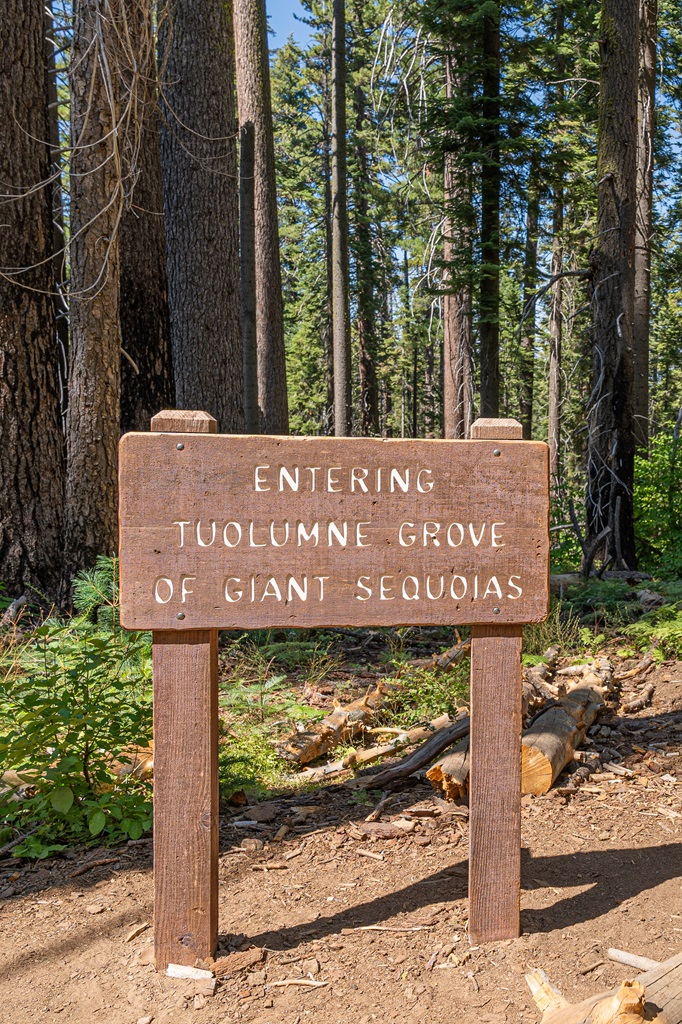
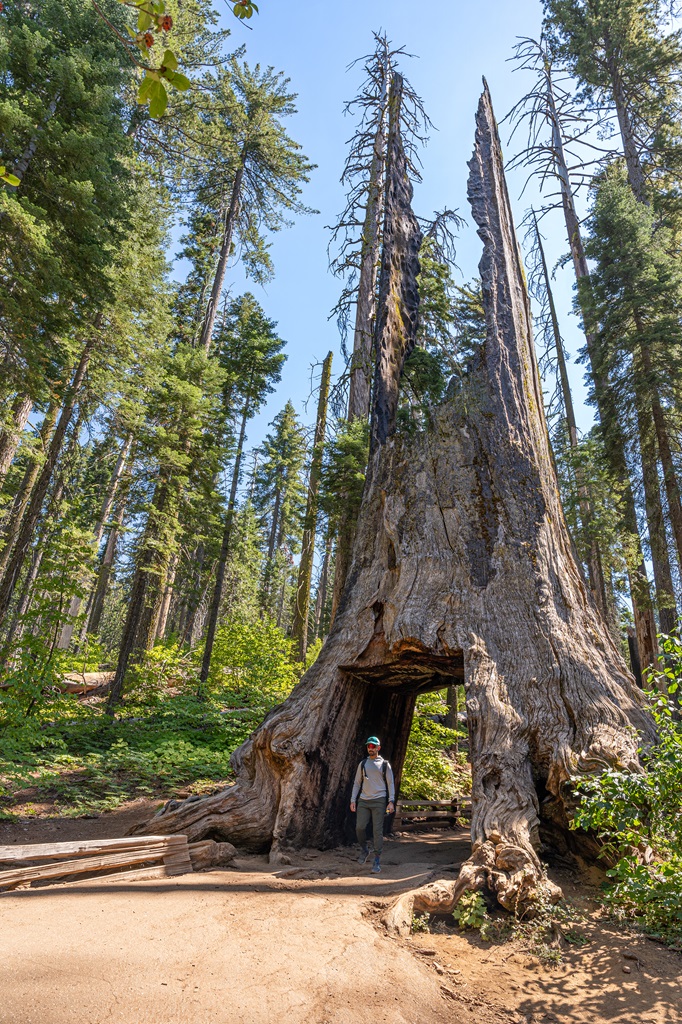
The Tuolumne Grove is home to about two dozens giant sequoias with a unique one being the Dead Giant Tunnel Tree which still stands today but barely. It had a tunnel carved through it in the 1870s as a tourist attraction and as a result has weakened and succumbed to the elements.
The Tuolumne Grove Trail begins at 6,200 feet in elevation and descends along the old roadbed (the former Big Oak Flat Road) leading straight into the heart of the grove.
In winter, when the snow blankets the ground, the trail becomes a perfect winter route for snowshoers and skiers.
🎿 Route Details:
- Starting Point: Tuolumne Grove Trailhead off Tioga Road
- Length: 2.5 miles roundtrip
- Elevation Gain: 600 feet
- Tuolumne Grove Trail Map
🌳 READ THIS: Best Spots to Find Giant Sequoia Trees in Yosemite
Winter Wilderness Camping in Yosemite
Exploring Yosemite National Park under a blanket of snow can feel like a whole new place as compared to any other season. That said, winter travel is far less forgiving.
Winter wilderness backpacking and camping can be such an incredible experience but it’s important that you’re prepared, realistic about your skills, and knowledgeable about winter travel in the backcountry.
From December through April, backpacking in Yosemite almost always involves snow camping and travel by skis or snowshoes. Even in May, snow often limits options to lower elevations like Yosemite Valley, Wawona, and Hetch Hetchy.
Most backpackers stick to marked winter trails around Badger Pass and Crane Flat. These areas offer beginner, intermediate, and advanced routes ranging from less than one mile to 20+ miles.
Overnight wilderness camping requires that you obtain a free wilderness permit from any of the following places: Big Oak Flat Information Station, Yosemite Valley Welcome Center, Badger Pass Ranger Station, Wawona Visitor Center, or Hetch Hetchy Entrance Station. Register at the station closest to your starting point!
There are no reservations from November to April but trailhead quotas still apply and can fill up, especially along Glacier Point Road.
If you are planning to camp somewhere off Glacier Point Road, follow these rules ⬇️
- Camp at least 1 mile from the road
- Camping is not allowed within 1½ miles of Badger Pass Ski Area
- No camping at Summit Meadow, Dewey Point, or Glacier Point (camping is allowed nearby, just not at the points themselves)
A more advanced option begins in Yosemite Valley and climbs toward Tuolumne Meadows via the Snow Creek Trail. This route has avalanche potential and requires expert winter backcountry skills, avalanche awareness, route finding, and winter survival competency.
🏕️ What to expect when backpacking and camping in Yosemite’s wilderness in winter:
- Navigation is harder – Most winter travel is cross country. Trails and markers are often buried under snow, and only a few routes are marked for winter use. Strong route finding and navigation skills are a must.
- Travel requires skis or snowshoes – Hiking in boots alone usually isn’t practical once enough snow accumulates.
- Water access is limited – Streams may be frozen or buried, so you may need a stove to melt snow for drinking water.
- Rapid weather changes – Winter storms can roll in fast. Always check the forecast, but be prepared for a wide range of conditions.
- Avalanche risk – Some areas are prone to avalanches. Proper training, equipment, and route awareness are critical.
- Short daylight hours – Days are brief and temperatures drop quickly after sunset so plan accordingly.
- Campfires are often unrealistic – Fires are only allowed in existing fire rings, which are usually buried under deep snow and impossible to locate.
- Human waste disposal – You must dig through snow and at least six inches into frozen soil, or pack it out.
- Camping on snow – Snow is considered a durable surface, which can make campsite selection easier. Just be sure you’re still at least 100 feet from trails and water sources.
Exploring Crane Flat in Snowshoes or Skis
The Crane Flat area is another fantastic spot in Yosemite for winter adventures, especially if you’re into snowshoeing or cross country skiing without the crowds. This area features marked winter routes that range from short, scenic outings to longer loop tours through quiet forest.
Most trails start around 6,200 feet in elevation so expect more snow here than down in Yosemite Valley. Also, another important thing to note, is that these routes are not groomed, so trail conditions can vary depending on recent snowfall.
There are three popular winter routes in Crane Flat ⬇️
- Crane Flat Lookout Trail
- Gin Flat Loop Trail
- Tuolumne Grove Trail (discussed above)
Crane Flat Lookout Trail is a beginner-friendly snowshoeing and cross country skiing trail with great views at the top. This route follows an old fire road all the way up to the historic Crane Flat Fire Lookout, which was built in 1931.
At the top, you’ll find a large, flat lookout area where you’ll be treated to 360-degree panoramas of Yosemite, with El Capitan and Half Dome visible to the east, plus endless snowy forest in every direction. There’s even an abandoned helicopter shell near the lookout, which is a fun surprise.
🎿 Route Details:
- Starting Point: Crane Flat Lookout Road
- Length: 2.9 miles roundtrip
- Elevation Gain: 400 feet
- Crane Flat Lookout Trail Map
Gin Flat Loop Trail is a cross country skiing and snowshoeing route meant for winter use. The trail loops along Old Big Oak Flat Road and Tioga Road, with an optional detour through the meadow.
It’s a great way to enjoy Yosemite’s winter scenery and the peaceful solitude of the park. You can go either direction, but counter-clockwise is recommended as it offers a gentler climb and a steeper descent, which works well for skiers.
If you’re new to snowshoeing, this trail can be a bit challenging, so start early, take it slow, and pack plenty of snacks and water.
🎿 Route Details:
- Starting Point: Tioga Road near Tuolumne Grove parking area
- Length: 5 miles roundtrip
- Elevation Gain: 770 feet
- Gin Flat Loop Trail Map
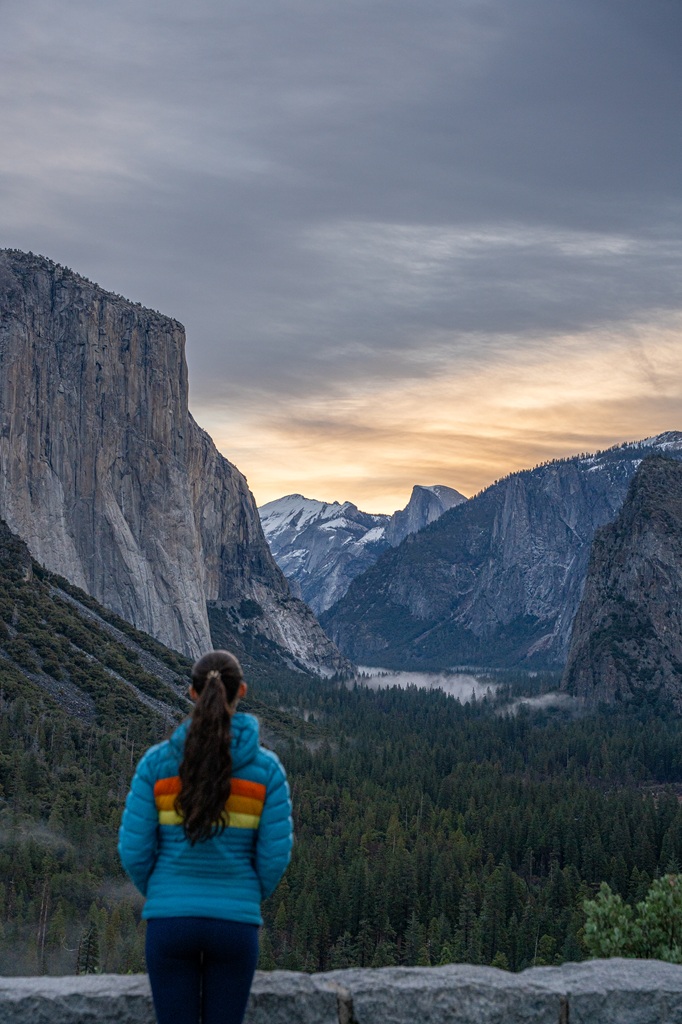
Watching Winter Sunrises and Sunsets in Yosemite
My husband and I love catching a good sunrise or sunset in Yosemite, especially during the winter months. They seem to pop more with stronger colors and vibrance as compared to other seasons.
Also, since daylight hours are shorter, more so in the beginning of winter, that means sunrises are later in the morning and sunsets are earlier in the evening. So you don’t have to wake up too early or stay up too late! 🙌
🌄 Best sunrise spots in Yosemite Valley in winter:
- Tunnel View
- Sentinel Bridge
- Cook’s Meadow
🌄 Best sunset spots in Yosemite Valley in winter:
- Tunnel View
- Cook’s Meadow
- El Capitan Meadow
- Valley View
Guided Ranger Tours
Yosemite offers a variety of fun and educational walks and talks that help you learn more about the park’s history, wildlife, and winter landscape. All regularly scheduled programs are posted on the official park calendar.
From mid-December through March (weather and staffing permitting), National Park Service rangers often lead free guided snowshoe walks starting at Badger Pass Ski Area. These are a great option if you’re new to snowshoeing. Typically snowshoes are provided but double check just to make sure!
Both the Yosemite Conservancy and the Yosemite Mountaineering School offer guided snowshoe trips as well. These programs usually require a fee and may include longer routes, added instruction, or themed tours focused on natural history, photography, or winter travel skills.
Guided walks are a great way to explore safely in winter conditions!
Winter Stargazing in Yosemite
Winter is an amazing time for stargazing in Yosemite. Cold air usually means clearer skies, fewer visitors means less light pollution, and snow on the ground can make the whole park feel extra magical under the stars.
On a clear winter night, you can see the Milky Way, constellations, planets, and countless stars!
Winter stargazing does take a little planning. Here are a few tips 👇
- Check the moon phase: Bright moonlight can wash out the night sky and make it harder to see stars and the Milky Way. For the best views, plan your stargazing session before moonrise or after moonset.
- Wait for full darkness: The sky is at its darkest roughly 1.5 hours after sunset until about 1.5 hours before sunrise, which is the prime window for stargazing.
- Use Red Light: Skip white-light flashlights and use a red light instead to protect your night vision.
- Let your eyes adjust: Give yourself 20–30 minutes without looking at white light, including phone or camera screens.
- Bundle up: Temperatures drop fast after sunset in winter. Bring extra layers, blankets, hand warmers, and a warm drink so you stay warm and cozy.
🌠 Best spots for stargazing in Yosemite Valley:
- El Capitan Meadow
- Sentinel Bridge
- Cook’s Meadow
- Valley View
- Tunnel View
Staying at a Ski Hut in Yosemite
If you’re looking for a true backcountry winter experience, pack a backpack and spend a night or two at one of Yosemite’s ski huts! Accessible only by cross country skiing (or sometimes snowshoeing), these huts offer a cozy escape into the snowy wilderness.
There are two ski huts along Glacier Point Road: Glacier Point Ski Hut and Ostrander Ski Hut, both run by the Yosemite Conservancy, a nonprofit organization.
They’re typically open December through early April, and reservations are required. These trips are best suited for intermediate or advanced skiers in good physical shape!
Glacier Point Ski Hut offers a dining area, sofas, indoor bathrooms, wood stove, and bunk beds. Yosemite Hospitality offers guided cross country ski trips to the hut and also provides food and lodging for self-guided skiers
Ostrander Ski Hut is a two-story stone hut built in 1941 by the Civilian Conservation Corps. It’s located at the edge of Ostrander Lake at an elevation of 8,500 feet.
This hut is about 10 miles from Badger Pass and includes enough bunks for 25 people, wood stove, and a kitchen with gas stove and basic cookware.
Playing in the Snow Play Areas in Yosemite
There are two snow play areas within and just outside Yosemite National Park that are perfect areas for family-friendly fun in the snow!
The Goat Meadow Trailhead and Snow Play Area is located just off Highway 41 between Fish Camp and Yosemite’s South Entrance. It’s a great spot for sledding and tubing. Nearby, you’ll also find cross country ski and snowshoe trails that wind through scenic forested logging roads.
The Crane Flat Snow Play Area is located just south of the Crane Flat gas station near the Crane Flat Campground. It’s open when there’s enough snow and offers plenty of space for sledding and snow play.
Participating in the Bracebridge Dinner at The Ahwahnee
During winter, The Ahwahnee’s dining room transforms into Bracebridge Hall, bringing to life a festive holiday tradition inspired by Washington Irving’s classic writings.
Since 1927, guests have been transported to 18th-century England, enjoying an unforgettable evening of pageantry, music, fine dining, and festive cheer.
The event features elaborate entertainment, delicious seasonal dishes, and a warm, magical atmosphere making it a truly unique way to celebrate the holidays in the park.
You can book tickets for the Bracebridge Dinner online.
❄️ Yosemite Winter Guides
- Ultimate Guide to Visiting Yosemite in Winter
- The Only Yosemite Winter Itinerary You Need!
- Where to Stay in Yosemite in Winter: 15+ Best Lodges, Hotels, and Cozy Cabins
- The Ultimate Yosemite Winter Packing List
- 20 Best Yosemite Hikes in Winter (Guide to Snowy Adventures)
- 18 Best Yosemite Winter Activities You Can’t Miss!
- Yosemite Firefall: A Complete First-Timer’s Guide
- Beginner’s Guide to Visiting Mariposa Grove in Winter
Yosemite Winter Packing List
Depending on what you plan to do in Yosemite in winter will influence what you should pack. This list focuses on the hiking essentials and general things that you might need in the winter.
Some winter hikes in Yosemite may not require any special gear, depending on trail conditions.
Others may need microspikes or snowshoes, and for more advanced winter adventures, skis might be necessary.
Always be prepared for the conditions no matter what winter adventure you are going on!
🎒 Backpack – A pack around 22–30 liter works well to carry layers, snacks, water, and gear. I’ve been using the Cotopaxi Luzon Del Dia 24L Pack and my husband uses the REI Co-op Trail 25L Pack.
🥾 Winter Boots – Waterproof, insulated boots are a must!
🧊 Microspikes – Bring a pair of microspikes if you’re visiting in the winter and you’re planning to hike along icy trails. They will give you good traction to avoid slipping! I use Black Diamond Access Spike Traction Device.
❄️ Snowshoes – Best used when hiking on deep, soft, or loose snow, usually anything over six inches, to prevent sinking, also known as postholing. Don’t own any? You can rent them at the Badger Pass Ski Area!
☃️ Gaiters – Keep snow out of your boots when snowshoeing or hiking in deep snow.
🥢 Trekking Poles – Essential for stability on snow and slippery trails. I use REI Co-op Trailmade Trekking Poles and love them!
🧥 Warm Layers (top) – Pack a moisture-wicking base layer, a fleece mid-layer, an insulated jacket, and an outer shell to protect you from the elements, such as rain, snow, and wind. Check out my favorite tops 👇
- Base layer: REI Co-op Midweight Long-Sleeve Base Layer
- Fleece mid layer: Cotopaxi Teca Fleece Full-Zip Jacket
- Down mid layer: Cotopaxi Fuego Hooded Down Jacket
- Outer shell: Patagonia Torrentshell 3L Jacket
👖 Warm Layers (bottom) – Pack a breathable base layer, fleece-lined mid-layer, and soft-shell pants. A pair of hard-shell pants might be overkill but depends on the conditions and the winter adventure you plan to go on. My favorite fleece bottoms are the Baleaf Fleece Jogger Pants and the Baleaf Fleece Leggings.
🤠 Warm Hat/Beanie – Keeps your head and ears warm on cold winter hikes. My favorite beanie is the Cotopaxi Tozo Beanie!
🧦 Socks – Moisture-wicking, quick-drying socks are the way to go. My favorite pair of hiking socks are Darn Tough Hiker Micro Crew Cushion Socks. I’m obsessed with them!
🥶 Emergency Shelter – Pack an emergency bivy sack or space blanket for shelter in case of sudden weather changes.
🗺️ Navigation – Carry a physical topographic map, compass, a satellite messenger (or personal locator beacon), and download offline maps to help you stay on course, find your way in unfamiliar terrain, and call for help if needed.
🔦 Headlamp/Flashlight – A reliable light source with extra batteries, in case you end up hiking in the dark or need it for emergency situations.
🩹 First-Aid Kit – A basic first-aid kit with items like bandages, antiseptic, pain relievers, and any personal medications you may need.
💧 Water – Water bottles to carry sufficient water to stay hydrated, along with a filtration system or purification tablets if you plan to refill from natural sources.
🍕 Food – Energy-rich snacks or meals to keep your energy levels up during the hike.
😎 Sun Protection – Sunscreen, sunglasses, and a sunhat to protect yourself from harmful UV rays, even when it’s cloudy. Also, polarized sunglasses are important when it’s bright outside and the ground is covered in snow/ice.
🔥 Fire – A lighter, matches, or fire starter to help you build a fire for warmth or signaling in case of emergency. Along with matches, I also carry a multi-tool carabiner that has a fire starter, utility blade, screwdriver, and bottle opener.
🗡️ Multi-Tool and Repair Kit – A versatile tool/knife and repair kit to handle any task, from preparing food to making repairs.
🚙 Winter Car Kit – Pack a basic winter car kit, including blankets or sleeping bags, extra warm layers, ice scraper, small shovel, extra water, snacks, flashlights, portable power bank with chargers, and signaling devices. Just in case you get stranded or caught in an unexpected winter storm!
✨ Need help figuring out exactly what to pack for Yosemite this winter? Read my complete Yosemite winter packing list and download the PDF checklist to make packing quick and easy!
Conclusion
Visiting Yosemite National Park in the winter does not have to be boring! There’s so much to see and do that you probably won’t be able to fit it all into one trip.
I’m a newbie when it comes to winter adventures, but I’m so excited to get out there and learn new skills, such as snowshoeing, cross country skiing, AND snowboarding. I want to do it all! 😆
I hope this guide helped you find the most exciting activities to add to your Yosemite winter itinerary. Drop a comment below and tell me about your own winter adventures!
🤩 Yosemite Trip Planning Resources
- 1-Day Yosemite Itinerary for First-Time Visitors
- Where to Stay Outside of Yosemite (best places in 2026)
- 13 Best Hikes in Yosemite Valley You Can’t Miss!
- Best Spots to Find Giant Sequoia Trees in Yosemite
- 10 Must-Do Easy Hikes in Yosemite for All Skill Levels
- Hetch Hetchy Hikes: Explore This Hidden Gem
- Best Yosemite Waterfall Hikes: Complete Guide
- Ultimate Guide to Visiting Yosemite in May
- Is Tioga Pass Open? Plan an Epic Trip with This Guide
- 12 Best Tioga Pass Hikes for Adventure Lovers
Enjoyed this post? Pin for later!