Planning a trip to Yosemite National Park in winter and need an epic pre-made itinerary full of fun activities? You stumbled into the right place. I got you! 🫵
Winter is one of the most underrated times to visit the park, and having a solid Yosemite winter itinerary makes all the difference. Instead of stressing over what to do, road closures, weather conditions, or where to stay, this complete guide and itinerary breaks everything down for you.
In this Yosemite winter itinerary, you will find top things to do, the best winter hikes, the most scenic viewpoints, and unforgettable adventures that will make you want to plan another trip. 🤩
There are so many reasons to plan a winter visit to Yosemite. The crowds are smaller, the park feels more peaceful, and the scenery is completely transformed once the snow starts falling.
Winter also brings unique experiences like snowshoeing, cross country skiing, and ice skating, plus better campground availability in Yosemite Valley and more affordable accommodations outside the park.
If you’re dreaming of a magical winter experience in Yosemite, this 3-day itinerary will help you plan the perfect trip from start to finish, so you can spend less time stressing and more time enjoying your vacation. 🏔️❄️
Affiliate Disclaimer: Some links on this page may be affiliate links, meaning I may earn a small commission at no extra cost to you. As an Amazon Associate, I earn from qualifying purchases. Thanks for supporting the blog! 🫶
- What to Know About Yosemite in Winter
- Day 1: Yosemite Winter Day Trip (explore Yosemite Valley)
- Day 2: Yosemite Winter Itinerary (explore Mariposa Grove)
- Day 3: Yosemite Winter Itinerary (winter adventures at Badger Pass and Glacier Point Road)
- Visiting Yosemite in February? Don’t Miss Firefall!
- More Things to Do in Yosemite in Winter
- Best Places to Stay Near Yosemite in Winter (by entrance)
- Yosemite Winter Tips and Packing List
- Conclusion
What to Know About Yosemite in Winter
🎟️ Yosemite’s Entrance Fee and Reservations in Winter
Entrance to Yosemite National Park costs $35 per vehicle for a 3-day pass. However, if you have the America the Beautiful Annual Pass, your entry is free!
For those who love exploring national parks, investing in the Annual Pass is a smart choice. At just $80, for U.S. residents, it grants you access to over 2,000 federal recreation sites across the country!
FEE UPDATES! Beginning January 1, 2026, non-U.S. residents (without an annual pass) will pay a $100 per person in addition to the standard entrance fee. The Annual Pass for non-US. residents will cost $250.
A reservation is not required to visit Yosemite in winter this year! In the past, reservations were required during the Firefall event which takes places in mid to late February. But this year, 2026, reservations are NOT required!
🌨️ Yosemite’s Winter Weather
Winter in Yosemite runs from December through March, but snowfall can happen much earlier or much later. It’s not uncommon to see snow as early as October or November and as late as April, depending on the year.
🥶 Temperatures in winter?
Winter conditions vary a lot depending on where you are in the park. Yosemite Valley tends to be much milder than the high country. In January and February, daytime highs usually hover in the upper 40s°F (~9°C), while overnight lows often dip into the upper 20s°F (~-2°C).
❄️ How much snow does Yosemite get?
Yosemite Valley doesn’t always get buried in snow every winter. Average annual snowfall in the valley is often quoted around 30–40 inches, but this can vary greatly year to year. Some winters are magical and snowy, while others are surprisingly light.
Even if there isn’t much snow on the valley floor, you’ll almost always see snow on the higher peaks surrounding the valley, and trails that climb above the valley often hold snow longer.
If you were to head to higher elevations in the winter months (only accessible by foot, snowshoes, or skis), expect colder temperatures and significantly more snow as compared to the valley.
🏔️ Always be prepared for the winter conditions!
Before you head out, always check the weather forecast for snowstorms and look at the Yosemite webcams for real-time look at current conditions.
We visited Yosemite several times in the winter months of 2025 and saw some snow in the valley, but our first visit in January 2023 was a completely different story – the valley was buried! We even had to cancel a trip in February 2023 due to a major storm causing the entire park to close temporarily.
⚠️ With that being said, winter weather can be unpredictable. Be prepared for anything! Conditions could be cold and dry or Yosemite could get absolutely dumped on. It’s important to keep checking road conditions and the weather forecast!
🛣️ Yosemite’s Road Conditions, Closures, and Chain Control in Winter
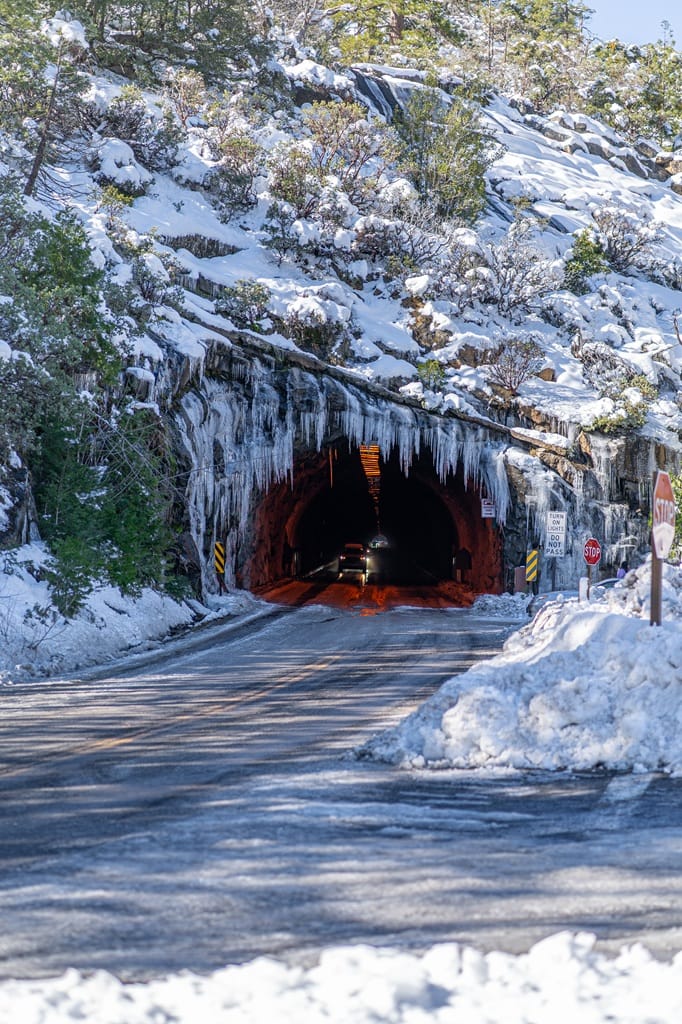
Some roads in Yosemite close for the season due to hazardous winter conditions, including Tioga Road (Highway 120), Glacier Point Road, and Mariposa Grove Road.
Even roads that remain open can be icy or snowy, so plan for slower driving, possible delays, and occasional temporary closures. Always check current road conditions before heading into the park.
⚠️ For the latest updates, call Yosemite’s road conditions hotline at 209-372-0200 (press 1, then 1 again).
Tire chains are commonly required in winter, and if chain controls are in effect, you’re legally required to carry them and know how to use them, even if you have AWD/4WD or snow tires.
⛓️ Levels of chain control:
- R1 – You’ll need to put chains on your car unless you’re in a car, pickup, or SUV under 6,000 pounds AND you have snow tires with at least 6/32 inches of tread or deeper.
- R2 – You’ll need to put chains on your car unless you’re in a car, pickup truck, or SUV under 6,500 pounds AND you have snow tires with at least 6/32 inches of tread or deeper AND your car has 4WD or AWD engaged.
- R3 – Chains are required on ALL vehicles, no exceptions.
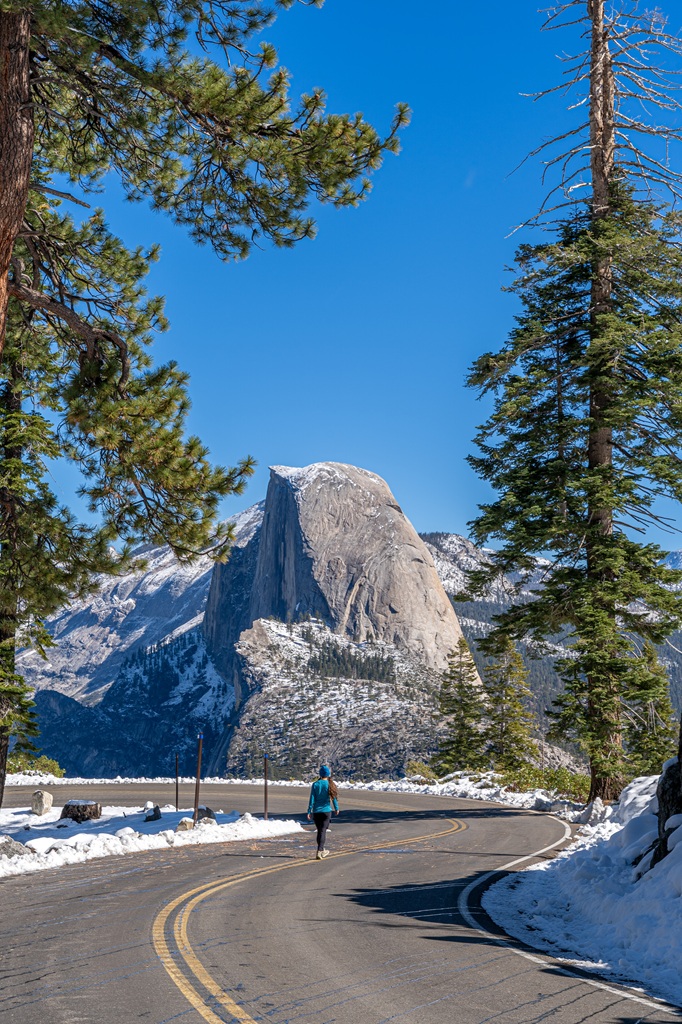
🏂 Yosemite’s Best Winter Activities
Yosemite is open year-round, but some spots become tough and dangerous to reach in winter, such as Tuolumne Meadows and Glacier Point.
However, there are still so many things to do! Winter is amazing for hiking, snowshoeing, and cross country skiing in places like Yosemite Valley, Mariposa Grove, Hetch Hetchy, and Badger Pass.
✨ READ THIS: 18 Best Yosemite Winter Activities You Can’t Miss!
Many of the park’s trails remain open year-round, however, some close due to hazardous conditions. Typically, these trails include a portion of the Four Mile Trail and portions of the Mist Trail and John Muir Trail to Vernal and Nevada Falls. Check the current trail conditions before you head out on your adventure!
🐻 Yosemite’s Wildlife in Winter
Winter can be a great time to spot wildlife in Yosemite, especially since animals are often easier to notice against the snow.
You may see fresh tracks along the trails or even catch a glimpse of the animals themselves. Keep an eye out for mule deer, coyotes, bobcats, and even black bears.
Yes, black bears are still active in winter. Be sure to follow these guidelines and proper food storage rules to avoid any negative or unsafe bear encounters.
🚫 Bear spray is prohibited in Yosemite!
🌲 Follow Leave No Trace in Yosemite
Follow Leave No Trace principles and help protect Yosemite National Park for future generations.
- Plan ahead and be prepared
- Travel and camp on durable surfaces
- Dispose of waste properly
- Leave what you find
- Minimize campfire impacts
- Respect wildlife
- Be considerate of others
☃️ Yosemite Winter Travel Tips
- Expect slower travel due to icy and snowy roads.
- Bring or purchase tire chains and make sure you know how to put them on.
- Pack plenty of layers, as temperatures can drop quickly.
- Keep in mind that daylight hours are shorter during winter.
- Plan for traffic congestion and limited parking during winter holidays (late December–early January) and the Firefall event (mid to late February).
- Always carry emergency supplies in your car, including water, snacks, blankets, and flashlights, in case of breakdowns or unexpected snowstorms.
- Consider staying inside the park to avoid winter driving. Lodging in Yosemite Valley includes Yosemite Valley Lodge, The Ahwahnee, and Curry Village.
- The Yosemite Valley Shuttle System runs year-round and is a great way to get around the valley during winter, helping keep your visit hassle-free and stress-free.
✨ Planning a trip to Yosemite this season? Before you book anything, read through my ultimate guide to the best lodges, hotels, and cozy cabins in Yosemite in winter. It’ll save you time and help you find the perfect snowy getaway!
Day 1: Yosemite Winter Day Trip (explore Yosemite Valley)
For day one of this Yosemite winter itinerary, you’ll spend the entire day exploring Yosemite Valley.
While this is part of a 3-day plan, this first day also works perfectly as a standalone Yosemite winter day trip if you’re just visiting for the day.
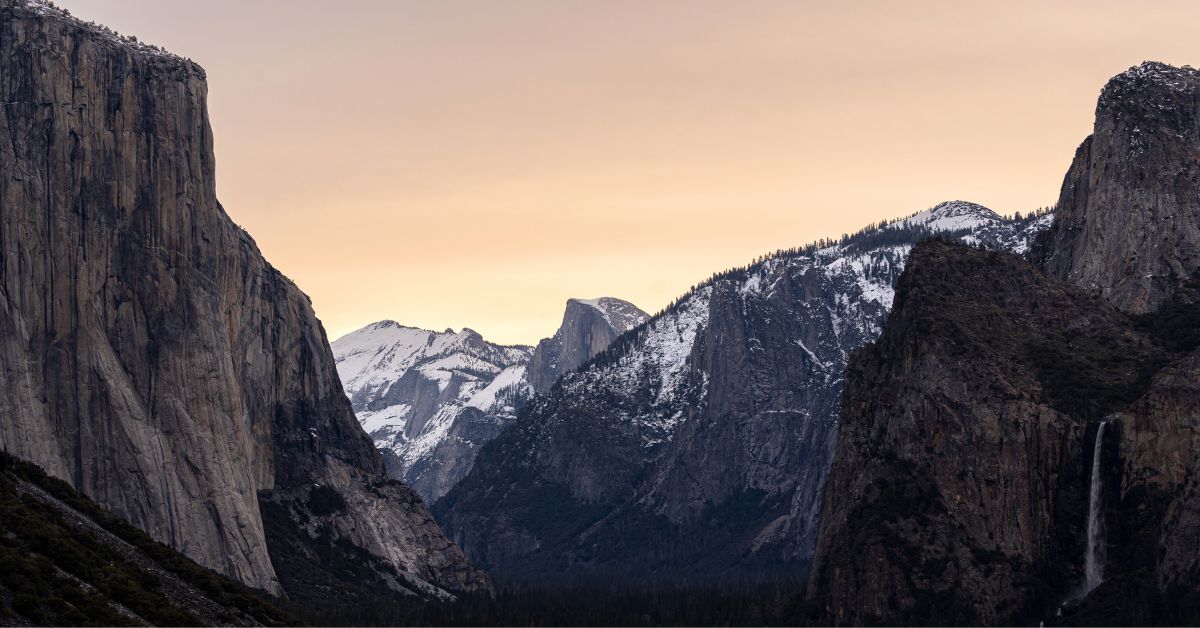
🌄 Sunrise at Tunnel View
In almost all Yosemite itineraries, you will see that the first thing people recommend, if you’re visiting Yosemite Valley, is to watch sunrise at Tunnel View.
It’s such an iconic thing to do and a great way to start your morning!
This famous viewpoint offers an incredible view of El Capitan, Half Dome, Bridalveil Fall, Clouds Rest, Sentinel Rock, and Cathedral Rocks. It’s even more stunning in the winter when the granite formations are covered in snow!
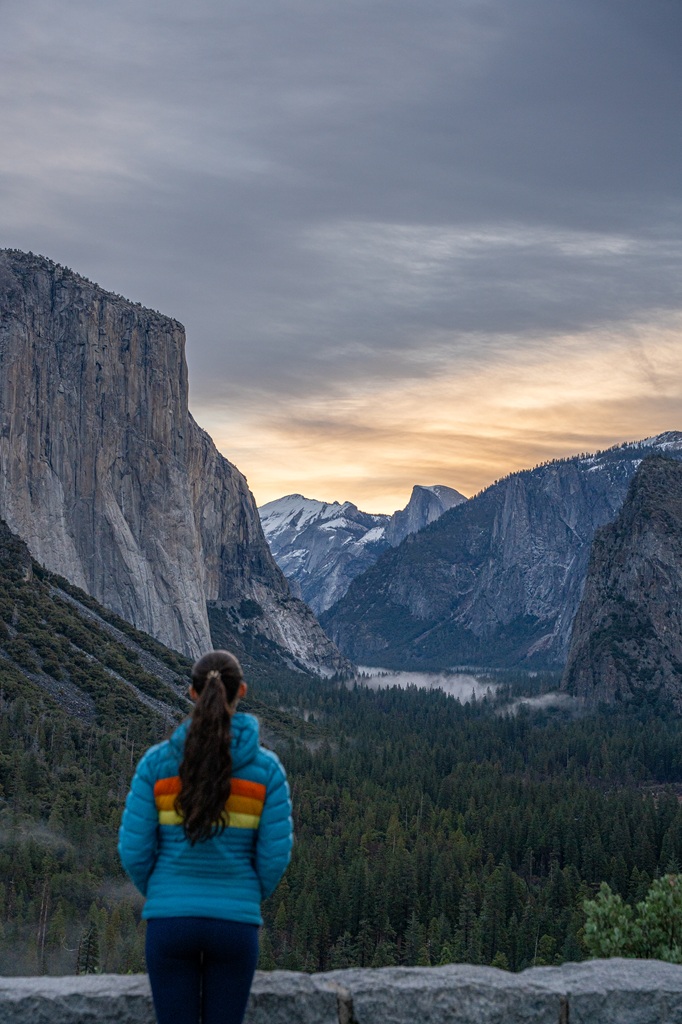
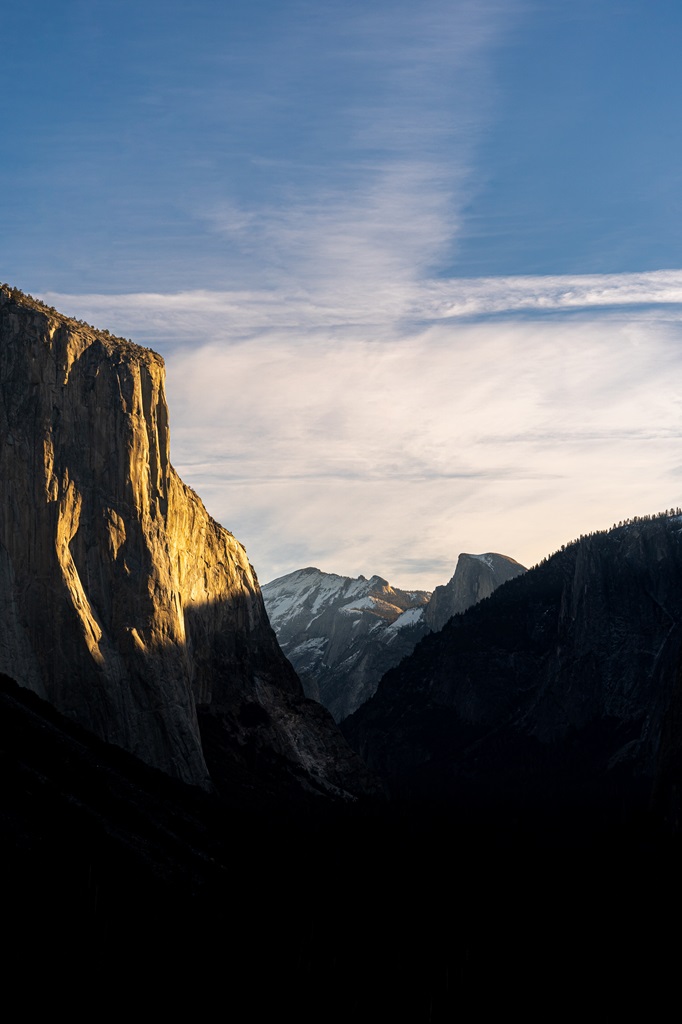
If you’re entering the park from the South Entrance via Highway 41, you will drive through the Wawona Tunnel, which is the longest highway tunnel in California!
Be sure to check the exact sunrise time before your visit, since it changes throughout winter.
🌤️ As a general reference, here’s about when the sun rises during each winter month in Yosemite:
- December – 7 AM
- January – 7 AM to 7:15 AM
- February – 6:30 AM to 7 AM
- March – 6:30 AM to 7:15 AM (daylight saving time will happen March 8, 2026)
🥾 Hike to Bridalveil Fall
Bridalveil Fall is one of Yosemite’s most iconic waterfalls and is easy to spot from classic viewpoints like Tunnel View and Valley View.
At 620 feet tall, it’s often the first waterfall you’ll see as you enter Yosemite Valley and it’s especially beautiful in winter.
Winter conditions can make the trail icy and slick, particularly near the viewpoint, so take your time and wear shoes with good traction!
👉 If you want to reach the viewpoint at the base of the waterfall, you have two easy options:
- A short, paved 0.5-mile roundtrip walk from the main trailhead
- A slightly longer 1-mile roundtrip hike starting farther down Southside Drive
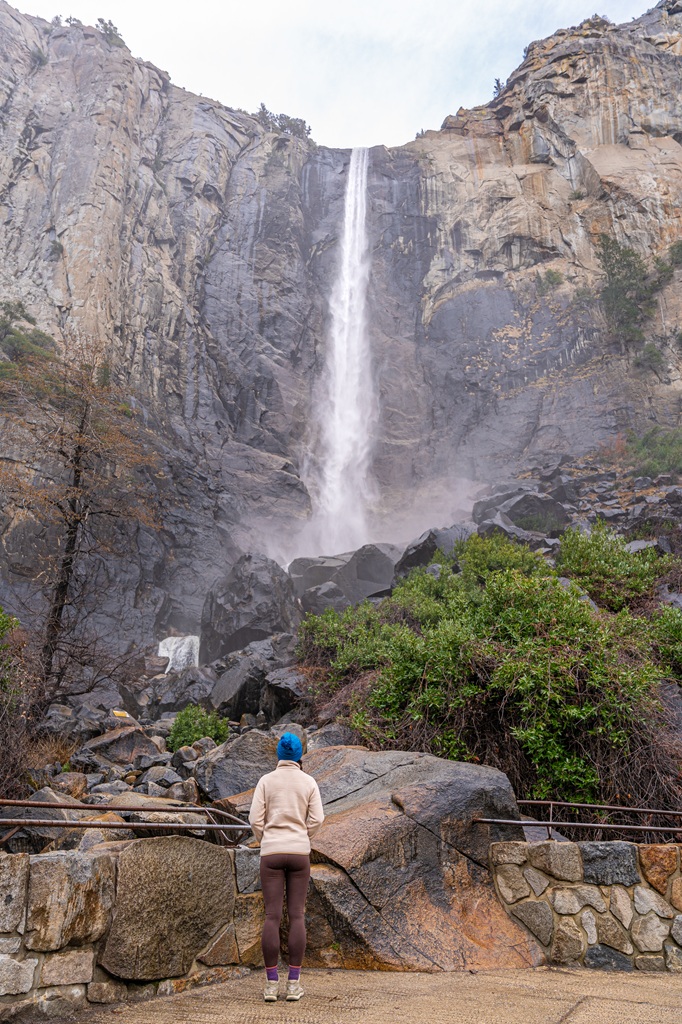
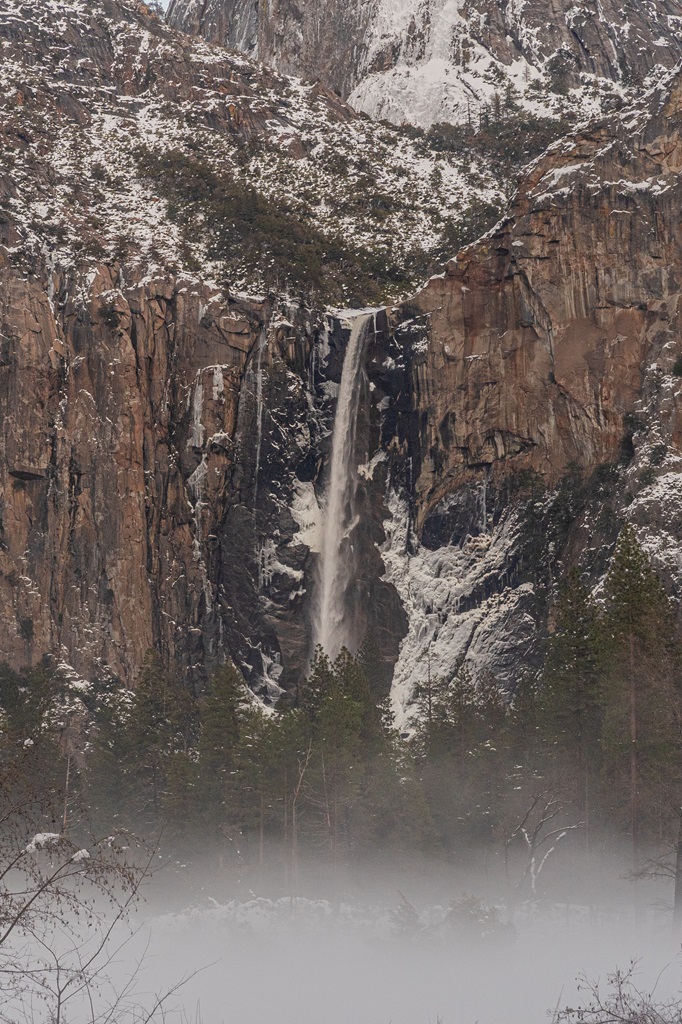
The paved trail from the main trailhead is pet-friendly (leashes required), while the Southside Drive route is not since it follows part of the Valley Loop Trail.
The main parking lot holds around 60 vehicles, with additional roadside parking available along Southside Drive.
There’s no shuttle service to Bridalveil Fall, so you’ll need to drive. Restrooms are available at the main parking area.
🧺 Visit Swinging Bridge Picnic Area
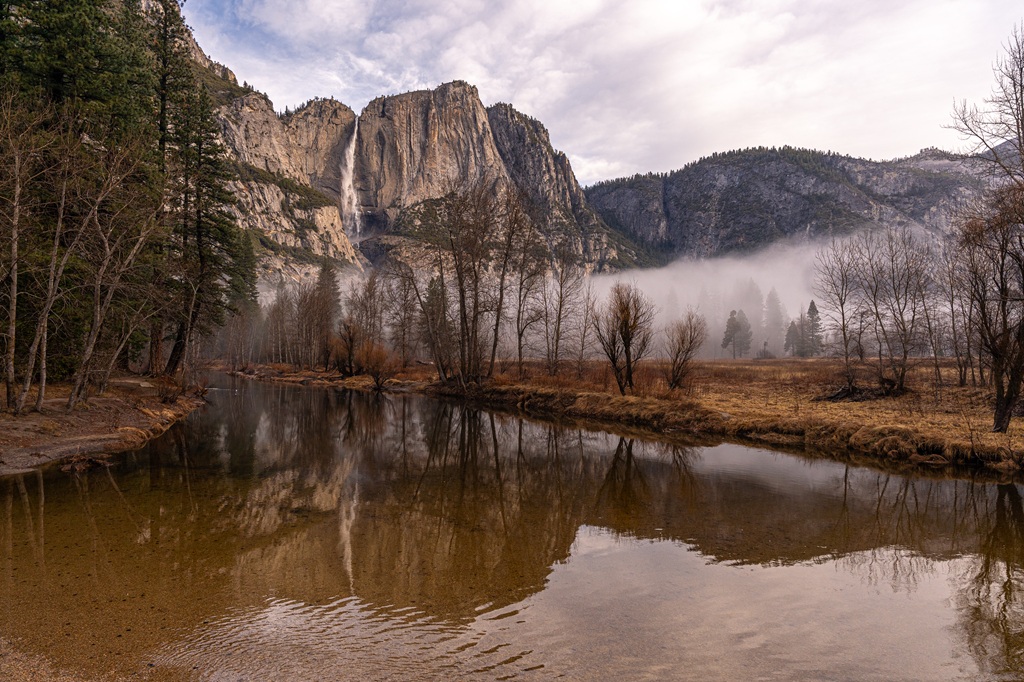
Swinging Bridge Picnic Area is a scenic stop along the Merced River with picnic tables, vault toilets, and a paved walking and biking path. From the bridge, you’ll get great views of Yosemite Falls and the surrounding granite cliffs.
Despite the name, the bridge doesn’t actually swing. The original swinging bridge was damaged multiple times by floods and was eventually replaced with a permanently fixed bridge after the massive 1964 flood.
Parking here is limited, and the small lot fills up quickly. If it’s full, drive a little farther down Southside Drive and use the designated roadside parking spots. From there, it’s an easy walk along the paved path to reach the picnic area.
One of the perks of parking at the picnic area, or along Southside Drive, is how close you are to Cook’s Meadow, which is our next stop!
🦌 Explore Cook’s Meadow
One of my favorite places to explore in winter in Yosemite Valley is Cook’s Meadow (also called Sentinel Meadow). This wide-open meadow is surrounding by incredible scenery, including Yosemite Falls, Half Dome, Glacier Point, and Sentinel Rock.
And it’s an easy 1-mile loop! Perfect for families and those who want to sightsee without hiking an actual trail.
📸 There are several photo-op worthy-spots along the way:
- Yosemite Valley Chapel – It’s the oldest structure in Yosemite Valley, built in 1879, and is listed on the National Register of Historic Places.
- Sentinel Bridge – Offers a perfect view of Half Dome with its reflection seen in the Merced River below.
- Superintendent’s Bridge – Also offers beautiful views of the peaks surrounding the valley. I love the way this bridge looks! Many people take pictures of the bridge itself versus the views from it.
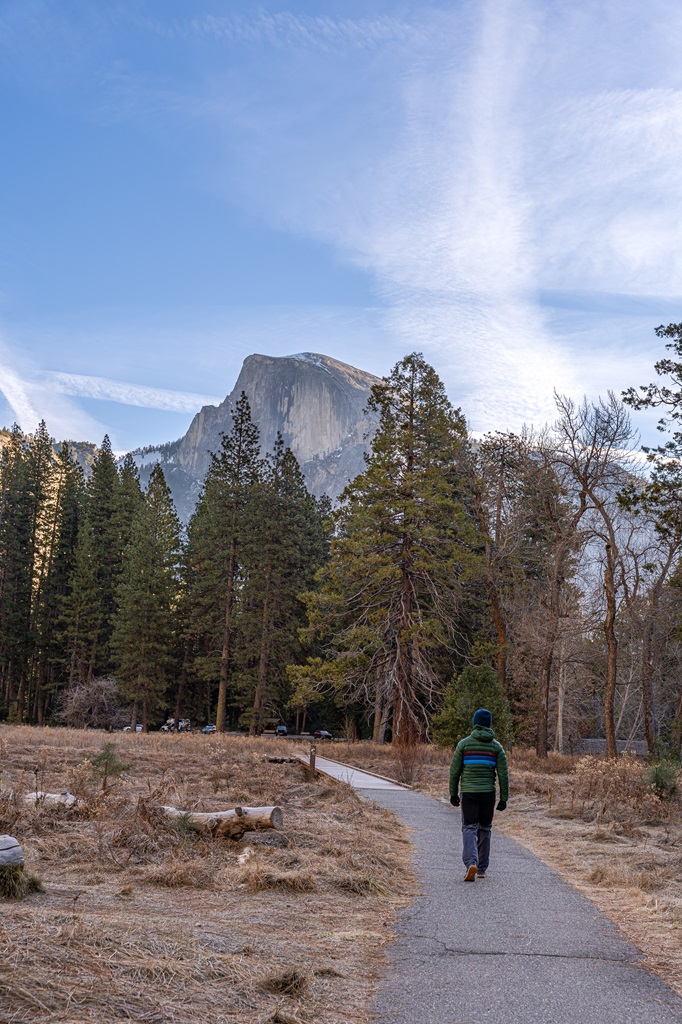
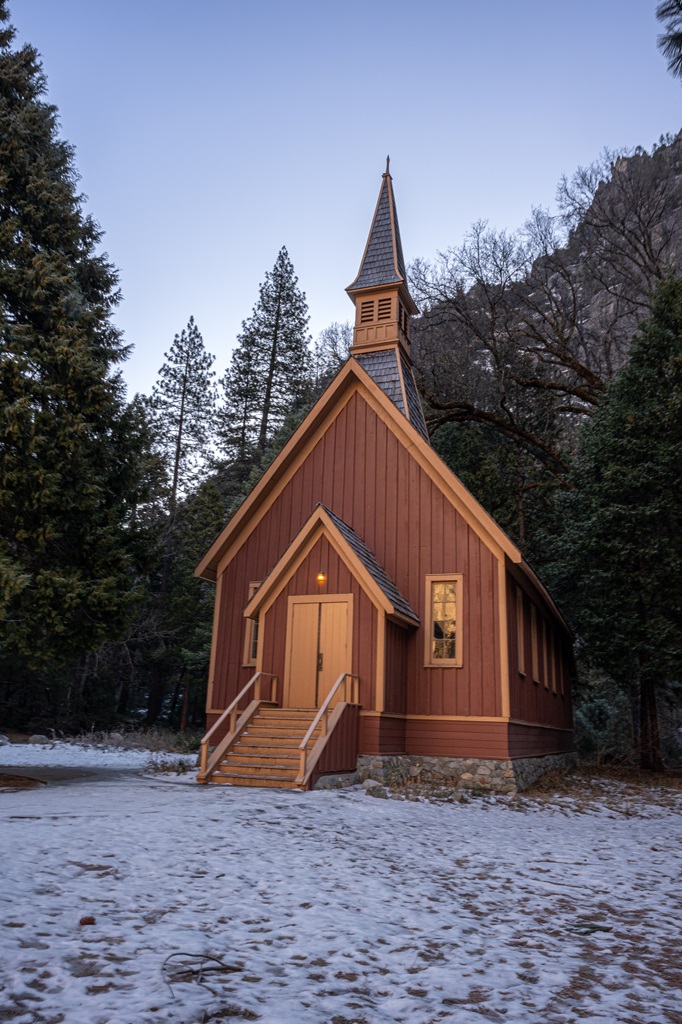
Be aware that winter conditions can make the Cook’s Meadow Trail, especially the boardwalks, icy and slippery, so be cautious and consider using microspikes and hiking poles for extra stability.
Leashed pets, bikes, and strollers are allowed, and it’s wheelchair accessible when not covered in snow.
⚠️ To help protect Cook’s Meadow, stay on the designated trails and avoid creating unofficial paths!
👉 You can begin this hike from various starting points:
- Yosemite Valley Visitor Center (shuttle stop #5)
- Lower Yosemite Fall Trailhead (shuttle stop #6)
- Sentinel Bridge Parking Area
- Southside Drive
If you want a slightly longer hike, you can combine the Cook’s Meadow Loop with the Lower Yosemite Fall Trail for a scenic 2-mile double-loop.
More info about the Lower Yosemite Fall Trail below!
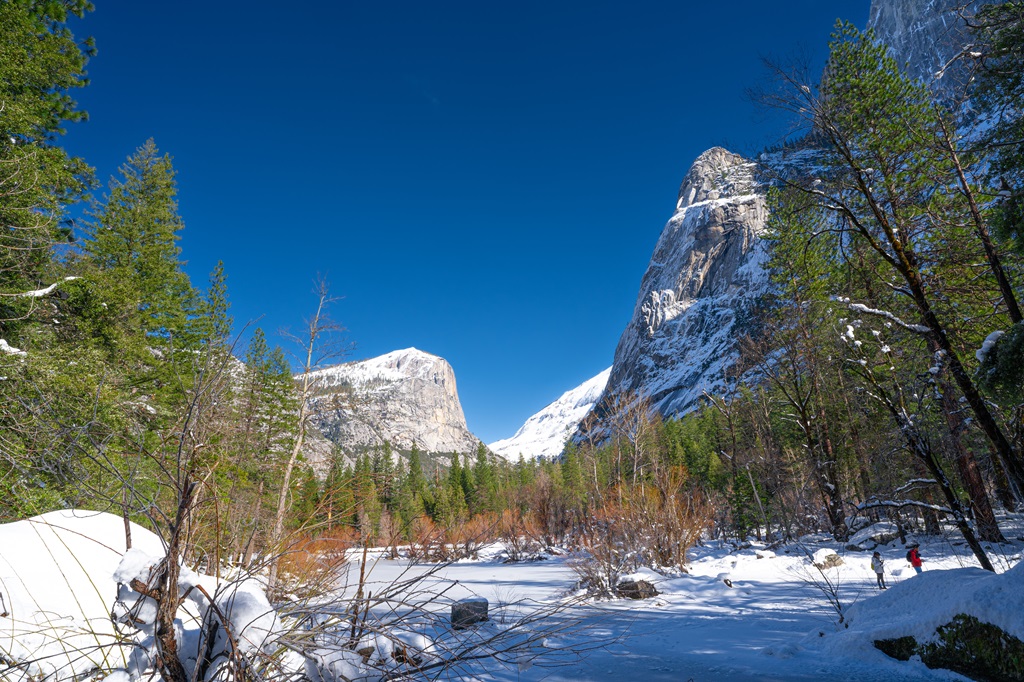
🥾 Hike to Mirror Lake
Mirror Lake is one of Yosemite Valley’s most scenic spots, offering amazing reflections of surrounding granite walls, including Half Dome, Mountain Watkins, and Washington Column.
But in winter, the lake becomes frozen. Even without the reflections, the snow-covered landscape makes it a magical place to explore!
There are a couple of ways to hike to Mirror Lake, but the easiest is the short 2-mile out-and-back route along a paved road. It’s perfect for a family-friendly, leisurely walk. Just keep an eye out for icy or snowy patches along the way.
Parking isn’t available right at the trailhead, but you can park at Curry Village or the Yosemite Valley Trailhead Parking. Alternatively, hop on the Yosemite Valley Shuttle and get off at stop #17.
Bring your own water, as there’s none available along the trail, but vault toilets are located about half a mile from the trailhead and again near the lake.
✨ READ THIS: 20 Best Yosemite Hikes in Winter
🖼️ Visit The Ansel Adams Gallery in Yosemite Village
If you’re a fan of photography or just want to see a piece of Yosemite history, The Ansel Adams Gallery in Yosemite Village is a must-visit.
The building was established in 1902 and is on the Register of Historic California Businesses. Ansel Adams even lived and worked in this same building that stands today.
Visitors can explore an extraordinary collection of his original photographs, tracing his work from his earliest pieces to his world-famous Western landscapes.
Beyond photography, the gallery offers a wide array of books, maps, handicrafts, and Native American jewelry.
🥪 Eat Lunch at Degnan’s Kitchen or Base Camp Eatery
For lunch, stop at either Degnan’s Kitchen or Base Camp Eatery for a delicious meal!
Degnan’s Kitchen serves deli sandwiches, salads, and breakfast items. Grab a coffee or pastry from Peet’s Coffee and enjoy indoor or outdoor seating. This restaurant started as a small home bakery in the 1880s by Irish immigrant Bridget Degnan and has been serving Yosemite Valley visitors for over 130 years!
Base Camp Eatery, formerly known as the Food Court at Yosemite Valley Lodge, offers a variety of foods with fresh, seasonal ingredients, front-of-house cooking, and grab-and-go options. They also have a Starbucks. And they’re open for breakfast, lunch, and dinner!
💧 Hike Lower Yosemite Fall Trail
Want to get up close to one of Yosemite’s most famous waterfalls? The Lower Yosemite Fall Trail takes you right to the base of this spectacular cascade, the final 320-foot drop of Yosemite Falls, one of North America’s tallest waterfalls.
📸 This short, easy 1.2-mile roundtrip loop offers multiple viewpoints along the way:
- From the Lower Yosemite Fall footbridge, you’ll get a front-row view of the thunderous lower cascade.
- From the Yosemite Falls viewpoint, you’ll see the entire waterfall from top to bottom.
- The western side of the loop is my favorite viewpoint to see all three tiers of Yosemite Falls.
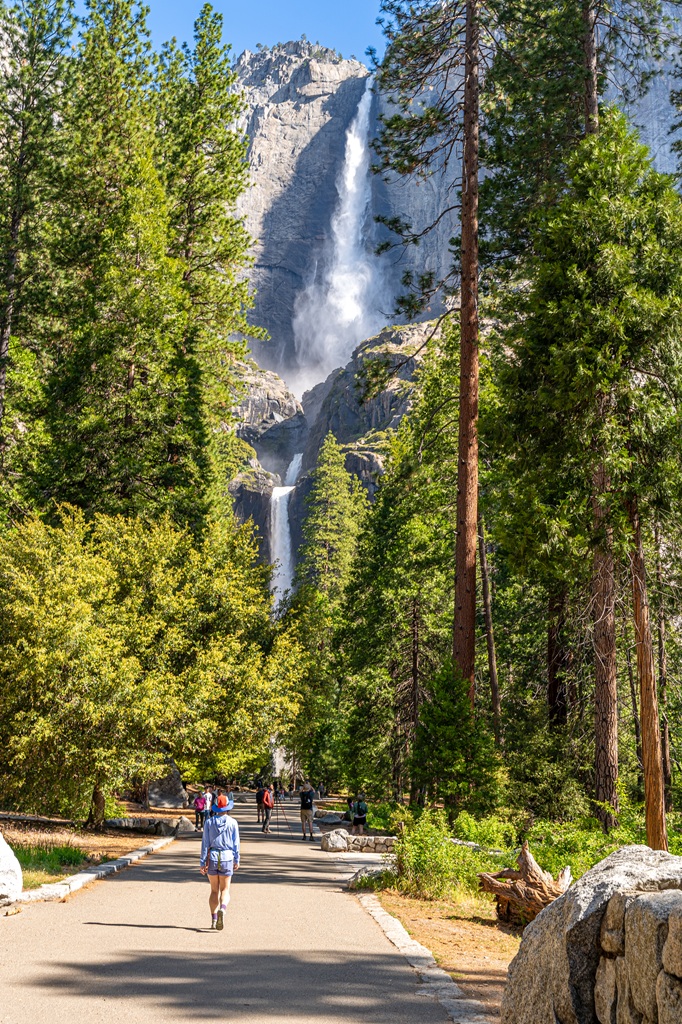
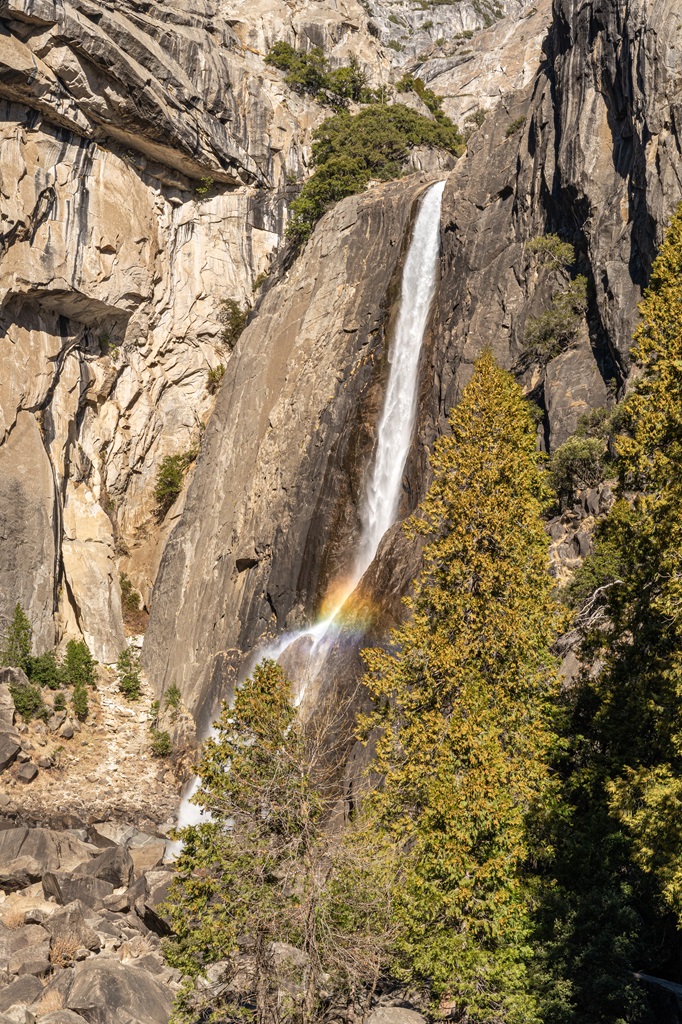
In winter, watch out for icy patches, especially on the short climb to the footbridge on the western portion of the trail.
There’s no parking directly at the trailhead, so your best bet is to park at Yosemite Village or the Yosemite Falls parking area.
You can also hop on the Valley Shuttle and get off at stop #6 (Lower Yosemite Fall Trailhead) for convenient access.
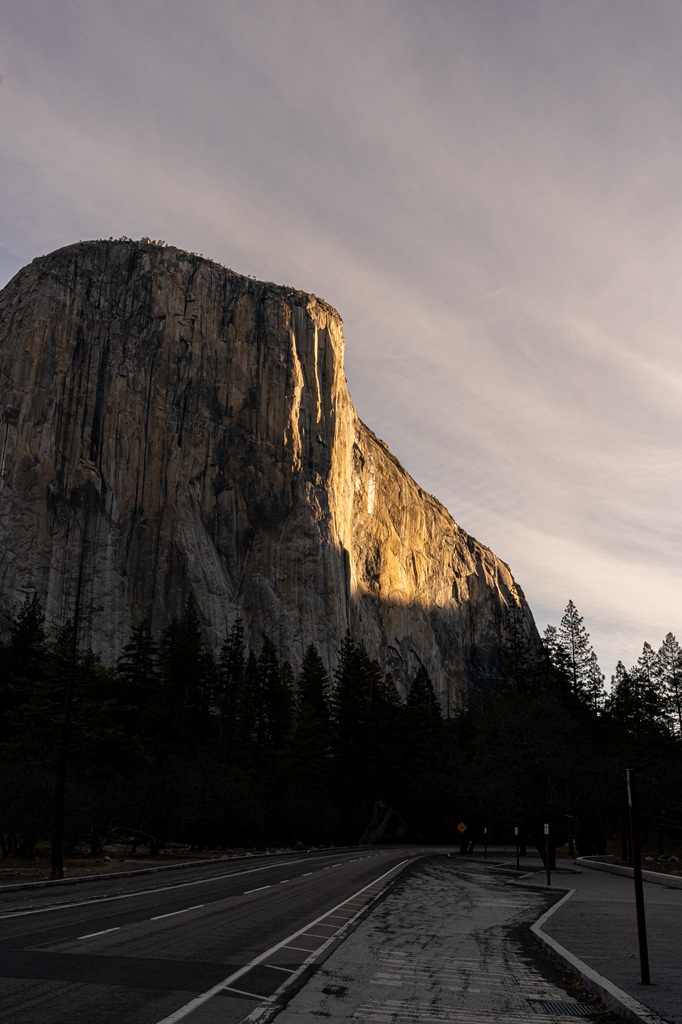
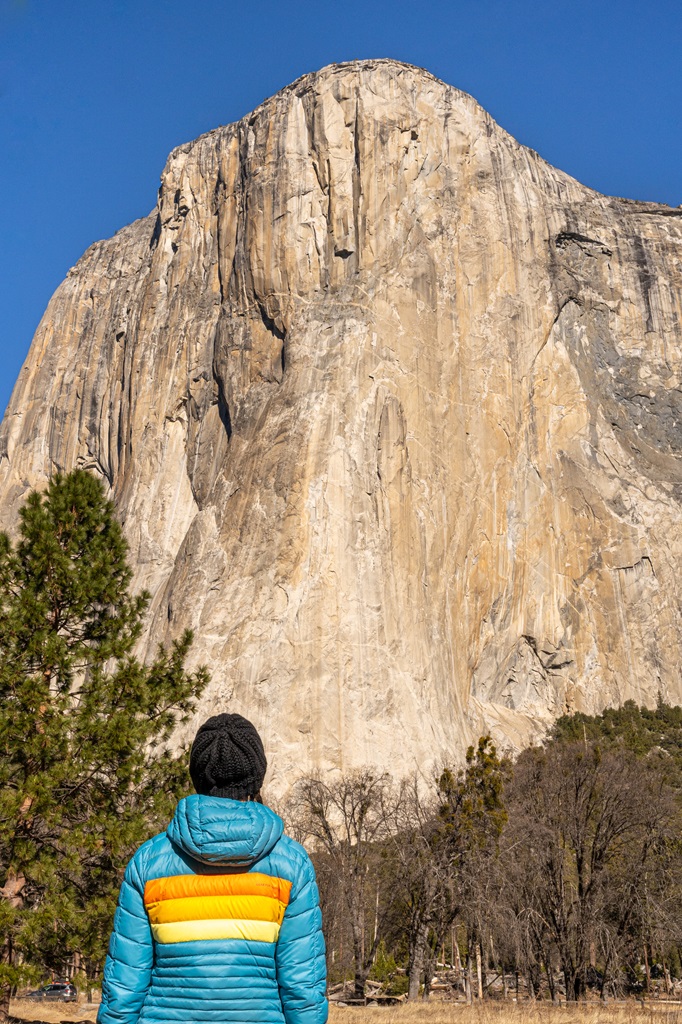
🧗♀️ Admire El Capitan
As you drive through Yosemite Valley, you’ll get incredible views of El Capitan, one of Yosemite’s most iconic landmarks.
Rising over 3,000 feet above the valley floor, this massive granite monolith is a world-famous challenge for rock climbers and an unforgettable sight for visitors.
Want a closer look? Head to El Capitan Meadow on Northside Drive near the west end of Yosemite Valley. From here, you can admire the sheer rock face up close and with a pair of binoculars, you might even catch climbers making their way up, even in winter!
The Yosemite Valley Shuttle stops at El Capitan Meadow (stop #9), making it easy to visit without worrying about parking.
⚠️ To help protect El Capitan Meadow, stay on the designated trails and avoid creating unofficial paths.
🌄 Watch Sunset at Valley View
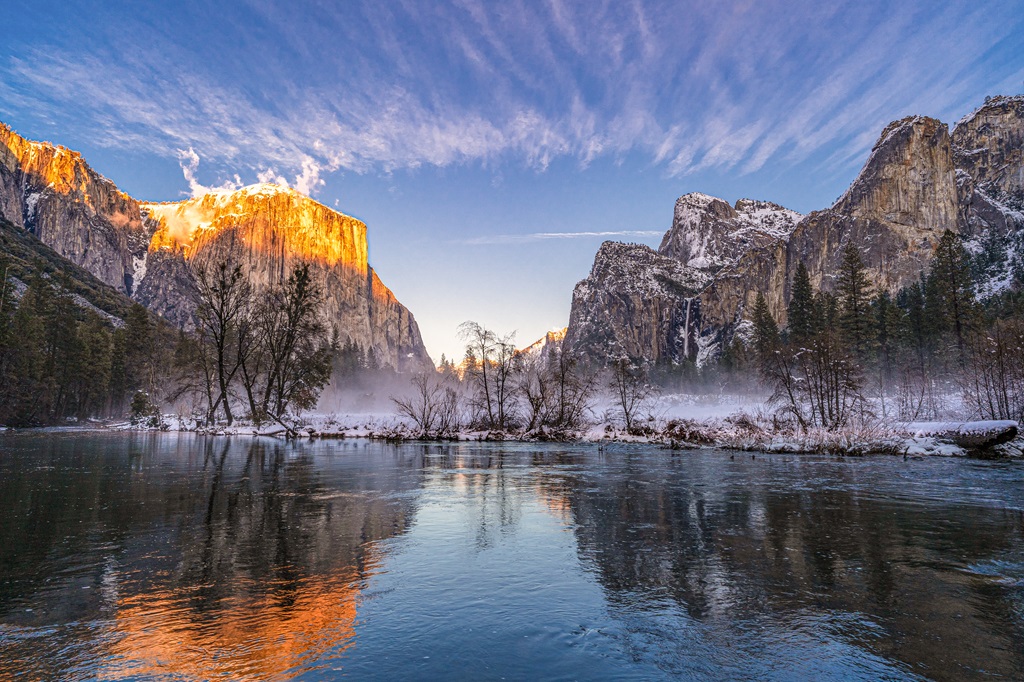
Valley View is a gorgeous viewpoint in Yosemite Valley, located just off Northside Drive.
It’s an amazing spot to catch the sunset, with the Merced River reflecting El Capitan, Bridalveil Fall cascading in the distance, and Cathedral Rocks towering high above the valley.
Be aware that the parking lot is small with limited spots! Also, there is no shuttle stop here.
The first time I visited Valley View, I was completely blown away. The sunset was perfect, with a light dusting of snow on the peaks and a soft layer of fog hovering over the valley. The photo below remains one of my all-time favorites from our Yosemite adventures!
❄️ Yosemite Winter Guides
- Ultimate Guide to Visiting Yosemite in Winter
- The Only Yosemite Winter Itinerary You Need!
- Where to Stay in Yosemite in Winter: 15+ Best Lodges, Hotels, and Cozy Cabins
- The Ultimate Yosemite Winter Packing List
- 20 Best Yosemite Hikes in Winter (Guide to Snowy Adventures)
- 18 Best Yosemite Winter Activities You Can’t Miss!
- Yosemite Firefall: A Complete First-Timer’s Guide
- Beginner’s Guide to Visiting Mariposa Grove in Winter
Day 2: Yosemite Winter Itinerary (explore Mariposa Grove)
⛷️ Snowshoe or Cross Country Ski in Mariposa Grove
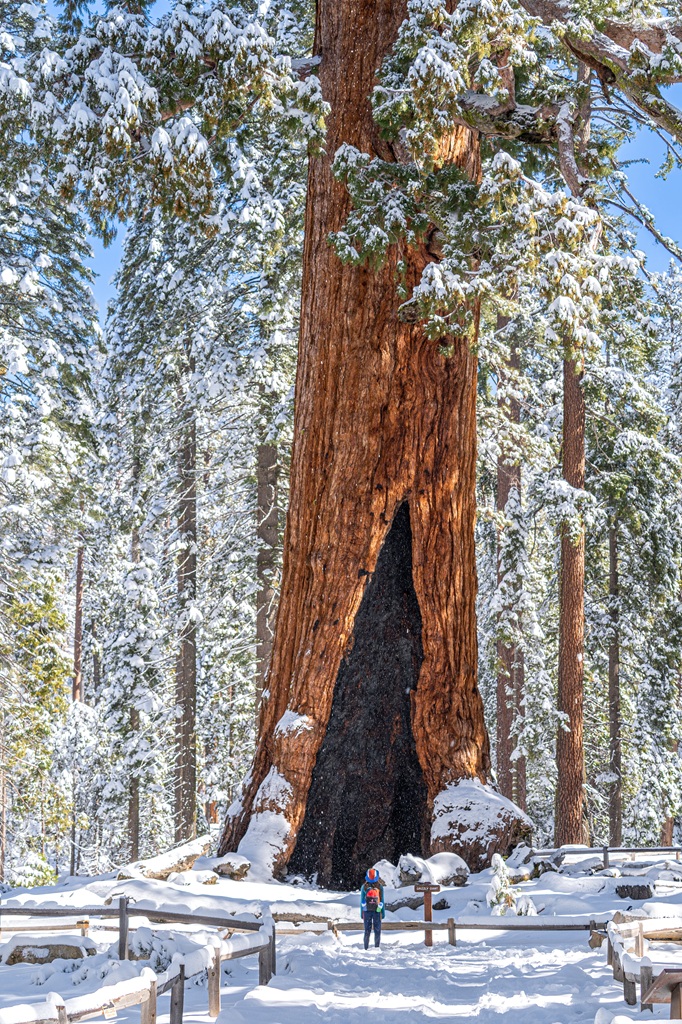
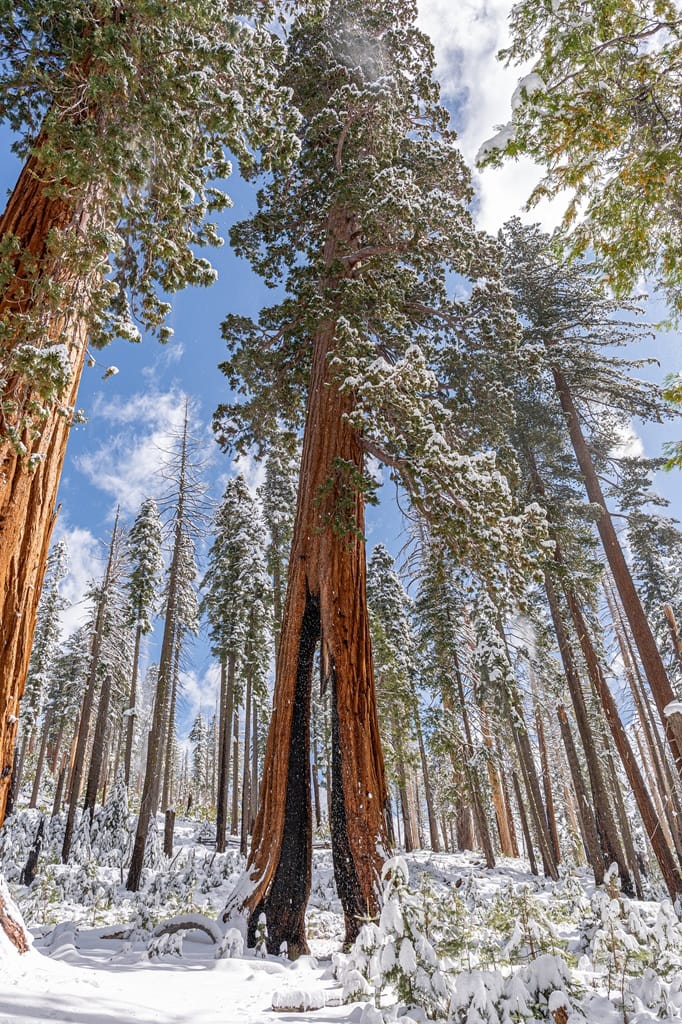
Mariposa Grove of Giant Sequoias is one of the most magical spots to visit in Yosemite, especially in the winter. It’s personally my favorite time to explore the grove!
Located just inside the South Entrance along Highway 41, Mariposa Grove is home to over 500 mature giant sequoias, including some of the park’s most famous trees.
After a fresh snowfall, the grove is perfect for snowshoeing or cross country skiing. I have only been hiking through the grove in winter, but I’m hoping to try snowshoeing for the first time this winter season!
Access to the grove in winter can be a bit tricky. Mariposa Grove Road closes seasonally from November through April, so the shuttle won’t be running.
🥾 There are two ways to reach the grove in winter:
- Washburn Trail
- Mariposa Grove Road
Both routes are 2 miles one-way with about 500 feet of elevation gain. So in addition to the hikes you plan to do within the grove, add on 4 extra miles!
The grove is divided into lower and upper sections. Trails in the lower grove are family-friendly and beginner-friendly whereas the trails in the upper grove are more challenging.
🌳 Lower grove trails:
- Big Trees Loop (0.3 miles) – You’ll see the Fallen Monarch interpretive panels on the life and ecology of giant sequoias.
- Grizzly Giant Loop (2.1 miles) – You’ll see the Bachelor and Three Graces, California Tunnel Tree, and Grizzly Giant.
🌳 Upper grove trails:
- Guardians Loop (6.5 miles) – You’ll see Columbia Tree, Mariposa Grove Cabin, Telescope Tree, Fallen Wawona Tree, and Galen Clark Tree.
- Mariposa Grove Trail (7 miles) – You’ll see Faithful Couple, Clothespin Tree, Mariposa Tree, and Wawona Point.
If you’re heading to the upper grove, start early since snow slows your pace and daylight is limited. Make sure to stay on designated routes, avoid walking on ski tracks, and be mindful of other hikers, snowshoers, or skiers.
Don’t have your own gear? Badger Pass Ski Area rents snowshoes and skis so you can still enjoy the winter trails!
✨ READ THIS: Beginner’s Guide to Visiting Mariposa Grove in Winter
🛷 Family Fun at Goat Meadow Snow Play Area
For more family-friendly winter fun, head to the Goat Meadow Trailhead and Snow Play Area, just off Highway 41 between Fish Camp and Yosemite’s South Entrance.
From Mariposa Grove, it’s only a 6 minutes’ drive to reach the snow play area!
This is a great spot for sledding and tubing, and nearby trails offer opportunities for cross country skiing and snowshoeing along scenic, forested logging roads.
⛸️ Ice Skate at Curry Village
Ice skating at the Curry Village outdoor rink is one of the most classic winter activities in Yosemite.
This outdoor rink has been a favorite for visitors and families since 1928, offering a fun, festive experience with a stunning view of Half Dome.
The rink typically operates daily from mid-November through early March, weather permitting. This season it’s open November 14, 2025, through March 2, 2026.
👉 Times you can skate:
- 8:30 AM – 11:00 AM (only on weekends and holidays)
- 12:00 PM – 2:30 PM
- 3:30 PM – 6:00 PM
- 7:00 PM – 9:30 PM
Tickets can be purchased online or in person at the Curry Village Tour & Activity Desk.
🍕 Eat Dinner at the Curry Village Pizza Deck
End another incredible day exploring Yosemite by enjoying a hand-tossed pizza at The Pizza Deck at Curry Village.
It’s open from 12:00 PM to 9:00 PM in January through November and during holidays. It’s a great place to relax and dine after a full day of adventuring!
Day 3: Yosemite Winter Itinerary (winter adventures at Badger Pass and Glacier Point Road)
There are several fun winter adventures you can go on at Badger Pass and along Glacier Point Road. I’ll share three popular options below but always choose what feels right based on your experience, skill level, and preparedness.
Keep in mind that visiting Yosemite in early winter can be unpredictable. Some years, winter starts later than expected, and if there’s not enough snow, Badger Pass may be closed.
If that happens, don’t stress. Yosemite still has plenty of great winter activities, and I’ll share alternate options further below, so you’re never stuck without a backup plan.
1. Snowshoe to Dewey Point
This is an epic half-day snowshoe adventure that starts at the Badger Pass Ski Area. The route starts with about a mile along Glacier Point Road before veering into the forest and onto the winter trail.
From there, you’ll hit a junction where you can choose between Ridge Trail (#14) or Meadow Trail (#18). Ridge Trail is more open and a bit more challenging, while Meadow Trail heads through a quiet forest.
As you get closer to Dewey Point, the trees start to thin and those incredible mountain views slowly come into sight.
Hiking the loop clockwise is the recommended direction since it makes the return easier and lets you enjoy the ridge views earlier in the hike. You can do this route as an out-and-back, but completing the full loop is the preferred option and totally worth it!
🎿 Route Details:
- Starting Point: Badger Pass Ski Area off Glacier Point Road
- Length: 7.4 miles roundtrip
- Elevation Gain: 900 feet
- Dewey Point Winter Loop Map
Snowshoes and cross country skis are available for rent at Badger Pass Ski Area, and guided tours are also offered.
⚠️ This trail is only for snowshoeing or cross country skiing. Hiking in boots or microspikes can damage the trail and create hazards for others.
2. Downhill Ski or Snowboard at Badger Pass
Ever been downhill skiing or snowboarding at Badger Pass Ski Area? If not, you should! It’s California’s oldest ski area, which makes the experience even cooler.
Sitting at 7,200 to 8,000 feet in elevation, Badger Pass is located off Glacier Point Road, about 5 miles from the Wawona Road junction. Winter driving conditions are common here, so be sure to carry tire chains, as they’re often required to access the road.
The ski area typically operates from mid-December through March, depending on snow conditions. All-day lift tickets are available online, while half-day and lower-lift tickets can be purchased on-site. Ski runs include 35% beginner, 50% intermediate, and 15% advanced.
You can rent everything you need right at Badger Pass, including skis, snowboards, boots, poles, helmets, and snowshoes.
When Badger Pass is open for the season, a daily shuttle from Yosemite Valley runs to Badger Pass, but seats are limited, so arriving early is key.
If you’re new to skiing or snowboarding, Badger Pass Ski School offers lessons taught by PSIA-certified instructors. They even have the Badger Pups program, where kids ages 4–6 can learn to ski or snowboard in a fun, supportive environment.
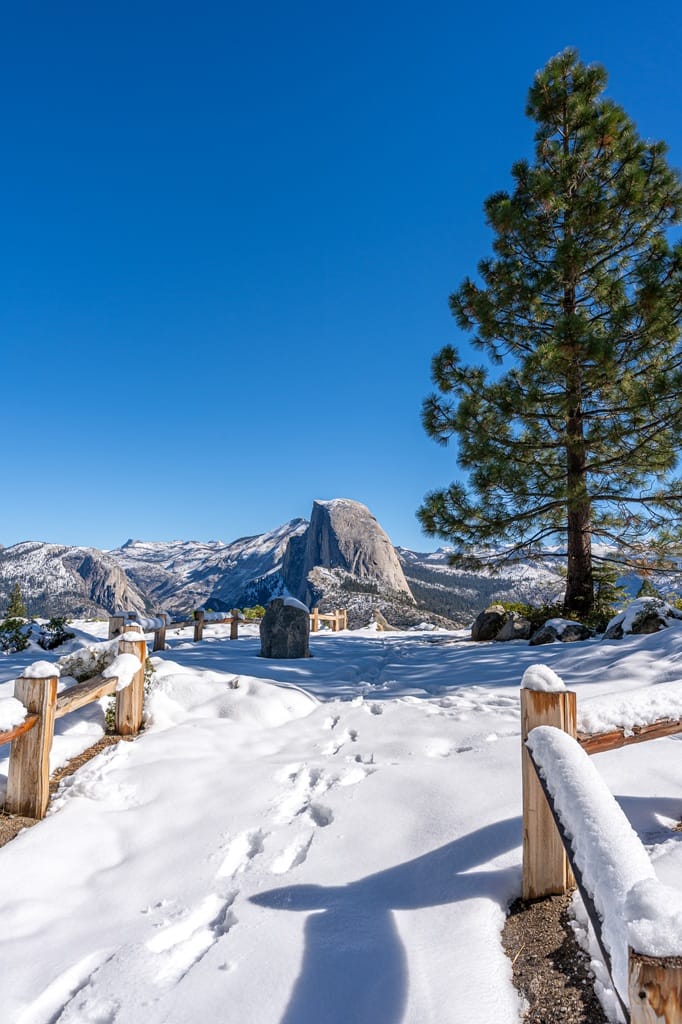
3. Cross Country Ski on Glacier Point Road
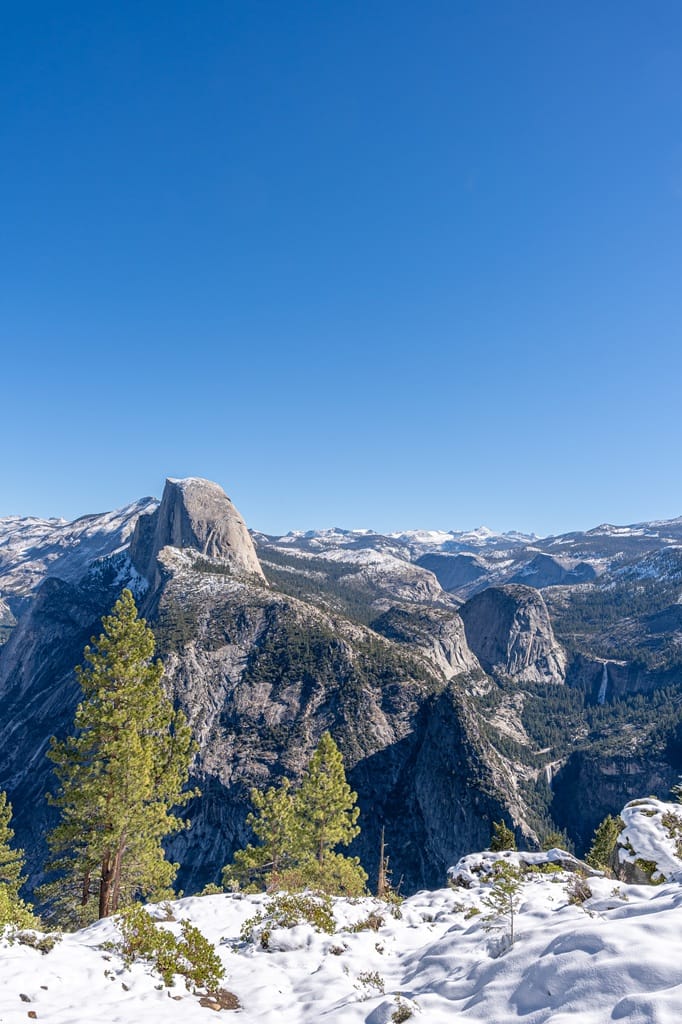
In winter, Glacier Point Road closes to cars and transforms into one of Yosemite’s most iconic routes for cross country skiing and snowshoeing. The road is machine-groomed with set ski tracks, which makes it a great option for cross country skiers who don’t want to navigate winter routes in the wilderness.
This route is popular because the views at Glacier Point in winter are amazing, plus you get to enjoy the area without the usual summer crowds!
⛷️ Route Details:
- Starting Point: Badger Pass Ski Area
- Distance: 22 miles with 2,660 feet of elevation gain
- Backpacking Option: One-way 11 miles to Glacier Point with an overnight stay at the Glacier Point Ski Hut
- Glacier Point Road Winter Route
Cross country skiing is the better option here since the distance is pretty long for a single-day snowshoe (unless you’re planning to camp overnight).
If you do choose to snowshoe, be sure to stay along the edges of the groomed road, outside the parallel ski tracks. The wide center lane is reserved for skate skiers and beginner skiers who need extra room to stop and turn.
⚠️ Hiking this route in boots or microspikes is not recommended! It creates divots in the tracks and can be hazardous to skiers. Stick to either snowshoes or skis!
Visiting Yosemite in February? Don’t Miss Firefall!
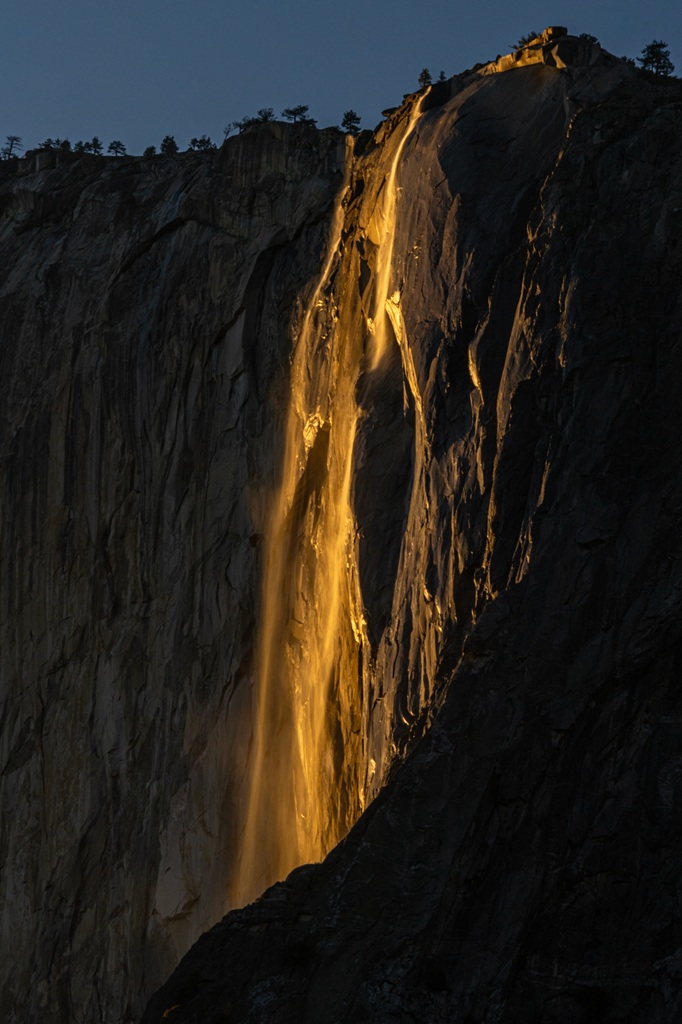
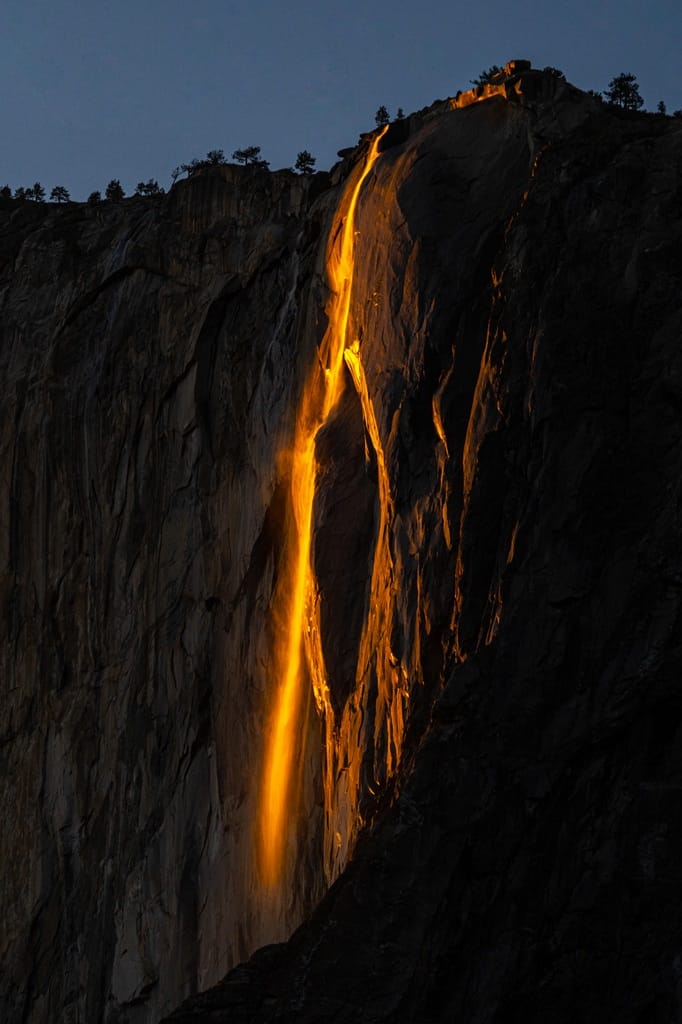
Horsetail Fall plunges 2,130 feet over the eastern edge of El Capitan in Yosemite Valley. Since it’s fed entirely by snowmelt, it usually dries up by summer, making it a short-lived sight.
However, in mid to late February, when conditions line up just right, the setting sun can light the waterfall on fire! The water glows bright orange at sunset, creating the famous Firefall effect that looks like molten lava spilling down the cliff.
My husband and I saw Horsetail Fall turn into Firefall for the first time in February 2025. I’ll be honest, I was a little worried whether or not I would enjoy the experience because I’m not a fan of big crowds, but it ended up being absolutely incredible!
If you’re planning to see it for yourself, reservations may be required if you don’t have in-park lodging or camping, so make sure you check ahead of time.
The El Capitan Picnic Area is the most popular viewing spot. It can get packed quick so arrive early to secure a spot. The “molten lava effect” usually happens about 5–15 minutes before sunset.
Be sure to dress warmly, be patient, be respectful of others, and most importantly, enjoy the show. It’s truly something special!
✨ READ THIS: Complete First-Timer’s Guide to Seeing Yosemite Firefall
More Things to Do in Yosemite in Winter
Spending extra days in Yosemite and need more adventures? I got you! Here are some more exciting things you can do in Yosemite this winter.
✅ Always be prepared with the proper winter gear (microspikes, snowshoes, etc.), check current trail conditions before heading out, and be honest with yourself about your experience and skill level.
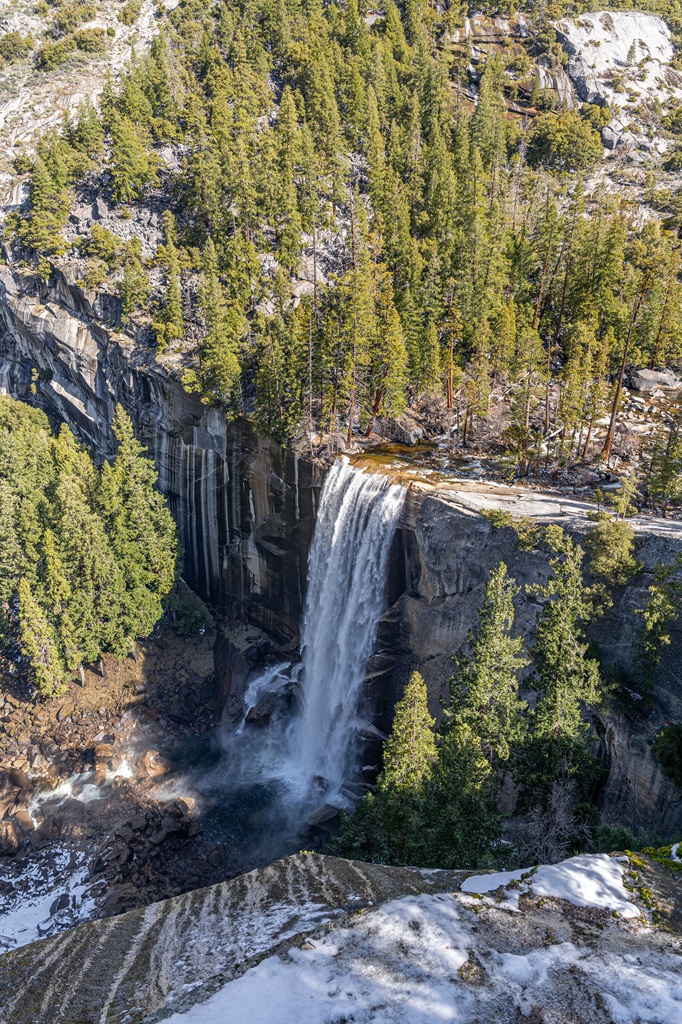
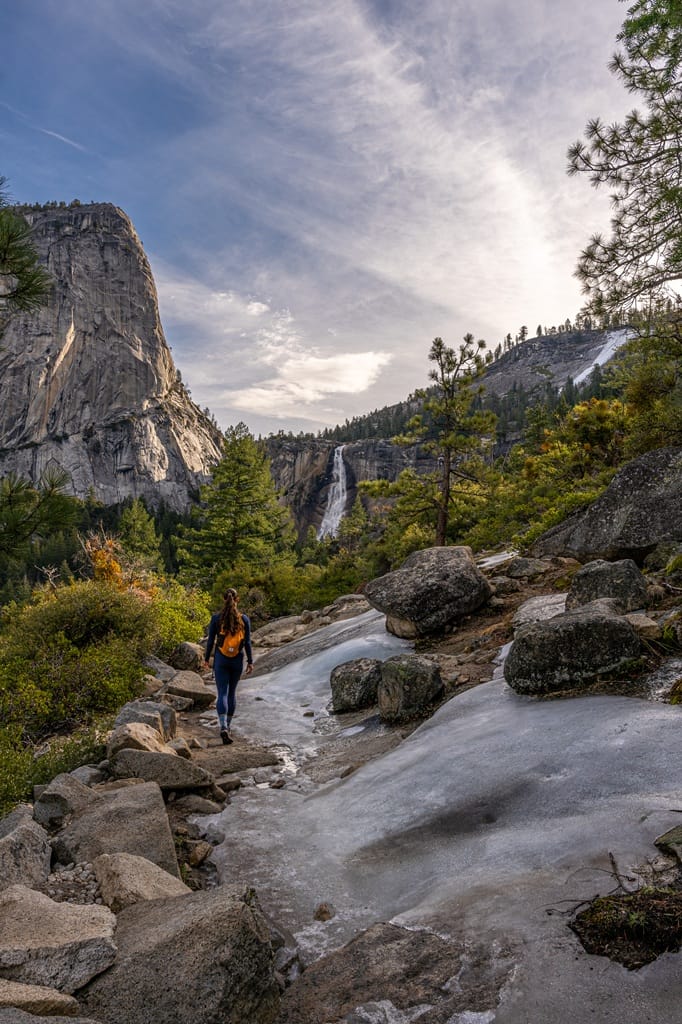
1. Hike to Vernal Fall and Nevada Fall (winter route)
Hiking the Mist Trail and John Muir Trail to Vernal and Nevada Falls is a Yosemite bucket-list adventure. Challenging? Yes. Worth it? Yes!
In winter, parts of the trail are closed (typically November through May) due to hazardous winter conditions and risk of rock fall. The stone steps near Vernal Fall are off-limits, and the upper John Muir Trail between Clark Point and the top of Nevada Fall is also closed.
That said, there is a winter route that still lets you reach both waterfalls! There could be snow and ice along the trail so pack microspikes and trekking poles.
✨ READ THIS: Mist Trail vs John Muir Trail Hiking Guide
2. Hike the Upper Yosemite Fall Trail
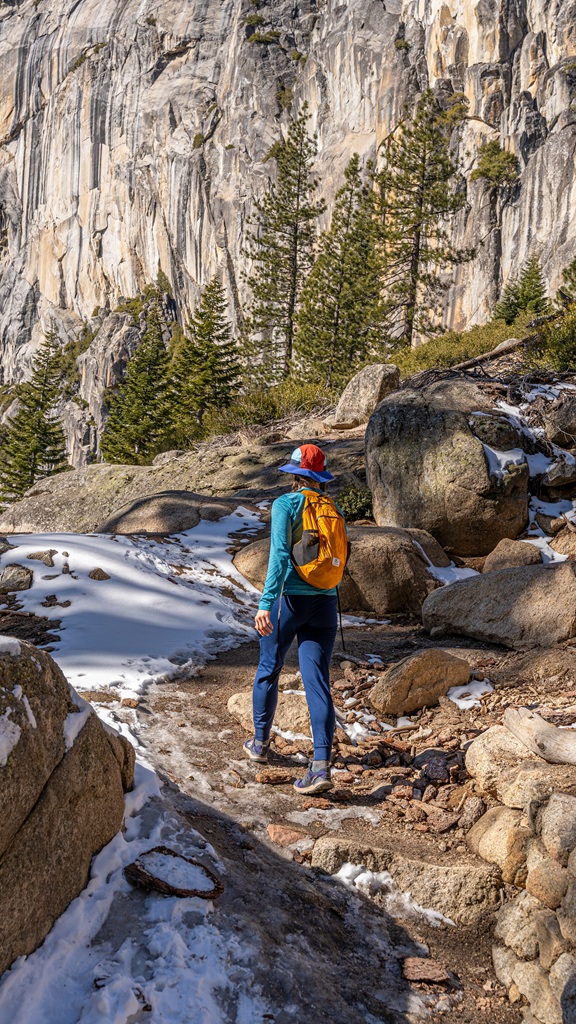
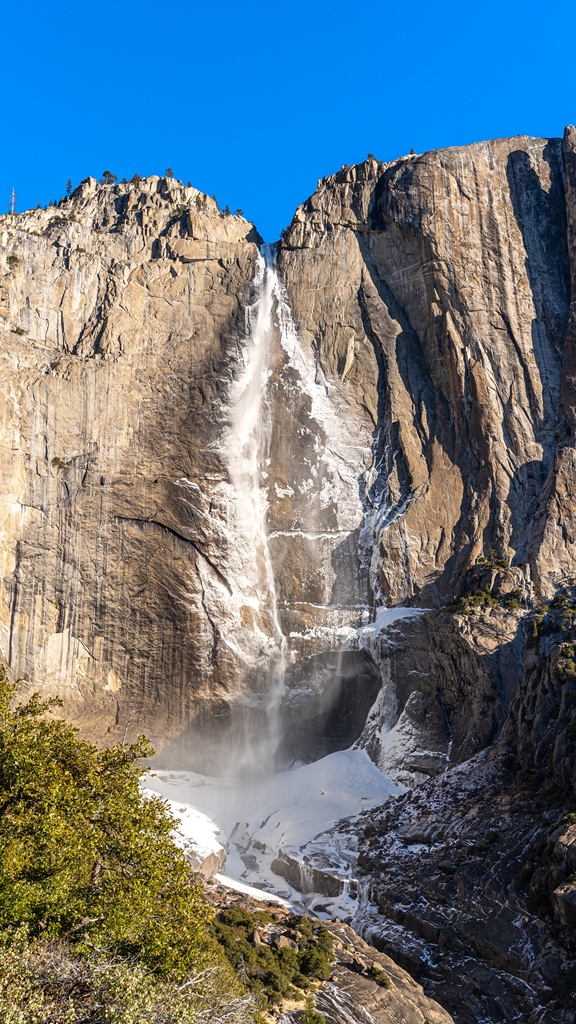
Yosemite Falls is one of the tallest waterfalls in North America, plunging a massive 2,425 feet from top to bottom. It’s made up of three sections: Upper Yosemite Fall, the Middle Cascades, and Lower Yosemite Fall.
If you’re up for a serious challenge, the Upper Yosemite Fall Trail is one of the most rewarding (and leg-burning) hikes in the park. The trail gains about 3,000 feet in just 3.5 miles, with steep switchbacks and rocky terrain.
But you’re rewarded with nonstop views of Yosemite Valley, Half Dome, and the surrounding granite cliffs. You can even add an extra mile to Yosemite Point for even better views!
In winter, falling ice from the top of the waterfall can cause loud booms, and the spray often builds a huge “snow cone” at the base.
The lower trail gets decent sun and is sometimes clear, but the upper sections are shaded and can be icy or buried in snow, so be prepared for those conditions.
✨ READ THIS: Upper Yosemite Fall Hiking Guide
3. Hike the Chilnualna Falls Trail
Chilnualna Falls Trail is a very underrated hike! I have hiked it in the summer and it was beautiful! I have yet to hike it in winter, but I would assume it’s just as stunning.
I believe a portion, if not the entire waterfall, can freeze in the winter. You can also backpack further up along this trail and continue into the wilderness.
I’m feeling inspired to go on a new winter adventure. 😉
The entire hike is 8.2 miles roundtrip with 2,400 feet of elevation gain. It’s a challenging one! Be prepared with microspikes and hiking poles in case there are icy sections.
✨ READ THIS: Chilnualna Falls Trail Hiking Guide
4. Winter Adventuring at Crane Flat
Crane Flat, located near the western end of Tioga Road, is a great spot for snowshoeing and cross country skiing in the winter.
There are three popular winter routes in this area, including Tuolumne Grove Trail, Crane Flat Lookout Trail, and Gin Flat Loop.
🌳 Tuolumne Grove Trail:
Tuolumne Grove is home to about two dozen giant sequoias, including the famous Dead Giant Tunnel Tree, which still stands today despite its weakened state from an 1870s tourist-carved tunnel.
The Tuolumne Grove Trail starts at 6,200 feet and follows the old Big Oak Flat Road down into the grove. In winter, the snow-covered trail makes for a perfect route for snowshoeing or cross-country skiing.
The route is about 2.5 miles roundtrip with 600 feet of elevation gain.
❄️ Crane Flat Lookout Trail:
This beginner-friendly trail, which is 2.9 miles roundtrip with 400 feet of elevation gain, follows an old fire road up to the historic Crane Flat Fire Lookout, built in 1931.
From the top, enjoy 360-degree views of Yosemite, including El Capitan, Half Dome, and snow-covered forests all around. There’s also an abandoned helicopter shell near the lookout.
⛷️ Gin Flat Loop Trail:
This winter-only loop follows the old Big Oak Flat Road and Tioga Road, with an optional meadow detour. It’s a peaceful way to enjoy Yosemite’s snowy scenery which you may not get in the valley.
Going counter-clockwise gives a gentler climb and steeper descent which is perfect for skiers. Beginners should take it slow, start early, and bring snacks and water.
The Gin Flat Loop Trail is about 5 miles roundtrip with 770 feet of elevation gain.
✨ READ THIS: 18 Best Yosemite Winter Activities You Can’t Miss!
5. Hike the Four Mile Trail (below Union Point)
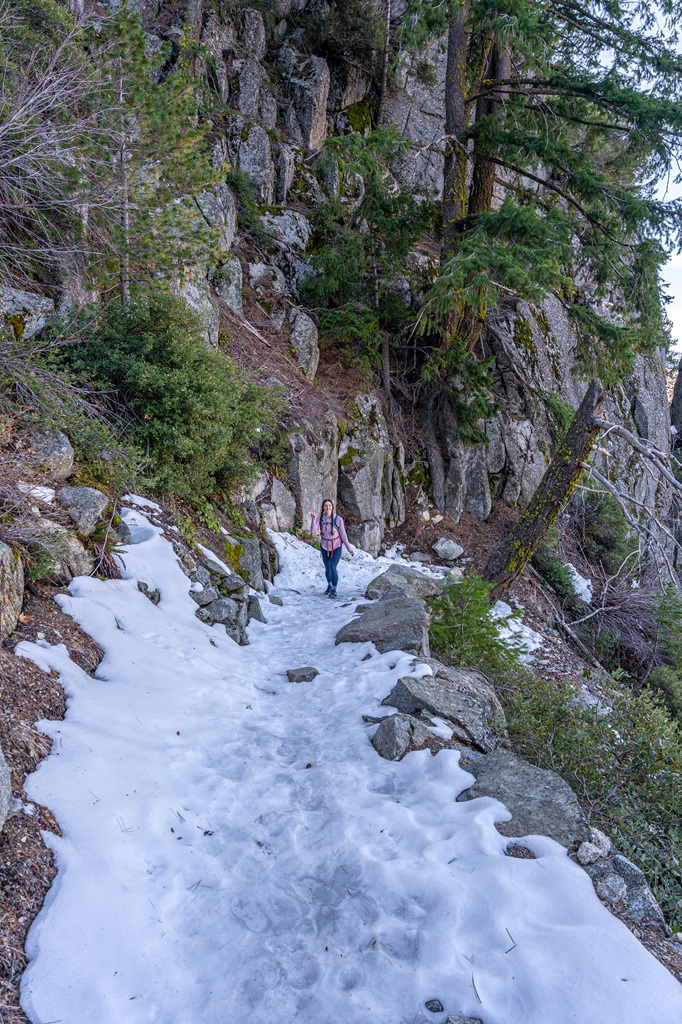
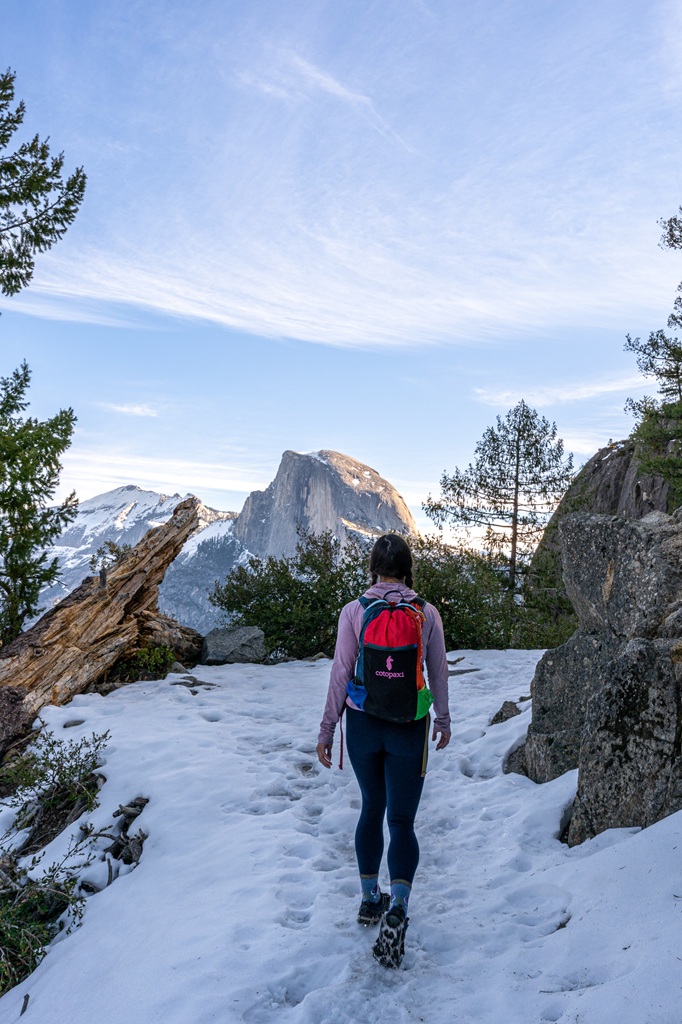
In winter, the Four Mile Trail is partially open, letting you hike the lower 2.8 miles up to the gate just below Union Point. Even with the upper portion of the trail closed, you’ll still be treated to incredible views of Yosemite Valley, including El Capitan, Yosemite Falls, and Half Dome.
The trail can get icy since it stays in the shade most of the day, so microspikes and hiking poles are a must. The full trail usually opens around May and closes sometime in November or December. After big snowstorms, the entire trail may shut down temporarily.
Sometimes Glacier Point Road is closed due to snow, but the Four Mile Trail remains open. This is a great opportunity to hike to Glacier Point in winter and enjoy the quiet beauty without the summer crowds!
The entire trail is 9.8 miles roundtrip with 3,420 feet of elevation gain. It’s a tough trail so be prepared! And when the upper portion is closed, do not attempt to hike to Glacier Point. It closes due to hazardous winter conditions and risk of rock fall and avalanche!
✨ READ THIS: Four Mile Trail Hiking Guide
6. Hike Wapama Falls Trail in Hetch Hetchy
Just like Yosemite Valley, Hetch Hetchy doesn’t usually get a ton of snow, but in winter it’s quiet, peaceful, and beautiful!
Keep in mind that Hetch Hetchy Road can close or require tire chains in icy or snowy conditions, and it’s only open from sunrise to sunset. Make sure to check current road conditions before you go.
This winter-friendly hike is about 5 miles roundtrip with 500 feet of elevation gain, offering cooler weather and far fewer crowds than in summer.
✨ READ THIS: Wapama Falls Hiking Guide
Hike to El Capitan from Yosemite Valley
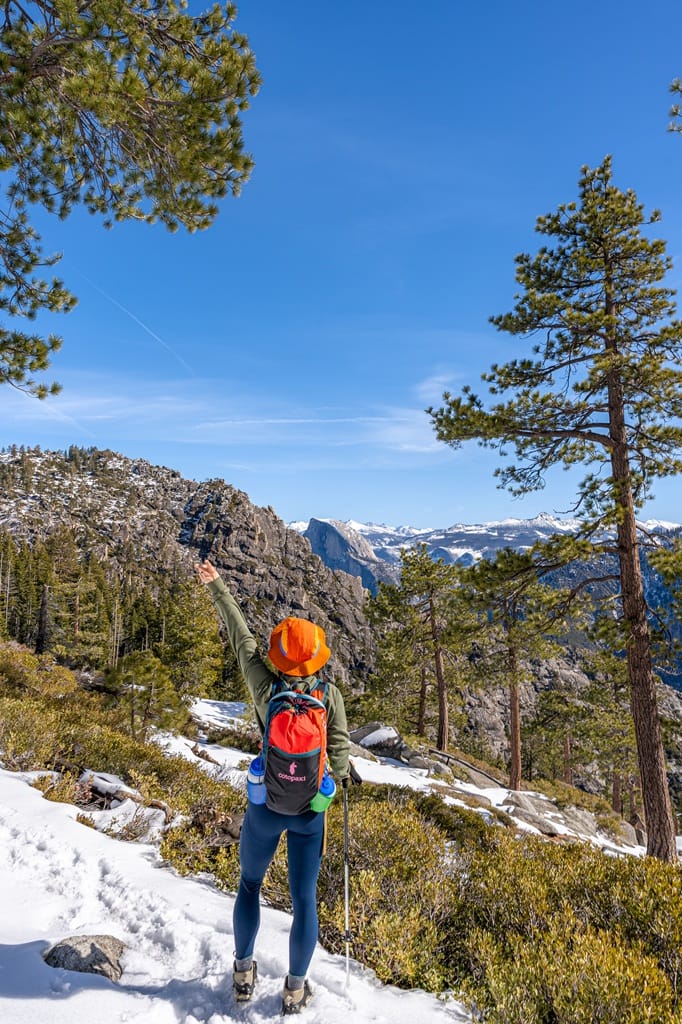
If you’re looking for a serious winter challenge, hiking El Capitan is an epic adventure! This 16-mile roundtrip route climbs about 5,000 feet, so it’s long, steep, and tough. But the views from the top are worth the effort!
You will likely encounter snow at this elevation so be prepared with microspikes, snowshoes, or sometimes both to tackle the trail safely.
My husband and I did this hike for the first time in February 2025, and once we passed the Upper Yosemite Fall Trail junction, everything was buried in snow.
It ended up being one of the hardest hikes we’ve ever done but also one of our favorites!
✨ READ THIS: El Capitan from Yosemite Valley Hiking Guide

Best Places to Stay Near Yosemite in Winter (by entrance)
The most convenient place to stay in Yosemite in winter would be in Yosemite Valley. There are three lodging options:
- Luxury – The Ahwahnee
- Midrange – Yosemite Valley Lodge
- Budget – Curry Village
If you aren’t able to book a place inside the park, or you’d prefer to stay outside of Yosemite, there are plenty of options nearby!
Yosemite’s South Entrance (Highway 41)
The South Entrance is the most popular route into Yosemite because of its easy access to Mariposa Grove, Wawona, Badger Pass Ski Area, and Yosemite Valley.
🚗 Drive times from the South Entrance:
- Mariposa Grove – 2 minutes
- Wawona – 10 minutes
- Badger Pass Ski Area – 40 minutes
- Yosemite Valley – 1 hour
Tenaya Lodge
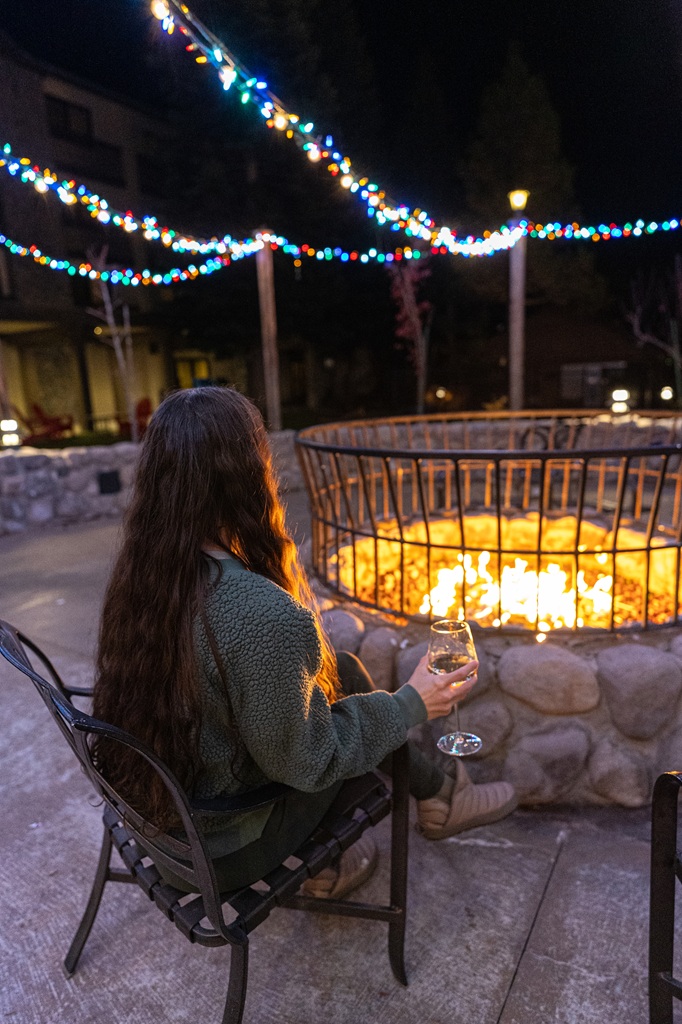
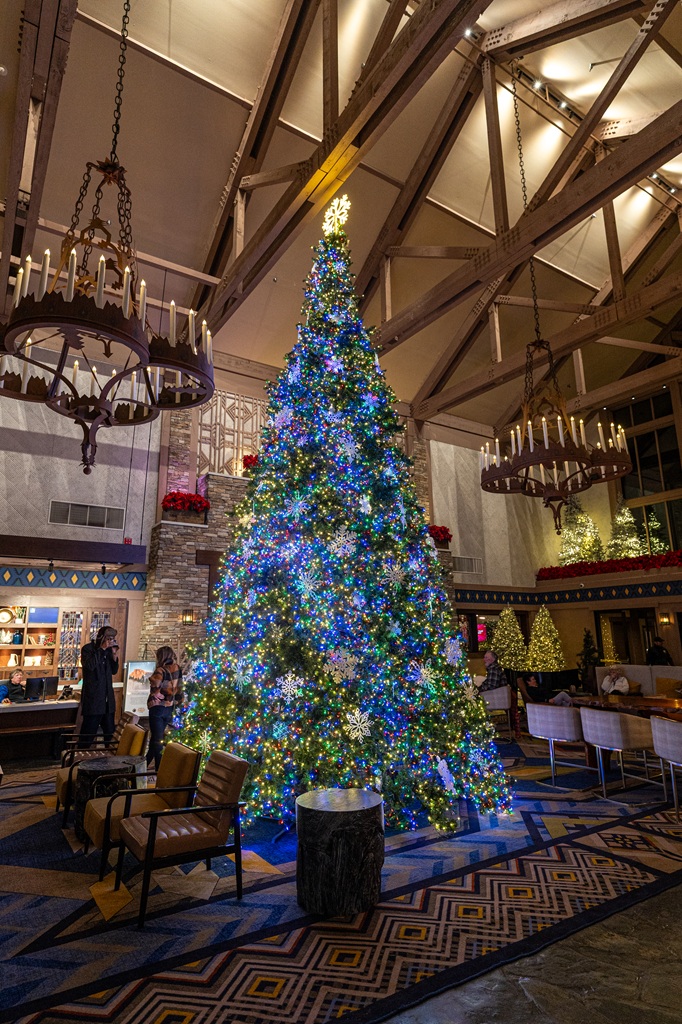
Tenaya Lodge at Yosemite is a 4-star luxury resort in Fish Camp, just 5 minutes from Yosemite’s South Entrance. Sitting at 5,288 feet, it combines cabin-in-the-woods vibes with upscale comfort. It’s perfect for couples, families, or anyone wanting a cozy mountain getaway.
My husband and I recently stayed at Tenaya Lodge in December 2025 and loved every minute of our stay. Read my honest, in-depth Tenaya Lodge review!
The resort offers several lodging styles, including two-bedroom Explorer Cabins with fireplaces and plenty of space, cottages with patios and forest views, and spacious main lodge rooms and suites close to the restaurants, spa, and indoor pool.
Tenaya Lodge also has a ton of activities included with your stay, even in winter, such as ice skating, snowshoeing, sledding, guided hikes, and more. Luxury amenities like the Ascent Spa, heated indoor pool, hot tubs, and multiple on-site restaurants make it tempting to spend your whole trip at the resort.
🤩 Book your stay at Tenaya Lodge
Sierra Sky Ranch
Sierra Sky Ranch is a historic ranch-style boutique hotel in Oakhurst, just 20 minutes from Yosemite’s South Entrance. Perfect for couples seeking a romantic escape or families looking for something cozier than a chain hotel.
Many rooms open onto a spacious wraparound veranda, letting you step outside, breathe in the pine-scented air, and enjoy the forest views.
Inside, the main ranch house features The Great Room with a grand piano, stone fireplace, and beamed ceilings, plus a quiet library.
If you love warm, intimate stays with character and cozy porches, Sierra Sky Ranch is an excellent winter getaway near Yosemite.
🤩 Book your stay at Sierra Sky Ranch
Best Western Plus Yosemite Gateway Inn
Best Western Plus Yosemite Gateway Inn is a 3-star, resort-style hotel in Oakhurst, just 25 minutes from Yosemite’s South Entrance. It’s a great choice for families, couples, or budget travelers who want comfort without breaking the bank.
The hotel features clean, modern rooms, free breakfast, an indoor pool, fitness center, walking paths, and even a playground.
Spread across several buildings, it feels more like a peaceful resort than a typical roadside hotel. Some rooms even have private balconies to enjoy the scenery.
With an on-site restaurant serving all-day meals and a convenient location, it’s a solid pick for a comfortable, affordable Yosemite getaway.
🤩 Book your stay at Best Western Plus Yosemite Gateway Inn
Yosemite’s Arch Rock Entrance (Highway 140)
The Arch Rock Entrance is the easiest and closest way into Yosemite Valley, making it the best area to stay near if most of your winter plans center on exploring the valley but you can’t get lodging inside the park.
At about 2,100 feet, this entrance is accessed via Highway 140, also called the All-Season Highway. Its lower elevation usually makes it the safest and most reliable route into the valley during winter.
Just remember that tire chains may be required at any time, and it’s legally required to carry them whenever snow is possible!
🚗 Drive times from the Arch Rock Entrance:
- Yosemite Valley – 20-25 minutes
- Badger Pass Ski Area – 40 minutes
- Mariposa Grove – 1 hour
Yosemite View Lodge
Yosemite View Lodge is a riverside hotel just minutes from the Arch Rock Entrance, making it a perfect base for winter trips. The lodge sits along the Merced River, so you can wake up to peaceful river views and crisp winter mornings.
Rooms are spacious and include kitchenettes, with some offering fireplaces and spa tubs. Suites with full kitchens are great for families or larger groups.
On-site dining options include The River Restaurant & Lounge for a sit-down meal and Parkside Pizza for something quick and casual.
If you want convenient, comfortable lodging close to the park, Yosemite View Lodge is a solid choice. Before you book, read my complete Yosemite View Lodge guide and review!
🤩 Book your stay at Yosemite View Lodge
Yosemite Cedar Lodge
Yosemite Cedar Lodge is a mountain lodge just 8 miles from the Arch Rock Entrance, making it an easy winter base.
Rooms range from standard hotel rooms to roomy suites, and the lodge features two on-site restaurants. The Cedar Lodge Restaurant closes in the off season, but the Canyon Bar & Grill remains open all year long (at least from what I could find).
There’s also a gift shop, game room, and a private river beach. There’s also a YARTS bus stop right outside, perfect if you’d rather skip driving on snowy roads.
With cozy mountain lodge vibes, river access, and fun amenities for families and couples, Yosemite Cedar Lodge is a convenient, comfortable spot close to the park.
🤩 Book your stay at Yosemite Cedar Lodge
Yosemite Bug Rustic Mountain Resort
Yosemite Bug Rustic Mountain Resort is a quirky, budget-friendly spot in Midpines, about 40 minutes from the Arch Rock Entrance.
The property has a variety of lodging options, including private cabins, hostel dorms, tent cabins, and vacation homes. Guests can hang out around the seasonal fire pit, relax in the game lounge, or cook in the shared kitchen.
On-site, the June Bug Café serves locally sourced, seasonal dishes and the Yosemite Health Spa offers a cedar sauna, spring-water hot tub, herbal baths, and massage therapy.
For budget-conscious travelers, solo adventurers, or groups looking for a social, outdoorsy stay, Yosemite Bug is a convenient and unique base near the park.
🤩 Book your stay at Yosemite Bug Rustic Mountain Resort
Yosemite’s Big Oak Flat Entrance and Hetch Hetchy Entrance (Highway 120)
The Big Oak Flat Entrance is a convenient way to reach Yosemite Valley and the western stretch of Tioga Road, including popular winter routes like Crane Flat Lookout Trail and Tuolumne Grove.
Just a mile before the gate, you’ll find the turnoff for Hetch Hetchy Road (Evergreen Road), which leads to one of the park’s quietest and most underrated areas.
The Hetch Hetchy Entrance is the most remote of all the park’s entrances, providing access only to Hetch Hetchy Valley and a handful of trailheads.
🚗 Drive times from the Big Oak Flat Entrance:
- Yosemite Valley – 40 minutes
- Badger Pass Ski Area – 1 hour
- Mariposa Grove – 1 hour and 15 minutes
The Hetch Hetchy Reservoir is only 15 minutes from the Hetch Hetchy Entrance.
Rush Creek Lodge
Rush Creek Lodge is a 4-star mountain resort just 5 minutes from the Big Oak Flat Entrance. The lodge offers spacious rooms, suites, and villas. Amenities include a heated outdoor pool, hot tubs, a spa, playground, fire pits, and plenty of on-site activities like bike rentals, giant checkers, shuffleboard, and ping pong.
Guests can enjoy meals at the on-site restaurant, grab snacks from the general store, or relax with a drink in the lounge. Groveland is also nearby for extra dining and shopping options.
Rush Creek Lodge is a certified B Corp with eco-friendly initiatives and a youth employment program, so your stay supports sustainability and the local community.
During the holidays, the lodge gets festive with guided Yosemite outings, snowshoe trips, sightseeing tours, and fun activities like gingerbread house building and stocking decorating.
🤩 Book your stay at Rush Creek Lodge
Evergreen Lodge
Evergreen Lodge is a modern, woodsy retreat set on 20 acres, just 5 minutes from the Hetch Hetchy Entrance and 20 minutes from Big Oak Flat Entrance.
The lodge offers cozy cabins with private decks, Alexa devices, and gourmet coffee makers, plus larger vacation rentals and glamping options. On-site amenities include a heated pool, hot tub, game room, playground, restaurant, general store, and plenty of activities like ping pong and billiards.
As a founding B Corp, Evergreen Lodge focuses on social and environmental initiatives. After a day exploring Yosemite, you can unwind with a massage in a private cabana or at the spa at Rush Creek Lodge.
During the holidays, Evergreen Lodge offers festive fun activities, such as guided hikes, snowshoeing through giant sequoias, Yosemite Valley sightseeing, and family activities like stocking decorating and gingerbread house building.
🤩 Book your stay at Evergreen Lodge
Yosemite Westgate Lodge
Yosemite Westgate Lodge is a clean, comfortable 3-star hotel in Groveland, just 20 minutes from the Big Oak Flat Entrance.
The lodge offers spacious rooms with flat-screen TVs, fridges, microwaves, and coffee makers. The on-site Lucky Buck Cafe serves American classics from breakfast through dinner, and Groveland is close by for more dining and shopping options.
It’s a simple, affordable, and convenient base for your Yosemite adventures.
🤩 Book your stay at Yosemite Westgate Lodge
Yosemite Winter Tips and Packing List
🌨️ Yosemite Winter Tips
1. Check the weather before you go.
2. Look up trail conditions ahead of time.
3. Dress in layers as temperatures can drop fast, especially at higher elevations.
4. Wear waterproof boots and moisture-wicking socks. Dry feet = happy feet!
5. Start your adventures early! Winter daylight hours are short.
6. Bring essential gear, including map/compass or GPS, extra layers, headlamp/flashlight, first aid kit, fire starter, sun protection, tools/repair kit, extra food and water, and an emergency blanket or bivy.
7. Hike with a buddy and share your plans with someone.
8. Know your limits! Snowshoeing and cross country skiing can be tough for beginners. Take it slow and pace yourself.
9. Watch for signs of hypothermia, such as intense shivering (may stop as it worsens), confusion, drowsiness, slurred speech, clumsiness, pale/cold skin, or slowed heart rate/breathing.
10. Bring proper winter gear (skis, snowshoes, microspikes, etc.) and make sure everything is in good condition before heading out.
☃️ Yosemite Winter Packing List
What you pack for Yosemite in winter really depends on your plans. This list focuses on hiking essentials and general winter gear.
Some winter hikes in Yosemite are doable without special equipment, depending on trail conditions. Others might call for microspikes or snowshoes, and more advanced adventures could require skis.
No matter what you’re doing, always be prepared for the conditions!
🎒 Backpack – A pack around 22–30 liter works well to carry layers, snacks, water, and gear. I’ve been using the Cotopaxi Luzon Del Dia 24L Pack and my husband uses the REI Co-op Trail 25L Pack.
🥾 Winter Boots – Waterproof, insulated boots are a must!
🧊 Microspikes – Bring a pair of microspikes if you’re visiting in the winter and you’re planning to hike along icy trails. They will give you good traction to avoid slipping! I use Black Diamond Access Spike Traction Device.
❄️ Snowshoes – Best used when hiking on deep, soft, or loose snow, usually anything over six inches, to prevent sinking, also known as postholing. Don’t own any? You can rent them at the Badger Pass Ski Area!
☃️ Gaiters – Keep snow out of your boots when snowshoeing or hiking in deep snow.
🥢 Trekking Poles – Essential for stability on snow and slippery trails. I use REI Co-op Trailmade Trekking Poles and love them!
🧥 Warm Layers (top) – Pack a moisture-wicking base layer, a fleece mid-layer, an insulated jacket, and an outer shell to protect you from the elements, such as rain, snow, and wind. Check out my favorite tops 👇
- Base layer: REI Co-op Midweight Long-Sleeve Base Layer
- Fleece mid layer: Cotopaxi Teca Fleece Full-Zip Jacket
- Down mid layer: Cotopaxi Fuego Hooded Down Jacket
- Outer shell: Patagonia Torrentshell 3L Jacket
👖 Warm Layers (bottom) – Pack a breathable base layer, fleece-lined mid-layer, and soft-shell pants. A pair of hard-shell pants might be overkill but depends on the conditions and the winter adventure you plan to go on. My favorite fleece bottoms are the Baleaf Fleece Jogger Pants and the Baleaf Fleece Leggings.
🤠 Warm Hat/Beanie – Keeps your head and ears warm on cold winter hikes. My favorite beanie is the Cotopaxi Tozo Beanie!
🧦 Socks – Moisture-wicking, quick-drying socks are the way to go. My favorite pair of hiking socks are Darn Tough Hiker Micro Crew Cushion Socks. I’m obsessed with them!
🥶 Emergency Shelter – Pack an emergency bivy sack or space blanket for shelter in case of sudden weather changes.
🗺️ Navigation – Carry a physical topographic map, compass, a satellite messenger (or personal locator beacon), and download offline maps to help you stay on course, find your way in unfamiliar terrain, and call for help if needed.
🔦 Headlamp/Flashlight – A reliable light source with extra batteries, in case you end up hiking in the dark or need it for emergency situations.
🩹 First-Aid Kit – A basic first-aid kit with items like bandages, antiseptic, pain relievers, and any personal medications you may need.
💧 Water – Water bottles to carry sufficient water to stay hydrated, along with a filtration system or purification tablets if you plan to refill from natural sources.
🍕 Food – Energy-rich snacks or meals to keep your energy levels up during the hike.
😎 Sun Protection – Sunscreen, sunglasses, and a sunhat to protect yourself from harmful UV rays, even when it’s cloudy. Also, polarized sunglasses are important when it’s bright outside and the ground is covered in snow/ice.
🔥 Fire – A lighter, matches, or fire starter to help you build a fire for warmth or signaling in case of emergency. Along with matches, I also carry a multi-tool carabiner that has a fire starter, utility blade, screwdriver, and bottle opener.
🗡️ Multi-Tool and Repair Kit – A versatile tool/knife and repair kit to handle any task, from preparing food to making repairs.
🚙 Winter Car Kit – Pack a basic winter car kit, including blankets or sleeping bags, extra warm layers, ice scraper, small shovel, extra water, snacks, flashlights, portable power bank with chargers, and signaling devices. Just in case you get stranded or caught in an unexpected winter storm!
✨ Need help figuring out exactly what to pack for Yosemite this winter? Read my complete Yosemite winter packing list and download the PDF checklist to make packing quick and easy!
Conclusion
Visiting Yosemite National Park in winter is an incredible experience, especially after a fresh snowfall!
In this guide, I’ve covered a full 3-day itinerary, plus tips on visiting in winter, what to know before you go, the best activities, where to stay, and what to pack.
If this Yosemite winter itinerary inspired you to plan your own trip, drop a comment below and share your adventures!
🤩 Yosemite Trip Planning Resources
- 1-Day Yosemite Itinerary for First-Time Visitors
- Where to Stay Outside of Yosemite (best places in 2026)
- 13 Best Hikes in Yosemite Valley You Can’t Miss!
- Best Spots to Find Giant Sequoia Trees in Yosemite
- 10 Must-Do Easy Hikes in Yosemite for All Skill Levels
- Hetch Hetchy Hikes: Explore This Hidden Gem
- Best Yosemite Waterfall Hikes: Complete Guide
- Ultimate Guide to Visiting Yosemite in May
- Is Tioga Pass Open? Plan an Epic Trip with This Guide
- 12 Best Tioga Pass Hikes for Adventure Lovers
Enjoyed this post? Pin for later!