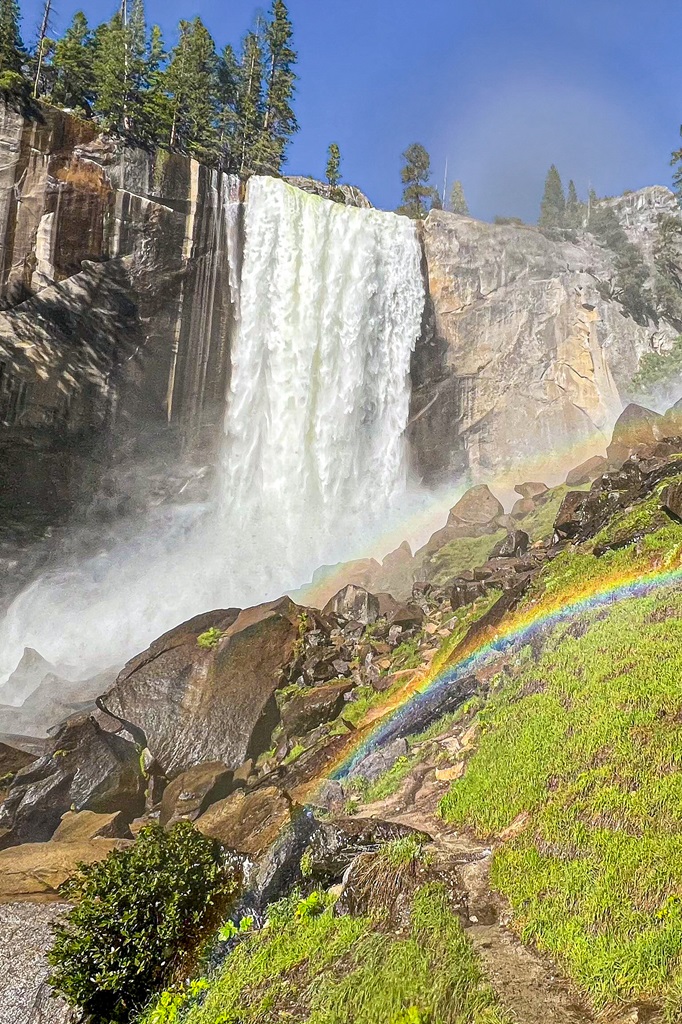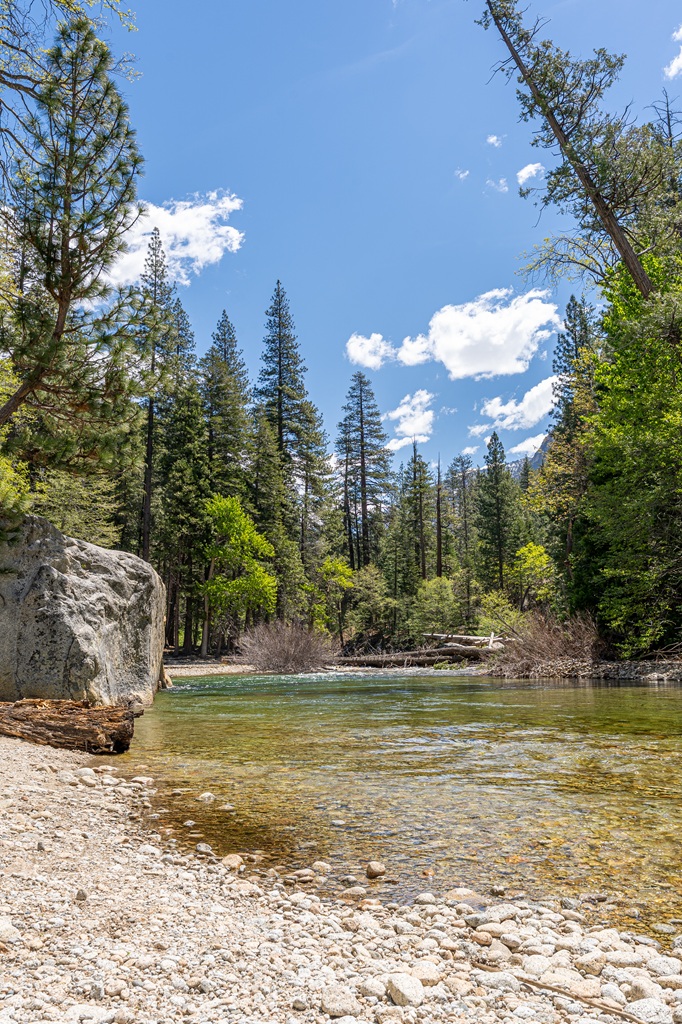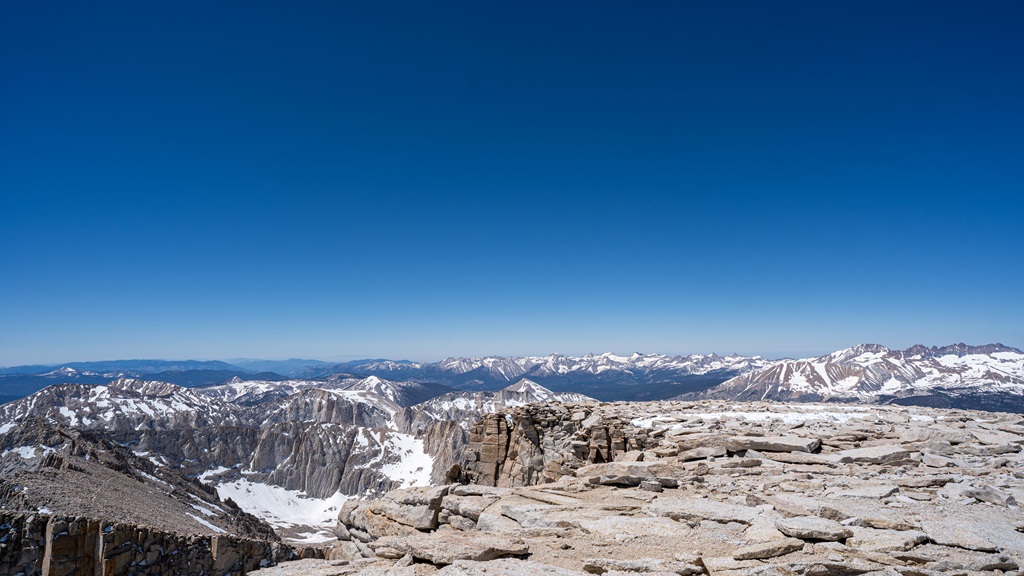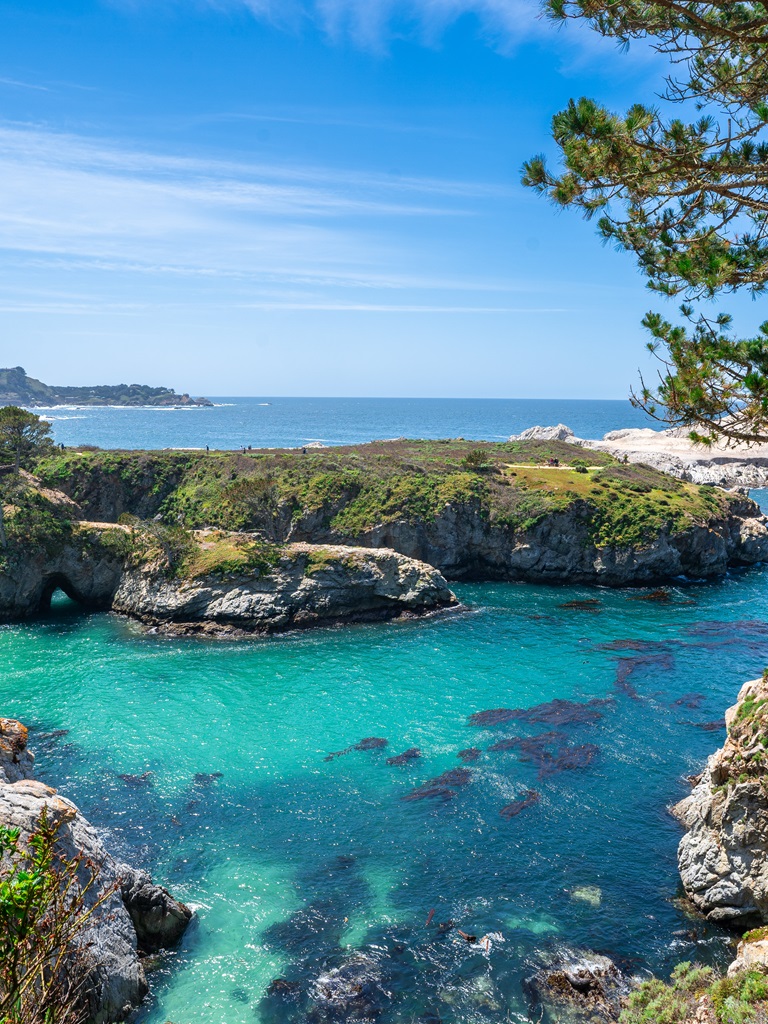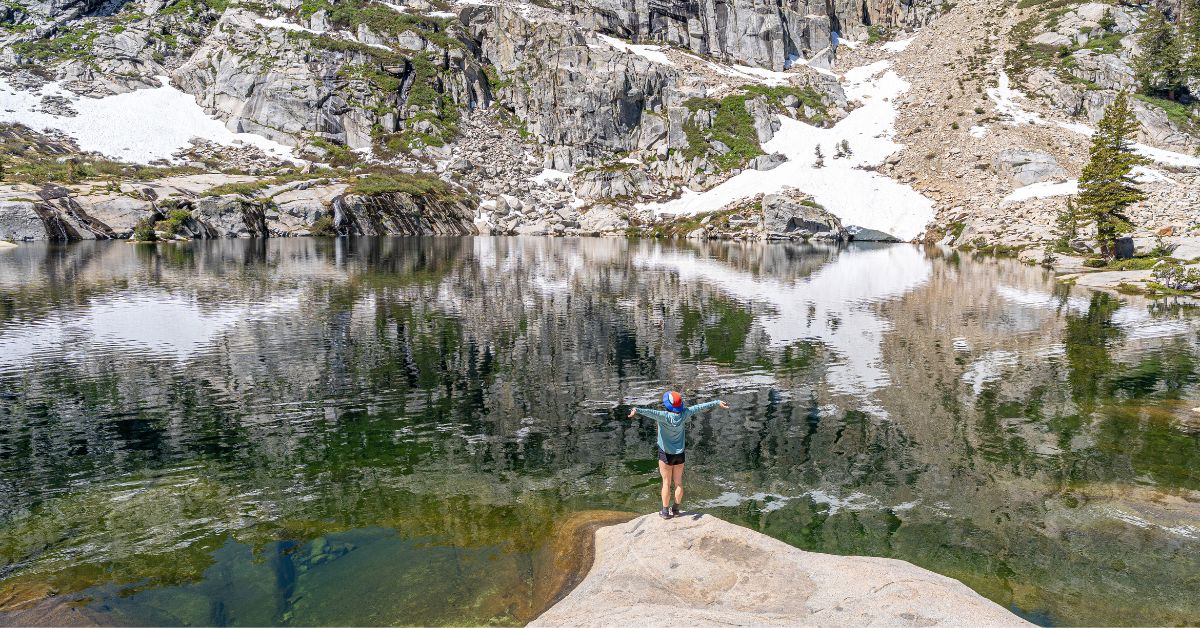
Sequoia National Park is famous for its towering giant sequoias but there’s so much more here than just big trees. This park is also home to crystal-clear alpine lakes, jagged granite peaks, and wide-open meadows! 😍
From the lush foothills and deep canyons to hidden caves and the largest trees on Earth, the variety of landscapes here is unreal! This means the hiking options are just as diverse.
With so many trails to choose from, it’s easy to feel overwhelmed when trying to plan your trip. That’s exactly why I put together this guide to the best hikes in Sequoia National Park.
Whether you’re looking for an easy stroll through giant sequoia groves or a challenging climb to jaw-dropping views, there’s something for you no matter your skill level!
Keep reading to discover the best Sequoia National Park hikes plus everything you need to know before you go. 🥾🌳
Affiliate Disclaimer: Some links on this page may be affiliate links, meaning I may earn a small commission at no extra cost to you. As an Amazon Associate, I earn from qualifying purchases. Thanks for supporting the blog! 🫶
Sequoia National Park Trip Info
📍 Location: California, USA
🗓️ Best Time to Visit: Year-round but most accessible time is May-October
🏞️ Ideal Trip Length: 2–3 days
✈️ Closest Airport: Fresno Yosemite International (2 to 2.5 hours away)
🏨 Where to Stay: Wuksachi Lodge in Sequoia, John Muir Lodge in Kings Canyon, or Lazy J Ranch Motel, Buckeye Tree Lodge, and AutoCamp Sequoia in Three Rivers
🚙 Getting Around: Rent a vehicle from rentalcars.com or discovercars.com
💵 Entrance Fee: $35 per vehicle (7 days) or buy an America the Beautiful Pass (covers the entrance fee for 1 year). There are new non-resident fees – learn more here
🤩 Check out my Sequoia National Park Guide for more travel, hiking, and seasonal guides
Best Hikes in Sequoia National Park
Before heading out on any of these hikes in Sequoia National Park, be sure to check current trail conditions on the park’s official website. Trails can close unexpectedly for a variety of reasons, usually for your safety or trail repairs.
I also like to check recent reviews on AllTrails to get a feel for what conditions are actually like and what to expect along the way.
I’ve also got more helpful tips for hiking in Sequoia below, so keep reading to make sure you’re fully prepared before you hit the trail.
Ok, let’s get into the best trails in Sequoia National Park! 👇
1. Tokopah Falls Trail

Length: 4 miles (6.4 km) roundtrip
Elevation Gain: 540-600 feet
Difficulty: Moderately challenging
Hiking Time: 2 to 2.5 hours
Route Type: Out-and-back
Pet-friendly? No
Wheelchair Accessible? No
Highlights: The Watchtower, Tokopah Valley, Marble Fork of the Kaweah River, and Tokopah Falls
✨ READ THIS: Tokopah Falls Hiking Guide
Tokopah Falls Trail is a moderately challenging and relatively short hike near the Lodgepole Campground. This stunning trail leads you to a 1,200-foot waterfall – Tokopah Falls.
The trail follows the Marble Fork of the Kaweah River as it winds through a scenic canyon. You’ll pass by towering granite walls, beautiful meadows, and peaceful pine forests.
It’s well-maintained with a gradual incline, making it a great option for just about anyone. I’ve seen hikers of all ages on this trail!
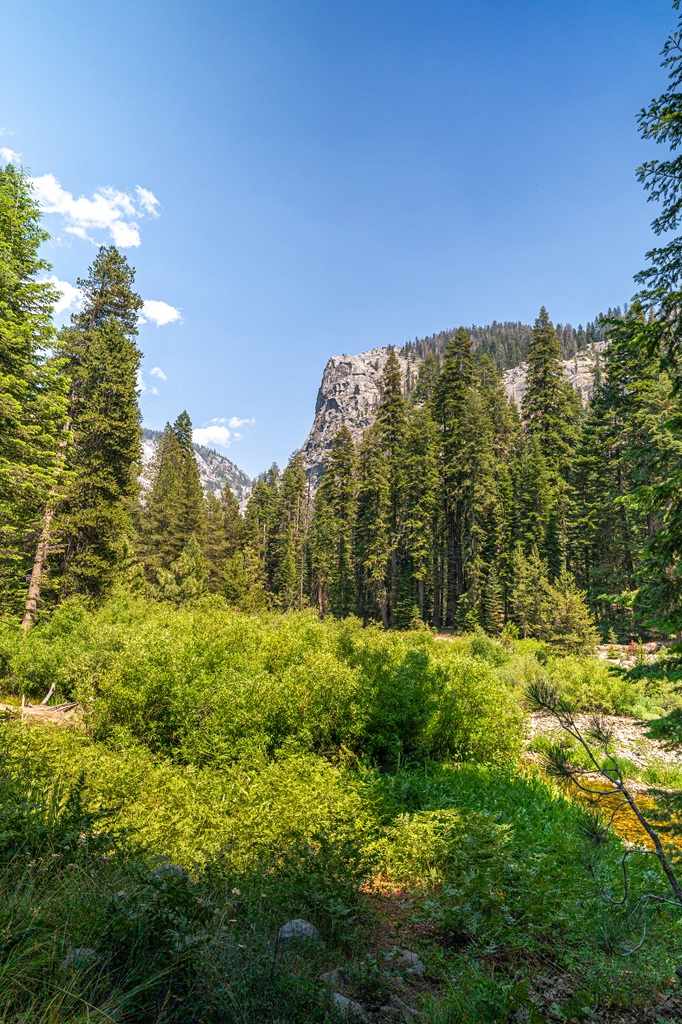
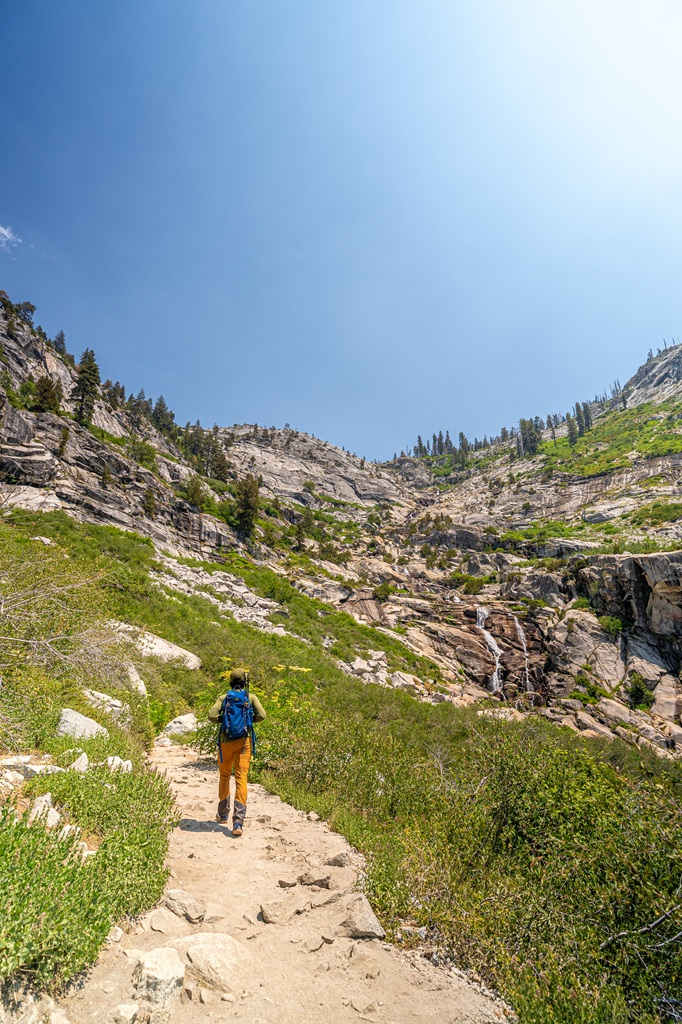
This is one of my favorite hikes in the park, especially in late summer when the river is safe for swimming! Always use caution if planning to take a dip in one of the many swimming holes along the trail.
🅿️ Tokopah Falls Trailhead/Parking: The Tokopah Falls Trailhead is located in the Lodgepole Campground near the Lodgepole Visitor Center, and parking is usually manageable thanks to a large overflow lot nearby. You will also find flush toilets and potable water near the trailhead.
📍 Google Maps Location: Tokopah Falls Trailhead
🚌 Shuttle Info: In the summer, you can also take the free Sequoia Shuttle, which stops at both the Lodgepole Visitor Center and Lodgepole Campground.
2. Congress Trail
Length: 2.8 miles (4.5 km) roundtrip
Elevation Gain: 460 feet
Difficulty: Moderately challenging
Hiking Time: 1 to 1.5 hours
Route Type: Lollipop
Pet-friendly? No
Wheelchair Accessible? No
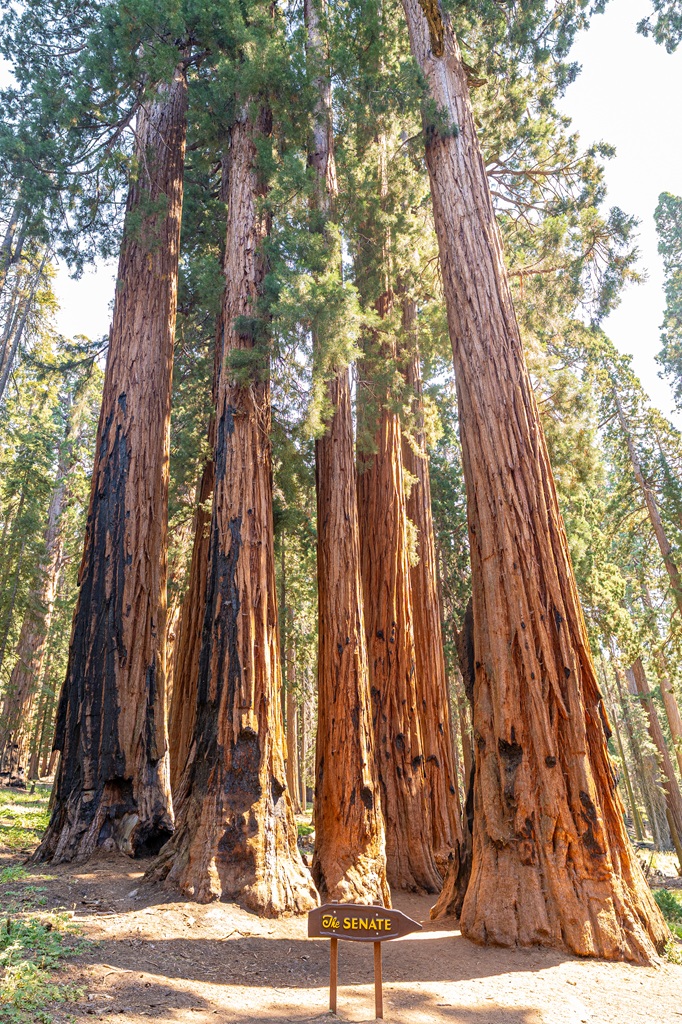
Highlights: Chief Sequoyah, The President Tree, The Senate Group, The House Group, Room Tree, and McKinley Tree
✨ READ THIS: Congress Trail Hiking Guide
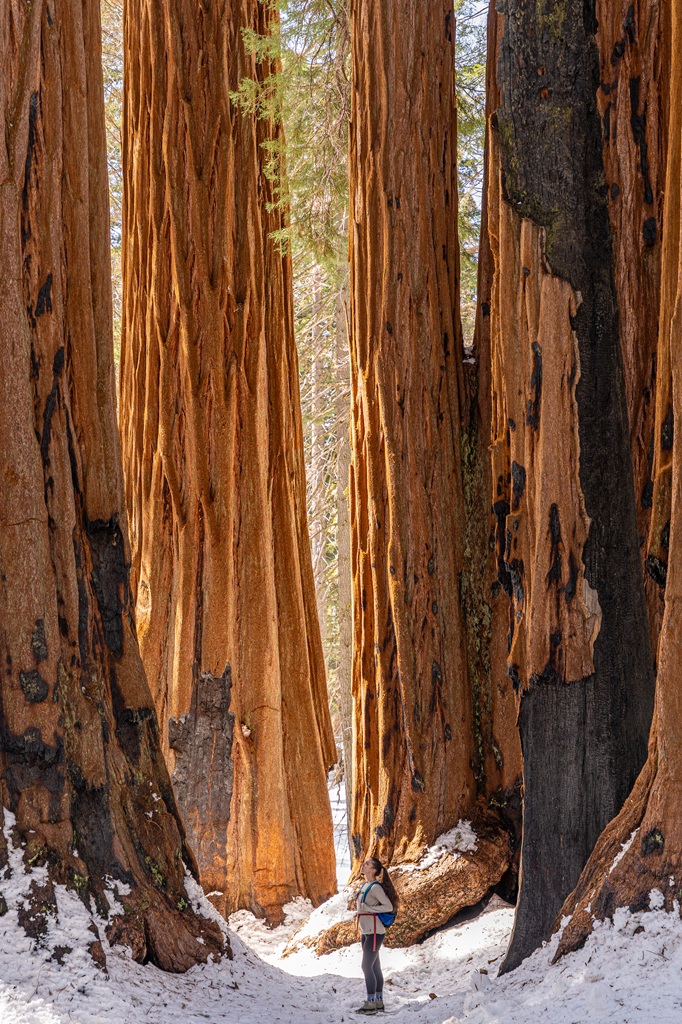
The Congress Trail is a scenic loop that winds through the heart of the Giant Forest in Sequoia National Park. This is by far the best hike in the park if you want to see giant sequoias!
🌳 Congress Trail highlights:
- The President Tree – The third-largest tree in the world by volume and believed to be around 3,200 years old.
- Chief Sequoyah – The ninth-largest tree in the Giant Forest, named in honor of the Cherokee leader who created the Cherokee syllabary.
- The Senate Group and The House Group – Towering clusters of giant sequoias named in the 1920s.
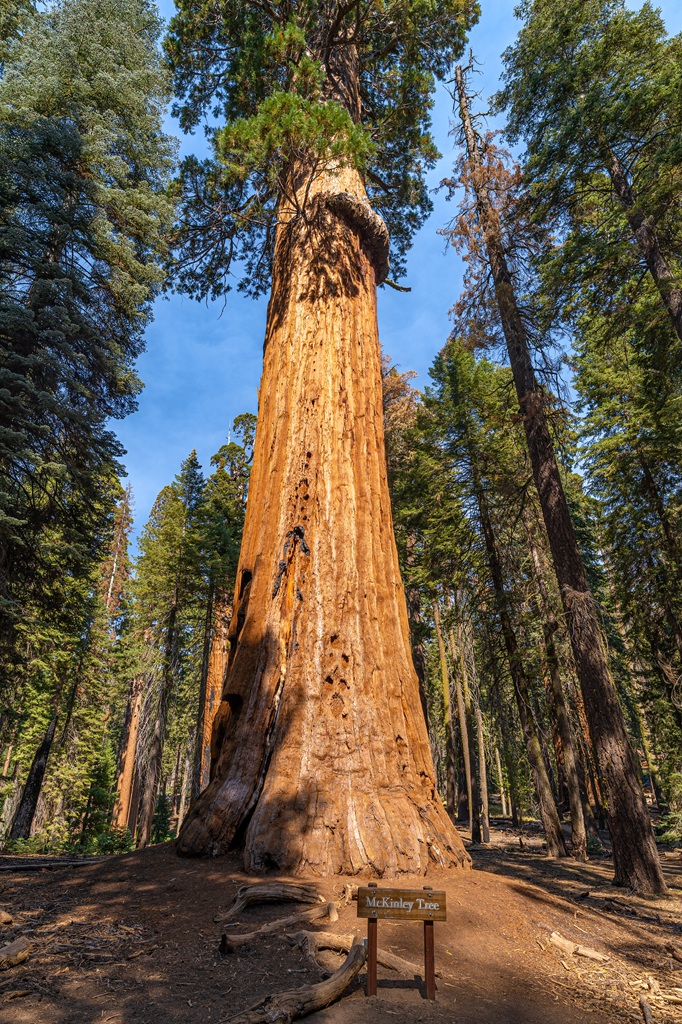
- McKinley Tree – Standing over 240 feet tall, this massive sequoia sits near a five-way junction along the trail and is easy to spot thanks to its impressive height.
- Room Tree – A hollow giant sequoia you can actually step inside. The opening at the base was naturally formed by fire damage over time (not carved out).
I highly recommend combining the General Sherman Tree Trail and Congress Trail. They’re right there together and a great option for first time visitors who want to see lots of stunning giant sequoias!

🅿️ Congress Trail Starting Point/Parking: The main access point for the Congress Trail is the Sherman Tree Trailhead, located off Wolverton Road about 10 minutes south of the Lodgepole Visitor Center.
From the trailhead, you will follow a paved path downhill. You will see a sign indicating the start of the Congress Trail on the left. You can go ahead and start the hike or continue along the paved path to see the General Sherman Tree, largest tree in the world by volume, first. After seeing General Sherman, then you can retrace your steps to start the Congress Trail.
The main parking lot at the Sherman Tree Trailhead has restrooms and drinking water, and there’s also a smaller accessible parking area off Generals Highway (you can only park here if you have a disability placard). This smaller lot is open to everyone during winter when the main trailhead is closed due to snow, and it also has restrooms available.
📍 Google Maps Location: Congress Trail Trailhead
🚌 Shuttle Info: If you’re visiting during the busy season (usually late May through early September), the free Sequoia Shuttle is a great way to reach one of the starting points. Route 1 (Green) stops at the accessible parking area, while Route 4 (Orange) takes you to both the Sherman Tree Trailhead and the accessible lot.
3. General Sherman Tree Trail

Length: 1.1 miles (1.7 km) roundtrip
Elevation Gain: 190 feet
Difficulty: Easy to moderate
Hiking Time: 30 to 45 minutes
Route Type: Lollipop
Pet-friendly? No
Wheelchair Accessible? Yes, via the wheelchair-accessible route
Highlights: General Sherman Tree
✨ READ THIS: General Sherman Tree Hiking Guide
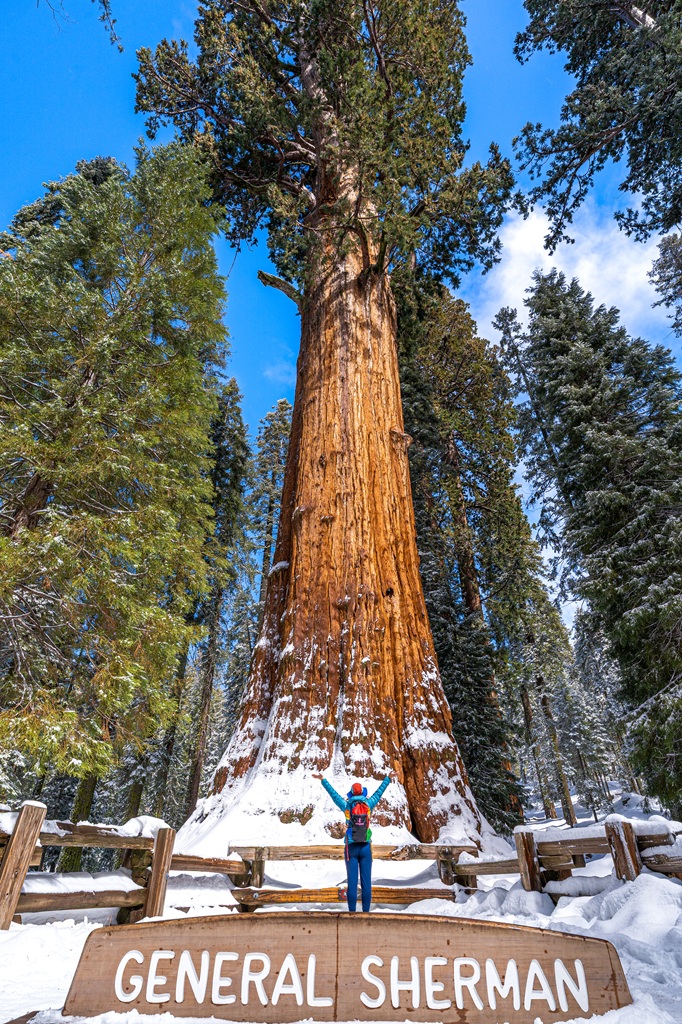
The General Sherman Tree is a must-see when visiting Sequoia National Park for the first time! Standing over 275 feet tall, more than 36 feet wide at the base, and weighing close to 1,400 tons, it’s the largest tree in the world by volume.
Estimated to be over 2,000 years old, it was given the title as the largest tree (by volume) in 1931. And it’s still growing every day, adding enough wood each year to equal a 60-foot-tall tree!
There’s a great photo spot near the base of the tree, and yes, there’s usually a line. It is the most popular tourist attraction in Sequoia after all. Just be sure to stay behind the fence! The barriers are there to protect the tree’s fragile root system.
If you’re able, I highly recommend hiking the Congress Trail next! The start of the trail is located just a short walk from the General Sherman. It’ll lead you deeper in the Giant Forest where you’ll pass many incredible giant sequoias.
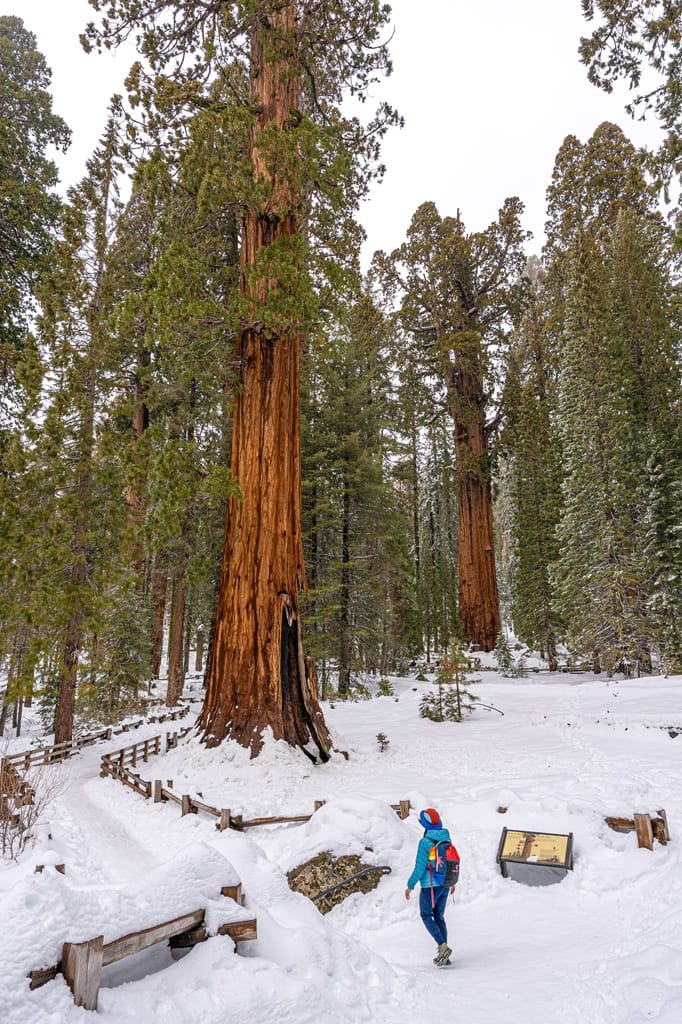
🅿️ General Sherman Tree Trailhead/Parking: The main access point is the General Sherman Tree Trailhead, located off Wolverton Road about 10 minutes south of the Lodgepole Visitor Center. The main parking lot has restrooms and drinking water. There’s also a smaller accessible parking lot off Generals Highway for easier access to the General Sherman Tree.
While the accessible lot is reserved for those with a disability placard during the peak season, it’s opens to all visitors in winter. This lot has limited spots, so if you’re visiting during the winter months, get there early to snag a spot. Restrooms are available here as well.
A wheelchair-accessible paved path leads to the General Sherman Tree from the small accessible parking lot. This path is about 500 feet in length and gently sloped.
📍 Google Maps Location: General Sherman Tree Trailhead (main parking lot)
🚌 Shuttle Info: During the busy season (late May through early September), the free Sequoia Shuttle is the easiest way to visit. Route 1 (Green) stops at the accessible parking area, while Route 4 (Orange) services both the Sherman Tree Trailhead and the accessible lot.
4. Moro Rock

Length: 0.5 miles (0.8 km) roundtrip
Elevation Gain: 185 feet
Difficulty: Moderate to hard
Hiking Time: 30 minutes to 1 hour
Route Type: Out-and-back
Pet-friendly? No
Wheelchair Accessible? No
Highlights: Moro Rock, 350+ steps, and stunning views from the top
✨ READ THIS: Moro Rock Hiking Guide
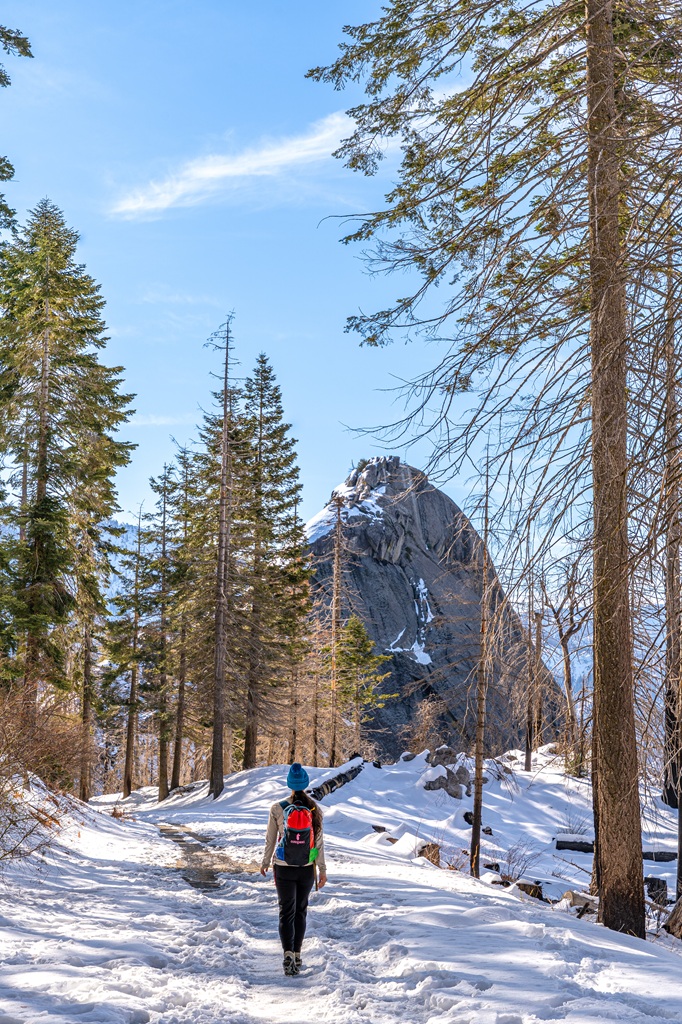
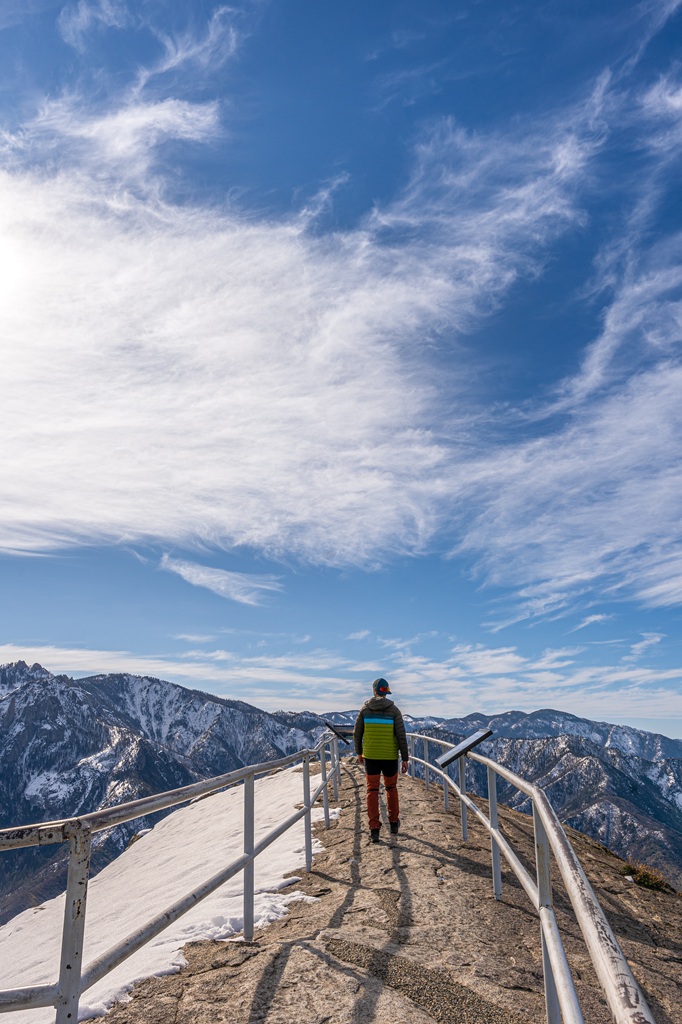
Moro Rock is one of the most iconic landmarks in Sequoia National Park! Sitting at 6,725 feet, this massive granite dome delivers incredible 360° views on a clear day, stretching across the Great Western Divide, the San Joaquin Valley, and deep into the surrounding wilderness.
Geologically, Moro Rock formed millions of years ago from cooled underground magma. Over time, erosion wore away the softer rock around it, leaving this dramatic granite dome exposed and standing high above the forest.
The hike is short but intense with over 350 steps carved into the rock. As you ascend, the forest drops away below you and the views just keep getting bigger and better the higher you go.
Despite the effort, this is a must-do hike. And watching sunrise or sunset from the top is one of the best things to do in Sequoia National Park!
🅿️ Moro Rock Trailhead/Parking: The Moro Rock Trailhead is located off Moro Rock / Crescent Meadow Road, where you’ll find a small parking lot that fills up quickly during peak months. Arriving early is your best bet for getting a spot.
📍 Google Maps Location: Moro Rock Trailhead
🚌 Shuttle Info: If the lot is full, the free Sequoia Shuttle is another way to reach the trailhead. A good strategy is to park at the Giant Forest Museum and take the shuttle from there. You can also take the shuttle to other popular spots in Sequoia from the Giant Forest Museum so you don’t have to stress about driving and parking.
On weekends, the road to Moro Rock closes to private vehicles, so the shuttle is your only option. On weekdays, the road is fully open. Be aware that during the winter months, the road remains closed for the season.
🥾 Alternate Route: If you really want to get your steps in, you can also park at the Giant Forest Museum and hike the Moro Rock Trail. This route is about 3.8 miles (6.1 km) roundtrip with 475 feet of elevation gain.
5. General Sherman Tree, Congress Trail, Trail of the Sequoias, and Tharp’s Log Loop
Length: 7.1 miles (11.4 km) roundtrip
Elevation Gain: 1,240 feet
Difficulty: Moderately challenging
Hiking Time: 3.5 to 4 hours
Route Type: Loop
Pet-friendly? No
Wheelchair Accessible? No
Highlights: General Sherman Tree, many giant sequoias, Tharp’s Log
🥾 General Sherman + Congress + Trail of Sequoias + Tharp’s Log Loop Trail Map
I have yet to hike this route and I don’t know why!! It combines several beautiful trails into one big loop.
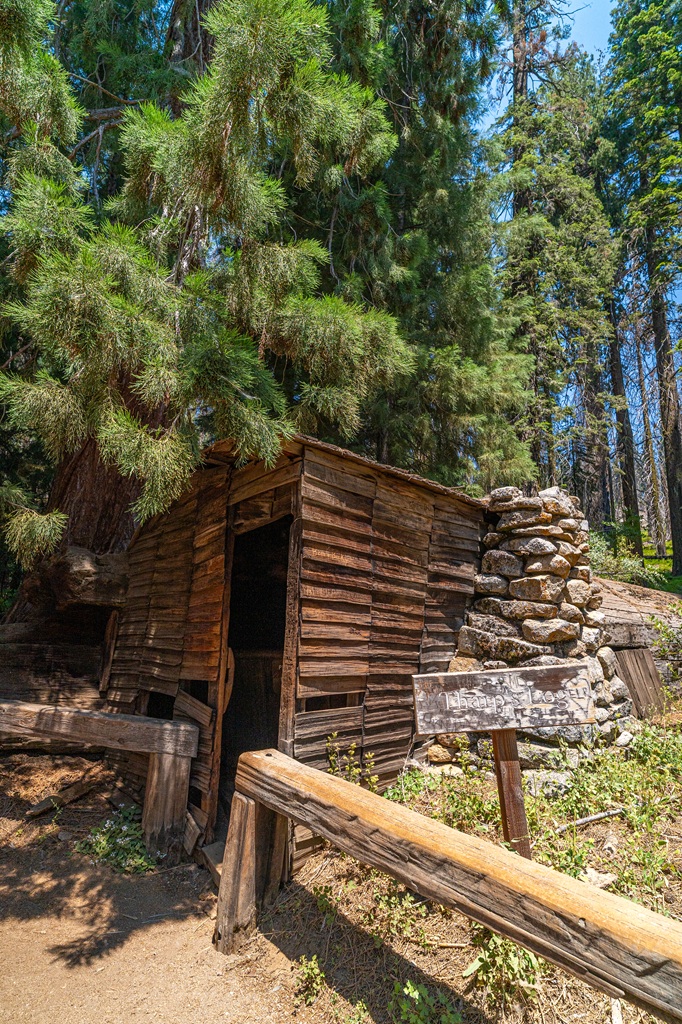
This route starts off along the General Sherman Tree Trail, connects to the Congress Trail where you’ll see the President Tree and Chief Sequoyah, then you’ll hop onto the Trail of the Sequoias where it’ll eventually merge onto the Tharp’s Log Trail where you’ll see Tharp’s Log which is really cool.
You’ll follow this trail until it connects to the Washington Tree Trail then you’ll merge onto an unnamed trail (on AllTrails there is no name) but you know you’re on the right path when you pass the Black Arch Tree and Cattle Cabin.
You’ll hop back onto the Congress Trail and finish up on the General Sherman Tree Trail. Might sound confusing because of all the different trails but if you download the AllTrails offline map, you shouldn’t have any trouble!
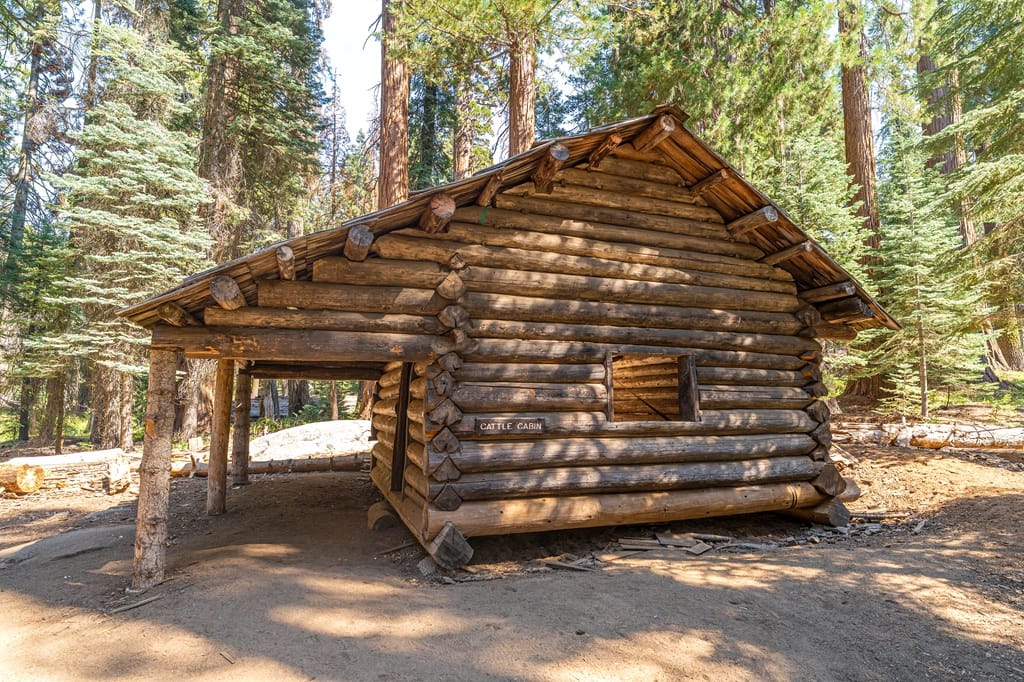
This route is on the top of my list next time I visit Sequoia National Park. I’ll let you know how it goes once I complete it. 😄
🅿️ Trailhead/Parking: This hike starts from the General Sherman Tree Trailhead, located off Wolverton Road about 10 minutes south of the Lodgepole Visitor Center. This parking lot has restrooms and drinking water.
📍 Google Maps Location: General Sherman Tree Trailhead
🚌 Shuttle Info: During the busy season (late May through early September), the free Sequoia Shuttle is a great way to reach the Sherman Tree Trailhead if the parking lot is full. Route 4 (Orange) takes you to the Sherman Tree Trailhead, but you will have to hop on Route 1 (Green) to connect to Route 4 (Orange).
6. Big Trees Trail

Length: 1.2 miles (1.9 km) roundtrip
Elevation Gain: 105 feet
Difficulty: Easy
Hiking Time: 30 minutes to 1 hour
Route Type: Loop
Pet-friendly? No
Wheelchair Accessible? Yes
Highlights: Sentinel Tree, Clara Barton Tree, giant sequoia trees, and Round Meadow
✨ READ THIS: Big Trees Trail Hiking Guide
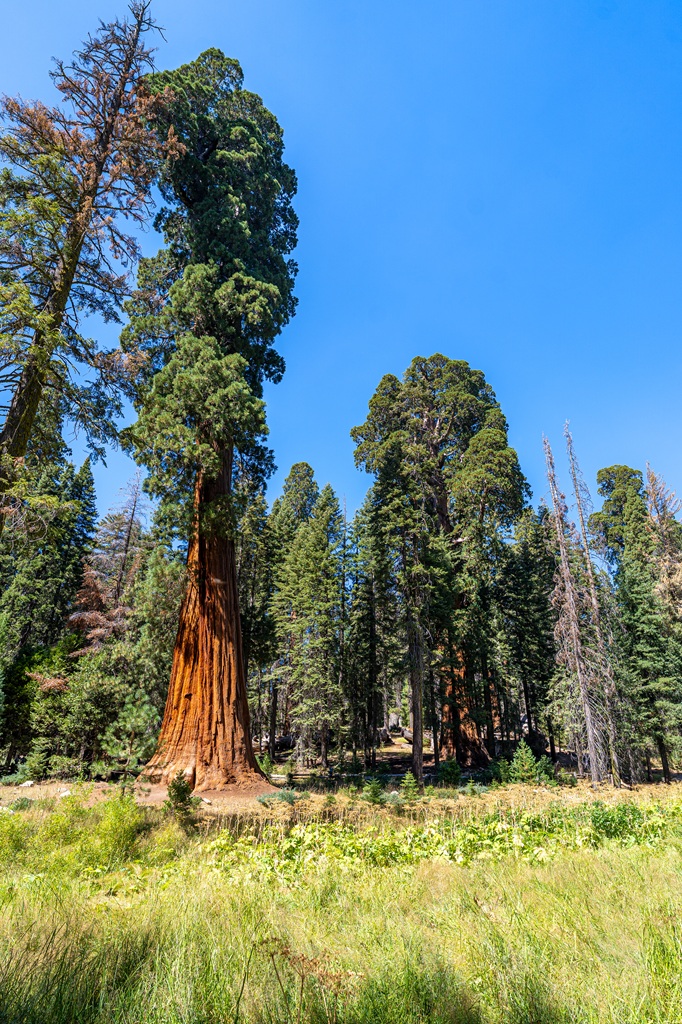
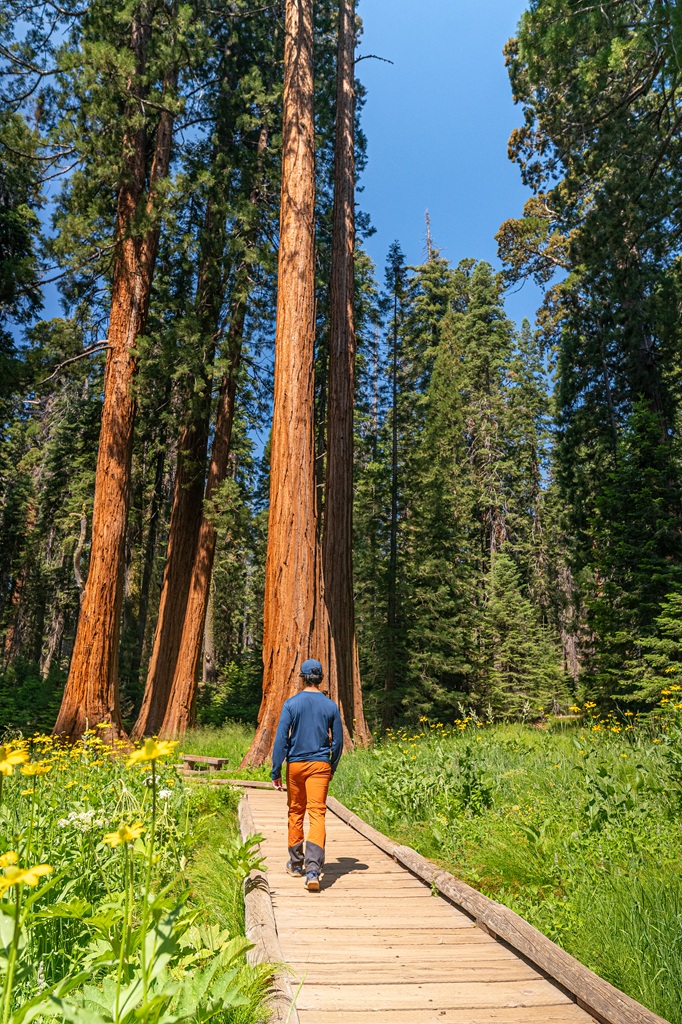
The Big Trees Trail is one of the easiest and most scenic walks in Sequoia National Park. This flat, mostly paved loop makes it super accessible for visitors of all ages and abilities with benches along the way to rest and soak in the views.
On this hike you will pass by the Giant Forest Museum, Sentinel Tree, Clara Barton Tree, Round Meadow, and interpretive signs where you’ll learn more about the giant sequoia ecosystem.
If you’re looking for the ultimate day of exploring giant sequoias, add the Big Trees Trail with the General Sherman Tree Trail and the Congress Trail to your 1-day Sequoia National Park itinerary. Together, they make for an unforgettable experience walking among some of the largest trees on Earth!
🅿️ Big Trees Trailhead/Parking: The Big Trees Trailhead is located just down the road from the Giant Forest Museum, near Round Meadow. The main parking area sits across from the museum, and from there it’s an easy 0.3-mile (0.4 km) paved walk to reach the trailhead. Vault toilets and drinking water are available near the museum.
There’s also a small parking lot right at the trailhead with a few designated accessible spaces. In summer, this lot is reserved for visitors with disability placards. In winter, the accessible lot is open to everyone.
📍 Google Maps Location: Big Trees Trailhead
🚌 Shuttle Info: During peak season (late May through early September), the free shuttle system is a great way to reach the Giant Forest Museum. Route 1 (Green) stops at the Giant Forest Museum. You may have to transfer from one shuttle bus to another to reach the museum. Make sure to check out the shuttle bus map!
7. Lakes Trail and Watchtower Trail to Pear Lake
Length: 13 miles (20.9 km) roundtrip
Elevation Gain: 3,200 feet
Difficulty: Challenging
Hiking Time: 6 to 8 hours
Route Type: Out-and-back
Pet-friendly? No
Wheelchair Accessible? No
Highlights: Watchtower, Heather Lake, Aster Lake, Emerald Lake, and Pear Lake
✨ READ THIS: Lakes Trail Hiking Guide
The Lakes Trail, located in the Giant Forest/Lodgepole area of Sequoia National Park, is one of the best hikes in the park! I feel like I say this about a lot of the hikes. They’re all so amazing!
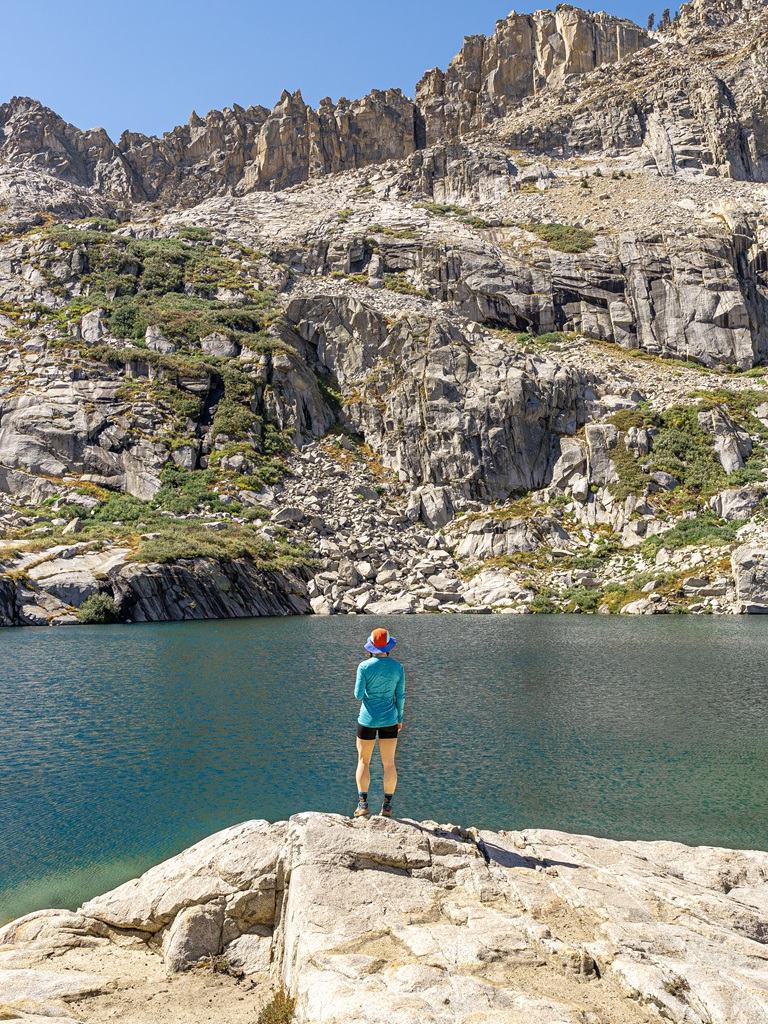
Anyway, it leads you past a series of stunning alpine lakes, including Heather Lake, Aster Lake, Emerald Lake, and Pear Lake.
The trail begins at about 7,300 feet and climbs steadily up to Pear Lake at 9,550 feet. Because of the elevation, altitude sickness can be a real concern if you’re not acclimated, so it’s important to take your time, stay hydrated, and know your limits.
If you’re hiking in winter, the Watchtower Trail is closed, but the Lakes Trail itself is open year-round, just make sure to check current trail conditions. Hikers must use the Hump Trail instead to reach the lakes.
You don’t have to hike the entire route to enjoy it. Many hikers turn around at Heather Lake (8 miles / 12.8 km roundtrip) or Emerald Lake (10.4 miles / 16.7 km roundtrip). It’s still a challenging trek no matter how far you go, but totally worth every step!
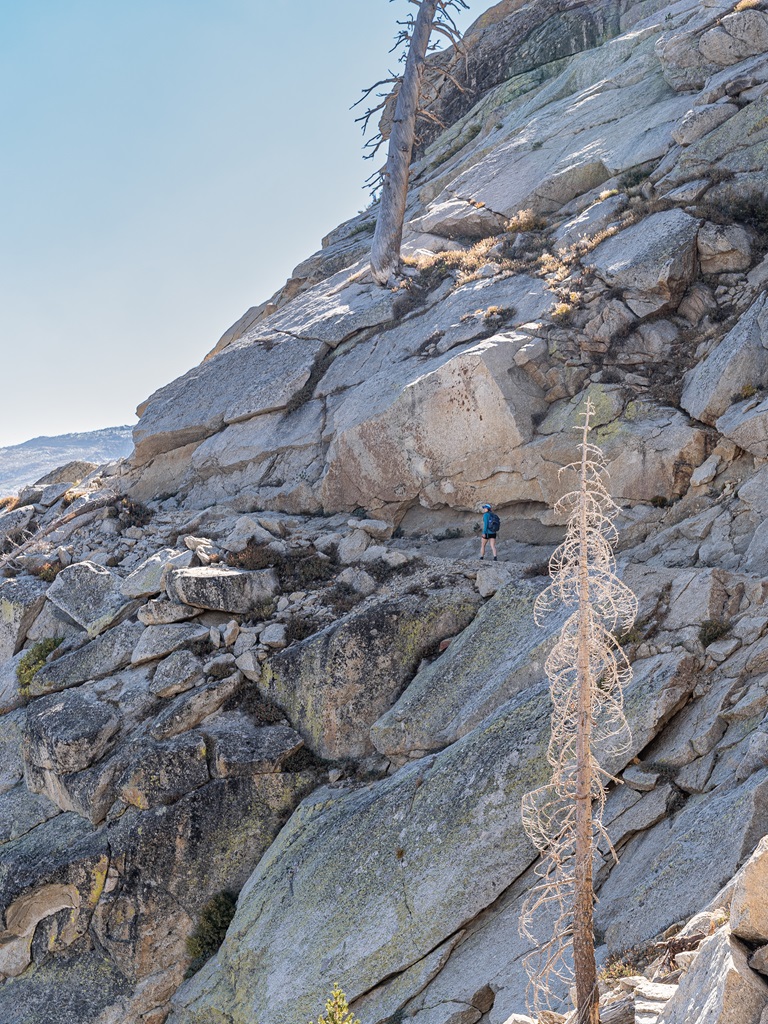
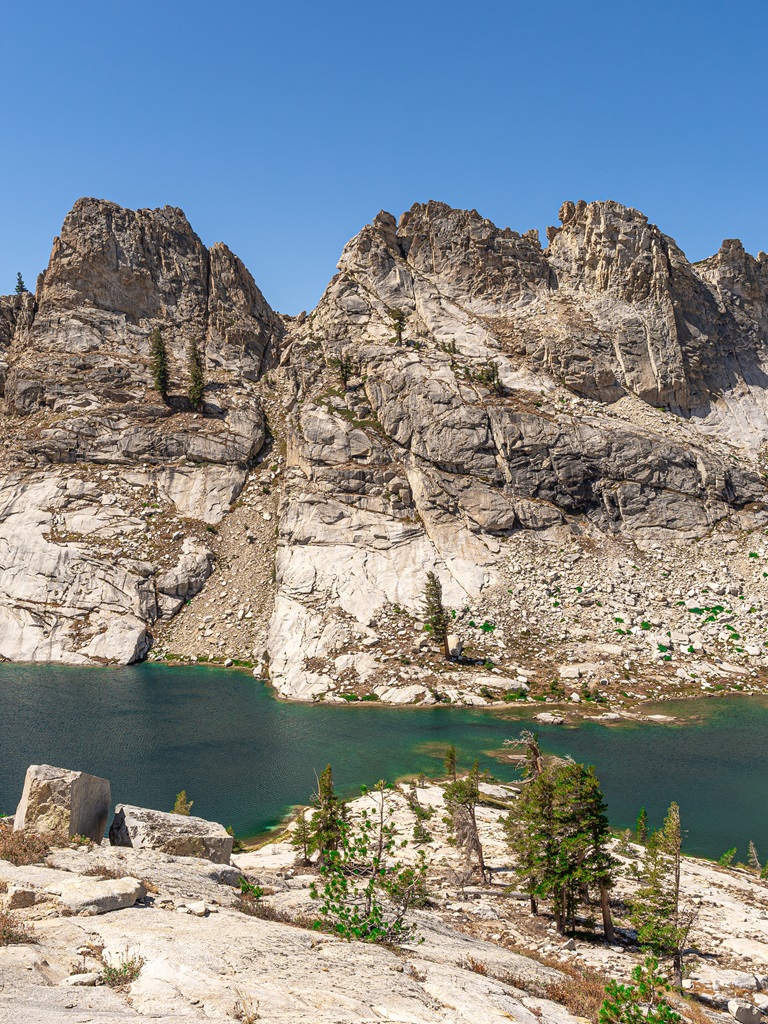
🥾 Route Options: In the summer, I highly recommend taking the Watchtower Trail instead of the Hump Trail. It’s incredibly scenic! However, if you have a strong fear of heights, the Hump Trail might be the better choice.
The Watchtower section is wide enough where I personally felt 100% safe, but it does have steep drops without guardrails, which can feel a bit intimidating for some hikers. If you’re okay with mild exposure, the views are absolutely worth it, but if not, the Hump Trail is a great alternative – just be prepared for a climb!
🅿️ Lakes Trail Trailhead/Parking: The trail starts at the Wolverton Trailhead (also known as the Lakes Trail Trailhead) at the end of Wolverton Road. The parking lot is large, but it can still fill up quickly during peak season. Restrooms, trash cans, and bear boxes are available on-site.
📍 Google Maps Location: Lakes Trail Trailhead/Wolverton Trailhead
🚌 Shuttle Info: During peak season (late May through early September), you can take the Sequoia Shuttle to the Wolverton parking area. You will have to transfer from one shuttle bus to another to reach the trailhead parking. Make sure to check out the shuttle bus map!
8. Marble Falls Trail
Length: 6.5 miles (10.4 km) roundtrip
Elevation Gain: 1,500 feet
Difficulty: Moderate to hard
Hiking Time: 3.5 to 4.5 hours
Route Type: Out-and-back
Pet-friendly? No
Wheelchair Accessible? No
Highlights: Marble Falls
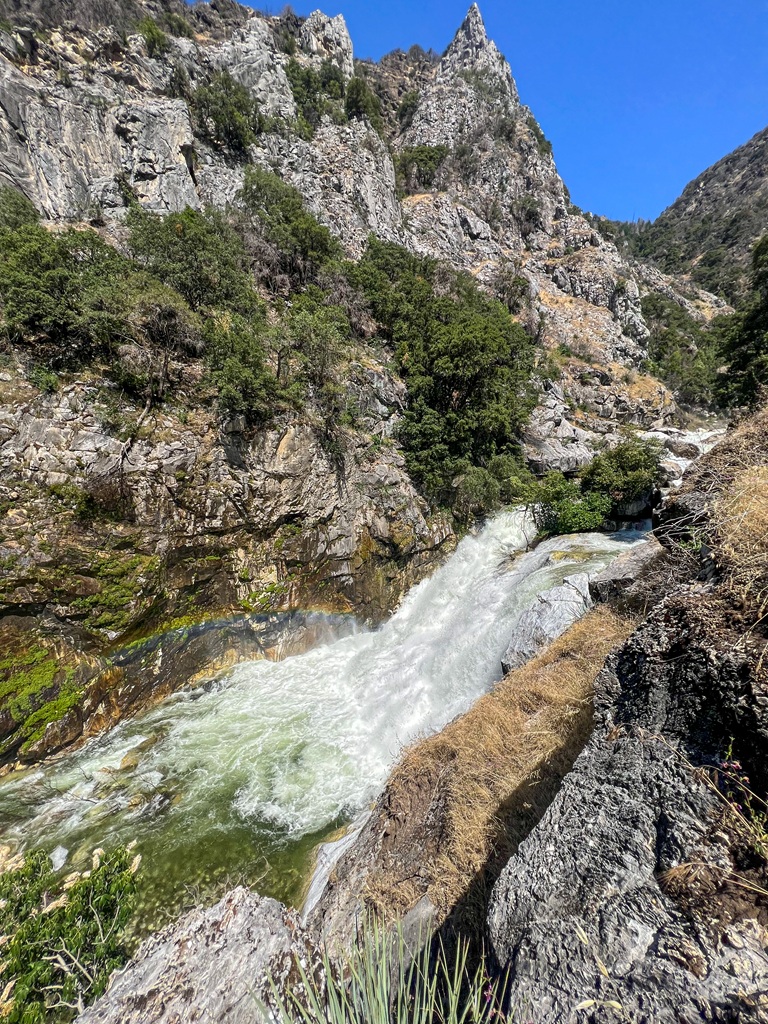
Marble Falls is a great hike in the foothills of Sequoia National Park! The route winds through a deep canyon filled with chaparral and woodland, passing oak and dogwood trees along the way.
As you climb the switchbacks, you’ll start to hear the Marble Fork of the Kaweah River echoing through the canyon. Near the end, the trail levels out and opens up to Marble Falls – a series of cascades with a total drop of about 510 feet.
I’ve only hiked this trail once in the summer and the heat was brutal, so early spring, fall, and winter seems like the best times to go. Summer is doable, just start early to beat the heat, wear sun protective clothing, and bring plenty of water and salty snacks!
🅿️ Marble Falls Trailhead/Parking: Parking for the trailhead is located near campsite #14 at Potwisha Campground. If that area is full, there’s additional parking available across Generals Highway in the Potwisha Overflow Parking Lot.
📍 Google Maps Location: Marble Falls Trailhead
🚌 Shuttle Info: There is no shuttle access.
9. Little Baldy Trail
Length: 3.4 miles (5.4 km) roundtrip
Elevation Gain: 800 feet
Difficulty: Moderately challenging
Hiking Time: 1.5 to 2.5 hours
Route Type: Out-and-back
Pet-friendly? No
Wheelchair Accessible? No
Highlights: Little Baldy Dome (also called Little Baldy Peak)
Little Baldy Trail is an incredible short hike in Sequoia National Park that leads to one of the best panoramic viewpoints in the area. Sitting at 8,044 feet, Little Baldy Dome offers jaw-dropping views of the Silliman Crest, the Great Western Divide, and the surrounding wilderness.
The trail climbs steadily via a series of switchbacks to the top of the granite dome. It’s not a strenuous climb but can be tough for some at that elevation. Just take your time and rest as much as you need. And don’t forget to stay hydrated!
At the summit, you’ll be treated to 360° views that’s especially magical at sunrise or sunset.
🅿️ Little Baldy Trailhead/Parking: The Little Baldy Trailhead is located 6 miles north of Lodgepole, just off Generals Highway. Parking is available in paved pullouts on either side of the highway near the trailhead.
📍 Google Maps Location: Little Baldy Trailhead
🚌 Shuttle Info: There is no shuttle access.
10. Alta Peak

Length: 14 miles (22.5 km) roundtrip
Elevation Gain: 4,000 feet
Difficulty: Challenging
Hiking Time: 8 to 10 hours
Route Type: Out-and-back
Pet-friendly? No
Wheelchair Accessible? No
Highlights: Panther Gap, Mehrten Meadow, Alta Meadow (side quest), Tharps Rock, and Alta Peak summit
✨ READ THIS: Alta Peak Hiking Guide
If you’re a peak bagger visiting Sequoia National Park, the Alta Peak Trail is one you’ll definitely want to add to your bucket list!
Standing at 11,204 feet, Alta Peak delivers some of the most jaw-dropping views in the park. From the summit, you get sweeping panoramas of the Great Western Divide, the Kaweah Peaks, the Tablelands, and countless rugged peaks in the Sierra Nevada wilderness.
If you’re well-acclimated and start early, this can absolutely be done as a long but rewarding day hike. It’ll be tough but worth it!
For those who want to take it slower, this is a great 1-night backpacking trip! There are backcountry campsites along the route at Panther Gap, Mehrten Meadow, and Alta Meadow.


I’ve only summited Alta Peak once in 2024, and I’m already itching to go back. The whole hike was stunning from start to finish, even though wildfire smoke made the summit views a bit hazy. I’d love to do it again on a clear day!
Update!! I recently hiked this trail in June 2026, and it was amazing! It was just as hard as the first time, but so worth it. The views of the Great Western Divide were unreal. There was even a fun summit sign at the top which was not there in 2024.
🅿️ Alta Peak Trailhead/Parking: The trail starts at the Alta Peak Trailhead (also known as the Wolverton Trailhead) at the end of Wolverton Road. The parking lot is large, but it can still fill up quickly during peak season. Restrooms, trash cans, and bear boxes are available on-site
📍 Google Maps Location: Alta Peak Trailhead
🚌 Shuttle Info: During peak season (late May through early September), you can take the Sequoia Shuttle to the Wolverton parking area. You will have to transfer from one shuttle bus to another to reach the trailhead parking. Make sure to check out the shuttle bus map!
11. Crescent Meadow Loop

Length: 1.3 miles (2 km) roundtrip
Elevation Gain: 130 feet
Difficulty: Easy
Hiking Time: 30 minutes to 1 hour
Route Type: Loop
Pet-friendly? No
Wheelchair Accessible? “The trail is partially paved and may be accessible, depending on abilities” – NPS
Highlights: Crescent Meadow, Cleveland Tree, and Chimney Tree
✨ READ THIS: Crescent Meadow Loop Hiking Guide
The Crescent Meadow Loop Trail in Sequoia National Park is a peaceful, underrated hike that feels like a hidden gem. It’s an easy, family-friendly loop that winds through towering giant sequoias and wide open meadows.
Along the way, keep an eye out for wildlife, especially black bears, which are often spotted grazing in the meadows. We saw a young black bear the first time we ever hiked this trail in 2025!


🅿️ Crescent Meadow Trailhead/Parking: The Crescent Meadow Trailhead, also known as the High Sierra Trailhead, is located at the very end of Crescent Meadow Road, about 2.6 miles from the Giant Forest Museum. There are restrooms and picnic tables available at the trailhead.
On weekdays in summer, you can drive directly to the trailhead, but parking is pretty limited. It’s not a small parking lot, but this area is popular for both day hikers and backpackers. I know I said earlier this trail is underrated (which it is compared to others), but it’s an easily accessible area with picnic tables so it can get pretty busy!
📍 Google Maps Location: Crescent Meadow Trailhead/High Sierra Trailhead
🚌 Shuttle Info: During summer weekends, the road is closed to private vehicles, so the only way to access Crescent Meadow is by taking the Sequoia Shuttle. Check out the shuttle bus map so you know which route to take. Also, beware that during the winter months, the road is closed for the season.
12. Muir Grove Trail
Length: 4.2 miles (6.7 km) roundtrip (add 2-3 miles or 3.2-4.8 km due to current campground closure)
Elevation Gain: 500 feet
Difficulty: Moderately challenging
Hiking Time: 3-4 hours
Route Type: Out-and-back
Pet-friendly? No
Wheelchair Accessible? No
Highlights: Giant sequoia trees
Muir Grove is a beautiful, old-growth sequoia grove. It’s located in a more remote area of Sequoia National Park and receives a lot less visitors as compared to the Giant Forest. If you want to avoid the crowds, this is the place to go!
As you hike along the Muir Grove Trail, you’ll pass a granite dome with amazing views and at the end you’ll reach the grove with stunning giant sequoias.
🅿️ Muir Grove Trailhead/Parking: The trail begins at the Muir Grove Trailhead, which is located inside Dorst Creek Campground. This campground has been closed since 2023 due to winter storm damage. Because of this, you cannot park in the campground. The closest parking is a small lot across the street from the campground off Generals Highway. Starting from here will add 2 miles to the hike (6.2 miles / 9.9 km roundtrip).
Others have also parked at the Little Baldy Trailhead and followed an unmaintained side trail which adds about 3 miles to the hike (7.2 miles / 11.5 km roundtrip).
The official trailhead is located near Dorst Creek’s group site B. If you don’t mind the extra mileage, visiting Muir Grove is definitely worth the extra effort!
📍 Google Maps Location: Muir Grove Trailhead
🚌 Shuttle Info: There is no shuttle access.
13. Twin Lakes Trail
Length: 14 miles (22.5 km) roundtrip
Elevation Gain: 3,230 feet
Difficulty: Challenging
Hiking Time: 7-9 hours
Route Type: Out-and-back
Pet-friendly? No
Wheelchair Accessible? No
Highlights: Cahoon Meadow, Cahoon Gap, and Twin Lakes
Twin Lakes is a beautiful alpine destination tucked beneath the rugged Silliman Crest in Sequoia National Park, and it’s a great option for both ambitious day hikers and backpackers.
Sitting at around 9,446 feet, the lakes feel remote and peaceful, with classic high-country scenery all around. You’ll pass through pine forest, climb over the Cahoon Pass, and eventually tackle rocky, alpine terrain.
The southern lake is larger, while the northern lake is smaller, swampier. At the lakes, you’ll have incredible views of the Twin Peaks.
Most of the established campsites are around the southern lake, along with basic amenities like bear lockers and a pit toilet (wilderness permit required for overnight stays).
🅿️ Twins Lakes Trailhead/Parking: The Twin Lakes Trailhead is located in Lodgepole Campground near the Lodgepole Visitor Center, and parking is usually manageable thanks to a large overflow lot nearby. You will also find flush toilets and potable water near the trailhead.
📍 Google Maps Location: Twin Lakes Trailhead
🚌 Shuttle Info: In the summer, you can also take the free Sequoia Shuttle, which stops at both the Lodgepole Visitor Center and Lodgepole Campground.
14. Sunset Rock
Length: 1.6 miles (2.5 km) roundtrip
Elevation Gain: 150 feet
Difficulty: Easy
Hiking Time: 30 minutes to 1 hour
Route Type: Out-and-back
Pet-friendly? No
Wheelchair Accessible? No
Highlights: Beautiful views from Sunset Rock
Starting from the Giant Forest Museum, the Sunset Rock Trail is a short and scenic hike through a mixed-conifer forest filled with red fir, Jeffrey pine, sugar pine, and incense cedar.
The trail leads up to a large granite dome known as Sunset Rock, where you’re rewarded with sweeping views over the deep canyon carved by the Kaweah River.
As the name suggests, it’s a great spot to catch sunset, at least that’s what I’ve heard. I have not watched sunset from this spot yet nor have I even hiked this trail. I’ll be checking this off my list this summer though!
🅿️ Sunset Rock Trailhead/Parking: The Sunset Rock Trailhead is located across the street from the Giant Forest Museum. A large parking area sits across from the museum. Vault toilets and drinking water are available nearby.
📍 Google Maps Location: Sunset Rock Trailhead
🚌 Shuttle Info: During peak season (late May through early September), the free shuttle system is a great way to reach the Giant Forest Museum. Route 1 (Green) stops at the Giant Forest Museum. You may have to transfer from one shuttle bus to another to reach the museum. Make sure to check out the shuttle bus map!
15. Hanging Rock Trail
Length: 0.3 miles (0.4 km) roundtrip
Elevation Gain: 70 feet
Difficulty: Easy to moderate
Hiking Time: 30 to 45 minutes
Route Type: Out-and-back
Pet-friendly? No
Wheelchair Accessible? No
Highlights: Giant sequoias, Hanging Rock, and stunning panoramic views
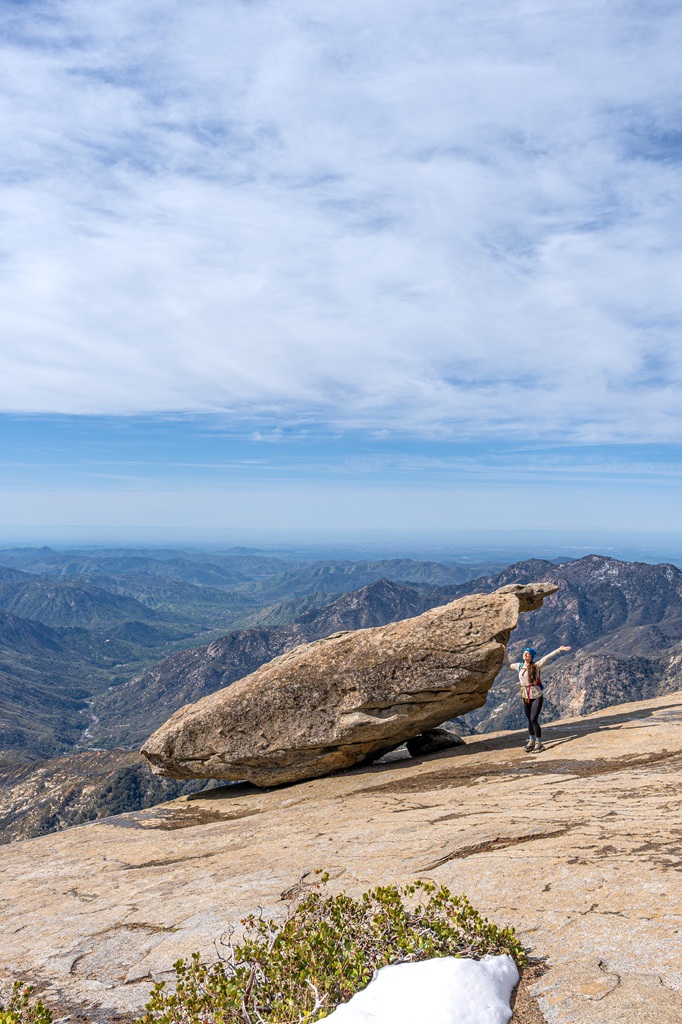
Hanging Rock Trail gets its name from a large, oval-shaped boulder that looks like it’s barely balanced on the edge of a granite cliff. It’s a short, often overlooked hike in Sequoia National Park, but it leads to some really amazing views.
Along the way, you’ll also get a great look at Moro Rock and the surrounding granite domes, plus a few beautiful old giant sequoias near the start of the trail.
At the viewpoint, you’ll see the “hanging” rock itself perched dramatically over the Kaweah River Valley. It’s fun to take a photo with the Hanging Rock. Just be careful near the edge – it’s a long way down!
🅿️ Hanging Rock Trailhead/Parking: The Hanging Rock Trailhead is located off Moro Rock / Crescent Meadow Road, where you’ll find a small parking lot. There’s additional parking at Moro Rock. Both lots are small and fill up quickly, so plan to get there early!
📍 Google Maps Location: Hanging Rock Trailhead
🚌 Shuttle Info: If the lot is full, the free Sequoia Shuttle is another way to reach the trailhead. A good strategy is to park at the Giant Forest Museum and take the shuttle from there. You can also take the shuttle to other popular spots in Sequoia from the Giant Forest Museum so you don’t have to stress about driving and parking.
On weekends, the road to Hanging Rock closes to private vehicles, so the shuttle is your only option. On weekdays, the road is fully open. Also, beware that during the winter months, the road is closed for the season.
16. Beetle Rock Vista
Length: 0.2 miles (0.3 km) roundtrip
Elevation Gain: 25 feet
Difficulty: Easy
Hiking Time: 15 to 30 minutes
Route Type: Out-and-back
Pet-friendly? No
Wheelchair Accessible? Yes
Highlights: Beetle Rock with amazing views
Beetle Rock is one of the shortest hikes in Sequoia National Park that leads to an overlook with incredible views. From the top, you’ll look out over the western edge of the park and across the San Joaquin Valley below.
The paved path is short, straightforward, and easily accessible for visitors of all ages! It’s a great hike to add to your itinerary that won’t take up too much time.
🅿️ Beetle Rock Trailhead/Parking: The Beetle Rock Trailhead is located across the street from the Giant Forest Museum. There’s a large parking area across from the museum. Vault toilets and drinking water are available nearby.
📍 Google Maps Location: Beetle Rock Trailhead
🚌 Shuttle Info: During peak season (late May through early September), the free shuttle system is a great way to reach the Giant Forest Museum. Route 1 (Green) stops at the Giant Forest Museum. You may have to transfer from one shuttle bus to another to reach the museum. Make sure to check out the shuttle bus map!
Sequoia National Park Hikes Map
Below you’ll find a map of the best hikes in Sequoia National Park, organized by easy, moderate, and challenging trails so you can quickly find options that match your skill level and hiking style.
I hope this map makes planning your trip a little easier and helps you discover some incredible trails along the way!
Best Time to Hike Sequoia National Park Trails
🌷 Spring (March – May): Spring is unpredictable but beautiful. Expect daytime temperatures in the Giant Forest area between 50–70°F (10-21°C) and the possibility of lingering snow, especially in March and April.
Wildflowers begin to bloom, and the trails are less crowded than in summer. You might still need traction gear early in the season, but by late spring, the trails in the foothills and Giant Forest area are typically snow-free.
Be aware that higher elevation trails, such as Lakes Trail or Alta Peak Trail, may still have a decent amount of snow through the spring months. Check trail conditions before you go and always be prepared!
☀️ Summer (June – August): Summer is the most popular time to visit Sequoia National Park. Days are warm (usually between 70–80°F / 21-26°C) and most of the trails are fully accessible and snow-free.
Some higher elevation trails may have some lingering snow into early summer. Check trail conditions before heading out!
Summer is a great time for hiking, but it’s also the busiest season. To avoid the biggest crowds and score a good parking spot, plan to hit the trail early in the morning.
Late summer can sometimes bring wildfire smoke, so keep an eye on air quality conditions before you go. If you’re not a fan of busy trailheads, consider using the free park shuttles to avoid the hassle of finding parking.
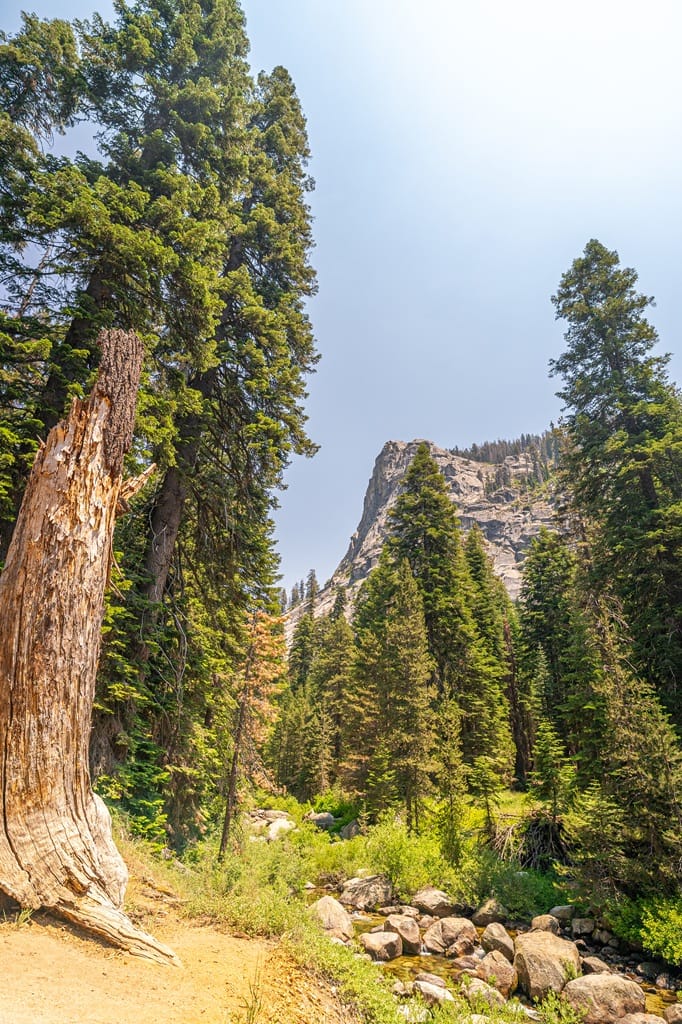
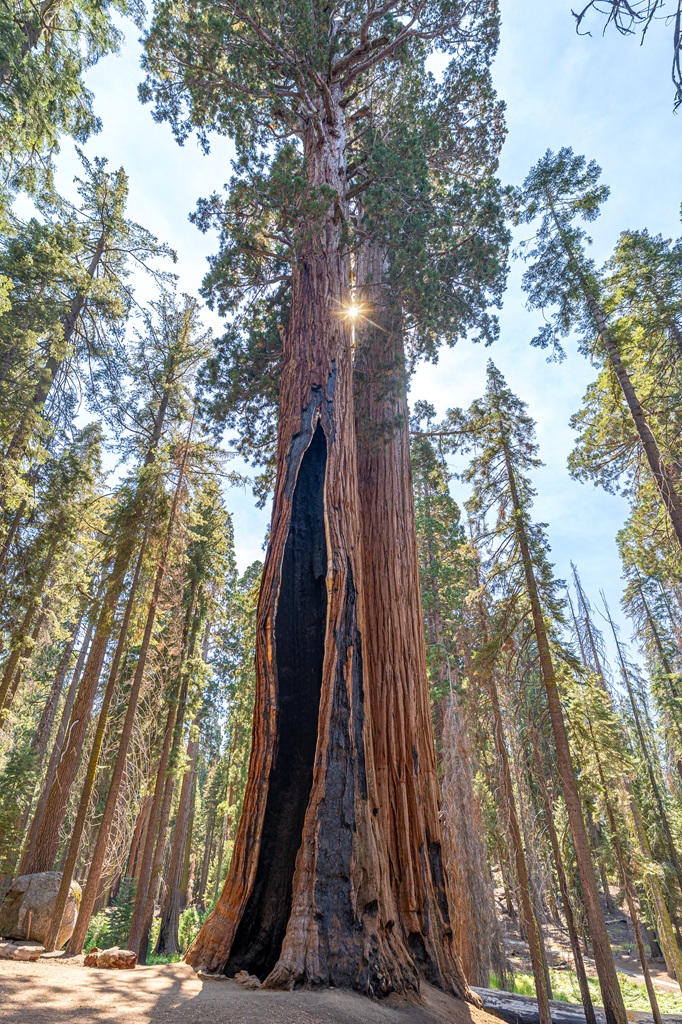
🍂 Fall (September – November): Fall is a great time to hike in Sequoia National Park. Daytime temperatures range from 40–70°F (4-21°C), the summer crowds start to fade, and the crisp air and golden light give the forest a peaceful, magical feel.
While giant sequoias stay green year-round, you’ll still spot some colorful foliage from dogwoods and other nearby trees.
September usually still feels like summer, while October and November start to cool off, especially in the mornings and evenings. Be aware that early winter storms can happen in the fall so be prepared and check the weather forecast!
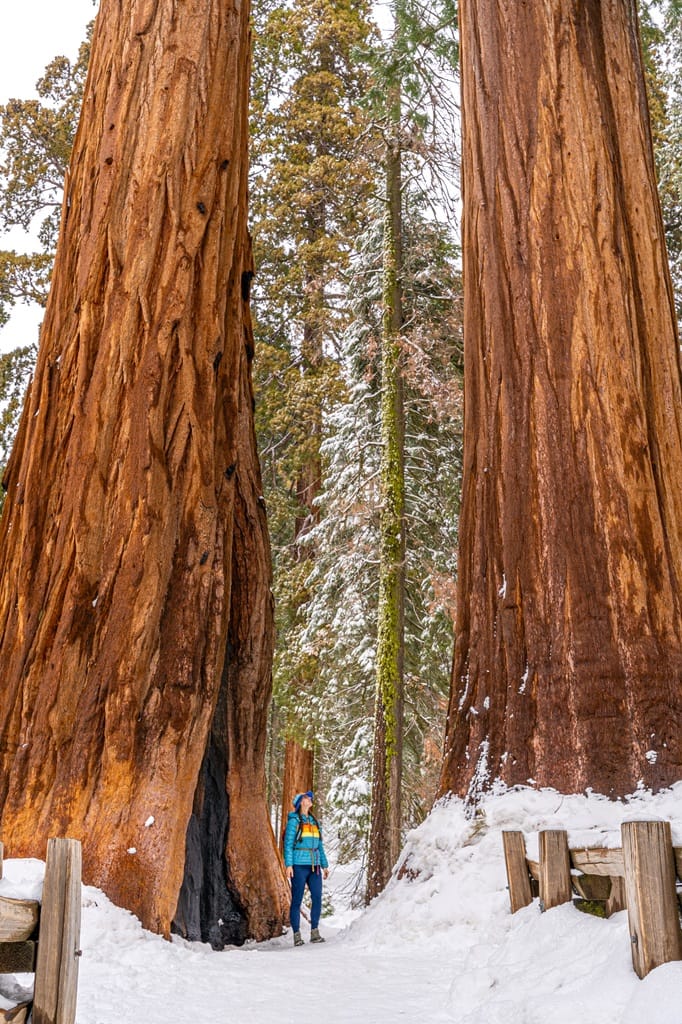
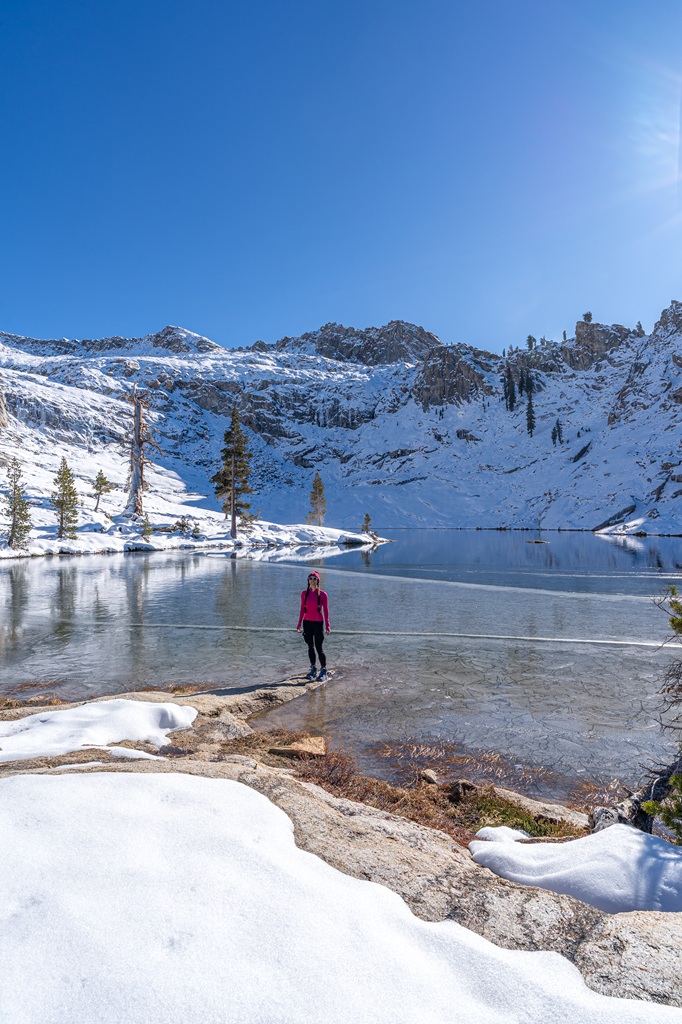
☃️ Winter (December – February): Hiking Sequoia National Park trails in winter is a completely different experience. It’s my favorite season to visit Sequoia National Park!
Temperatures can get really cold so dress appropriately and pack plenty of layers, and the trails may be icy and slippery so bring microspikes and hiking poles.
If you’re up to a fun winter adventure, use snowshoes or cross country skis to explore the trails if there’s enough snow.
Some trails, such as the Lakes Trail or Alta Peak Trail, require more winter experience along with knowledge of avalanche danger. Make sure you do your research, bring the proper gear, and know your skill set and limits. It’s important to be extra cautious when exploring Sequoia in the winter!
⛓️ Chain Requirements: From November through March, it’s common for Sequoia National Park to activate chain control zones when road conditions get snowy or icy. All vehicles, including 4WD and AWD, are required by state law to carry tire chains or cables when entering these zones.
❄️ Sequoia National Park Winter Guides
Tips for Hiking in Sequoia National Park
1. Sequoia National Park’s Entrance Fee:
Entrance to Sequoia National Park costs $35 per vehicle for a 7-day pass. However, if you have the America the Beautiful Annual Pass, your entry is free!
For those who love exploring national parks, investing in the Annual Pass is a smart choice. At just $80, it grants you access to over 2,000 federal recreation sites across the country!
FEE UPDATES! Beginning January 1, 2026, non-U.S. residents (without an annual pass) will pay a $100 per person in addition to the standard entrance fee. The Annual Pass for non-US residents will cost $250.
2. Start Early: Beat the crowds and enjoy cooler temperatures by starting your hike early in the morning, especially during peak season.
3. Take the Shuttle if Lots Are Full: If parking is unavailable, park at one of the lots at Giant Forest Museum, Wolverton, or Lodgepole and catch the free Sequoia Shuttle. It runs every 15 minutes and with different routes taking you to different areas of the park.
4. Hiking at High Elevation: Some trails require hiking at high elevations anywhere from 6,500 in the Giant Forest area up to 11,200 feet at Alta Peak. Many of the easy to moderate trails mentioned above sit between 6,500 to 8,000 feet so don’t be surprised if you feel winded faster than usual. The elevation can make even a short walk feel more intense, so take it slow, rest often if needed, and stay hydrated.
5. Be Prepared: Not all trails are created equal. Some are easy and beginner-friendly whereas others are challenging and may take all day to complete. Know your limits! This is especially important in the winter months when snow and icy conditions can make any trail much more difficult. Check trail conditions, bring the proper gear, and be aware that some areas have avalanche risk.
6. Be Bear Aware: Black bears are active within Sequoia. Follow these guidelines to avoid any negative interactions with a black bear.
🐻 Note: Bear spray is prohibited in Sequoia National Park!
7. Respect Nature: Follow Leave No Trace principles – plan ahead, pack out all trash, avoid disturbing wildlife, be considerate of others, and respect the natural beauty of Sequoia National Park.
What to Pack for Sequoia National Park Hikes
🎟️ Entrance Pass – You will need to purchase an entrance pass once you reach the entrance station or you can buy the America the Beautiful Pass ahead of time and use that for the entire year.
👚 Layers of Clothing (top) – Pack a moisture-wicking base layer, a fleece mid-layer, an insulated jacket, and an outer shell to protect you from the elements, such as rain and wind. You may not need all these layers, especially in the summer months, but it’s always best to be over-prepared!
Check out my favorite tops 👇
- Base layer: REI Co-op Sahara Shade Hoodie (warm/mild conditions) and REI Co-op Midweight Long-Sleeve Base Layer (cooler conditions)
- Fleece mid layer: Cotopaxi Teca Fleece Full-Zip Jacket
- Down mid layer: Cotopaxi Fuego Hooded Down Jacket
- Outer shell: In the summer I always pack a light windbreaker, such as the Cotopaxi Teca Crop Windbreaker or the RevolutionRace Unit Light Windbreaker. Make sure to also pack a waterproof rain jacket – I like the Patagonia Torrentshell 3L Jacket.
🩳 Hiking Shorts or Pants – Pack a comfortable, durable, and stretchy pair of hiking shorts or pants. Also think about what conditions you might run into, such as warm or cold temperatures, wind and/or rain, bugs, and overgrown trails.
Check out my favorite hiking bottoms 👇
- Cotopaxi Losdos Zip-Off Pants
- RevolutionRace Breezy Ankle Outdoor Pants
- Baleaf Fleece-Lined Jogger Pants
- RevolutionRace Summit Pocket Tights
- Revolution Race Hike & Dive Shorts
🥾 Hiking Footwear – Bring a good pair of hiking boots or shoes with good traction. If I’m not expecting to hike in too much mud or snow, my go-to hiking shoes are the Altra Lone Peak trail runners. They have a wide-toe box, 0 mm heel-to-toe drop, and MaxTrac rubber outsole. Plus, they’re lightweight and so comfy!
🧦 Socks – Moisture-wicking, quick-drying socks are the way to go. My favorite pair of hiking socks are Darn Tough Hiker Micro Crew Cushion Socks. Always pack an extra pair!
🎒 Day Pack – What you plan to do (sightseeing, hiking, etc.), determines what size pack you’ll need. Here is what I typically bring based on what I’m doing that day 👇
- Short walks and sightseeing: Cotopaxi Kapai 1.5L Del Dia Hip Pack
- Short, easy to moderate day hikes: REI Co-op Flash 22L Pack
- Long, moderate to challenging day hikes: REI Co-op Trail 25L Pack or Cotopaxi Luzon Del Dia 24L Pack
🥢 Trekking Poles – Essential for stability, balance, and support when hiking trails, especially on tough, rocky, and uneven terrain. I use REI Co-op Trailmade Trekking Poles and love them!
❄️ Microspikes – Bring a pair of microspikes if you’re visiting in the winter and you’re planning to hike along icy trails. They will give you good traction to avoid slipping! I use Black Diamond Access Spike Traction Device.
🦟 Mosquito/Bug Repellants – In the warmer months, be prepared for annoying gnats, mosquitoes, and flies. Wear long-sleeve clothing, a head net, and use bug spray.
🧤 Extra Warm Layers – If you expect cooler conditions or hiking to higher elevations, make sure to pack extra layers for added warmth, such as gloves, beanie, neck gaiter, and a light jacket.
🗺️ Navigation – Carry a physical topographic map, compass, a satellite messenger (or personal locator beacon), and download offline maps to help you stay on course, find your way in unfamiliar terrain, and call for help if needed.
🔦 Headlamp/Flashlight – A reliable light source with extra batteries, in case you end up hiking in the dark or need it for emergency situations.
💧 Water – Water bottles to carry sufficient water to stay hydrated, along with a filtration system or purification tablets if you plan to refill from natural sources.
🍕 Food – Energy-rich snacks or meals to keep your energy levels up during the hike.
😎 Sun Protection – Sunscreen, sunglasses, and a sunhat to protect yourself from harmful UV rays, even when it’s cloudy. Also, polarized sunglasses are important when it’s bright outside and to reduce glare from reflective surfaces like water, snow, and roads.
🩹 First-Aid Kit – A basic first-aid kit with items like bandages, antiseptic, pain relievers, and any personal medications you may need.
🥶 Emergency Shelter – Pack an emergency bivy sack or space blanket for shelter in case of sudden weather changes.
🔥 Fire – A lighter, matches, or fire starter to help you build a fire for warmth or signaling in case of emergency. Along with matches, I also carry a multi-tool carabiner that has a fire starter, utility blade, screwdriver, and bottle opener.
🗡️ Multi-Tool and Repair Kit – A versatile tool/knife and repair kit to handle any task, from preparing food to making repairs.
💩 Waste Disposal Supplies – WAG bags, trowel, toilet paper, pee cloth, wipes, Ziploc bags – be sure to pack out everything!
Planning to visit Kings Canyon National Park? Check out my travel guides! 👇
Best Places to Stay in Sequoia National Park
Trying to decide where to stay when visiting Sequoia National Park? Don’t worry, I’ve got you covered!
Lodging inside the park is pretty limited, but there are still a few great options to choose from. If camping is more your style, Sequoia has several fantastic campgrounds for tents, RVs, and car campers.
Just outside the park, the town of Three Rivers near the Ash Mountain Entrance is one of the most convenient places to stay, offering everything from cozy cabins to comfortable hotels.
Here are some of the best places to stay in and near Sequoia National Park 👇
Wuksachi Lodge
Wuksachi Lodge is the signature hotel of Sequoia National Park, and one of the best places to stay if you want to be close to all the action.
It’s conveniently located near top spots like the General Sherman Tree, Giant Forest trails, and the Lodgepole Visitor Center and Market.
Open year-round, it makes a perfect home base for exploring the park without a lot of extra driving. Just keep in mind, rooms book up fast, often months in advance, so it’s a good idea to plan ahead.
The lodge features 102 spacious guest rooms with options to fit a variety of travelers.
🏨 Room Options:
- Standard Rooms – Cozy, classic lodge-style rooms with either a king bed or two queen beds. Queen rooms also include a pull-out sofa bed and can sleep up to 4.
- Deluxe Rooms – A bit more space, great for families or small groups. Choose between a king with a sofa bed or two queen beds with a table and chairs. Sleeps up to 5 with a rollaway bed or crib.
- Superior Rooms – The largest option, located in corner units for extra space and privacy. These rooms include a king or two queen beds, plus a sofa bed, seating area, and a sliding door. Sleeps up to 6 with a rollaway bed or crib.
🌲 Amenities and Features: Guests can enjoy The Peaks Restaurant, a gift shop, meeting and event spaces, free parking, WiFi, and even pet-friendly room options.
🤩 Book your stay at Wuksachi Lodge!
John Muir Lodge
John Muir Lodge is a cozy, rustic retreat located in Kings Canyon National Park. It’s a great home base if you plan to explore both Kings Canyon and Sequoia National Parks.
Built in 1998, the lodge has a warm mountain vibe with open-beam ceilings, a stone fireplace, and a historic redwood mantel sourced from Sequoia. The lobby’s great room offers games, books, and puzzles, and there are public balconies where you can enjoy the Sierra views.
From the lodge, it’s about an hour’s drive along the Generals Highway to reach the Giant Forest Museum in Sequoia.
🏨 Room Options:
- Standard Rooms – These are the classic mountain lodge accommodations, featuring two queen beds, a desk, and chairs. Sleeps up to 4 guests.
- Deluxe Rooms – These rooms offer a bit more space, with one king bed, a sofa bed, and a cozy seating area. Sleeps up to 4 guests.
🌲 Amenities and Features: Free parking, WiFi, pet-friendly rooms, and inviting common areas with fireplaces, books, and games. Plus, the Grant Grove Restaurant and nearby gift shop are just a short walk away.
🤩 Book your stay at John Muir Lodge!
Lazy J Ranch Motel
Lazy J Ranch Motel is a laid-back, scenic retreat in the historic town of Three Rivers. Tucked into the rolling Sierra foothills, this family-owned motel has been welcoming guests since 1975 and offers a peaceful place to unwind after a day of exploring.
Located just 15 minutes from the Ash Mountain Entrance to Sequoia National Park, it’s a super convenient home base for visiting the giant sequoias, hitting the trails, and enjoying everything the park has to offer.
All accommodations are one-story with private entrances, and the property is pet-friendly!
🏨 Room Options:
- King Rooms – Simple and comfortable with a king bed, ideal for couples (sleeps 2).
- Two-Bed Rooms – Great for families or friends, with space for up to 4 guests.
- Cottages – A more spacious option with a full kitchen, sleeping up to 6 – perfect for longer stays or larger groups.
🌲 Amenities and Features: Guests can enjoy free WiFi, on-site parking, river access, and laundry facilities. Rooms also come equipped with a mini-fridge, microwave, Keurig coffee maker, and TV with basic cable for a comfortable stay.
🤩 Book your stay at Lazy J Ranch Motel!
Buckeye Tree Lodge
Buckeye Tree Lodge is a stylish, updated stay located less than half a mile from the Ash Mountain Entrance to Sequoia National Park. Set along the Kaweah River next to the historic Pumpkin Hollow Bridge, it’s hard to beat this location!
A longtime staple in Three Rivers since the late 1940s, the lodge offers a mix of cozy rooms and cabins, many with beautiful river views and the relaxing sound of rushing water right outside your door.
🏨 Accommodations:
- Lodge Rooms – Located in two buildings, with odd-numbered rooms on the ground floor (pet-friendly with patios) and even-numbered rooms upstairs with private balconies. All rooms include WiFi, TV, microwave, mini-fridge, AC/heating, and easy river access.
- Cabins and Cottages – Set across the street, these individually styled units feature custom woodwork, private outdoor spaces, and barbecue grills. Some even include fireplaces for cozy winter stays. Options range from smaller queen cabins to multi-bedroom setups that can sleep up to 8.
- Buckeye River House (Presidential Suite) – A great choice for larger groups or families wanting extra space. This 3-bedroom, 2-bath multi-level cabin includes private balconies with river views, a full kitchen, outdoor grill, laundry, and a wood-burning stove for a comfortable, home-like stay.
🤩 Book your stay at the Buckeye Tree Lodge!
AutoCamp Sequoia
AutoCamp Sequoia is a unique glamping experience located in Three Rivers, just 15 minutes from the Ash Mountain Entrance of Sequoia National Park. Set along the scenic Kaweah River, it blends the feel of camping with the comfort of a boutique hotel.
The property is designed for both relaxation and fun, with a seasonal outdoor pool, complimentary bike rentals, outdoor grilling areas, a cozy fireplace lounge, and a general store. You’ll also find The Kitchen (on-site restaurant), WiFi, and lawn games at the Clubhouse.
Depending on the season, they often host extras like live music, yoga or Pilates classes, stargazing programs, and community events.
🏕️ Lodging Options:
- Airstream Suites – Stylish, climate-controlled Airstreams with spa-like bathrooms and private outdoor spaces.
- Premium Airstream Suites – Similar setup with added privacy.
- Vista Airstream Suites – Positioned along the river for the best views.
- Explorer Suites – Airstreams that include a complimentary AllTrails subscription for local hikes.
- BaseCamp Suites – A mix of Airstream and canvas tent for a true glamping feel.
- Premium BaseCamp Suites – Same concept with more privacy.
- Vista BaseCamp Suites – More secluded, with river views.
- Premium Cabin – Tiny home-style stay with extra privacy.
- Accessible Suite – Fully accessible tiny home with a spa-inspired bathroom and outdoor space.
- Double Queen Bunk Rooms – Traditional hotel-style rooms, great for families or groups.
- King Bunk Room – Boutique-style room with additional sleeping space.
- Accessible King Room – Centrally located, fully accessible hotel-style room.
🤩 Book your stay at AutoCamp Sequoia!
Comfort Inn & Suites Sequoia Kings Canyon
Comfort Inn & Suites Sequoia Kings Canyon is a convenient and comfortable stay located in the foothills town of Three Rivers, just about 15 minutes from the Ash Mountain Entrance of Sequoia National Park.
It’s a great place to unwind after a full day of hiking and exploring, with spacious rooms and suites designed for rest and relaxation. All accommodations include flat-screen TVs, free WiFi, premium bedding, and cozy seating areas to help you recharge.
🏨 Room Options:
- Standard Rooms – Comfortable, no-fuss hotel rooms with modern amenities and cozy beds.
- Suites – A great option for families or longer stays, offering extra space and separate seating areas.
🌲 Amenities & Features: Guests can enjoy a complimentary continental breakfast, outdoor pool and hot tub, sauna, fitness center, EV charging stations, pet-friendly rooms, laundry facilities, a gift shop, and a picnic area.
🤩 Book your stay at Comfort Inn & Suites Sequoia Kings Canyon!
Conclusion
Sequoia National Park is best known for its towering giant sequoias, but as you’ve probably seen throughout this guide, there’s so much more to explore beyond the trees.
From crystal-clear alpine lakes and rugged granite peaks to peaceful meadows and deep canyons, the variety of landscapes here is truly incredible.
One of the best parts about this park is just how diverse the hiking is. You can go from wandering through lush foothills to standing beneath the largest trees on Earth or even climbing up a mountain to sweeping views!
With so many trails to choose from, planning can definitely feel a bit overwhelming at first. That’s exactly why this guide exists – to help you narrow it down and find the hikes that best fit your time, energy, and interests.
If this guide inspires you to tackle the best hikes in Sequoia National Parks, I’d love to hear about your adventure. Leave a comment and share your experience!
📌 Enjoyed this post? Pin for later!
🏞️ Explore more incredible places in California!