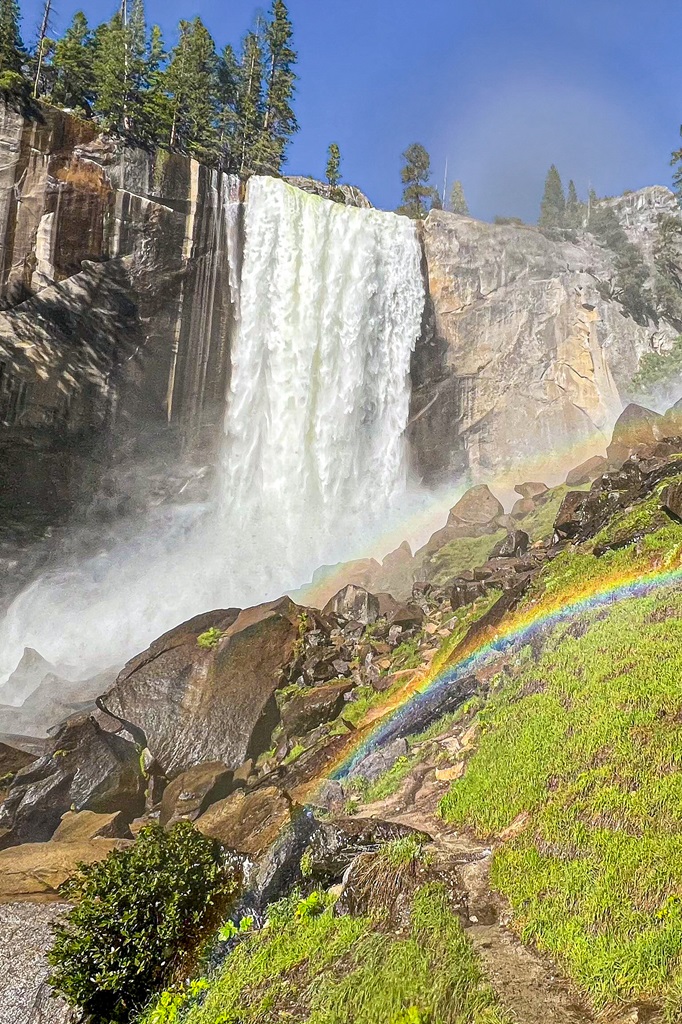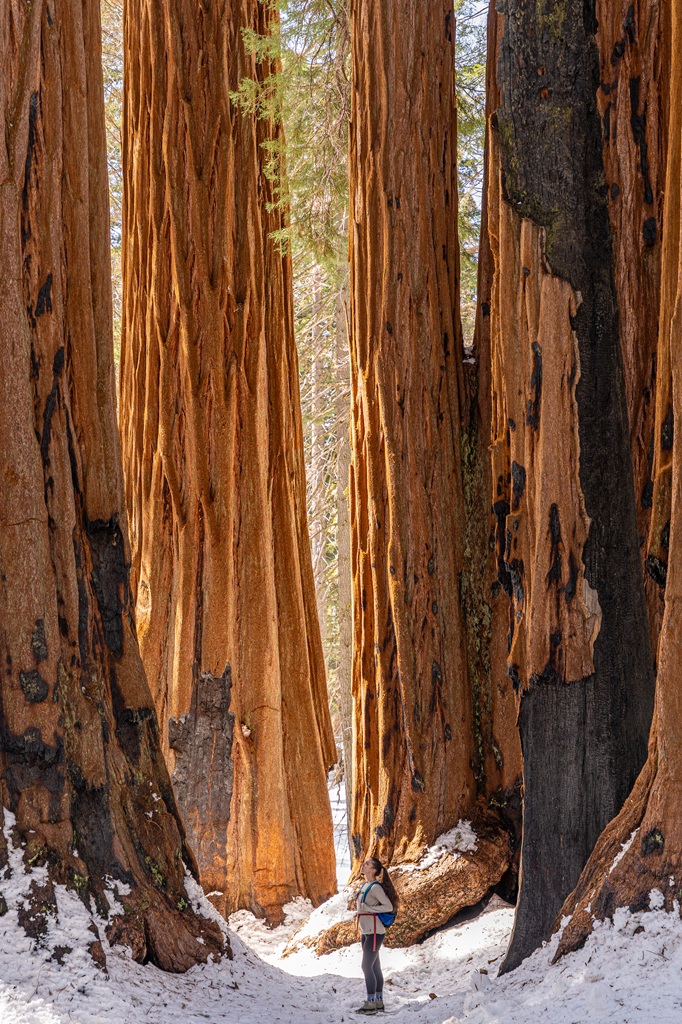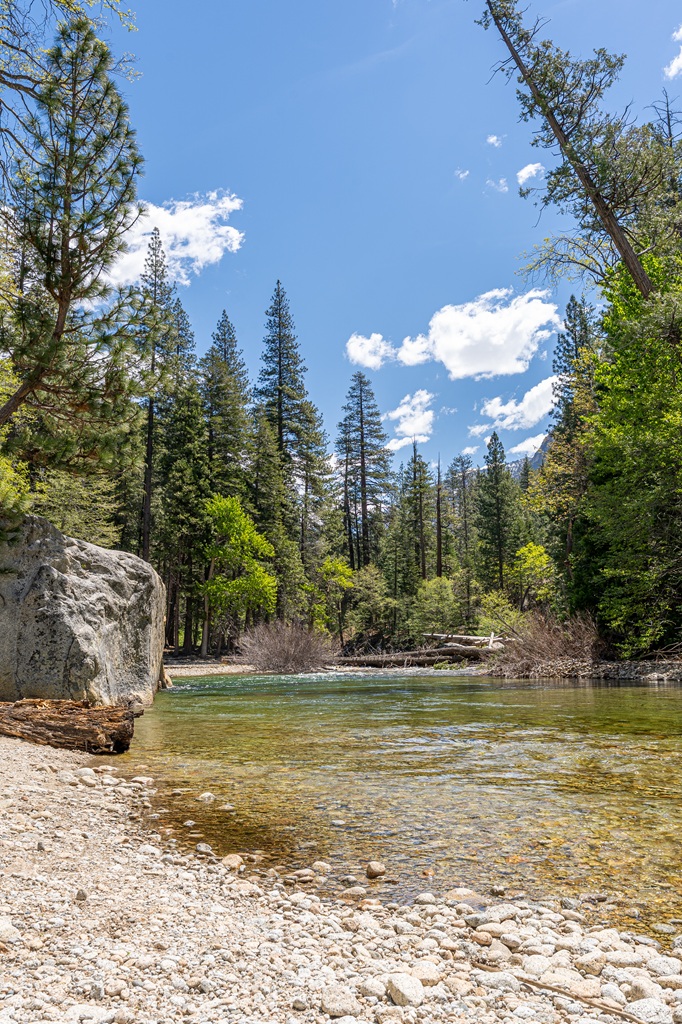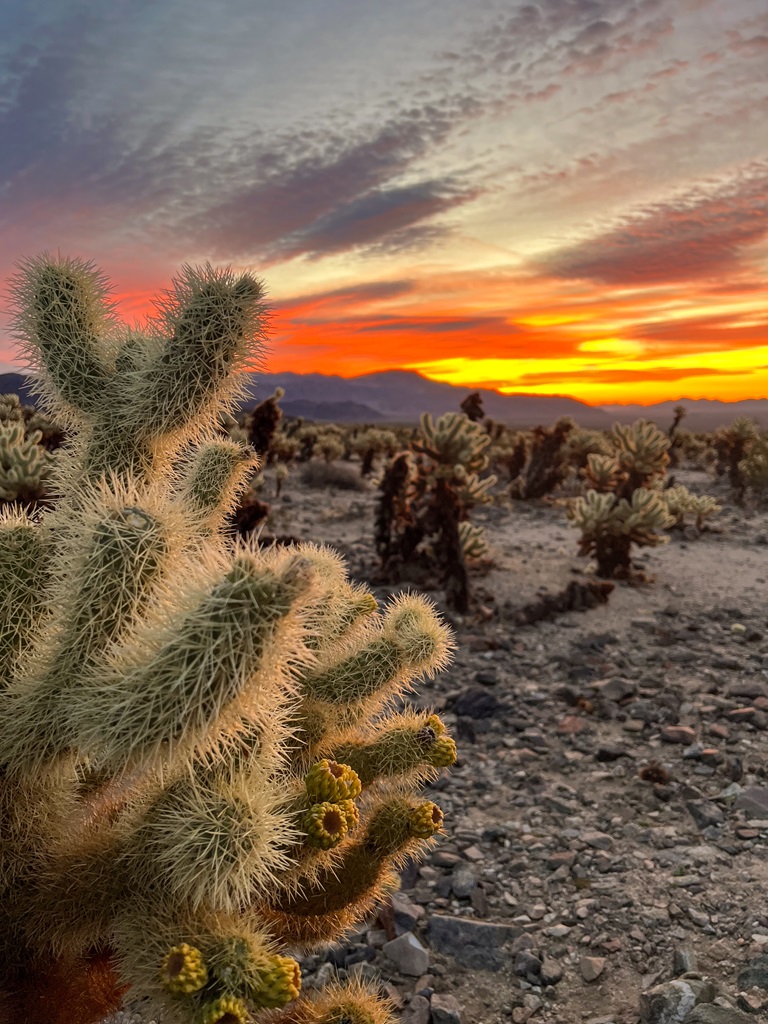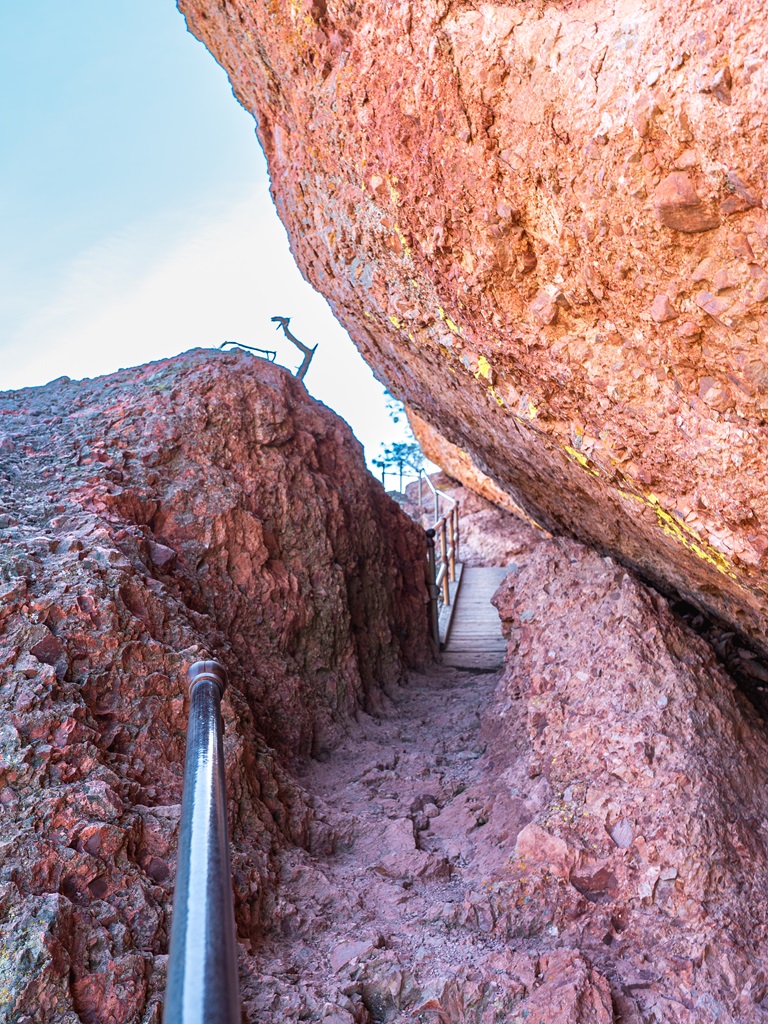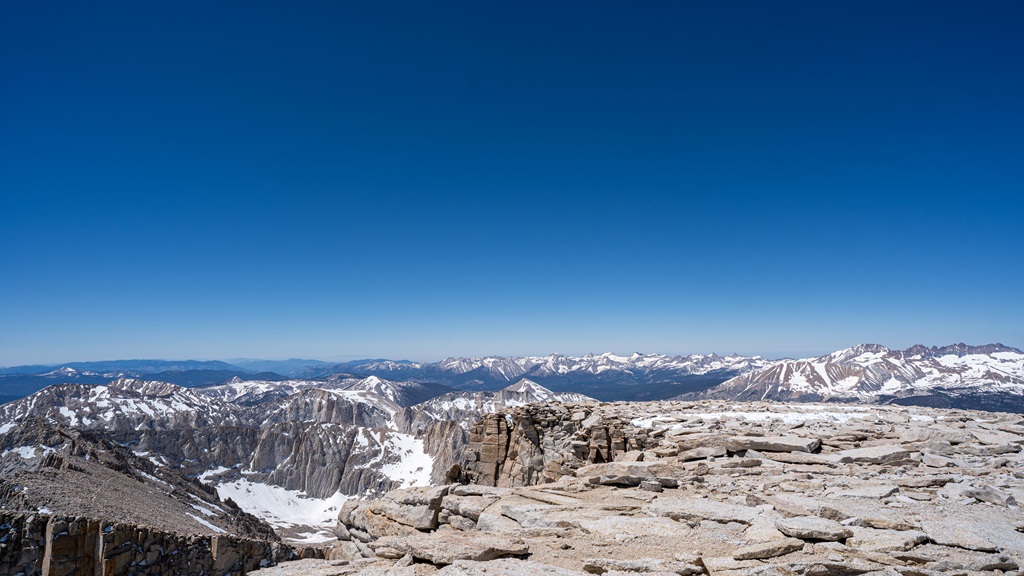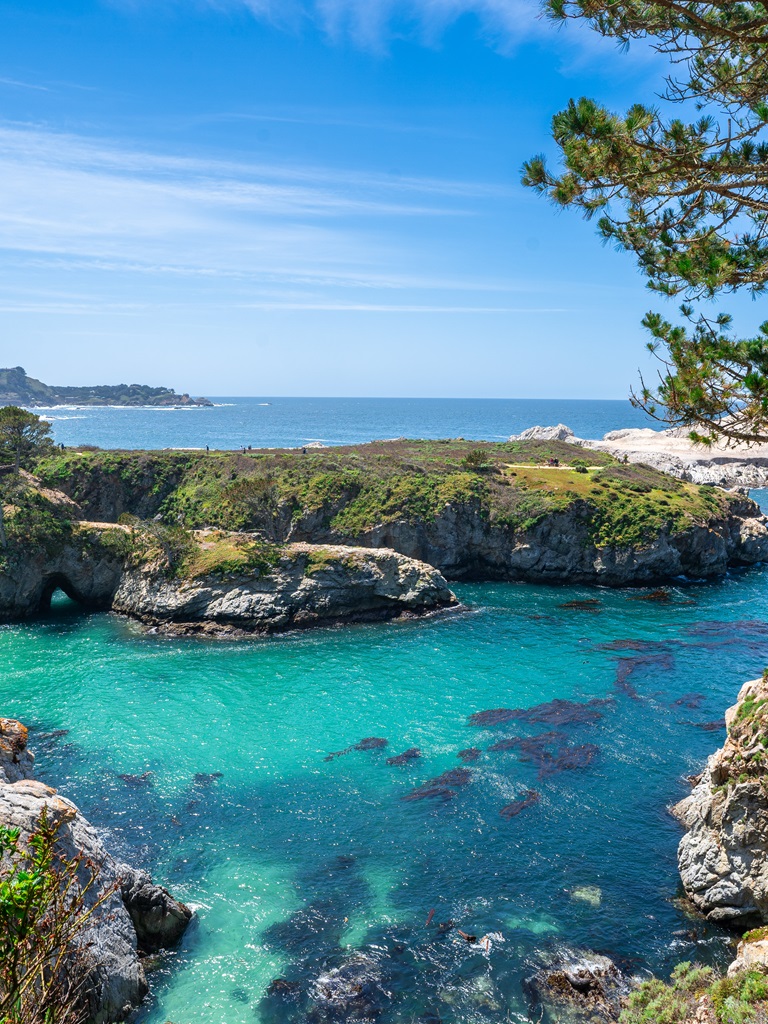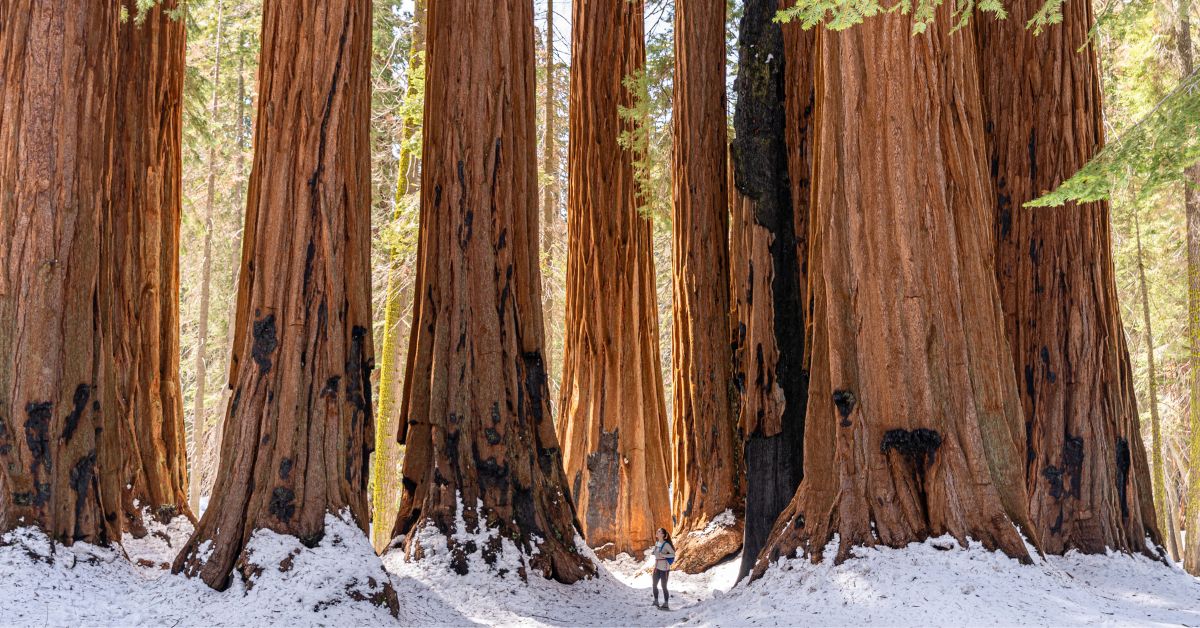
Sequoia National Park is one of the most beautiful and fun places to visit in California. It has giant sequoia trees, alpine lakes, lush meadows, and high mountain peaks. 😍
I have visited Sequoia so many times and it never gets old. The highlight of this park is obviously the giant sequoias! Have you ever stood beside the largest tree in the world? If not, plan a trip to Sequoia National Park so you can!
Planning a trip to a new place can be stressful, especially if you only have one day to squeeze in as much as possible. That’s why I created this one-day guide so you will be 100% prepared and ready to spend an exciting day in Sequoia National Park without the stress of all the logistics! 🙌
This guide includes an epic 1-day itinerary, best time to visit, where to stay, first timer tips, and so much more. If you want to have the best day in Sequoia National Park, read my guide first to help plan your trip!
Affiliate Disclaimer: Some links on this page may be affiliate links, meaning I may earn a small commission at no extra cost to you. As an Amazon Associate, I earn from qualifying purchases. Thanks for supporting the blog! 🫶
- Sequoia National Park One Day Itinerary
- Sample 1-Day Sequoia National Park Itinerary
- Best Time to Visit Sequoia National Park for One Day
- One Day Trip to Sequoia National Park Logistics
- Where to Stay for One Day in Sequoia National Park
- What to Bring to Sequoia National Park
- First Timer Tips for Visiting Sequoia National Park in One Day
- More Things to Do in Sequoia National Park
- Things to Do Near Sequoia National Park
- Conclusion
Sequoia National Park Trip Info
📍 Location: California, USA
🗓️ Best Time to Visit: Year-round but most accessible time is May-October
🏞️ Ideal Trip Length: 2–3 days
✈️ Closest Airport: Fresno Yosemite International (2 to 2.5 hours away)
🏨 Where to Stay: Wuksachi Lodge in Sequoia, John Muir Lodge in Kings Canyon, or Lazy J Ranch Motel, Buckeye Tree Lodge, and AutoCamp Sequoia in Three Rivers
🚙 Getting Around: Rent a vehicle from rentalcars.com or discovercars.com
💵 Entrance Fee: $35 per vehicle (7 days) or buy an America the Beautiful Pass (covers the entrance fee for 1 year). There are new non-resident fees – learn more here
🤩 Check out my Sequoia National Park Guide for more travel, hiking, and seasonal guides
Sequoia National Park One Day Itinerary
You might be wondering, “Is one day in Sequoia National Park enough?” And the answer to your question would be… YES! Spending one full day in Sequoia is enough to see all the main highlights, but make sure you start your day early, so you have all day to experience it all.
Visiting Sequoia National Park for one day is a lot more doable than spending one day in Yosemite National Park. Yosemite is massive with so many areas to explore and lots to do and see.
In this Sequoia National Park itinerary, we will be hitting all the best sights and top-rated trails! And the best part is that everything is in the same general area, so lesser drive time equals more time for fun activities.
This itinerary is full of incredible trails, but don’t worry, they’re all relatively short and easy/moderate in difficulty. If you’re a first-time visitor, family with children, or someone just looking for a fun-filled day in Sequoia, this itinerary is perfect for you!
Also, quick note, we will be spending most of our time in the Giant Forest area of Sequoia National Park. The Giant Forest is the largest unlogged grove of giant sequoias. This is where you will find the famous General Sherman Tree (largest tree on earth by volume) along with many more incredible giant sequoias plus beautiful hiking trails.
🏞️ Quick overlook at one day in Sequoia National Park:
- Morning – Scenic stops along the Generals Highway, General Sherman Tree, Congress Trail
- Late-morning – Tokopah Falls
- Afternoon – Lunch at Lodgepole Market and Grill, Giant Forest Museum, Big Trees Trail
- Evening – Tunnel Log, Crescent Meadow, Moro Rock
Ok, let’s dive into this 1-day Sequoia National Park itinerary! 👇
Drive from Ash Mountain Entrance OR Big Stump Entrance
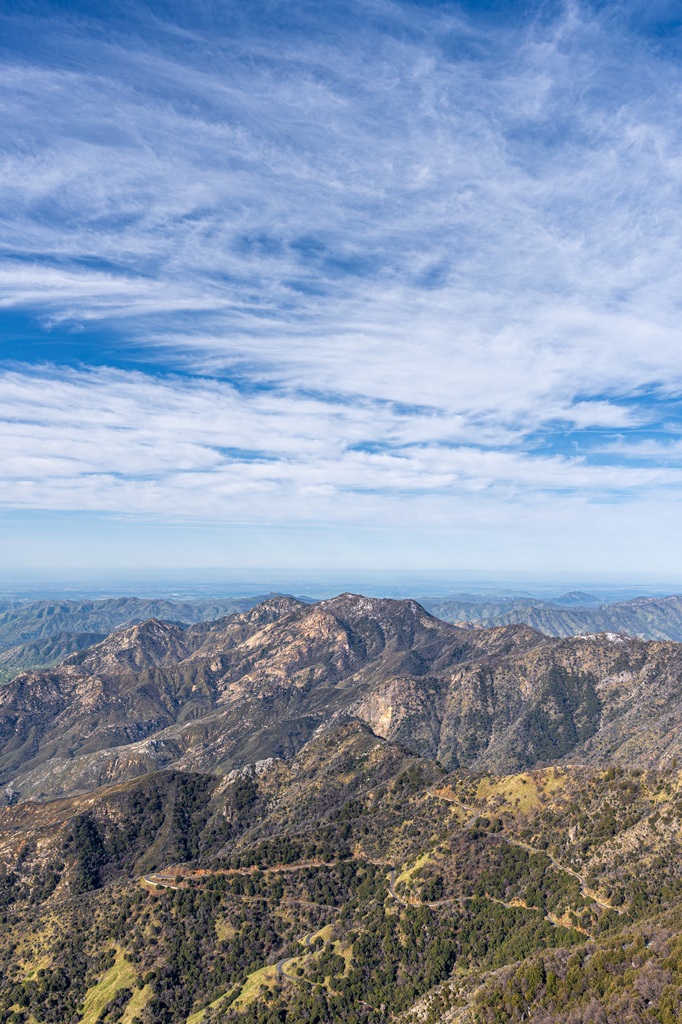
There are two entrances to Sequoia National Park. The most popular is the Ash Mountain Entrance near the town of Three Rivers. The drive along Generals Highway from the Ash Mountain Entrance is scenic but very curvy.
The second entrance is the Big Stump Entrance. This one is actually in Kings Canyon National Park, but you can easily reach Sequoia from this entrance.
💵 Entrance Fee: You will need to purchase an entrance pass ($35 per vehicle – valid for 7 days) or use your America the Beautiful Pass (if you don’t have one, purchasing this annual pass grants you access to all national parks for a year). There are more fees for non-U.S. residents (learn more HERE).
⛰️ Reasons to enter Sequoia through Ash Mountain Entrance:
- You are comfortable driving on a curvy, mountain road.
- You can reach this entrance no later than 7 AM (particularly in the summer or on holidays because the line at this entrance can get really long from 8 to 11 AM).
- You’re staying in Three Rivers or Visalia.
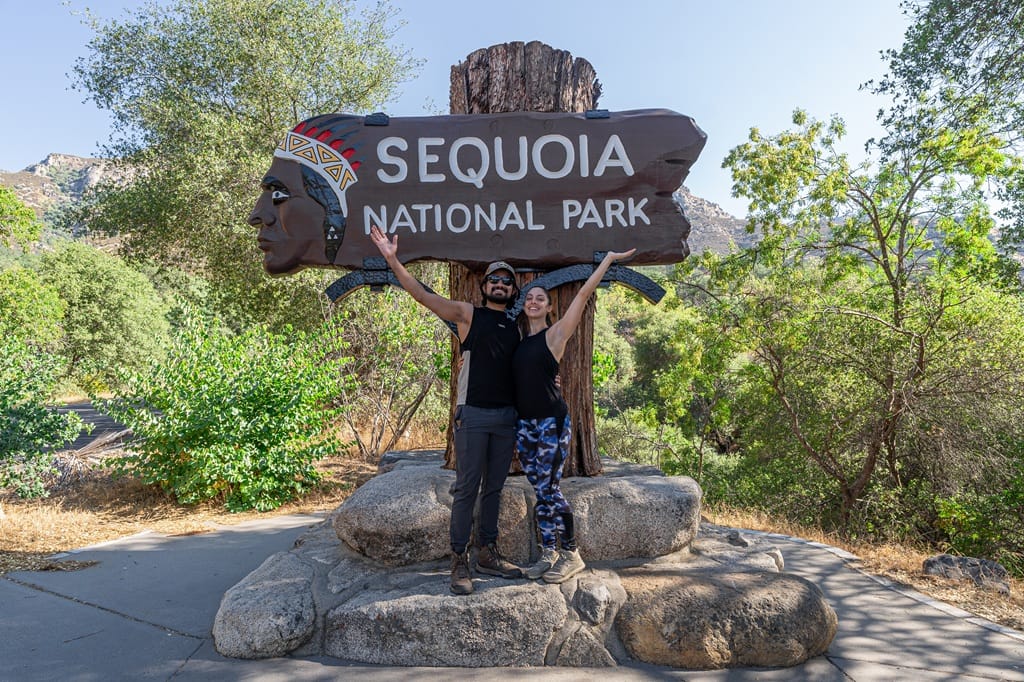
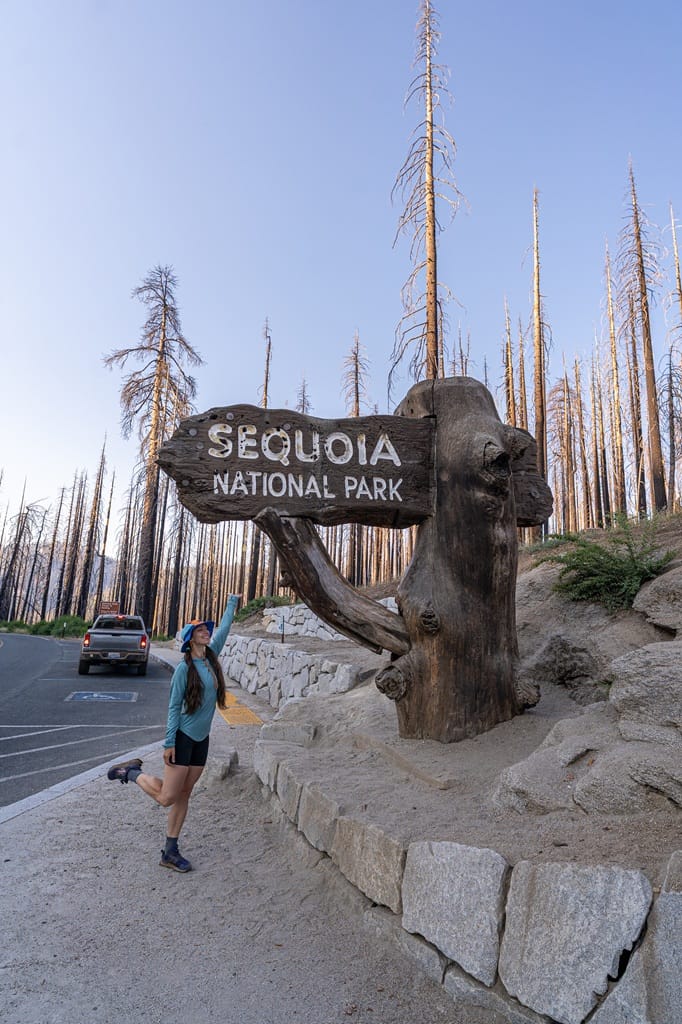
- Driving along this section of the Generals Highway is so scenic! There are several quick stops and viewpoints, such as the historic Sequoia National Park sign, Foothills Visitor Center, Tunnel Rock, Hospital Rock, Amphitheater Point, Eleven Range Overlook, and the Four Guardsmen.
📍 Google Maps Location: Ash Mountain Entrance
⚠️ Length Restrictions: Vehicles over 22 feet are not recommended on the Generals Highway between Potwisha Campground and the Giant Forest Museum, and vehicles over 24 feet are not advised between Foothills Visitor Center and Potwisha Campground.
🌳 Reasons to enter Sequoia through Big Stump Entrance:
- This route is a bit less curvy as compared to entering through the Ash Mountain Entrance.
- If you’re pulling a trailer or driving an RV, this route is a better option.
- You’re entering the park at 9 AM or later – the Big Stump Entrance is less busy.
- You want to combine Kings Canyon and Sequoia National Park into a 1-day trip.
- You’re driving from Fresno – slightly shorter route.
📍 Google Maps Location: Big Stump Entrance
🚌 Parking/Shuttle Tip: If you’re visiting Sequoia during peak season or holidays, I recommend parking at either the Giant Forest Museum or Lodgepole Visitor Center. These parking lots are big and have shuttle access, so you can easily hop on the free shuttle and take it to all the spots mentioned below in this itinerary. You could also park at General Sherman Tree or Wolverton – both have shuttle access.
See the General Sherman Tree (largest tree on earth)
Seeing the General Sherman Tree is a non-negotiable thing to do when visiting Sequoia National Park, especially if it’s your first time in the park! It’s also a good idea to see it first thing in the morning as it’s the most popular attraction in Sequoia.
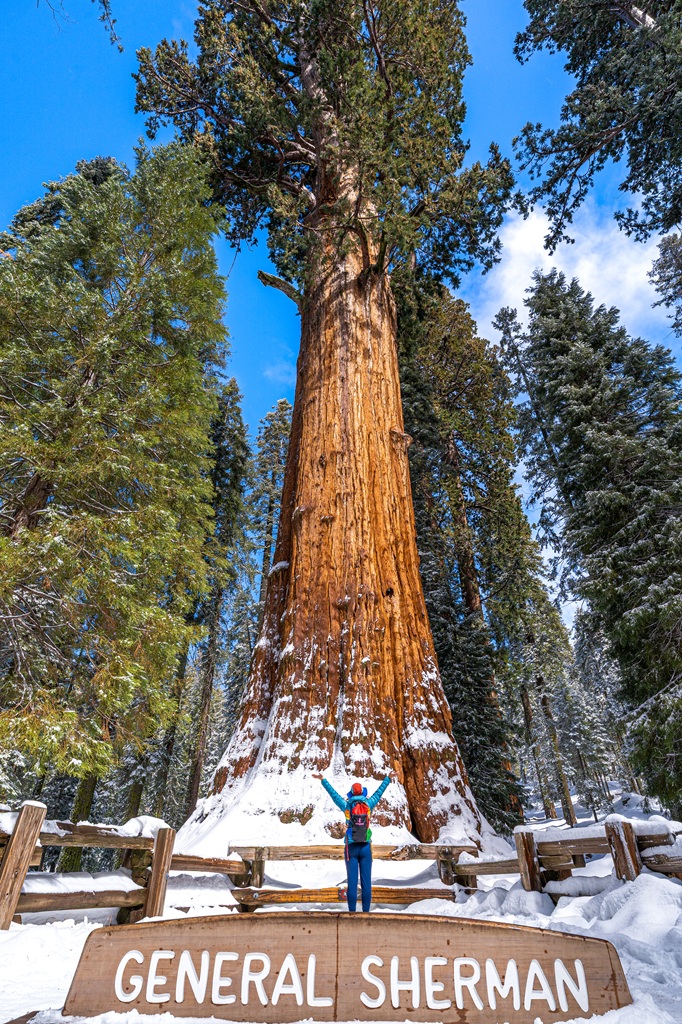
The General Sherman Tree is the largest tree in the world by volume! And it’s still growing larger every single day. It’s 275 feet tall, 36 feet wide at the base, weights about 1,400 tons, and has a volume of 52,500 cubic feet. And it’s estimated to be somewhere between 2,300 to 2,700 years old! 🤯
There are other sequoia trees around, but you’ll know which one is the General Sherman. Plus, there’s a sign that clearly states “General Sherman” so it’s easy to find. At this sign, you can take an awesome picture in front of the tree.
🌳 Preservation Tip: You will notice a fence around the tree. Please do not cross it! The fence is there to protect the General Sherman Tree’s shallow root system. I know you might want to hug this gentle giant but please refrain. A distance air-hug works just as well!
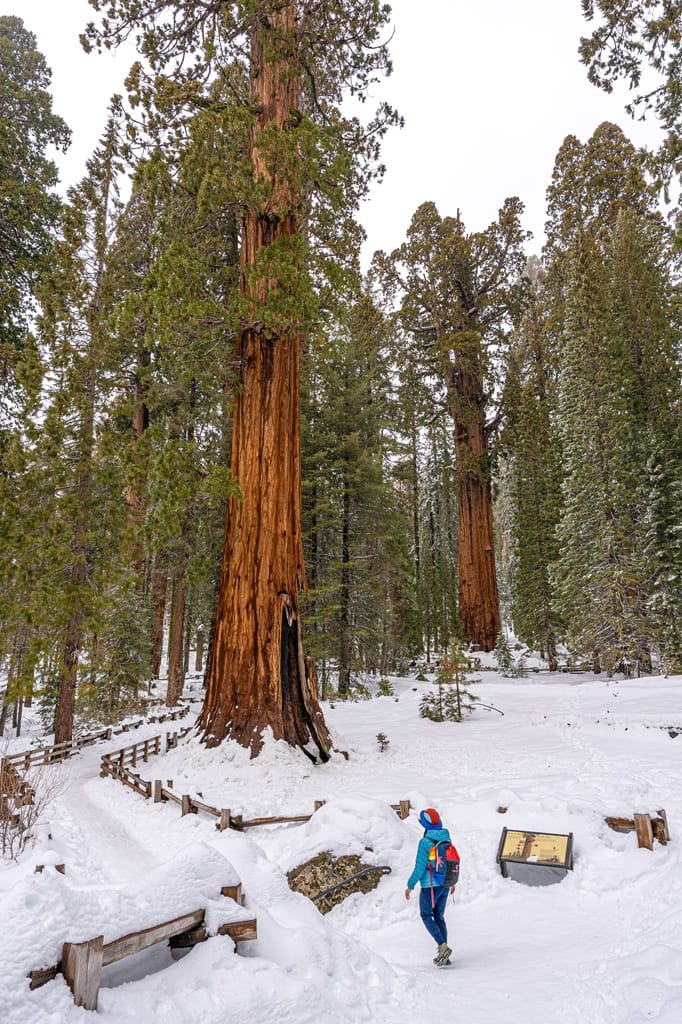
🥾 General Sherman Tree Trail Stats:
- Length: 1.1 miles (1.7 km) roundtrip
- Elevation Gain: 190 feet
- Difficulty: Easy to moderate
- Hiking Time: 30 to 45 minutes
- Pet-friendly? No
- Wheelchair Accessible? Yes, via the wheelchair-accessible route
- Highlights: General Sherman Tree
✨ READ THIS: General Sherman Tree Hiking Guide
🅿️ General Sherman Tree Trailhead/Parking: If you are driving and you don’t have a disability placard, you will park at the General Sherman Tree Trailhead located off Wolverton Road. This parking area is huge with restrooms and drinking water.
📍 Google Maps Location: General Sherman Tree Trailhead (main parking lot)
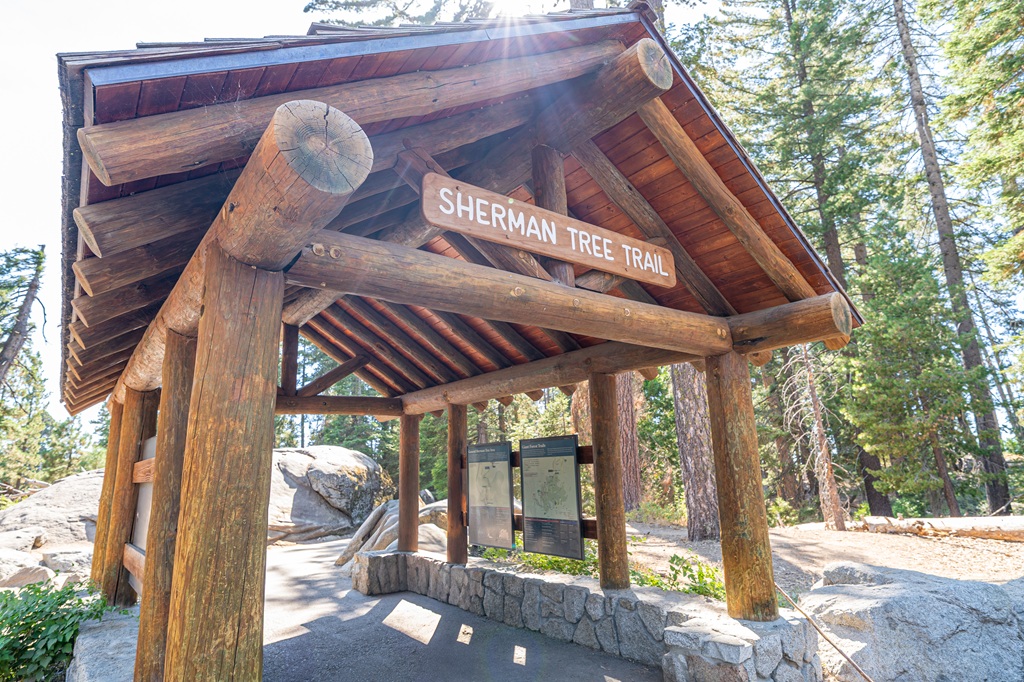
🚌 Shuttle Option: You can take the shuttle to either the General Sherman Tree main parking lot (off Wolverton Road) or the accessible parking lot (off Generals Highway). The accessible lot is reserved for those with a disability placard, but it’s nice that the shuttle stops here too. Both parking lots offer restrooms and drinking water.
📍 Google Maps Location: General Sherman Tree accessible parking lot
🥾 Alternate Shorter Routes:
- Option #1: If you start from the accessible parking lot, you can follow a paved wheelchair-accessible path just 500 feet to the General Sherman Tree. If you have a disability placard, you can simply park in this small lot. Or you can take the shuttle to this starting point. In the winter, the accessible parking lot is open to everyone!
- Option #2: Starting from the main General Sherman Tree parking lot (off Wolverton Road), follow the paved path downhill about 0.5 miles (0.8 km) to the tree. Now, to avoid hiking back uphill, head towards the accessible parking lot and hop on the shuttle to return to your car in the main parking lot. Make sure get on the correct shuttle bus – different color routes go to different spots!
🚗 Distance/Drive Time to General Sherman Tree Trailhead:
- From Ash Mountain Entrance: 20.5 miles (33 km), 1 hour
- From Big Stump Entrance: 29 miles (47 km), 55 minutes
Hike the Congress Trail
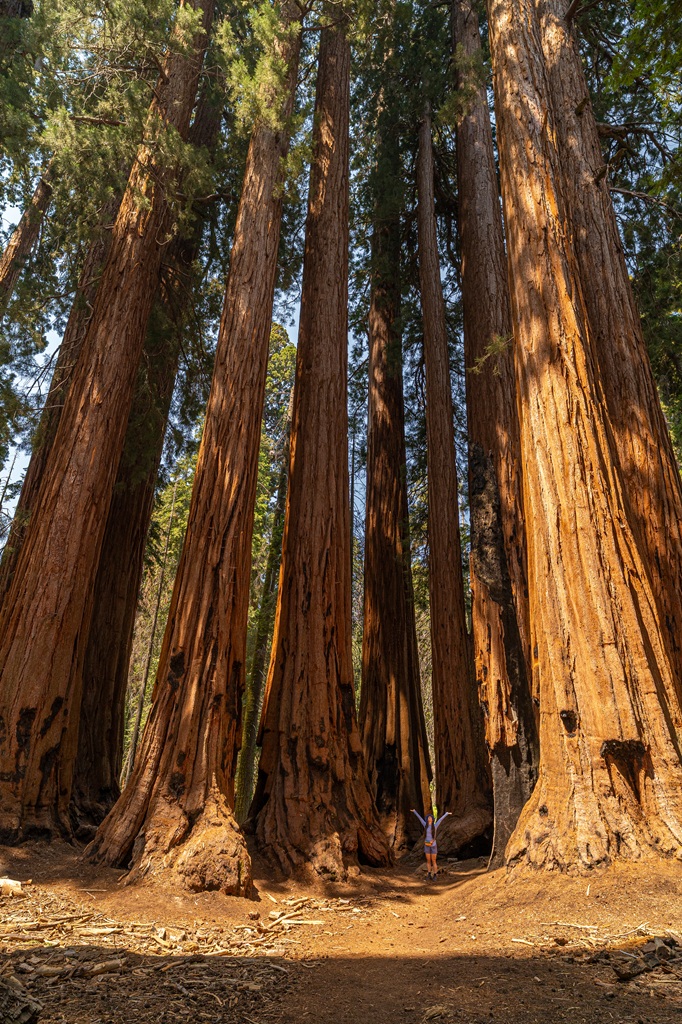
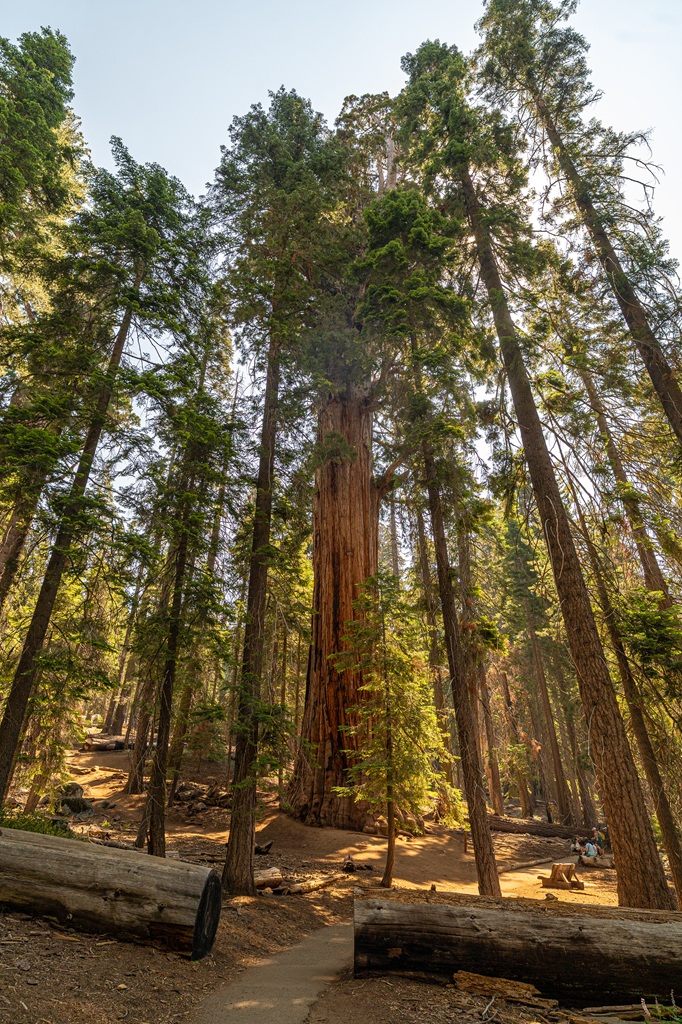
The Congress Trail is my favorite hike in Sequoia National Park to see giant sequoias! This trail takes your through the heart of the Giant Forest offering close-up views of these ginormous trees.
The beginning of the Congress Trail is conveniently located near the General Sherman Tree. Once you’re done marveling at the biggest tree in the world, you can quickly hop onto the Congress Trail and continue to be awe-struck by even more incredible giant sequoias!
🥾 Congress Trail Stats:
- Length: 2.9 miles (4.7 km) roundtrip (combined with the General Sherman Tree Trail)
- Elevation Gain: 460 feet
- Difficulty: Moderately challenging
- Hiking Time: 1 to 1.5 hours
- Pet-friendly? No
- Wheelchair Accessible? No
- Highlights: General Sherman Tree, Chief Sequoyah, The President Tree, The Senate Group, The House Group, Room Tree, and McKinley Tree
✨ READ THIS: Congress Trail Hiking Guide
📍 Google Maps Location: Congress Trail Trailhead
🚌 Shuttle Option: Same as the General Sherman Tree (see info above).
🚗 Distance/Drive Time to the Congress Trail: No driving required if walking from the General Sherman Tree to the Congress Trail.
Hike to Tokopah Falls
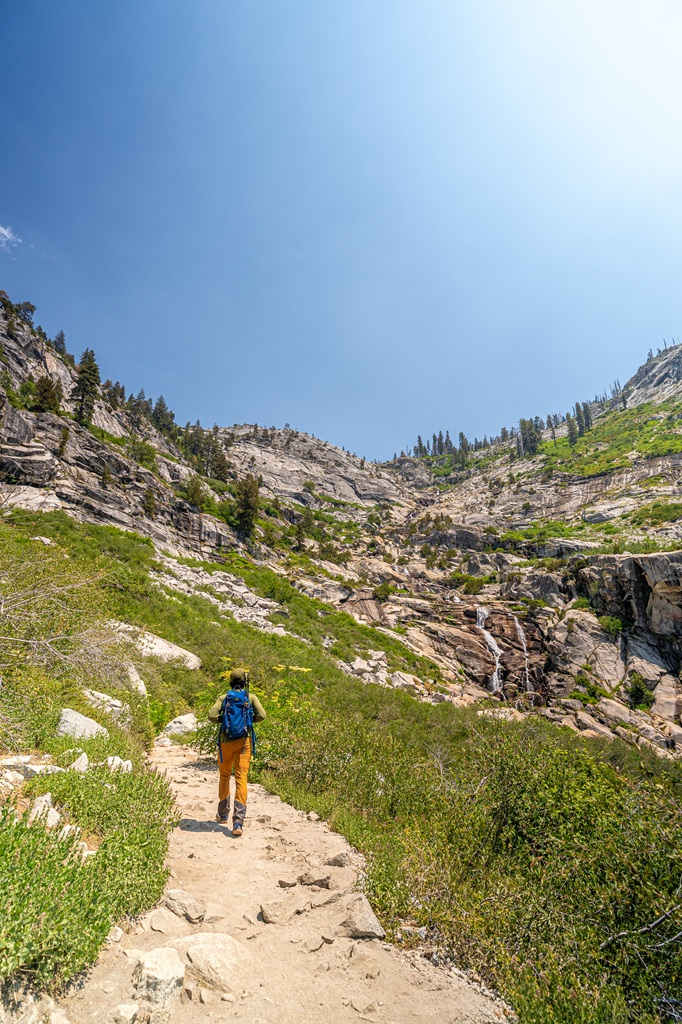
If you’re visiting Sequoia National Park in late spring, I recommend checking out Tokopah Falls! It’s a beautiful hike that leads to a 1,200-foot waterfall.
This is the longest hike on the itinerary at 4 miles (6.4 km) roundtrip. The trail follows the Marble Fork of the Kaweah River taking you through a scenic canyon with lots of towering pine trees, lush meadows, and captivating granite cliffs high above.
If you would rather just stick to short, easy hikes then you can definitely skip this one. By late summer the waterfall is just a trickle so it may not be worth seeing. However, during this time, the river is a lot calmer and great for swimming if you’re up for a dip!
🥾 Tokopah Falls Trail Stats:
- Length: 4 miles (6.4 km) roundtrip
- Elevation Gain: 540-600 feet
- Difficulty: Moderately challenging
- Hiking Time: 2 to 2.5 hours
- Pet-friendly? No
- Wheelchair Accessible? No
- Highlights: The Watchtower, Tokopah Valley, Marble Fork of the Kaweah River, Tokopah Falls
✨ READ THIS: Tokopah Falls Hiking Guide
🅿️ Tokopah Falls Trailhead/Parking: The Tokopah Falls Trailhead is located at the Lodgepole Campground near the Lodgepole Visitor Center. Parking is usually fairly easy as there is a large overflow lot near the trailhead. There are also flush toilets and drinking water here.
📍 Google Maps Location: Tokopah Falls Trailhead
🚌 Shuttle Option: You can take the free Sequoia shuttle right to the Tokopah Falls Trailhead at the Lodgepole Campground.
🚗 Distance/Drive Time to the Tokopah Falls Parking Lot: If you’re driving from the General Sherman Tree Trailhead off Wolverton Road, it’ll be about 3.4 miles / 5.5 km (10 minutes’ drive).

Eat Lunch at the Lodgepole Market and Grill
If you decided to hike the Tokopah Falls Trail in addition to the General Sherman Tree Trail and Congress Trail then you might be hungry! We have some more hikes coming up so refuel by grabbing a bite to eat at the Lodgepole Market and Grill.
The Lodgepole Grill serves breakfast, lunch, and dinner foods. If you want something quick, check out the Lodgepole Market for grab-and-go meals and snacks. The market and grill are open seasonally from May to October.
In addition to grab-and-go food, the market offers clothing, groceries, and an ATM. There are also restrooms and drinking water nearby.
📍 Google Maps Location: Lodgepole Market and Grill
🚌 Shuttle Option: If you decided not to hike the Tokopah Falls Trail but want to stop at the Lodgepole Market and Grill for lunch, you can take the shuttle bus to the Lodgepole Visitor Center. The market and grill are in the same area as the visitor center!
🚗 Distance/Drive Time to the Lodgepole Market and Grill: No driving required if you’re already in the area after hiking the Tokopah Falls Trail. It’s a short walk from the trailhead at the campground to the market and grill.
Visit the Giant Forest Museum
Want to learn some interesting facts about giant sequoias, their ecosystem, and this area’s human history? Check out the Giant Forest Museum!
In the museum, you’ll find interactive exhibits where you can learn how to identify trees, understand the difference between giant sequoias and California coastal redwoods, and explore the park’s ecology.
The Giant Forest Museum is also a great starting point for several trails, including the Big Trees Trail, Sunset Rock, Beetle Rock, and Moro Rock Trail.
🅿️ Giant Forest Museum Parking: There’s a large parking lot across the street from the museum that can fit up to 240 vehicles. If you have a disability placard you can park in the smaller lot beside the museum. You will find restrooms and drinking water here.
📍 Google Maps Location: Giant Forest Museum
🚌 Shuttle Option: You can take the free Sequoia shuttle right to the Giant Forest Museum.
🚗 Distance/Drive Time to the Giant Forest Museum: If you are driving from the Lodgepole Market and Grill to the Giant Forest Museum, the distance is about 4.6 miles (7.4 km) with a drive time of about 10 minutes.
Hike the Big Trees Trail
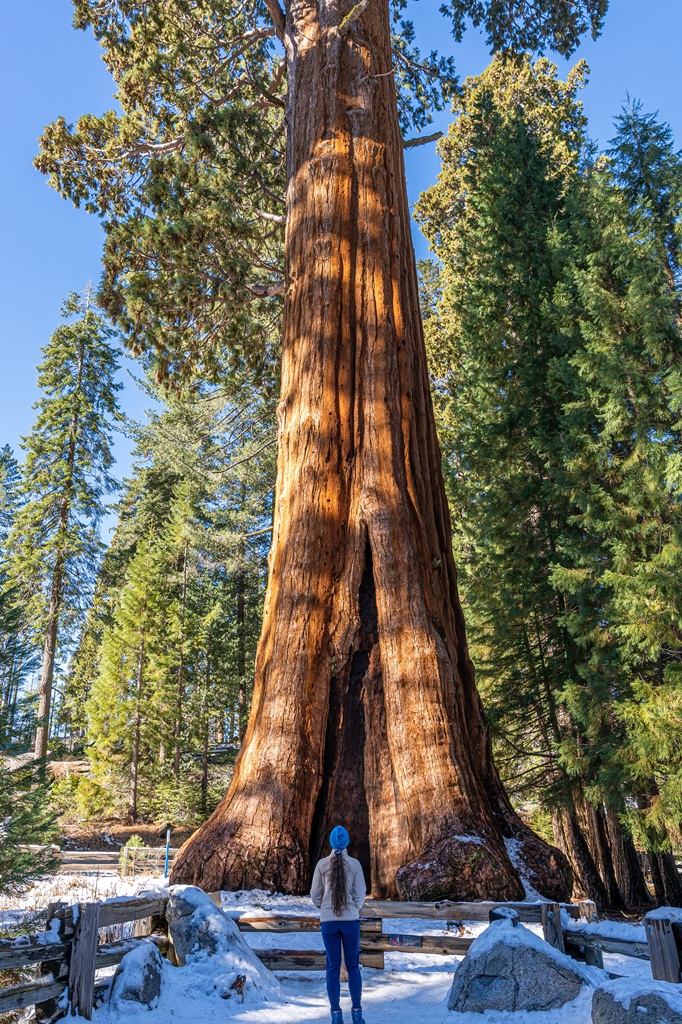
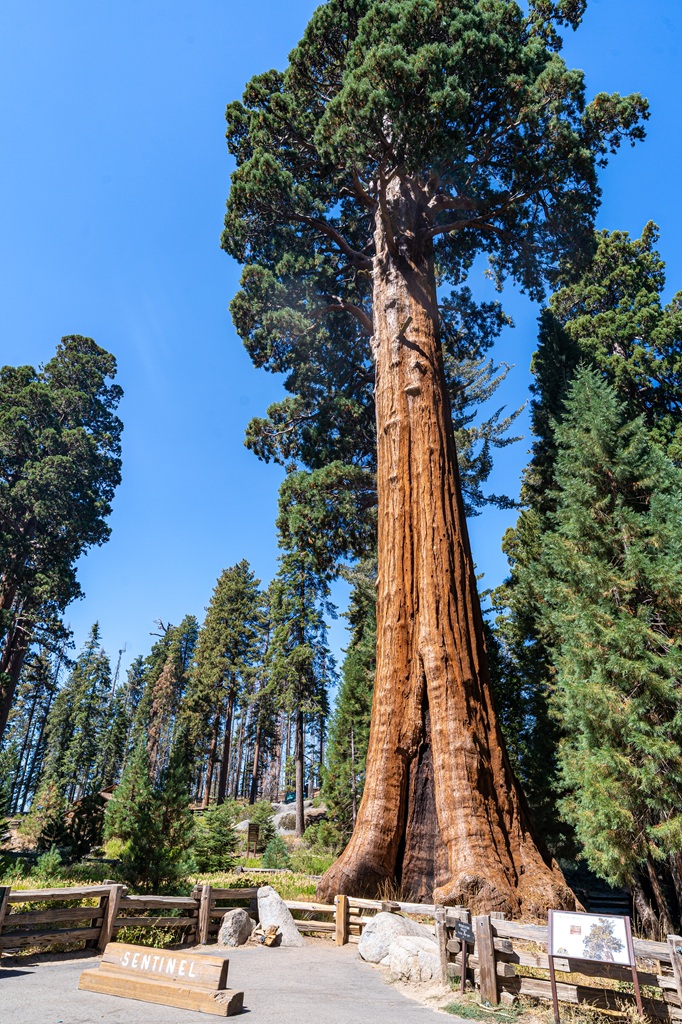
The Big Trees Trail is one of the easiest and most family-friendly hikes in Sequoia National Park! The trail is mostly flat, paved with a few boardwalk sections, and accessible for visitors of all ages and abilities.
Highlights along this trail include Sentinel Tree, Clara Barton Tree, Round Meadow, and interpretive signs about the giant sequoia ecosystem.
This hike is a great substitute if you decided not to hike the Tokopah Falls Trail. Or if you did do the Tokopah Falls Trail and you’re short on time, you can skip this one.
If I had to choose between the Big Trees Trail and the Congress Trail (both popular trails within the Giant Forest) then I would prioritize the Congress Trail. But if you have time for the Big Trees Trail, go for it! It’s a quick and easy hike – great option if you have kids. 🙂

🥾 Big Trees Trail Stats:
- Length: 1.2 miles (1.9 km) roundtrip
- Elevation Gain: 105 feet
- Difficulty: Easy
- Hiking Time: 30 minutes to 1 hour
- Pet-friendly? No
- Wheelchair Accessible? Yes
- Highlights: Sentinel Tree, Clara Barton Tree, young giant sequoia trees, and Round Meadow
✨ READ THIS: Big Trees Trail Hiking Guide
🅿️ Big Trees Trailhead/Parking: The Big Trees Trailhead is located just down the road from the Giant Forest Museum. The main parking area is across from the museum, and from there it’s an easy 0.3-mile (0.5-km) walk to reach the trailhead. Vault toilets and drinking water are available near the museum.
Those with disability placards can park directly at the trailhead in a small parking lot. In the winter, this lot is open for everyone.
📍 Google Maps Location: Big Trees Trailhead
🚌 Shuttle Option: You can take the free Sequoia shuttle to the Giant Forest Museum. The shuttle does NOT directly drop you off at the trailhead. From the Giant Forest Museum you must walk a short distance to the trailhead.
🚗 Distance/Drive Time to the Big Trees Trailhead: No driving required if you’re already at the Giant Forest Museum. You just have to walk a short distance to reach the Big Trees Trailhead.
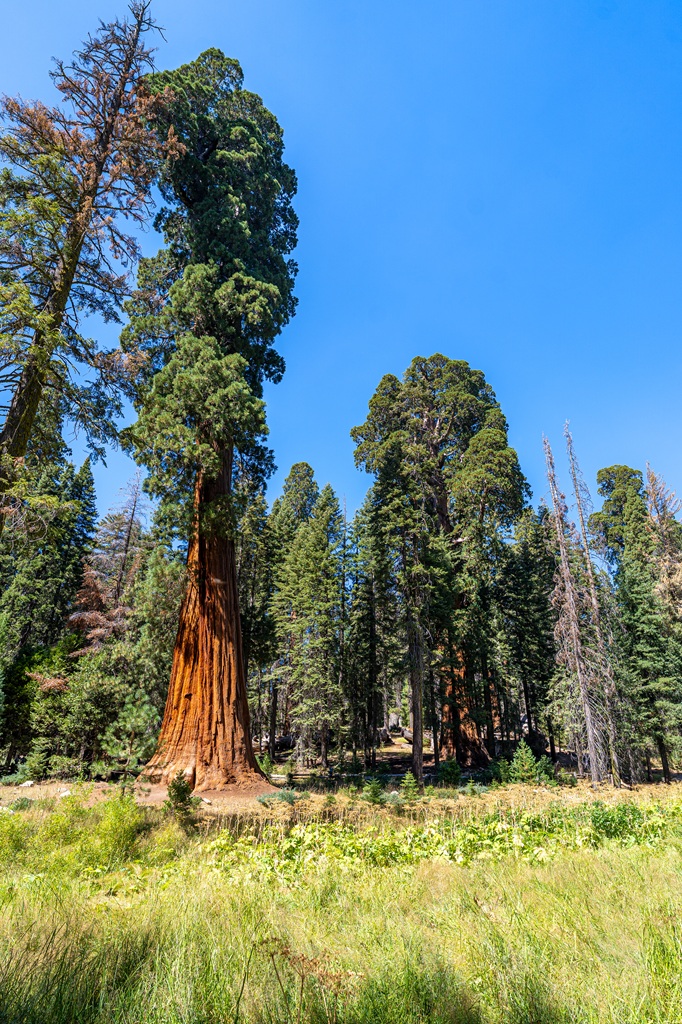
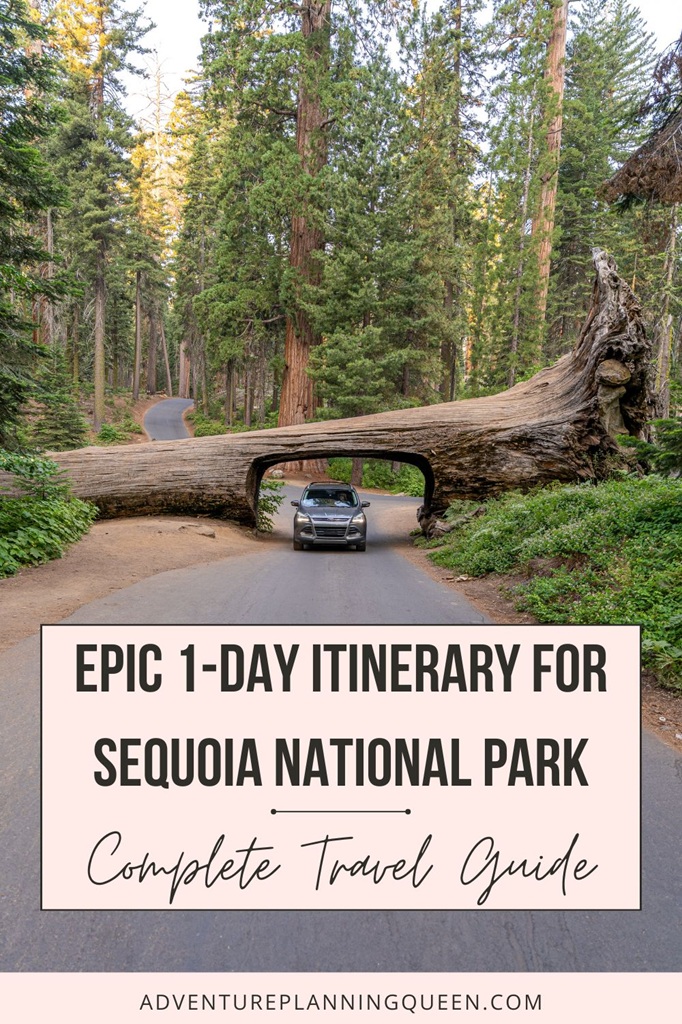
Drive Through Tunnel Log
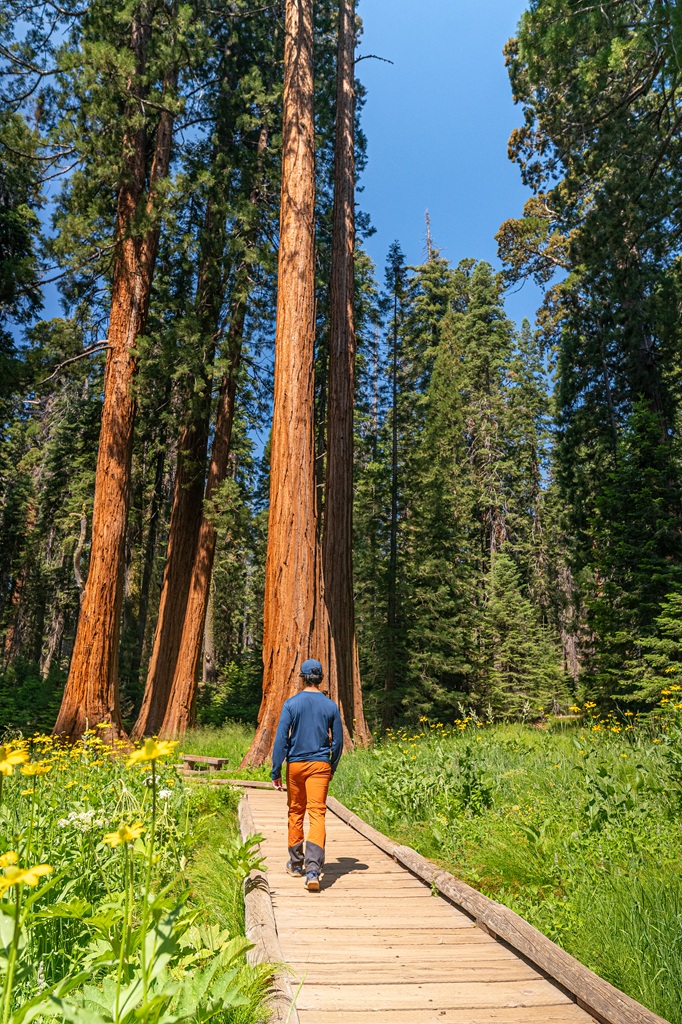
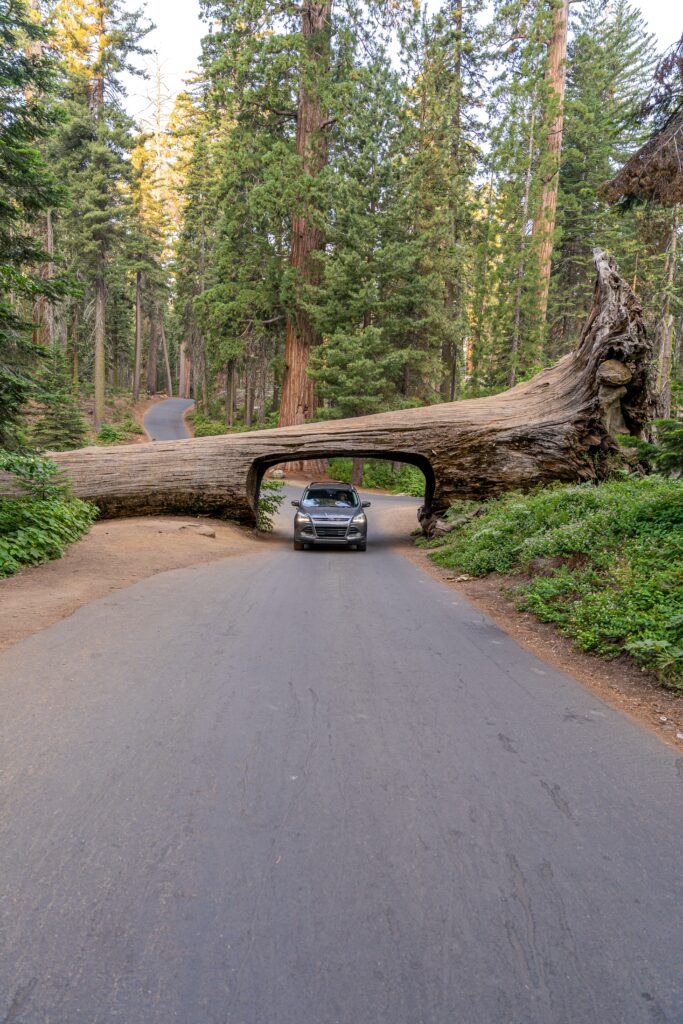
Another fun thing to do in Sequoia National Park is drive through a fallen giant sequoia tree. Soon after the Moro Rock / Crescent Meadow Road was built, a giant sequoia tree fell across the road. Instead of removing it, a tunnel was carved through the trunk.
Since then, the fallen giant sequoia has been known as Tunnel Log. Driving (or walking) through Tunnel Log is one of those things you just have to do when visiting Sequoia for the first time.
This is a popular spot so be prepared to wait your turn to drive through this fallen sequoia. Hopefully, if you’re following this itinerary and it’s later in the day, then the crowds will have thinned out.
🌳 Tunnel Log Tip: It’s not recommended to stop in the roadway to take photos, but I understand wanting to get a quick shot. Please just be mindful of other vehicles wanting to pass through. This a popular spot so have patience! Get there early or wait until later in the day if you want to get photos of your car under Tunnel Log. You can also pass the log by taking the bypass road on the left.
📍 Google Maps Location: Tunnel Log
🅿️ Tunnel Log Parking: There is not a parking lot directly at Tunnel Log, only small roadside turnouts nearby. So, if you want to walk to Tunnel Log you can park in the roadside turnouts along Crescent Meadow Road. Be careful when walking on the road!
🚌 Shuttle Option: There is no shuttle stop at Tunnel Log, but the shuttle does bypass the fallen sequoia when going to Crescent Meadow. Also, on weekends, Moro Rock / Crescent Meadow Road is closed to private vehicles so you will not be able to drive your own car through Tunnel Log.
During the weekday (Monday-Friday), the road is fully open so you can drive through the tree. If want to walk through Tunnel Log, you can take the shuttle to Moro Rock and walk from there (0.6 miles / 1 km one-way).
🚗 Distance/Drive Time to Tunnel Log: The distance from the Giant Forest Museum to Tunnel Log is about 1.6 miles (2.5 km) along Crescent Meadow Road with a drive time of about 10 minutes.
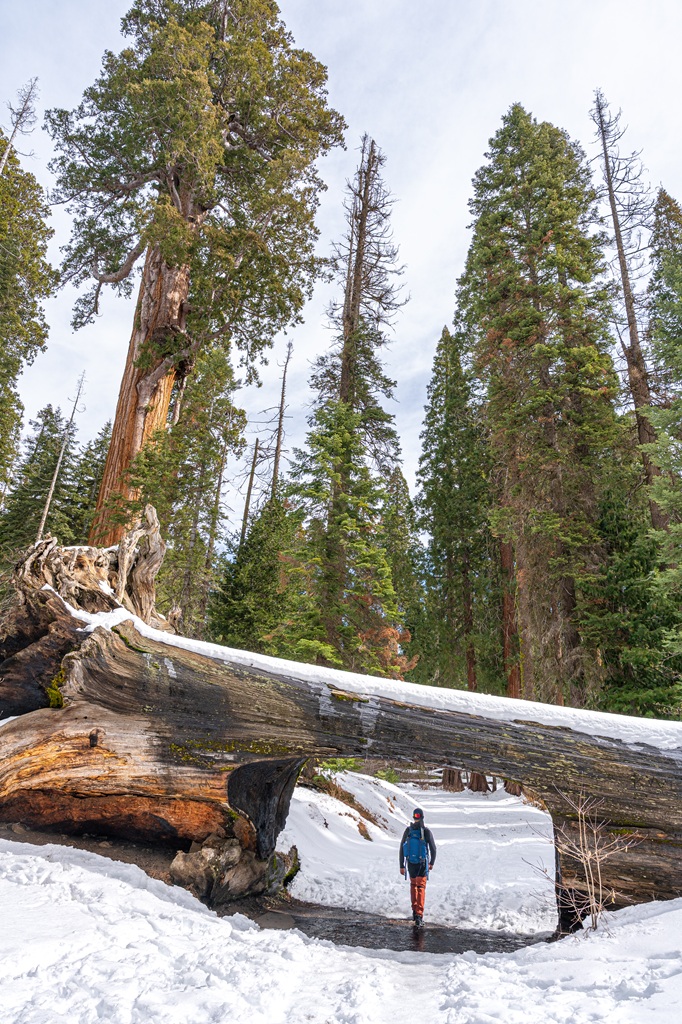
❄️ Winter Route: In the winter, the Moro Rock / Crescent Meadow Road closes so your only option is to walk, snowshoe, or cross country ski from the Giant Forest Museum to reach Tunnel Log. This is one of the top things to do in Sequoia in winter!
Hike the Crescent Meadow Loop
If you’re up for another easy and relatively short hike, Crescent Meadow Loop is a beautiful trail, especially later in the day when it’s not as crowded.
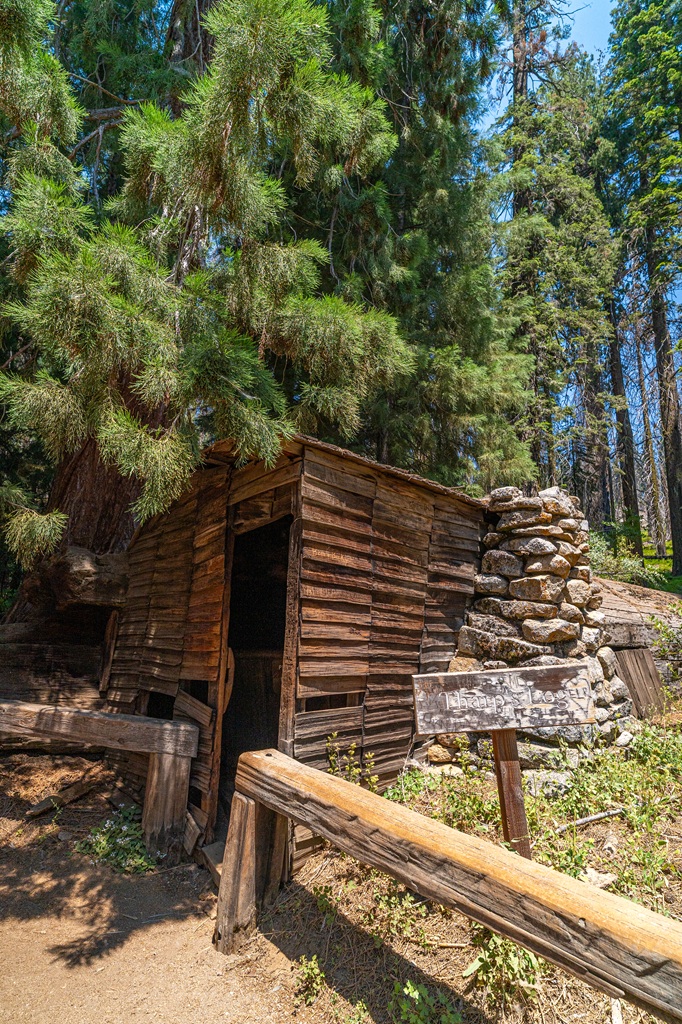
This trail loops around Crescent Meadow, passing towering giant sequoias, and leading to a unique structure called Tharp’s Log (a cabin built inside a fallen sequoia log in the 1800s by Hale Tharp).
The main loop is about 1.3 miles (2 km), but if you want to see Tharp’s Log, you’ll take a short detour onto the Tharp’s Log Trail. It reconnects with the main loop, turning it into a slightly longer but still easy 1.8-mile (2.8-km) hike.
🥾 Crescent Meadow and Tharp’s Log Trail Stats:
- Length: 1.8 miles (2.8 km) roundtrip
- Elevation Gain: 220 feet
- Difficulty: Easy
- Hiking Time: 1 hour
- Pet-friendly? No
- Wheelchair Accessible? “The trail is partially paved and may be accessible, depending on abilities” – NPS
- Highlights: Crescent Meadow, Tharp’s Log, and Chimney Tree
✨ READ THIS: Crescent Meadow Loop and Tharp’s Log Hiking Guide
🅿️ Crescent Meadow Trailhead/Parking: The Crescent Meadow Trailhead (also known as the High Sierra Trailhead) is located at the end of Crescent Meadow Road. There are restrooms and picnic tables here.
📍 Google Maps Location: Crescent Meadow Trailhead
🚌 Shuttle Option: You can take the free Sequoia shuttle to Crescent Meadow. The shuttle will bypass Tunnel Log, so you’ll get to see the famous fallen sequoia, but the shuttle is too tall to drive through it. Moro Rock / Crescent Meadow Road is closed to private vehicles on the weekends (Saturday and Sunday), so you have no choice but to take the shuttle on those days.
Be aware that the shuttle bus stops running at 6 PM! This hike is placed later in the day on the itinerary, so I recommend driving to the trailhead parking area rather than taking the shuttle.
🚗 Distance/Drive Time to Crescent Meadow: The distance from the Giant Forest Museum to the Crescent Meadow Trailhead is about 2.6 miles (4.2 km) with a drive time of about 13 minutes. You’ll pass through Tunnel Log when heading to Crescent Meadow.

Watch Sunset at Moro Rock
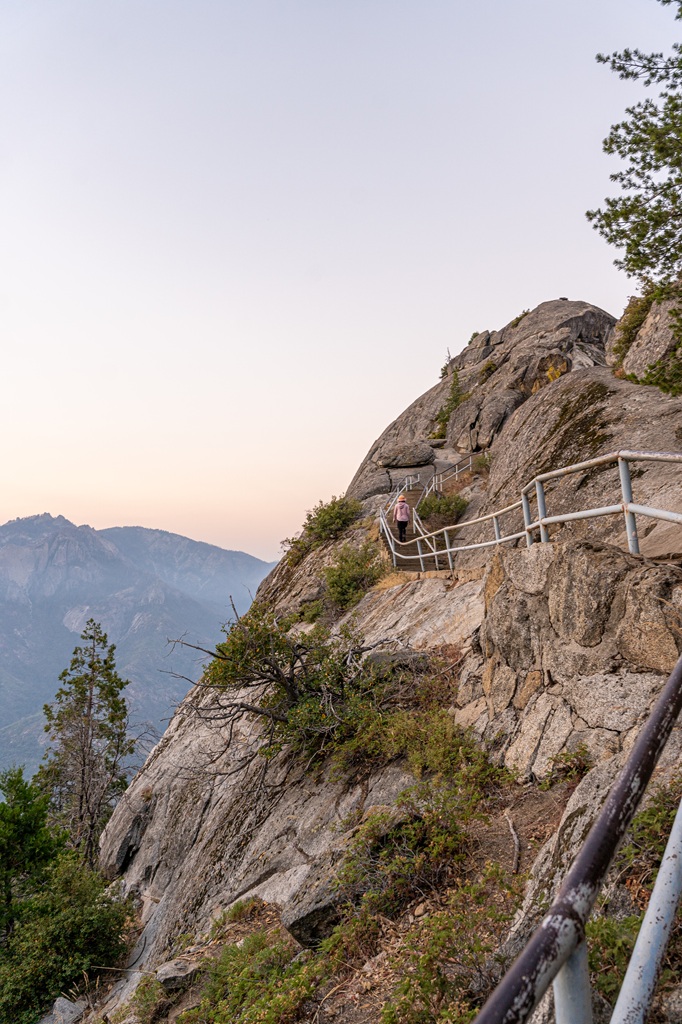
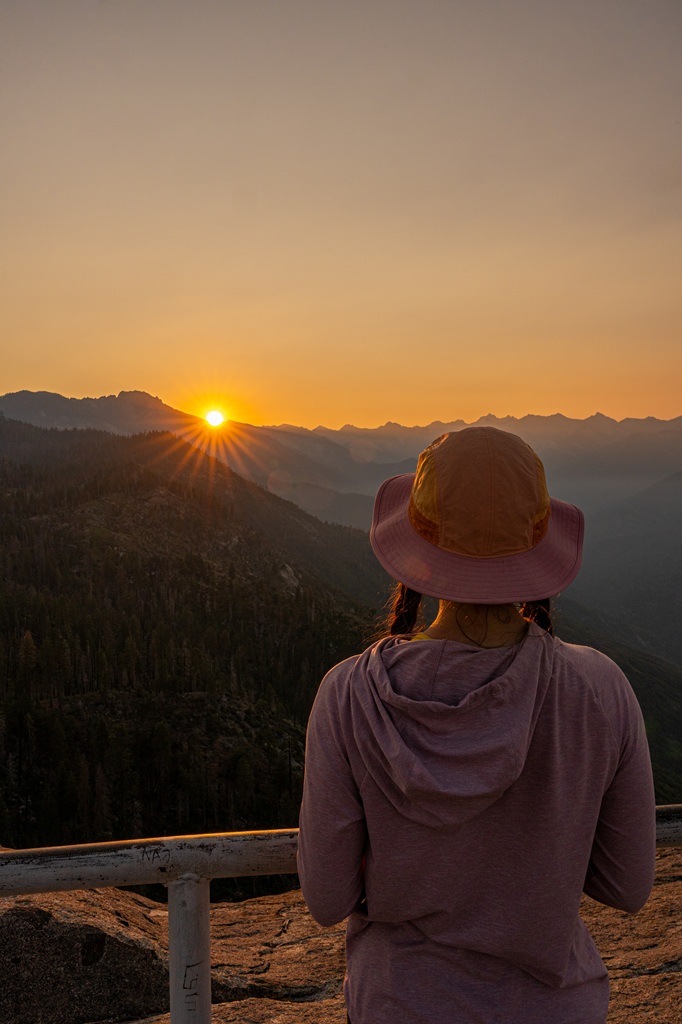
Moro Rock is a very popular hike so we’re saving this for last! Also, watching sunset from here is just the perfect way to end the day. If you don’t have time to do both Crescent Meadow and Moro Rock, I highly recommend Moro Rock if you’re not too afraid of heights and can handle climbing up 350+ steps!
Sitting at 6,725 feet in elevation, Moro Rock is a massive granite dome that offers amazing panoramic views of the Great Western Divide, San Joaquin Valley, and deep into the Sequoia National Park wilderness.
The hike to the top is really exciting and doesn’t feel too difficult despite the trail being made up of mostly steps. There are lots of spots to stop, enjoy the views, and catch your breath.
🥾 Moro Rock Trail Stats:
- Length: 0.5 miles (0.8 km) roundtrip
- Elevation Gain: 185 feet
- Difficulty: Moderate to hard
- Hiking Time: 30 minutes to 1 hour
- Pet-friendly? No
- Wheelchair Accessible? No
- Highlights: Moro Rock, 350+ steps, and stunning views from the top
✨ READ THIS: Moro Rock Hiking Guide
🅿️ Moro Rock Trailhead/Parking: The trailhead is located off Moro Rock / Crescent Meadow Road, where you’ll find a small parking area. Like I mentioned above, this is a popular hike, so finding a parking spot could be tough. There is additional parking further down the road at Hanging Rock Trailhead.
📍 Google Maps Location: Moro Rock Trailhead
🚌 Shuttle Option: You can take the free Sequoia shuttle to the Moro Rock Trailhead. Moro Rock / Crescent Meadow Road is closed to private vehicles on the weekends (Saturday and Sunday), so you have no choice but to take the shuttle on those days. However, if you’re hiking to Moro Rock for sunset, you must drive your own car – the shuttle bus stops running at 6 PM.
🥾 Alternate Hiking Route: If you have time for a longer hike, you can park at the Giant Forest Museum and take the Moro Rock Trail to reach the top of Moro Rock. This route is 3.8 miles (6.1 km) roundtrip with about 475 feet of elevation gain. This is the only option to reach Moro Rock during the winter months as the road closes for the season.
Sample 1-Day Sequoia National Park Itinerary
This is a sample itinerary for one perfect day in Sequoia National Park. It includes times, trails and highlights, parking, shuttle stops, and important things to know. Basically, it’s the exact same itinerary as described above – just less wordy.
Be aware, when following an itinerary, things may not go exactly as planned. That’s why it’s important to have a backup plan! And don’t stress about trying to squeeze in everything.
This sample itinerary includes the most popular trails and spots to visit in a reasonable amount of time. I try to take into account drive time, waiting for the shuttle, and hiking time.
And the great thing about this itinerary is that you can take out one thing and add something else that seems more interesting to you. Further below in this guide I include more things to do in Sequoia National Park, so feel free to create your own personalized 1-day itinerary!
🛣️ 7:00 AM – Ash Mountain Entrance
- Tip: During the summer months or holiday, reach the Ash Mountain Entrance before 7 AM (the earlier, the better) to avoid long lines.
- Highlights Along Generals Highway: Sequoia National Park sign, Foothills Visitor Center, Tunnel Rock, Hospital Rock, Amphitheater Point, Eleven Range Overlook, and the Four Guardsmen.
- Time for Activity: 1 to 1.5 hours (drive from Ash Mountain Entrance to Giant Forest + quick stops along the way).
- Alternate Entrance: You can also enter Sequoia National Park from the Big Stump Entrance. This is a great option if you want to add quick stops in Kings Canyon to your itinerary.
🌳 8:30 AM – General Sherman Tree
- Parking: Parking located at the General Sherman Tree Trailhead off Wolverton Road (main parking lot) or small accessible lot off Generals Highway (disability placard required).
- Shuttle Stop: Route 4 (orange) stops at the main General Sherman Tree parking lot and Route 1 (green) stops at the General Sherman Tree accessible lot.
- Hike Details: 1.1 miles / 1.7 km roundtrip with 190 feet of elevation gain (easy/moderate) starting from the main General Sherman Tree Trailhead or 0.3 miles / 0.5 km roundtrip with minimal elevation gain (easy) starting from the accessible parking lot.
- Highlights: General Sherman
- Time for Activity: 30 to 45 minutes
🥾 9:00 AM – Congress Trail
- Parking: Parking located at the General Sherman Tree Trailhead off Wolverton Road (main parking lot) or small accessible lot off Generals Highway (disability placard required). Hike starts at the Congress Trail Trailhead near General Sherman Tree.
- Shuttle Stop: Route 4 (orange) stops at the main General Sherman Tree parking lot and Route 1 (green) stops at the General Sherman Tree accessible lot.
- Hike Details: 2.9 miles / 4.7 km roundtrip (combined with the General Sherman Tree Trail) with 460 feet of elevation gain (moderate) starting from the main General Sherman Tree Trailhead.
- Highlights: General Sherman Tree, Chief Sequoyah, The President Tree, The Senate Group, The House Group, Room Tree, and McKinley Tree.
- Time for Activity: 1 to 1.5 hours
💦 11:00 AM – Tokopah Falls
- Parking: Big parking lot near the trailhead with flush toilets and drinking water. Hike starts at the Tokopah Falls Trailhead at the Lodgepole Campground.
- Shuttle Stop: Route 1 (green) stops at the Lodgepole Campground.
- Hike Details: 4 miles / 6.4 km roundtrip with 550 feet of elevation gain (moderate) starting from the Tokopah Falls Trailhead.
- Highlights: The Watchtower, Tokopah Valley, Marble Fork of the Kaweah River, and Tokopah Falls.
- Time for Activity: 2 to 2.5 hours
🥪 1:30 PM – Lunch at Lodgepole Market and Grill
- Food Options: Casual lunch meals and grab-and-go foods.
- Tip: The Lodgepole Market and Grill are open seasonally from May to October.
- Time for Activity: 1 hour
🏫 2:30 PM – Giant Forest Museum
- Parking: Large parking lot across the street from the museum and a small accessible lot beside the museum (disability placard required).
- Shuttle Stop: Route 1 (green) stops at the Giant Forest Museum.
- Details: The museum offers interactive exhibits about giant sequoia trees, identifying different types of trees, the park’s human history, and more.
- Time for Activity: 30 minutes
🌳 3:00 PM – Big Trees Trail
- Parking: Parking at Giant Forest Museum or accessible parking lot at the trailhead. Big Trees Trailhead located 0.3 miles / 0.5 km from the Giant Forest Museum.
- Shuttle Stop: No shuttle stop directly at the trailhead. Route 1 (green) stops at the Giant Forest Museum.
- Hike Details: 1.2 miles / 1.9 km roundtrip with 105 feet of elevation gain (easy) starting from the Giant Forest Museum.
- Highlights: Sentinel Tree, Clara Barton Tree, young giant sequoia trees, and Round Meadow.
- Time for Activity: 45 minutes to 1 hour
🚗 4:30 PM – Tunnel Log
- Location: Tunnel Log is located along Crescent Meadow Road about 1.6 miles / 2.5 km from the Giant Forest Museum.
- Shuttle Stop: No shuttle stop directly at Tunnel Log. Route 2 (gray) stops at Crescent Meadow, bypassing Tunnel Log so you’ll get a quick glimpse of the fallen sequoia. At this time, I’d recommend driving since the shuttle bus stops running at 6 PM.
- Highlights: Driving through a fallen giant sequoia tree.
- Time for Activity: 15 to 30 minutes (depending on traffic)
🐻 5:00 PM – Crescent Meadow Loop
- Parking: Fairly big parking lot at end of Crescent Meadow Road. Hike starts at Crescent Meadow Trailhead (also called the High Sierra Trailhead).
- Shuttle Stop: Route 2 (gray) stops at Crescent Meadow. Be aware that the shuttle bus stops running at 6 PM! At this time, it would be a better idea to drive to the trailhead parking area.
- Hike Details: 1.8 miles / 2.8 km roundtrip with 220 feet of elevation gain (easy) starting from the Crescent Meadow Trailhead.
- Highlights: Crescent Meadow, Tharp’s Log, and Chimney Tree.
- Time for Activity: 1 to 1.5 hours (extra time added if you stop and eat a packed dinner/snacks at the picnic area)
🌄 7:00 PM – Moro Rock
- Parking: Small parking lot at the trailhead with more parking at the Hanging Rock Trailhead. Hike starts at the Moro Rock Trailhead along Moro Rock Road.
- Shuttle Stop: Since the shuttle bus stops running at 6 PM, you will have to drive to the parking lot.
- Hike Details: 0.5 miles / 0.8 km roundtrip with 185 feet of elevation gain (moderate/hard) starting from the Moro Rock Trailhead.
- Highlights: Moro Rock, 350+ steps, and stunning views from the top, especially at sunset.
- Time for Activity: 30 minutes to 1 hour
Best Time to Visit Sequoia National Park for One Day
Sequoia National Park is a great place to visit anytime of the year! If it’s your first time visiting Sequoia and you only have one day, I’d recommend planning a summer trip. The daylight hours are longest allowing you to do as many fun activities as possible in one day!
Let’s dive deeper into each season so you can decide which month will be best for your Sequoia trip.
🌷 Spring (March – May): Spring can be unpredictable but beautiful. Daytime temperatures range between 50–70°F (10-21°C) and there’s a possibility of lingering snow, especially in March and April.
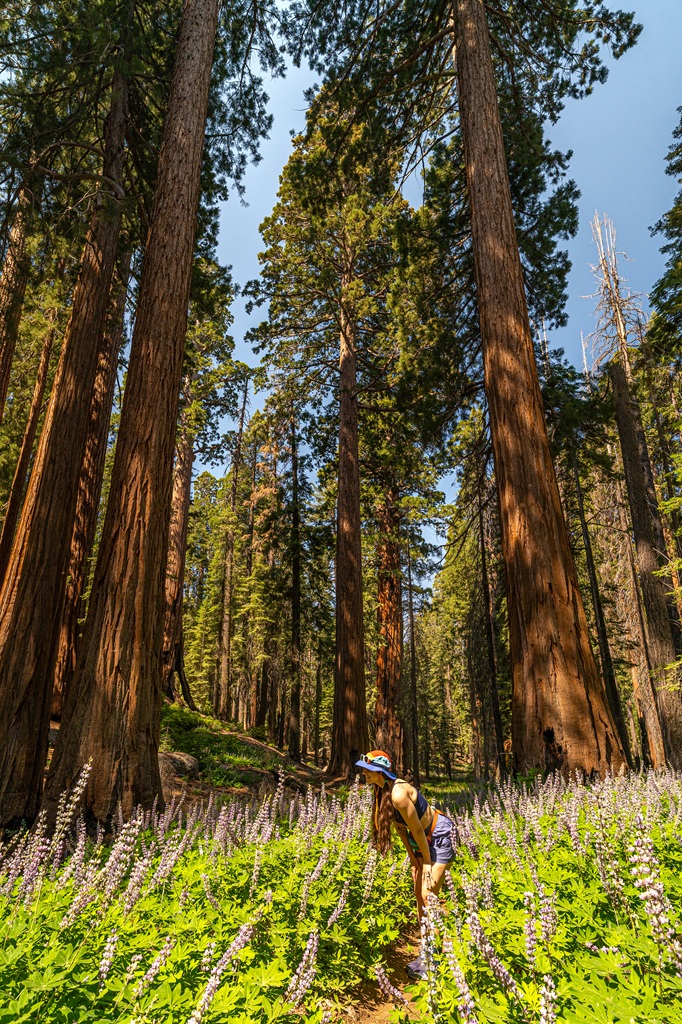
Wildflowers begin to bloom at lower elevations, and the trails are less crowded than in summer. You might still need traction gear, like microspikes, early in the season. Usually, the foothills area stays clear of snow during most of the year.
If you plan to hike trails that lead to higher elevations, such as Alta Peak or Lakes Trail, be prepared for snowy conditions. Always do your research beforehand!
⚠️ Throughout winter and into spring, some roads are closed due to snow, such as the Moro Rock / Crescent Meadow Road and the Generals Highway between Wuksachi Lodge and the junction to Highway 180 in Kings Canyon. Check current road status before heading out or call 559-565-3341 (press 1, then 1) for up-to-date road conditions.
☀️ Summer (June – August): Summer is the most popular time to visit Sequoia National Park. Days are warm with temperatures between 70–80°F / 21-27°C and wildflowers are blooming at higher elevations. The trails within the Giant Forest area are fully accessible and snow-free. For higher elevation hikes, research trail conditions before heading out.
Summer is also a very busy time so expect crowded trails and traffic. So, if you’re planning a one-day trip to Sequoia National Park in the summer, get to the entrance no later than 7 AM! Also, park your car in any of the major parking lots and utilize the shuttle system.
Keep an eye on the air quality as the summer season is also wildfire season.
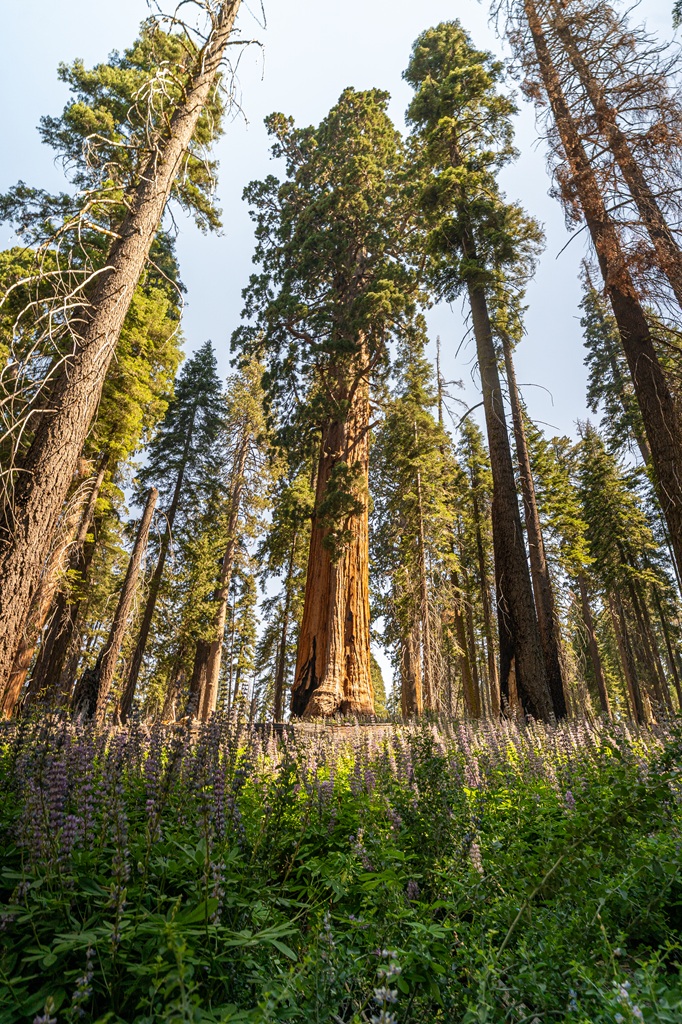
🍂 Fall (September – November): Fall is a great time to visit with daytime temperatures ranging from 40–70°F / 4-21°C. The air is cool, the massive summer crowds are gone, and the fall colors are popping with yellows, oranges, and reds. Giant sequoias stay green year-round, but other types of trees change colors in the fall.
September usually still feels like summer, while October and November start to cool off. Keep an eye on the weather as early winter storms can happen in the fall!
☃️ Winter (December – February): Visiting Sequoia National Park in winter is always a fun and exciting time. However, winter may not be the best time to go if it’s your first time and you only have one day.
➡️ If visiting in winter is your goal, check out my 2-day Sequoia National Park winter itinerary!
If you do go in the winter, be prepared with plenty of layers for the cold temperatures and proper gear for snowy/icy trails. Tire chains can be required at any time from November through March depending on road conditions – all vehicles are required by law to carry chains or cables when entering chain control zones.
Some roads close seasonally due to snow, such as the Moro Rock / Crescent Meadow Road and the Generals Highway between Wuksachi Lodge and the junction to Highway 180 in Kings Canyon. Check current road status before heading out or call 559-565-3341 (press 1, then 1) for up-to-date road conditions.

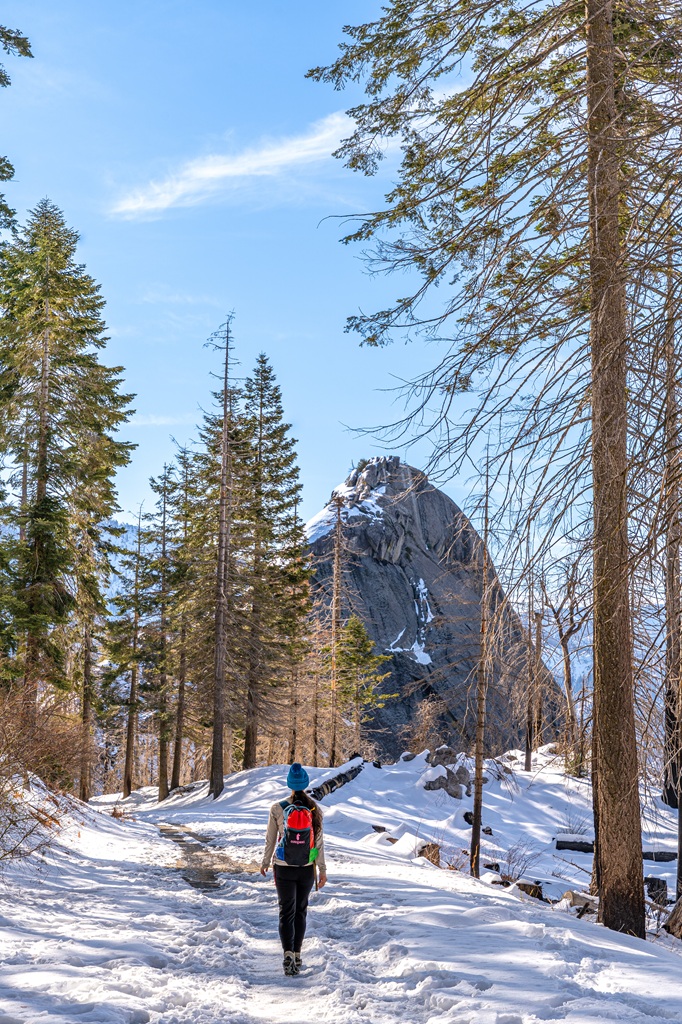
❄️ Sequoia National Park Winter Guides
One Day Trip to Sequoia National Park Logistics
Reading through the itinerary is the fun part! But now, it’s time to learn more about the logistics of planning a trip to Sequoia National Park.
Don’t skip this part! It contains important information that will make visiting Sequoia a smooth and stress-free experience.
How to Get to Sequoia National Park
The most popular way to get to Sequoia National Park is by renting a car or driving your own. This gives you the flexibility to enter the park as early as you want and stay as late as you want.
My husband and I have made many day trips from Fresno to Sequoia National Park. During the summer months, we’ll take Highway 180 through the Big Stump Entrance, and in the winter months, we’ll take Highway 99 to 198 through the Ash Mountain Entrance.
There aren’t too many public transportation options to Sequoia National Park unless you book a tour where they provide transportation. This will obviously make it tough the stick to this one-day itinerary, but tours can be a fun option!
One public transportation option is the Visalia-Sequoia Shuttle. A roundtrip ticket from Visalia to the Giant Forest Museum is just $15 per person. This is a great option if you do not own a car or you don’t want to drive up and down the mountainous roads.
The only major downside to taking the Visalia-Sequoia Shuttle is that you will be limited on how much time you can spend in the park. So, you will have to adjust the itinerary to fit the time window you have.
It seems like the shuttle’s earliest arrival time is around 9 AM and the latest departure time is around 5:30 PM. Here’s a new sample 1-day Sequoia National Park itinerary tailored to those who are taking the Visalia-Sequoia Shuttle. Remember, you will have to rely on the in-park shuttle system to get around!
🚌 Visalia-Sequoia Shuttle Itinerary:
- 9:30 AM – See the General Sherman Tree
- 10:00 AM – Hike the Congress Trail
- 12:00 PM – Lunch at the Lodgepole Market and Grill
- 1:30 PM – Visit Giant Forest Museum and hike the Big Trees Trail
- 3:30 PM – Hike to the top of Moro Rock
- 5:15 PM – Be back at the Giant Forest Museum for the 5:30 PM departure
Sequoia National Park’s Entrance Fee
Entrance to Sequoia National Park costs $35 per vehicle for a 7-day pass. However, if you have the America the Beautiful Annual Pass, your entry is free!
For those who love exploring national parks, investing in the Annual Pass is a smart choice. At just $80, it grants you access to over 2,000 federal recreation sites across the country!
FEE UPDATES! Beginning January 1, 2026, non-U.S. residents (without an annual pass) will pay a $100 per person in addition to the standard entrance fee. The Annual Pass for non-US residents will cost $250.
Parking in Sequoia National Park
During the offseason (October-May), parking usually isn’t an issue, but during the summer months or holidays, finding a parking spot can be a stressful task.
But don’t worry! If you just follow my advice, you will not have to spend most of your time circling parking lots waiting for a spot to become available.
To avoid big crowds and find a good parking spot, get into the park before 7 AM. Then park in one of the major parking lots and utilize the shuttle system to get around the park. All the spots mentioned above in the itinerary have shuttle stops except for Tunnel Log.
🅿️ Major Parking Lots in Sequoia:
Sequoia National Park Shuttle
If you’re visiting Sequoia National Park in the summer, the Sequoia shuttle will become your best friend. It’s free, no reservations required, and the best way to get around the park!
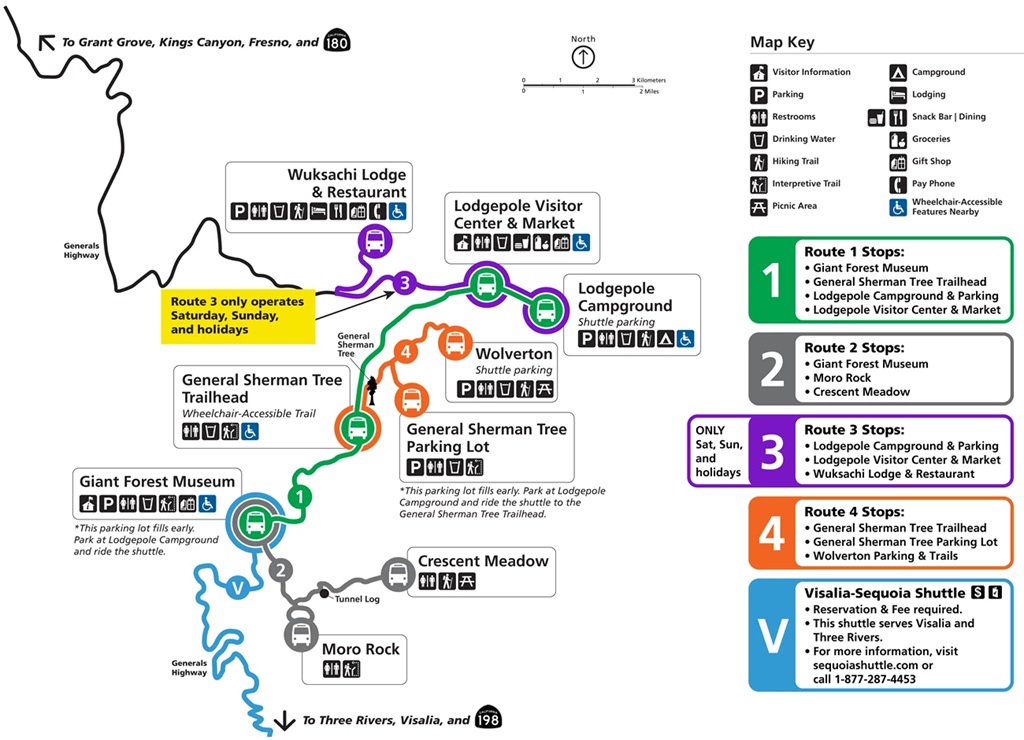
The shuttle system has four routes. Make sure you have a map of the shuttle system routes or a screenshot of it on your phone so you know which bus to get on – it can be confusing!
🗓️ 2026 Shuttle Service Dates and Times: May 22 – September 7, 2026 from 8:00 AM to 6:00 PM.
🚍 Sequoia Shuttle Routes:
- Route 1 (green): Stops along this route include the Giant Forest Museum, General Sherman Tree accessible parking lot, Lodgepole Visitor Center and Market, and Lodgepole Campground.
- Route 2 (gray): Stops along this route include the Giant Forest Museum, Moro Rock, and Crescent Meadow.
- Route 3 (purple): This route is only available Saturday, Sunday, and on holidays. Stops along this route include Wuksachi Lodge and Restaurant, Lodgepole Visitor Center and Market, and Lodgepole Campground.
- Route 4 (orange): Stops along this route include the General Sherman Tree accessible parking lot, General Sherman Tree Trailhead (main parking lot), and Wolverton.
Where to Stay for One Day in Sequoia National Park
Lodging inside the park is pretty limited, but there are a few choices. If you’re more into camping, Sequoia has several awesome campgrounds for tents, RVs, and car campers.
Just outside the park, the town of Three Rivers is the best place to stay! If you don’t mind driving a bit further, staying in Visalia is also a great option.
For lodging inside the park and just outside in Three Rivers, book your accommodation as far in advance as you can! They can sell out quick, especially during the summer months and holidays.
Here are the best places to stay in and near Sequoia National Park 👇
1. Wuksachi Lodge
- Location: Sequoia National Park
- Cost: Midrange to luxury
- Distance from Giant Forest Museum: 6.5 miles (10.5 km), 15 minutes’ drive
- Details: The only lodge inside the park. It offers a convenient location near popular spots in the Giant Forest and Lodgepole areas. If you’re just spending one day in Sequoia National Park, staying at the Wuksachi Lodge is the best choice. It also has an on-site restaurant, gift shop, and WiFi.
- Book your stay at Wuksachi Lodge! ✨
2. John Muir Lodge
- Location: Kings Canyon National Park
- Cost: Midrange
- Distance from Giant Forest Museum: 31 miles (50 km), 1 hour drive
- Details: Planning to spend one day in Kings Canyon and another day in Sequoia? This is a great place to stay! It’s a rustic, comfortable lodge with a restaurant and gift shop within walking distance, common areas with fireplaces and games, and WiFi.
- Book your stay at John Muir Lodge! ✨
3. Lazy J Ranch Motel
- Location: Three Rivers
- Cost: Midrange
- Distance from Giant Forest Museum: 25 miles (40 km), 1 hour drive
- Details: Stay at a family-owned motel located just 15 minutes from the Ash Mountain Entrance. All rooms are one-story with private entrances, on-site parking, river access, and laundry facilities.
- Book your stay at Lazy J Ranch Motel! ✨
4. Buckeye Tree Lodge
- Location: Three Rivers
- Cost: Midrange
- Distance from Giant Forest Museum: 17 miles (27 km), 50 minutes’ drive
- Details: Stay at this historic lodge established in the late 1940s. It’s located just half a mile from the Ash Mountain Entrance and offers lodge rooms, cabins, cottages, and the Buckeye River House.
- Book your stay at Buckeye Tree Lodge! ✨
5. AutoCamp Sequoia
- Location: Three Rivers
- Cost: Midrange
- Distance from Giant Forest Museum: 24 miles (37 km), 1 hour drive
- Details: This is a unique glamping experience just 15 minutes from the Ash Mountain Entrance. Options include airstreams, cabins, and lodge rooms. You will have access to an outdoor pool, bike rentals, lounge with a fireplace, general store, on-site restaurant, and WiFi along with community activities like yoga, live music, and more.
- Book your stay at AutoCamp Sequoia! ✨
6. Comfort Inn & Suites Sequoia Kings Canyon
- Location: Three Rivers
- Cost: Midrange
- Distance from Giant Forest Museum: 23 miles (37 km), 1 hour drive
- Details: This a typical but comfortable hotel in a great location about 15 minutes from the Ash Mountain Entrance. It offers WiFi, continental breakfast, outdoor pool, hot tub, sauna, gift shop, and laundry facilities.
- Book your stay at Comfort Inn & Suites Sequoia Kings Canyon! ✨
7. Wyndham Visalia
- Location: Visalia
- Cost: Budget to midrange
- Distance from Giant Forest Museum: 56 miles (90 km), 1 hour and 40 minutes’ drive
- Details: This is a more affordable option about 50 minutes from the Ash Mountain Entrance. This hotel offers continental breakfast, outdoor and indoor pools, on-site restaurant, fitness center, laundry facilities, and WiFi. If you only have one day to visit Sequoia, I recommend booking a place closer to the park if you can.
- Book your stay at Wyndham Visalia! ✨
🗺️ Find more places to stay using this map ⬇️
What to Bring to Sequoia National Park
🎟️ Entrance Pass – You will need to purchase an entrance pass once you reach the entrance station or you can buy the America the Beautiful Pass ahead of time and use that for the entire year.
👚 Layers of Clothing (top) – Pack a moisture-wicking base layer, a fleece mid-layer, an insulated jacket, and an outer shell to protect you from the elements, such as rain and wind. You may not need all these layers, especially in the summer months, but it’s always best to be over-prepared!
Check out my favorite tops 👇
- Base layer: REI Co-op Sahara Shade Hoodie (warm/mild conditions) and REI Co-op Midweight Long-Sleeve Base Layer (cooler conditions)
- Fleece mid layer: Cotopaxi Teca Fleece Full-Zip Jacket
- Down mid layer: Cotopaxi Fuego Hooded Down Jacket
- Outer shell: In the summer I always pack a light windbreaker, such as the Cotopaxi Teca Crop Windbreaker or the RevolutionRace Unit Light Windbreaker. Make sure to also pack a waterproof rain jacket – I like the Patagonia Torrentshell 3L Jacket.
🩳 Hiking Shorts or Pants – Pack a comfortable, durable, and stretchy pair of hiking shorts or pants. Also think about what conditions you might run into, such as warm or cold temperatures, wind and/or rain, bugs, and overgrown trails.
Check out my favorite hiking bottoms 👇
- Cotopaxi Losdos Zip-Off Pants
- RevolutionRace Breezy Ankle Outdoor Pants
- Baleaf Fleece-Lined Jogger Pants
- RevolutionRace Summit Pocket Tights
- Revolution Race Hike & Dive Shorts
🥾 Hiking Footwear – Bring a good pair of hiking boots or shoes with good traction. If I’m not expecting to hike in too much mud or snow, my go-to hiking shoes are the Altra Lone Peak trail runners. They have a wide-toe box, 0 mm heel-to-toe drop, and MaxTrac rubber outsole. Plus, they’re lightweight and so comfy!
🧦 Socks – Moisture-wicking, quick-drying socks are the way to go. My favorite pair of hiking socks are Darn Tough Hiker Micro Crew Cushion Socks. Always pack an extra pair!
🎒 Day Pack – What you plan to do (sightseeing, hiking, etc.), determines what size pack you’ll need. Here is what I typically bring based on what I’m doing that day 👇
- Short walks and sightseeing: Cotopaxi Kapai 1.5L Del Dia Hip Pack
- Short, easy to moderate day hikes: REI Co-op Flash 22L Pack
- Long, moderate to challenging day hikes: REI Co-op Trail 25L Pack or Cotopaxi Luzon Del Dia 24L Pack
🥢 Trekking Poles – Essential for stability, balance, and support when hiking trails, especially on tough, rocky, and uneven terrain. I use REI Co-op Trailmade Trekking Poles and love them!
❄️ Microspikes – Bring a pair of microspikes if you’re visiting in the winter and you’re planning to hike along icy trails. They will give you good traction to avoid slipping! I use Black Diamond Access Spike Traction Device.
🦟 Mosquito/Bug Repellants – In the warmer months, be prepared for annoying gnats, mosquitoes, and flies. Wear long-sleeve clothing, a head net, and use bug spray.
🧤 Extra Warm Layers – If you expect cooler conditions or hiking to higher elevations, make sure to pack extra layers for added warmth, such as gloves, beanie, neck gaiter, and a light jacket.
🗺️ Navigation – Carry a physical topographic map, compass, a satellite messenger (or personal locator beacon), and download offline maps to help you stay on course, find your way in unfamiliar terrain, and call for help if needed.
🔦 Headlamp/Flashlight – A reliable light source with extra batteries, in case you end up hiking in the dark or need it for emergency situations.
💧 Water – Water bottles to carry sufficient water to stay hydrated, along with a filtration system or purification tablets if you plan to refill from natural sources.
🍕 Food – Energy-rich snacks or meals to keep your energy levels up during the hike.
😎 Sun Protection – Sunscreen, sunglasses, and a sunhat to protect yourself from harmful UV rays, even when it’s cloudy. Also, polarized sunglasses are important when it’s bright outside and to reduce glare from reflective surfaces like water, snow, and roads.
🩹 First-Aid Kit – A basic first-aid kit with items like bandages, antiseptic, pain relievers, and any personal medications you may need.
🥶 Emergency Shelter – Pack an emergency bivy sack or space blanket for shelter in case of sudden weather changes.
🔥 Fire – A lighter, matches, or fire starter to help you build a fire for warmth or signaling in case of emergency. Along with matches, I also carry a multi-tool carabiner that has a fire starter, utility blade, screwdriver, and bottle opener.
🗡️ Multi-Tool and Repair Kit – A versatile tool/knife and repair kit to handle any task, from preparing food to making repairs.
💩 Waste Disposal Supplies – WAG bags, trowel, toilet paper, pee cloth, wipes, Ziploc bags – be sure to pack out everything!
First Timer Tips for Visiting Sequoia National Park in One Day
If it’s your first time visiting Sequoia National Park and you only have one day, here are some essential tips to help you maximize your time in the park!
🌄 Get to Sequoia’s Entrance Early: During the summer months and holidays, plan to arrive to Sequoia super early to beat the crowds and secure parking. If possible, enter the park before 7:00 AM (the earlier, the better). Avoid entering between 8-11 AM or else you will likely have to wait in a long line of cars and trying to find a parking spot will be chaotic.
🗺️ Plan Your Route and Download Offline Maps: Know where you’re going before you get to Sequoia! Look at a map, know the area, and plan out your route along with stops. Also, download offline maps on Google – there is little to no cell service inside the park.
🚗 Check Road Conditions: Always check road conditions before heading out. This is especially important in the winter months! You can also call 559-565-3341 (press 1, then 1) for up-to-date road conditions.
🚌 Use the Free Sequoia Shuttle: Parking fills up fast during the peak tourist season, so grab a spot early in one of the big parking lots – Giant Forest Museum, Lodgepole Visitor Center, Wolverton, or General Sherman Tree. Once parked, use the shuttle system to get around the Giant Forest and Lodgepole areas. The shuttle starts running at 8 AM and stops at 6 PM from May 22 – September 7, 2026.
🥾 Prioritize Short and Scenic Hikes: Since you only have one day to explore, focus on short hikes in the Giant Forest and Lodgepole areas. The ones mentioned below are some of the best hikes in Sequoia National Park and the ones you should prioritize when visiting for the first time.
You don’t have to squeeze all of them into one day! I recommend adding at least the first three to your itinerary and if you have time, you can tackle the other ones if you want. 👇
- General Sherman Tree (1.1 miles / 1.7 km roundtrip) – See the largest tree in the world by volume on this short walk.
- Congress Trail (2.9 miles / 4.7 km roundtrip) – The best hike to see lots of giant sequoia trees.
- Moro Rock (0.5 miles / 0.8 km roundtrip) – This exciting hike climbs up 350 steps to the top of Moro Rock which offers incredible 360-degree views.
- Big Trees Trail (1.2 miles / 1.9 km roundtrip) – Easy, family-friendly walk with views of a beautiful meadow and giant sequoias.
- Tokopah Falls (4 miles / 6.4 km roundtrip) – Beautiful hike that takes through a canyon passing tall granite cliffs, meadows, a river, and leading to a 1,200-foot waterfall.
- Crescent Meadow Loop and Tharp’s Log (1.8 miles / 2.8 km roundtrip) – Peaceful hike around a lush meadow, past sequoia trees, and to a unique cabin built in a fallen sequoia tree known as Tharp’s Log.
🌦️ Check the Weather Forecast: Check the weather forecast before going and be prepared for changing conditions. Weather in the mountains can be unpredictable. Always pack extra layers, rain gear, and sun protective clothing.
🌲 Respect Nature: Follow Leave No Trace principles – plan ahead, pack out all trash, avoid disturbing wildlife, be considerate of others, and respect the natural beauty of Sequoia National Park.
🚰 Bring a Reusable Water Bottle: Many of the spots mentioned in the itinerary have drinking water available. Bring a reusable water bottle and refill it each time so you can stay hydrated. This is especially important during the summer months – even though the Giant Forest is at high elevation, it can still get hot in the summer!
⛽ Fuel Up: Make sure to fuel up (or charge your vehicle) before entering the park. There are NO gas stations or EV charging stations inside Sequoia National Park!
🐶 Pets in Sequoia: For this 1-day Sequoia National Park itinerary, you will not be able to bring your furry friend along due to pets being prohibited on all trails (even the paved ones). Pets are only allowed on paved roads, parking lots, campgrounds, and picnic areas – they must be on a leash (no longer than 6 feet) at all times.
🐻 Be Bear Aware: Black bears are active within Sequoia. Follow these guidelines to avoid any negative interactions with a black bear. Also, bear spray is prohibited in Sequoia National Park!
More Things to Do in Sequoia National Park
If you’re spending another day or two exploring Sequoia National Park, here are a few more exciting things to do! I also created an in-depth blog post that provides all the information you’ll ever need about the best things to do in Sequoia National Park.
1. Visit Crystal Cave
Crystal Cave is a unique marble cavern located within the Giant Forest area. The only way to explore this cave is on a guided tour – this helps protect the cave’s fragile formations.
Tours are available from spring through fall by the Sequoia Parks Conservancy. Tickets must be purchased online at least 36 hours in advance! This is a popular attraction, so I recommend buying tickets about 1-2 months ahead of time.
The tour requires about 1.5 miles (2.4 km) of walking which includes a 0.5-mile (0.8-km) loop inside the cave. Bring a jacket – the temperature inside the cave stays around 50˚F / 10˚C. I haven’t been on a Crystal Cave tour yet but maybe this summer I’ll see what the hype is all about!
2. Hike the Lakes Trail
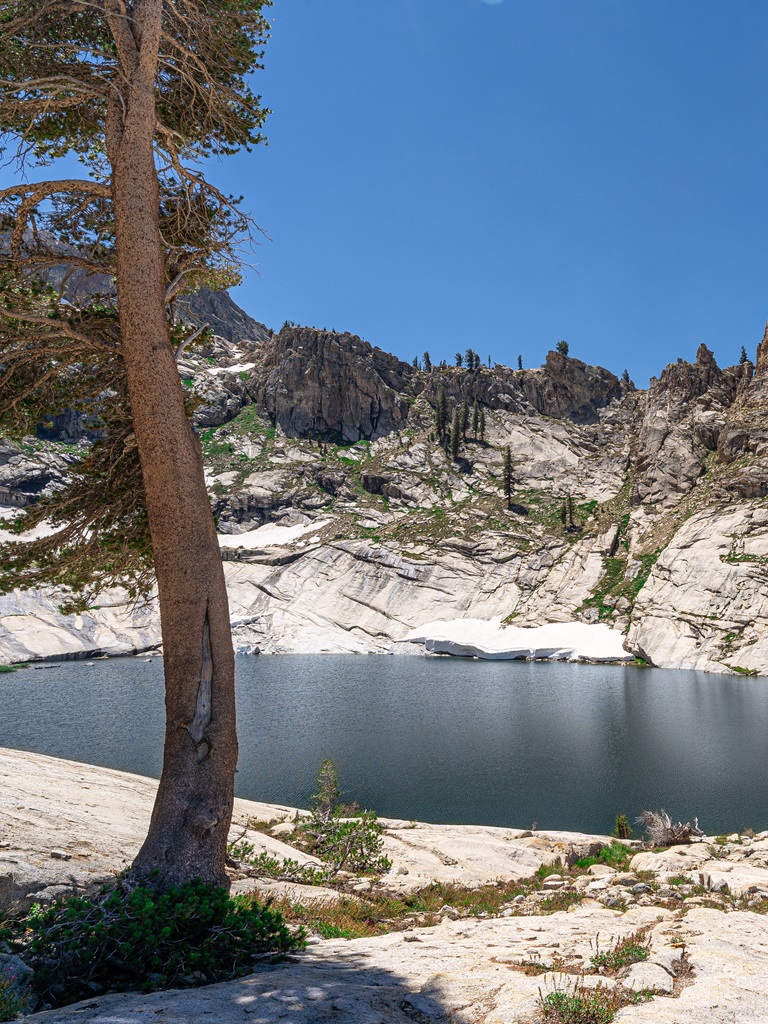
If you love alpine lakes and challenging hikes then you’ll LOVE this trail! The Lakes Trail is one of my favorite hikes in Sequoia National Park. It takes you to four stunning alpine lakes – Heather, Aster, Emerald, and Pear.
The hike starts at 7,300 feet in elevation and climbs to 9,550 feet at Pear Lake. Not only is the elevation gain itself challenging but the altitude can be tough for most people, especially those coming from lower elevation.
If you’re physically prepared and well acclimated, I highly recommend hiking the Lakes Trail! Combine it with the Watchtower Trail for even more jaw-dropping views!
🥾 Lakes Trail Stats:
- Length: 13 miles (20.9 km) roundtrip
- Elevation Gain: 3,200 feet
- Difficulty: Challenging
- Hiking Time: 6 to 8 hours
- Pet-friendly? No
- Wheelchair Accessible? No
- Highlights: Watchtower, Heather Lake, Aster Lake, Emerald Lake, and Pear Lake
✨ READ THIS: Lakes Trail Hiking Guide
🅿️ Lakes Trail Trailhead/Parking: The hike starts at the Lakes Trail Trailhead / Wolverton Trailhead at the end of Wolverton Road. The parking lot is big with plenty of spots. Restrooms, trash cans, and bear boxes are available here.
📍 Google Maps Location: Lakes Trail Trailhead
🚌 Shuttle Option: You can take the free Sequoia shuttle to the Wolverton parking lot.
3. Summit Alta Peak
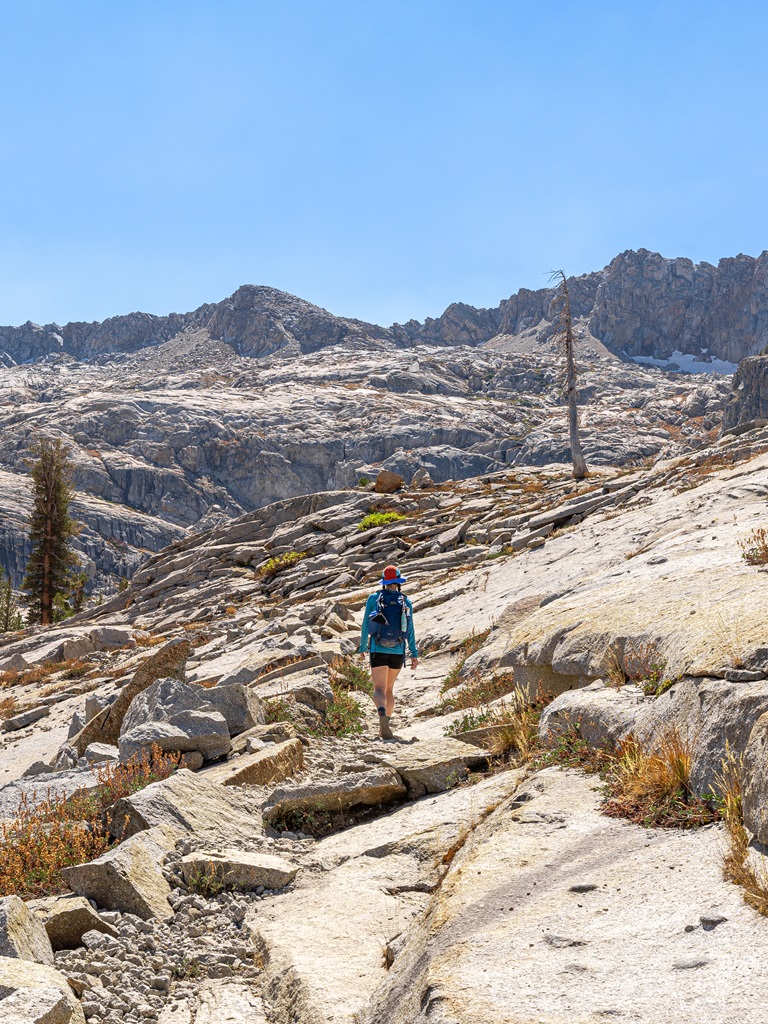
Alta Peak is one of the “easiest” high peaks to summit in Sequoia National Park. First off, when I say “easiest” I mean the trail is easy to follow, well-maintained, and non-technical as compared to other trails in the park leading to high peaks, such as in the Mineral King area. But this hike is far from easy!
Alta Peak sits at 11,204 feet and offers some of the most amazing views of the Great Western Divide, Kaweah Peaks, and the surrounding Sierra Nevada wilderness. The combination of distance, elevation gain, and altitude makes this hike quite challenging.
There is a short scramble to reach the actual summit but it’s an easy class 2. If you’re up for the challenge, this is a great hike to tackle!
🥾 Alta Peak Trail Stats:
- Length: 14 miles (22.5 km) roundtrip
- Elevation Gain: 4,000 feet
- Difficulty: Challenging
- Hiking Time: 8 to 10 hours
- Pet-friendly? No
- Wheelchair Accessible? No
- Highlights: Panther Gap, Mehrten Meadow, Alta Meadow (side quest), Tharps Rock, and Alta Peak summit
✨ READ THIS: Alta Peak Hiking Guide
🅿️ Alta Peak Trailhead/Parking: The hike starts at the Alta Peak Trailhead / Wolverton Trailhead at the end of Wolverton Road. The parking lot is big with plenty of spots. You’ll find restrooms, trash cans, and bear boxes available at the trailhead.
📍 Google Maps Location: Alta Peak Trailhead
🚌 Shuttle Option: You can take the free Sequoia shuttle to the Wolverton parking lot.


4. Explore Muir Grove
Muir Grove is a small, old-growth grove hidden within Sequoia National Park. Due to its location, this grove does not see as many visitors as compared to the Giant Forest. If you want to escape the crowds, visit Muir Grove!
Along the Muir Grove Trail, you’ll pass a granite dome with amazing views before reaching the grove itself full of towering ancient giant sequoias.
🥾 Muir Grove Trail Stats:
- Length: 4.2 miles (6.7 km) roundtrip (add 2 miles / 3.2 km due to current campground closure)
- Elevation Gain: 500 feet
- Difficulty: Moderately challenging
- Hiking Time: 3 to 4 hours
- Pet-friendly? No
- Wheelchair Accessible? No
- Highlights: Giant sequoia trees
- Muir Grove Trail Map
🅿️ Muir Grove Trailhead/Parking: The hike begins at the Muir Grove Trailhead, located inside Dorst Creek Campground. However, the campground has been closed since 2023, so you cannot currently park directly at the trailhead.
The closest parking area is a small pullout along Generals Highway in front of the campground entrance. Starting here adds about 2 miles to the total hike (6.2 miles / 9.9 km roundtrip).
📍 Google Maps Location: Muir Grove Trailhead
🚌 Shuttle Option: There is no shuttle stop at Dorst Creek Campground/Muir Grove.
5. Go on a Sequoia National Park Tour
If you’d rather skip the stress of planning and driving, book a guided tour! There are a lot of choices from private guided hikes to small group trips. All you have to do is book the tour then show up and enjoy the experience!
Here are a few fun options from Viator.com 👇
Things to Do Near Sequoia National Park
Looking to explore beyond Sequoia National Park? Or planning a road trip and want to add a few more fun stops? You’re in luck – there are some incredible places nearby that are worth the extra drive!
Kings Canyon National Park
Kings Canyon National Park sits right next to Sequoia, and the two parks are often grouped together as one. I recommend dedicating a day to exploring Kings Canyon.
🥾 A few must-do hikes in Kings Canyon:
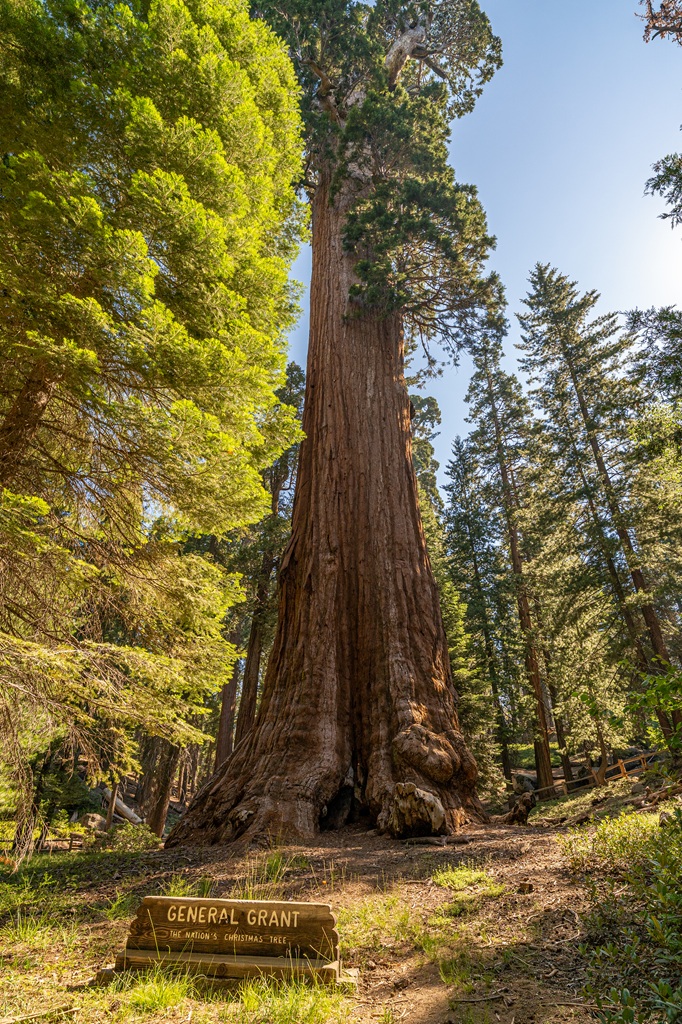
General Grant Tree – See the second-largest tree in the world! Hike along the General Grant Tree Trail for 0.2 miles (0.3 km) to reach the tree. Continue along the trail to see other unique features like Gamlin Cabin and Centennial Stump. Total hike is only 0.6 miles (0.9 km) roundtrip and doable for all ages.
Panoramic Point Overlook – Hike 0.5 miles (0.8 km) to Panoramic Point for incredible view of the Kings Canyon, Hume Lake, and the distant mountains. The trail is entirely paved and perfect for all skill levels.
Roaring River Falls – This is a popular hike that leads you to a powerful 40-foot waterfall called Roaring River Falls. The trail is easy to follow and short at just 0.3 miles / 0.4 km roundtrip.
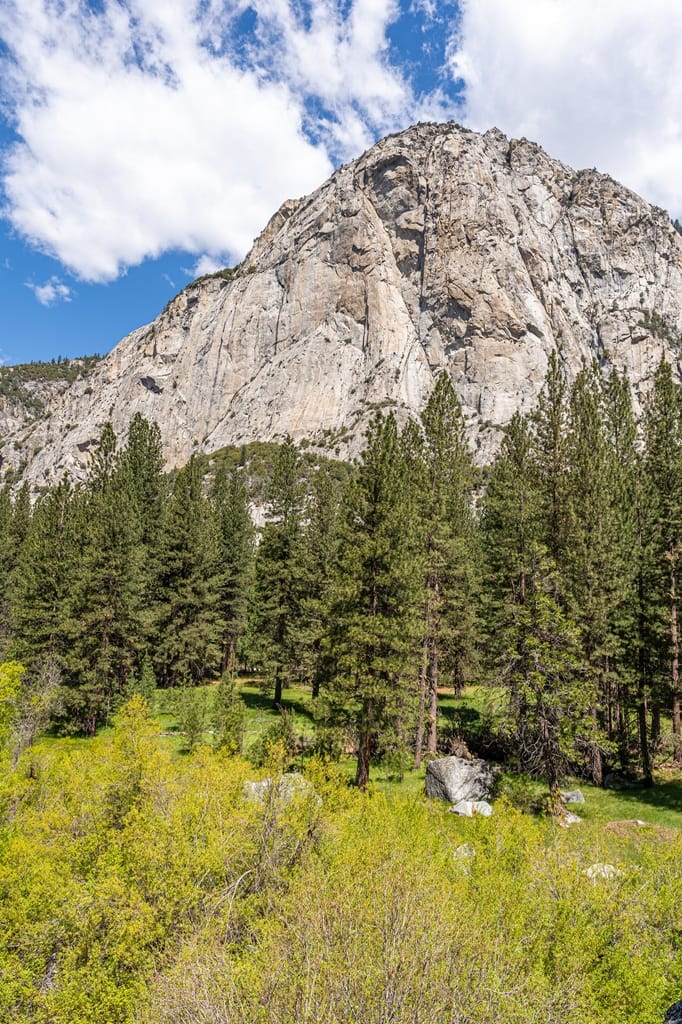
Zumwalt Meadow – This is one of the park’s most beautiful spots. This is a short, easy, family-friendly hike. It’s a great place to see wildlife, such as deer, black bears, and marmots!
Big Stump Trail – Hike 2 miles (3.2 km) along the Big Stump Trail to see the Big Stump (also known as the Mark Twain Stump). It used to be known as the Mark Twain Tree which grew to be 16 feet in diameter. It was unfortunately cut down in 1891 by the U.S. Army so it could be displayed to crowds around the world.
Buena Vista Peak Trail – This is one of my favorite short hikes in Kings Canyon. It’s moderately challenging but only 2 miles (3.2 km) roundtrip. At the top of Buena Vista Peak you’ll get stunning panoramic views of Sequoia and Kings Canyon!
Planning to visit Kings Canyon National Park? Check out my travel guides! 👇
Yosemite National Park
Yosemite National Park is one of my favorite places in the world! I’ve visited this park many times, and I love helping others experience just how incredible it is (along with Sequoia and Kings Canyon).
Below I’ve listed some of the best hikes in Yosemite. I also have lots of blog posts about trip planning, itineraries, and detailed trail guides, so you can easily plan an epic trip to this wonderful national park!
🥾 A few must-do hikes in Yosemite:
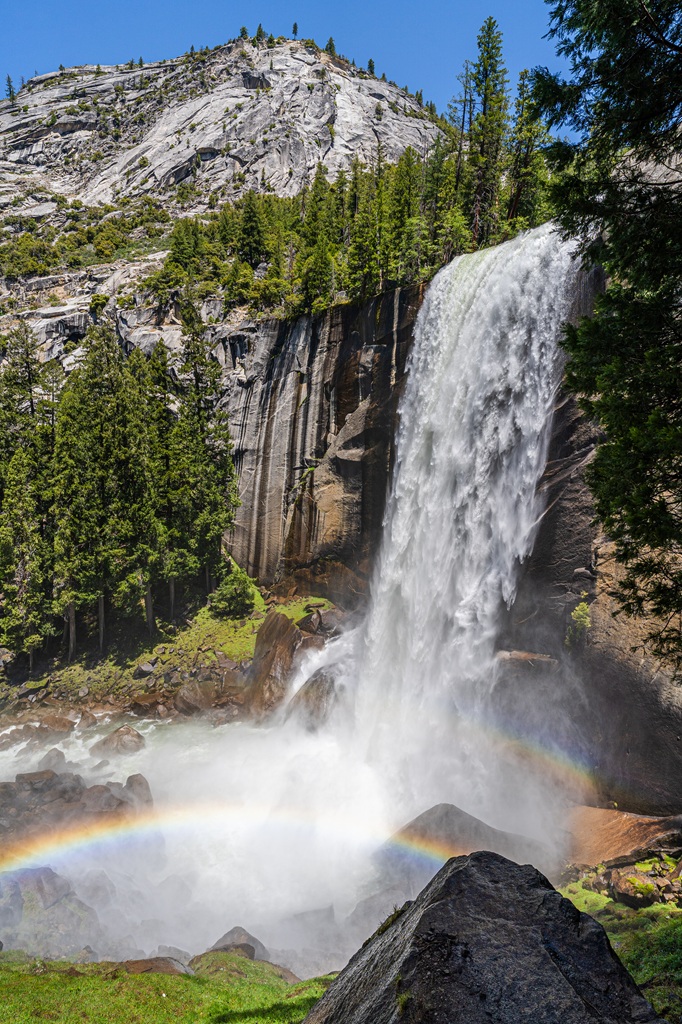
Mist Trail to Vernal and Nevada Falls – This is the most popular and most iconic hike in Yosemite National Park. Hike 1.5 miles (2.4 km) one way to the top of Vernal Fall along the famous granite steps embracing the powerful mist. If you have more energy and time, continue to the top of Nevada Fall – it’s worth the extra effort!
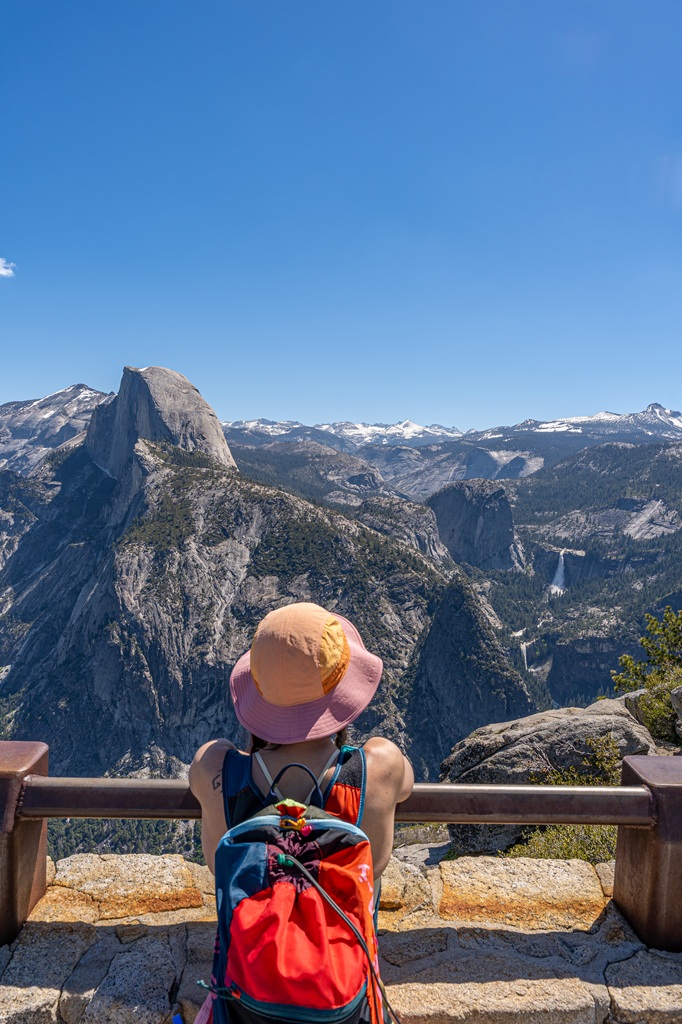
Four Mile Trail to Glacier Point – Want to see amazing views of Yosemite Falls, Half Dome, and the High Sierra peaks? Tackle the Four Mile Trail! It’s about 9.8 miles (15.7 km) from Yosemite Valley to Glacier Point and back down. Be prepared for a tough climb with 3,420 feet of elevation gain!
Upper Yosemite Fall Trail – This is one of my favorite hikes in Yosemite! It’s not as scenic as the Four Mile Trail but if you go during peak flow, you’ll get to feel the power of Upper Yosemite Fall up close! It’s one of the most challenging day hikes in the valley – 7 miles (11 km) roundtrip with 3,200 feet of elevation gain.
Sentinel Dome and Taft Point – Looking for short and moderately challenging hikes that lead to some of the most beautiful views in Yosemite? Add Sentinel Dome and Taft Point to your list! Sentinel Dome is 2.2 miles (3.5 km) roundtrip with 500 feet of elevation gain and Taft Point is 2.4 miles (3.8 km) roundtrip with 350 feet of elevation gain. They’re both great spots for watching sunrise or sunset!
Panorama Trail to Illilouette Fall – This is an insanely scenic hike with views of Half Dome, Vernal Fall, Nevada Fall, and distant granite peaks. It’s all downhill to Illilouette Fall (2.2 miles / 3.5 km one-way). You can continue a bit further to the Illilouette Creek Footbridge which is a great spot to rest and eat a meal before the tough climb back up to Glacier Point.
Wapama Falls Trail – Head over to the lesser-visited side of Yosemite – Hetch Hetchy! There you can hike the Wapama Falls Trail 2.5 miles (4 km) one-way to the 1,300-foot waterfall known as Wapama Falls.
Planning to visit Yosemite National Park? Check out my travel guides! 👇
- 1-Day Yosemite Itinerary for First-Time Visitors
- Where to Stay Outside of Yosemite (best places in 2026)
- 13 Best Hikes in Yosemite Valley You Can’t Miss!
- Fresno to Yosemite Day Trip: Itinerary for Every Season
- First Timer’s Guide to Glacier Point Road in Yosemite
- Best Spots to Find Giant Sequoia Trees in Yosemite
- 10 Must-Do Easy Hikes in Yosemite for All Skill Levels
- Hetch Hetchy Hikes: Explore This Hidden Gem
- 20 Best Yosemite Waterfalls You Can’t Miss!
- Ultimate Guide to Visiting Yosemite in May
- Is Tioga Pass Open? Plan an Epic Trip with This Guide
- 13 Best Tioga Pass Hikes for Adventure Lovers
- 20 Best Things to Do in Tuolumne Meadows and Tioga Pass in Yosemite
Conclusion
I hope this guide on how to spend one day in Sequoia National Park helps you plan an unforgettable trip!
I would recommend spending at least 2-3 days exploring Sequoia, but a day trip is definitely enough to hit all the popular spots! With an early start and a solid itinerary, you’ll have a great time visiting Sequoia National Park in a day.
Always remember to follow Leave No Trace principles so the park can be enjoyed by future generations to come. Sequoia holds a special place in my heart, so if I influence you to plan a trip, I hope I can also influence you to visit respectfully. ☺️
If this guide inspires you to visit Sequoia National Park in one day, I’d love to hear about your adventure! Leave a comment and share your experience.
📌 Enjoyed this post? Pin for later!
🏞️ Explore more incredible places in California!